New York Times Quashes DOJ Subpoenas Over Air Force One Leak 2026
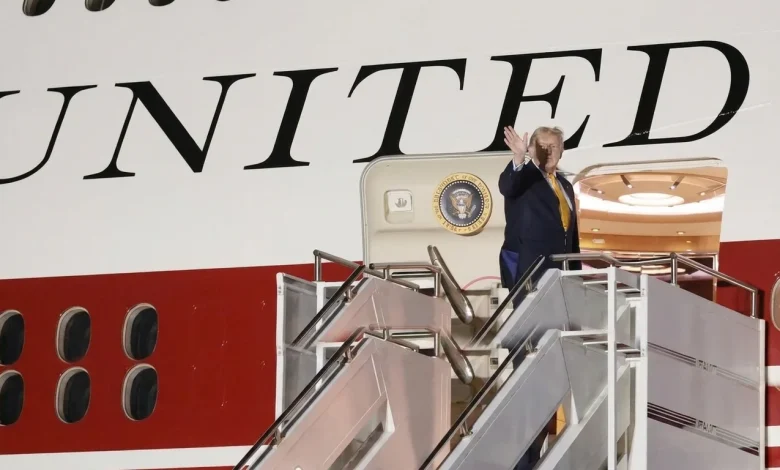
Table of Contents
The Clash of Press Freedom and Government Secrecy
New York Times legal representatives have taken a stand in federal court, filing a motion to quash Justice Department subpoenas targeting journalists who reported security flaws in the Qatari-gifted Air Force One. This legal maneuver, filed under seal in the Southern District of New York, sets up a high-profile constitutional showdown over press freedom, confidential source protections, and national security. The dispute represents a critical escalation of the government’s campaign to control independent media and restrict disclosures regarding national defense infrastructure. This escalation occurs amidst a broader administrative landscape where deep state dismissals and security reviews have dominated headlines, signaling a tighter grip on government-leaked information.
At its core, this battle pits the government’s power to enforce secrecy against the public’s right to be informed about potential vulnerabilities within executive operations. National security and transparency are often in tension, but press freedom advocates argue that subpoenaing reporters to identify their sources crosses a dangerous threshold. The struggle echoes historical benchmark cases, such as the landmark 1971 Pentagon Papers case, which firmly established that the government carries a heavy burden when seeking to restrict or punish the dissemination of public-interest news. Over the past several years, tension between investigative newsrooms and federal law enforcement has steadily climbed, leading to landmark litigation. The outcome of this specific case could define the boundaries of investigative journalism for decades to come, shaping how media organizations interact with anonymous whistleblowers within the federal apparatus.
Overview of the Motion to Quash in the Southern District of New York
The filing in the Southern District of New York (SDNY) challenges the validity of federal grand jury subpoenas served directly on Times reporters. While the Justice Department contends that these subpoenas are necessary to investigate unauthorized disclosures of classified defense details, the Times argues they represent prosecutorial overreach designed to intimidate reporters. While high-profile leaks often result in the unveiling of highly classified disclosures that challenge the executive branch, this marks a direct judicial confrontation with newsgatherers. Legal experts anticipate that the SDNY court’s ruling will establish significant legal precedent regarding reporter’s privilege in national security matters. The Motion to Quash asks the federal judge presiding over the grand jury proceedings to void the subpoenas entirely, arguing that the government has not demonstrated a compelling necessity that overrides First Amendment rights.
Anatomy of the Controversy: The Qatari-Gifted Air Force One
The origin of this dispute dates back to the acquisition of the executive aircraft in question. Originally presented to the administration as a diplomatic gift from the Qatari government, the state-of-the-art aircraft was intended to serve as a modern addition to the Air Force One fleet. However, the decision to integrate a foreign-sourced plane into the most secure tier of presidential transport immediately raised red flags among aviation analysts, intelligence agencies, and security watchdogs. The aircraft, retrofitted with $400 million of American capital, comes under scrutiny at a time when lawmakers face debates surrounding macroeconomic national defense expenditures.
Despite the high price tag associated with retrofitting the plane to meet strict Secret Service requirements, reports emerged indicating that vital defense equipment had been omitted or delayed. When President Donald Trump chose to fly an older Air Force One model to return from the NATO summit in Turkey instead of using the Qatari-gifted jet, the sudden logistical switch sparked public curiosity and subsequent press scrutiny. Media analysts point out that accepting a direct aircraft gift from a foreign state—even a key Middle Eastern ally like Qatar—creates complex administrative challenges, as the military must certify that the hardware is free of external influence and meets stringent operational standards.
Missing Safeguards: The Anti-Missile Discrepancy
Citing anonymous administration and defense sources, journalists revealed that the Qatari-gifted aircraft lacked crucial defensive countermeasures, most notably a fully operational antimissile system. The Secret Service reportedly advised against utilizing the new plane for long-distance transatlantic travel, favoring the older, battle-tested VC-25A platforms that feature comprehensive electronic warfare suites, radar jamming, and thermal decoy systems designed to defeat surface-to-air threats. Though administration officials claim the leak compromises national safety, critics argue that the threats are being conflated with standard diplomatic and sensitive geopolitical counter-threats.
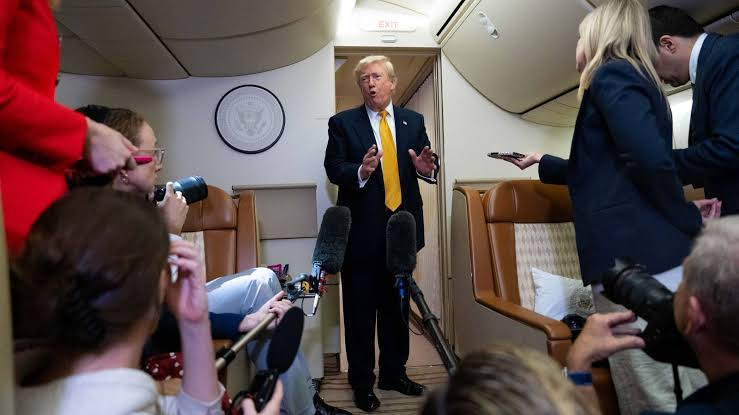
President Trump was quick to dismiss these claims on social media, asserting that the aircraft met all criteria and that no security risks were factored into his travel plans. However, military defense experts maintain that the absence of integrated missile defense on a presidential aircraft represents an unacceptable vulnerability, justifying public exposure and debate. The technical specifications of the defensive omissions quickly became the primary focus of the government’s ensuing leak investigation, with the Justice Department asserting that detailing specific technical shortcomings of the executive fleet constitutes a threat to operational security.
Summary of the Legal and Security Controversy
To better understand the various facets of this ongoing clash between the New York Times and the Department of Justice, the following table summarizes the core technical, administrative, and legal dynamics at play:
| Dispute Factor | Key Details and Technical Specifications | Legal / National Security Implications |
|---|---|---|
| The Aircraft | Boeing 747-8, gifted by Qatar and retrofitted for $400 million of taxpayer money. | Questions raised over foreign hardware influence and defense upgrade costs. |
| Security Flaws | Lacks advanced antimissile defense and specific electronic countermeasures. | Led to Secret Service recommending the older Air Force One for the NATO summit return. |
| DOJ Position | Subpoenaed journalists to testify before an SDNY federal grand jury to locate leakers. | Claims disclosure of technical vulnerabilities compromises presidential safety. |
| NYT Defense | Filed a motion to quash, arguing subpoenas are in bad faith and violate First Amendment rights. | Defending the constitutional right to protect anonymous sources and publish public-interest news. |
McCraw Speaks Out: The Legal Position of The New York Times
David McCraw, the newspaper’s senior vice president and deputy general counsel, criticized the government’s approach in an official statement on Wednesday. McCraw characterized the subpoenas as retaliatory actions designed to punish investigative reporting rather than legitimate law enforcement steps. He emphasized that the newspaper is fully prepared to defend its staff, pointing out that forcing journalists to act as an arm of government investigations would render independent reporting impossible. McCraw asserted that the subpoenas are a direct challenge to the press’s constitutional mandate to hold the executive branch accountable.
Legal representation for the Times is emphasizing that the information published was of immense public interest, directly concerning the safety of the Commander-in-Chief and the oversight of public funds. The argument rests on the assertion that the public has a right to know if a presidential aircraft is deployed without the defenses necessary to shield it from hostile actions. By filing the motion under seal, the Times is complying with the procedural secrecy of grand jury investigations while aggressively challenging the underlying legal justification for the subpoenas.
An Escalating Pattern: From Washington Post Searches to Home Subpoenas
The aggressive pursuit of the Times reporters is not an isolated incident but rather part of a broader, systemic crackdown on federal intelligence leaks. Earlier this year, the press corps was rattled by an FBI raid on a Washington Post reporter’s residence, which culminated in the seizure of personal communication devices. Delivering grand jury subpoenas directly to reporters’ homes over the weekend represents another significant step in this aggressive posture, designed to bypass traditional legal mediation and generate psychological pressure. The dramatic steps taken by federal prosecutors have also attracted commentary across the political spectrum, echoing recent media disruptions and political shifts in conservative leadership.
Civil liberties organizations have voiced deep concern over these strategies, warning that using the Justice Department to target political reporting creates an atmosphere of fear among potential whistleblowers, effectively shielding government decisions from view. Observers note that when governments aggressively pursue journalists instead of focusing on structural administrative reforms, they risk damaging the delicate checks and balances that undergird modern democracy.
Constitutional Implications of Forcing Journalists to Reveal Sources
The constitutional debate over whether reporters have a right to keep their sources confidential is one of the most enduring battles in American jurisprudence. While federal courts have historically recognized certain protections under the First Amendment, the executive branch has frequently claimed that national security concerns override these privileges. Legal observers note that as the nation reflects on its democratic journey and the fundamental ideals of national constitutional integrity, the protection of a free press remains paramount.
Without the ability to promise confidentiality, whistleblowers inside government agencies are unlikely to expose waste, fraud, or security hazards. Thus, the protection of anonymous sourcing is not merely a professional courtesy but a structural necessity for the preservation of a transparent, democratic system. The lack of a comprehensive federal shield law in the United States leaves journalists vulnerable to federal prosecutors who seek to bypass state-level protections, turning federal grand juries into powerful tools for identifying internal dissenters.
The First Amendment vs. Federal Grand Jury Demands
Federal grand juries possess broad investigatory powers, but they are not unlimited. Legal precedents require prosecutors to demonstrate a compelling, immediate need for a journalist’s testimony and to prove that the information cannot be obtained through any alternative, non-media channels. These aggressive maneuvers are fueling wider national security policy debates within Congress and the upcoming election cycle.
In this dispute, the Times plans to demonstrate that the Justice Department failed to exhaust other avenues of investigation before resorting to the highly disruptive measure of targeting journalists. By asserting that the subpoenas were brought in “bad faith,” the newspaper is asking the court to carefully balance the executive branch’s enforcement goals against the core values of the First Amendment. The Times’ legal briefs argue that the government has other, less intrusive methods to audit its own communications and identify internal leaks without violating the constitutional boundaries of the press.
The Geopolitical Context: Why a Gifted Plane Drew Scrutiny
The geopolitical dimension of the controversy cannot be overlooked. Qatar’s decision to gift a multimillion-dollar aircraft to the United States executive branch carries deep diplomatic significance. While Middle Eastern allies regularly cooperate with Washington on regional defense efforts, accepting such massive tangible assets creates unique security challenges. Defense experts argue that integrating any foreign-donated system requires rigorous, independent security audits to ensure there are no integrated surveillance risks or hardware backdoors. The debate over accepting high-value foreign gifts highlights the tension between diplomatic relations and stringent military defense standards.
By exposing that the jet was lacking crucial antimissile defenses, the Times reporting highlighted a profound disconnect between the official diplomatic narrative and the stark reality of military readiness. This revelation raised valid concerns among lawmakers regarding the decision-making process behind the acquisition and retrofitting of presidential transport assets. Skeptics point out that using foreign gifts for sensitive presidential transport invites intense technical and intelligence scrutiny, making public oversight not only appropriate but essential to national security.
Future Outlook: What Lies Ahead in the SDNY Legal Showdown
As the legal teams prepare for oral arguments in the Southern District of New York, the sealed nature of the filings keeps many specific details hidden from public view. However, the broad arguments are clear. The Justice Department will try to convince the federal judge that the leak of the aircraft’s defensive vulnerabilities poses an immediate danger, while the Times will argue that the government’s primary motivation is to prevent embarrassing disclosures about administrative oversights. The court’s decision will serve as a bellwether for the future of investigative reporting in the United States.
If the SDNY judge rules in favor of the Justice Department, it could lead to immediate appeals to the Second Circuit Court of Appeals and potentially to the Supreme Court. Such a trajectory would test the resilience of reporter’s privilege in the modern era, determining whether journalists can continue to protect the sources who expose uncomfortable truths within the halls of power. Regardless of the immediate legal outcome, the clash over the Qatari-gifted Air Force One has underscored the vital, adversarial relationship between a free press and an executive branch striving to maintain absolute control over its operational secrets.