Trump State Visit: King Charles Gifts Historic HMS Trump Bell
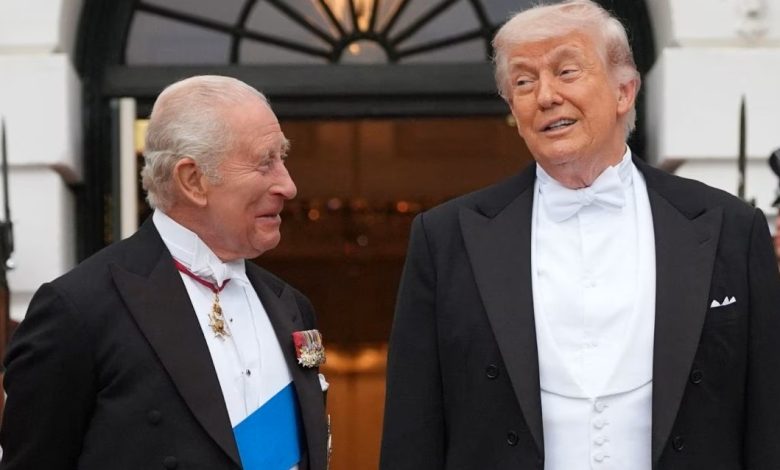
Trump Receives Historic Naval Relic During UK State Visit
State visits to the United Kingdom are always grand affairs steeped in centuries of pageantry, protocol, and meticulously curated optics. However, the exchange of gifts between heads of state often reveals the deeper diplomatic narratives at play. By presenting the ship’s bell of HMS Trump, the British monarchy managed to perfectly balance personal reverence with profound strategic symbolism. Ship’s bells hold an almost sacred status within naval tradition. They mark the rhythm of life aboard a vessel, sound the alarms during perilous combat, and ultimately serve as the enduring soul of a ship long after it has been decommissioned and sent to the breaker’s yard. To extract such an artifact from the historical archives of the Ministry of Defence and hand it over to a sitting U.S. President is an extraordinary gesture of friendship and alliance, reinforcing the unbreakable transatlantic bond.
The Legacy of HMS Trump in World War II
HMS Trump (Pennant P333) was a British submarine belonging to the formidable T-class, a group of patrol submarines designed in the 1930s to replace older vessels. Commissioned in 1944, just as the tides of the Second World War were dramatically turning against the Axis powers, HMS Trump was immediately thrust into the demanding operational environment of the Pacific. Unlike the frigid, heavily patrolled waters of the North Atlantic, the Pacific presented entirely different challenges: sweltering internal temperatures, long transit times from bases in Australia or Ceylon (now Sri Lanka), and the constant threat of highly skilled Imperial Japanese anti-submarine forces. Despite these harrowing conditions, HMS Trump executed numerous successful patrols, harassing enemy shipping lanes and providing vital intelligence that aided the broader Allied war effort. After surviving the war, the submarine enjoyed a remarkably long service life, undergoing extensive modifications during the Cold War before finally being decommissioned and scrapped in 1971.
King Charles Highlights Pre-AUKUS Naval Cooperation
During the presentation ceremony, King Charles elegantly framed the history of HMS Trump, identifying the old submarine as an “AUKUS predecessor.” This diplomatic phrasing was a masterstroke of geopolitical alignment. AUKUS, the trilateral security partnership formed between Australia, the United Kingdom, and the United States, is fundamentally centered on the Indo-Pacific region and heavily revolves around submarine technology. By pointing out that a British submarine was operating in the Pacific alongside American and Australian forces eight decades ago, King Charles drew a direct historical throughline. It served as a potent reminder that the strategic imperatives binding these three English-speaking nations are not merely reactionary modern inventions, but deeply rooted historical commitments. This historical parallel echoes the complexities seen in contemporary alliances, where coordination is paramount, much like when European leaders navigate joint defense missions to secure global choke points.
A Playful Royal Exchange: Just Give Us a Ring
The solemnity of the naval artifact and its heavy historical context was brilliantly punctured by King Charles’s trademark dry wit. After speaking on the grave sacrifices of the Second World War and noting that the bell should stand as “a testimony to our nations’ shared history and shining future,” the King delivered a highly memorable closer. Looking directly at the President, he smiled and added, “And should you ever need to get hold of us, just give us a ring.” The playful double entendre regarding the ringing of the brass bell and the diplomatic hotlines between London and Washington drew genuine laughter from the American delegation. It was a perfectly pitched moment of levity that humanized the rigid protocol of the State Visit, proving that King Charles is clearly having fun with the name, while Trump is now the proud owner of a genuine piece of naval history.
A Historical Look at HMS Trump Specifications
Understanding the formidable engineering of the vessel that carried the bell provides a deeper appreciation of the gift. The T-class submarines were the workhorses of the Royal Navy’s undersea fleet during the later stages of the war.
| Specification | Details for HMS Trump (P333) |
|---|---|
| Class | T-class Submarine (Group 3) |
| Builder | Vickers-Armstrongs, Barrow-in-Furness |
| Launched | 25 March 1944 |
| Displacement | 1,090 tons (surfaced) / 1,575 tons (submerged) |
| Length | 273 feet (83.2 meters) |
| Armament | 11 × 21-inch torpedo tubes, 1 × 4-inch deck gun |
| Fate | Scrapped in August 1971 |
Pacific Theater Operations and British Submarine Deployments
The strategic environment of the Pacific in 1944 and 1945 required immense endurance. The Royal Navy’s submarine flotillas operating out of Fremantle, Australia, and Trincomalee, Ceylon, had to navigate vast stretches of open ocean before reaching their patrol zones in the Java Sea, the Strait of Malacca, and the South China Sea. HMS Trump’s deployments in these theaters were characterized by stealthy coastal operations, intercepting Japanese resupply convoys, and executing daring surface gun actions against coastal shipping. The grueling nature of these patrols cemented the strong operational ties between the British submarine service and the United States Navy’s submarine force, establishing tactical doctrines of interoperability that continue to shape Western maritime strategy today.
Diplomatic Gifts as Symbols of Shared Military Heritage
The exchange of military artifacts has a long and storied history in the realm of statecraft. Perhaps the most famous naval artifact linking the US and the UK is the Resolute Desk, crafted from the oak timbers of the British Arctic exploration ship HMS Resolute and gifted to the US President by Queen Victoria. The gifting of the HMS Trump bell follows in this grand tradition of physical diplomacy. It is not merely an antique; it is a meticulously chosen emblem of blood shed together and oceans conquered jointly. It reflects a time when industrial might and military prowess were pushed to their limits, an era that laid the foundations for the massive defense ecosystems of today, echoing the industrial revitalization seen in America’s modern AI-driven factory booms.
Strengthening the Special Relationship in 2026
As global tensions evolve and the necessity for unified Western defense fronts becomes increasingly critical, the “Special Relationship” between the US and the UK requires constant nurturing. State visits serve as the ultimate platform to project allied unity to the rest of the world. While negotiations on trade, intelligence sharing, and defense procurements occur behind closed doors, the public optics of a state banquet—complete with a deeply personal, historically resonant gift—send an undeniable message of solidarity to both allies and adversaries. This shared resolve is particularly vital when traversing diplomatic flashpoints, reminiscent of times when NATO allies must negotiate complicated sovereign airspace restrictions during global crises.
How Historic Relics Shape Modern Diplomatic Optics
Optics matter immensely in international relations. A thoughtfully selected gift can generate thousands of positive headlines, while a generic or miscalculated offering can cause diplomatic embarrassment. The royal staff’s decision to locate, polish, and present the bell of HMS Trump is a testament to the sophisticated soft power wielded by the British monarchy. To read more about the ongoing legacy of the monarchy’s statecraft, you can visit the official Royal Family website. By directly acknowledging the President’s namesake in such a historically noble context, King Charles managed to honor his guest unequivocally while maintaining the dignity and gravitas expected of the Crown. The visual of the two leaders standing beside the gleaming brass bell creates a lasting archival image of transatlantic unity.
The Significance of Naval Artifact Gifting
The bureaucratic process of deaccessioning a historic artifact from a nation’s military archives is no small feat. A ship’s bell is essentially the property of the Crown and the Royal Navy. Authorizing its permanent transfer to a foreign head of state requires sign-offs at the highest levels of government. This logistical reality underlines the importance of the gesture. It signifies that the UK views its alliance with the United States not just as a matter of present convenience, but as a deeply entrenched pact validated by historical precedent. Every time the President looks at the bell, it will serve as a tactile reminder of British goodwill and the enduring sacrifices of the Silent Service.
Looking Forward: Expanding the US-UK Defense Partnership
Beyond the humor and the historical anecdotes, the exchange over the HMS Trump bell signals a forward-looking momentum for the US-UK partnership. As both nations modernize their armed forces to meet the demands of 21st-century warfare, the foundational trust built during conflicts like World War II remains the bedrock of their cooperation. Whether through the sharing of nuclear submarine propulsion technology under AUKUS, joint cyber warfare initiatives, or collaborative operations in space—where modern equivalents demonstrate unprecedented combat readiness in new domains—the legacy of interoperability lives on. The bell from a 1940s diesel-electric submarine may seem like an artifact of a bygone era, but as King Charles so eloquently stated, it is equally a testament to a shining future. Through historic relics and modern strategic alignments, the enduring strength of the transatlantic alliance rings clearer than ever.