Reindustrialization: America’s Factory Boom Driven by AI
Reindustrialization Through the Lens of AI Infrastructure
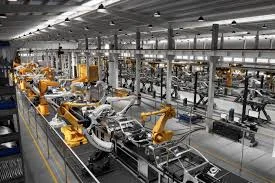
The concept of an American factory boom historically conjured images of bustling assembly lines, auto manufacturing hubs, and steel mills employing thousands of blue-collar workers. Today, the landscape is radically different. The modern factory floor is highly sterilized, relentlessly automated, and meticulously optimized by the very artificial intelligence algorithms it seeks to support. The focus has decisively shifted from consumer durables and traditional heavy machinery to the hyper-specialized equipment necessary to sustain the exponential growth of neural networks and machine learning models. As corporations across the globe race to implement large language models, predictive analytics, and autonomous systems, the physical foundation required to run these technologies must be built somewhere. The United States has quietly become the epicenter for manufacturing this highly advanced hardware. The facilities producing this equipment are marvels of modern engineering, operating with a level of precision and efficiency that renders vast amounts of human labor obsolete. This shift represents a structural evolution in how economic value is generated within the industrial sector. The traditional correlation between increased production output and proportional job creation has been permanently severed. We are witnessing the birth of a capital-intensive, hyper-productive manufacturing paradigm that relies on silicon, electricity, and advanced robotics rather than human sweat and manual dexterity.
The Statistical Paradox: Output Rises While Jobs Plunge
Analyzing the current economic data reveals a statistical paradox that challenges fundamental macroeconomic theories. A 2.3% increase in overall manufacturing output, coupled with a 4.2% rise in shipments, historically guaranteed widespread job creation. Instead, the loss of 100,000 manufacturing jobs points toward a massive leap in operational productivity fueled by advanced automation. Factory floors are increasingly populated by autonomous mobile robots, automated guided vehicles, and robotic arms capable of performing intricate assembly tasks with zero margin for error. Human workers are being transitioned out of repetitive, manual roles and into oversight, maintenance, and programming positions. However, it takes significantly fewer software engineers and robotics technicians to manage an automated factory than it does manual laborers to run a traditional assembly line. The net result is a leaner, faster, and infinitely more productive industrial base that structurally requires a fraction of the historical workforce. This labor efficiency allows American manufacturers to remain fiercely competitive on the global stage, driving up output metrics while systematically driving down payroll expenses.
Computer and Electronic Product Output Hits New Highs
The most staggering data point in this economic shift is the 7.7% surge in computer and electronic product output. This specific sector has completely decoupled from the broader manufacturing index, accelerating at a velocity that reflects the desperate global scramble for processing power. This category encompasses everything from the base silicon wafers to the intricate printed circuit boards that form the central nervous system of enterprise data centers. As innovations like ChatGPT and AGI innovations continue to redefine technological capabilities, the backend compute requirements skyrocket exponentially. Facilities scattered across the American Southwest, the Pacific Northwest, and newly established tech corridors in the Midwest are churning out massive volumes of electronic hardware. These specialized factories operate around the clock, heavily reliant on highly sophisticated machinery rather than vast human workforces. The output metrics reflect a booming industry successfully meeting the voracious appetite of the world’s leading technology conglomerates.
Semiconductors and Networking Gear Leading the Charge
At the heart of this electronic production boom are semiconductors and advanced networking gear. The localization of semiconductor fabrication plants, or fabs, within the United States has triggered a massive downstream supply chain reaction. Building the chips is only the first step; these processors must be integrated into complex servers, which must then be connected via high-bandwidth, ultra-low-latency networking switches and optical transceivers. American factories are dominating the production of this high-margin networking equipment. The routers and switches required to facilitate the massive data transfers within AI clusters are highly complex pieces of machinery. Their assembly requires a level of technological precision that plays directly to the strengths of highly automated American manufacturing facilities. This specific niche is insulated from traditional global manufacturing competition precisely because of the immense capital requirements and specialized intellectual property involved in the production process.
The Truth Behind the Numbers: AI Data Centers vs. Traditional Factories
To truly comprehend the ongoing industrial boom, one must separate the traditional manufacturing economy from the new AI-driven hardware economy. Traditional factories producing consumer goods, automobiles, and standard appliances have largely plateaued or even contracted slightly in the face of shifting global consumer demand. Conversely, the factories dedicated to supplying the AI infrastructure boom are operating at maximum capacity. This divergence necessitates a detailed comparison of how these two sectors operate and their respective impacts on the broader economic landscape.
| Metric | Traditional Manufacturing (Historical Baseline) | AI-Driven Reindustrialization (2026 Reality) |
|---|---|---|
| Overall Output Growth | 0.5% to 1.2% Annually | 2.3% Annually (Driven by Tech Sectors) |
| Computer & Electronic Output | 2.1% Annually | 7.7% Annually |
| Shipment Volume Growth | 1.5% Annually | 4.2% Annually |
| Employment Trajectory | Stagnant to Slight Cyclical Growth | Net Loss of 100,000 Jobs (Automation Driven) |
| Primary Market Drivers | Consumer Durables, Automotive, Raw Steel | Semiconductors, Data Centers, Cooling Tech |
| Labor Profile and Needs | Manual Assembly, Traditional Line Workers | Robotics Technicians, Automation Engineers |
This data clearly illustrates that the aggregate gains in American manufacturing are overwhelmingly concentrated in sectors that support digital infrastructure. The illusion of a broad-based industrial revival masks the hyper-concentrated success of the technology hardware supply chain.
Power and Cooling Equipment Market Explosion
An often-overlooked yet critical component of this boom is the production of power distribution and thermal management equipment. AI data centers consume staggering amounts of electricity and, consequently, generate massive amounts of heat. The factories producing industrial-scale HVAC systems, liquid cooling loops, high-capacity transformers, and uninterruptible power supplies (UPS) are experiencing unprecedented order volumes. This represents a heavy-industry counterpart to the delicate production of microchips. Massive metal fabrication, complex pipe fitting, and the assembly of large-scale electrical infrastructure are thriving. American factories have successfully cornered the domestic market for these massive infrastructure components, largely due to the prohibitive logistics and costs associated with shipping such heavy, specialized equipment overseas. The cooling and power sector is a hidden titan within the 2.3% output growth statistic, proving that the AI boom requires vast amounts of traditional raw materials forged into specialized industrial equipment.
Political Narratives vs. Economic Reality
The prevailing political narrative surrounding American manufacturing frequently misattributes the current boom to strategic trade policies, punitive tariffs, and targeted governmental interventions aimed at protecting legacy industries. Politicians are quick to point to rising output and shipment numbers as validation of their respective economic agendas. However, a granular examination of the data reveals a starkly different reality. The traditional manufacturing sectors that these policies were explicitly designed to protect are largely stagnating or actively declining. The phenomenal growth propping up the national averages is entirely sourced from the AI hardware ecosystem. The political class is eager to take credit for an industrial resurgence that they neither planned nor fully comprehend. The reality is that private capital, relentless technological innovation, and an insatiable global market demand for computational power are the true architects of this boom. The 100,000 job losses remain a politically inconvenient truth, directly contradicting the populist promise that increased factory output equates to a resurgence of the blue-collar middle class.
Why Tariffs and Subsidies Are Not the Real Drivers
While legislative efforts like the CHIPS Act certainly provided initial capital injections and favorable regulatory environments for localized production, they are not the primary engines of the current 7.7% surge in electronic output. Tariffs on imported goods have largely failed to revitalize uncompetitive domestic industries; instead, they have merely shifted supply chains or passed increased costs onto the consumer. The AI infrastructure boom, however, exists largely outside the realm of these traditional trade disputes. The United States leads in this sector because it possesses the necessary concentration of intellectual capital, advanced research institutions, and immediate proximity to the world’s leading software and AI development firms. To view objective economic indicators, one must consult primary sources such as the Federal Reserve’s industrial production and capacity utilization reports. These resources confirm that technological demand, rather than protectionist trade policy, is the singular force lifting the aggregate manufacturing statistics.
Labor Market Economics: The Decline in Manufacturing Employment
The elimination of 100,000 manufacturing jobs amidst record production levels forces a profound reevaluation of labor market economics. For generations, the formula was simple: more factory output required more factory workers. Today, that formula is obsolete. Capital investment has decisively shifted away from labor and heavily toward advanced machinery and software integration. The workers who were displaced over the past year were largely concentrated in legacy industries that are struggling to compete, or in roles that have been successfully automated within the thriving tech-hardware sectors. This transition is incredibly painful for communities reliant on traditional manufacturing employment, yet it is a necessary evolution for the broader economy to remain competitive. The jobs that remain in the manufacturing sector are fundamentally different; they demand advanced technical degrees, proficiency in algorithmic troubleshooting, and a comprehensive understanding of complex robotics. The labor market is not merely shrinking; it is undergoing an intense qualitative transformation that leaves behind those without specialized technical skills.
Automation and the Future of Factory Work in 2026
The future of factory work in 2026 is entirely defined by the integration of artificial intelligence directly into the manufacturing process itself. Factories are not only producing AI infrastructure; they are utilizing AI to optimize their own operations. Predictive maintenance algorithms anticipate machine failures before they occur, drastically reducing downtime. Supply chain management software autonomously orders raw materials based on real-time production speeds and external market fluctuations. The integration of advanced tech, similar to the evolution seen in advanced wearable tech, ensures that factory floors are interconnected ecosystems of continuous data exchange. The human element on the factory floor is evolving into a supervisory capacity. Workers monitor data dashboards, intervene during critical systemic anomalies, and manage the continuous deployment of software updates to robotic assembly units. The era of manual labor as the primary driver of industrial output has effectively ended, replaced by an era where human intellect governs automated precision.
Reevaluating Global Supply Chains in the AI Era
The localization of AI hardware manufacturing within the United States is sending shockwaves through global supply chains. As America reshores the production of mission-critical technology, traditional manufacturing hubs overseas are experiencing unprecedented disruption. The reliance on fragmented, international supply networks proved dangerously vulnerable during recent global crises, prompting a massive push for domestic supply chain resilience. This pivot is causing severe commodity shocks exposing economic cracks in traditional global supply chains. As the US consolidates its control over the AI hardware market, countries that previously relied on exporting electronic components to the American market are finding themselves rapidly marginalized. The supply chain of the future is shorter, more secure, and heavily concentrated around massive technology hubs located strictly within North America.
The Market Shifts and Ongoing Structural Evolution
The structural evolution of American manufacturing is irreversible. The 2.3% output growth and the 4.2% jump in shipments are not cyclical anomalies; they represent the new baseline of a technologically advanced industrial economy. The massive demand for data center infrastructure intersects directly with broader commercial shifts, echoing the rapid transformations seen in subscription economics and fulfillment innovations. As digital services expand, the physical hardware required to sustain them must expand proportionally. The United States has successfully transitioned its manufacturing base from the industrial age to the artificial intelligence age. The factories are booming, the output is staggering, and the shipments are flowing relentlessly. The defining characteristic of this new era is clear: America is producing the physical machinery that powers the future, and it is doing so with a level of automated efficiency that fundamentally redefines the relationship between industrial production and human labor.