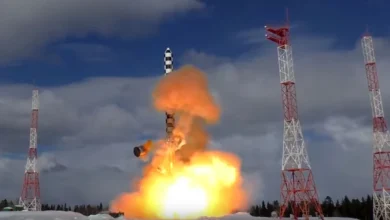
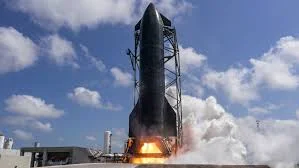
Space Force Combat Debut In Operation Epic Fury Proves Readiness
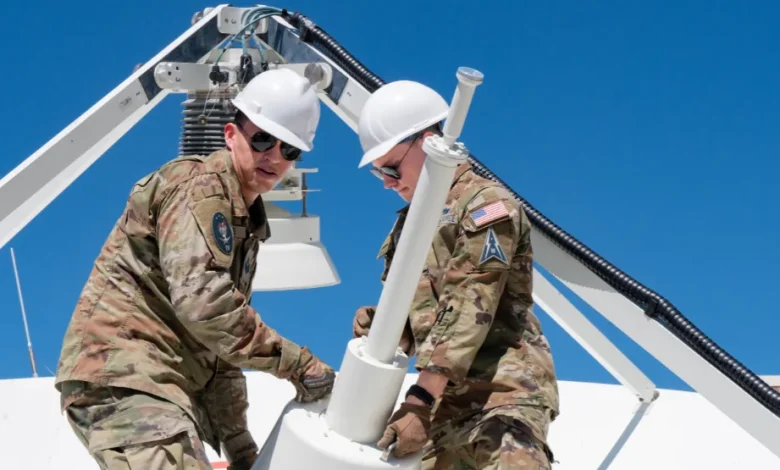
Space Force Guardians have officially marked their combat debut, permanently altering the landscape of modern warfare and confirming the strategic necessity of the military’s newest branch. During the intense and multifaceted engagements of Operation Epic Fury, these specialized operators were tasked with running critical missile tracking, deploying sophisticated electronic warfare countermeasures, and maintaining resilient satellite communications. What makes this debut particularly historic is that Guardians executed these highly technical operations while actively taking enemy fire. A military branch that spent its initial years fielding public skepticism, debating doctrinal theories, and designing uniforms is now on the front lines, jamming Iranian systems and tracking hostile troop movements under active bombardment. The success of these operations prompted Space Force Chief Gen. Saltzman to declare, “Just a few years ago, we were debating theories. Today, we’re a combat credible force.” This defining moment in military history demonstrates that the domain of space is no longer a theoretical battlefield but an active, contested environment requiring specialized expertise.
Space Force Combat Debut in Operation Epic Fury
The initiation of Operation Epic Fury required an unprecedented level of multi-domain coordination, placing the United States Space Force directly in the crosshairs of active combat. In environments where milliseconds determine the survival of deployed forces, Guardians provided the critical connective tissue that enabled synchronized ground, air, and naval operations. The deployment of space-based assets was not merely supportive; it was the foundational element that dictated the tempo of the engagement. By successfully operating sophisticated telemetry and communications arrays while hostile forces sought to sever these links through kinetic and non-kinetic means, the Space Force proved that orbital dominance directly translates to terrestrial victory. The operations conducted during this period unequivocally demonstrated that the branch possesses the operational maturity required to function flawlessly under the extreme pressures of a live combat scenario.
The Transition from Theory to Tactical Execution
For several years following its establishment, the Space Force was heavily focused on the vital but largely invisible work of defining its mission, establishing its organizational structure, and developing a unique warfighting doctrine. Theorists and strategists meticulously mapped out scenarios involving anti-satellite weapons, signal degradation, and cyber-intrusions targeting orbital infrastructure. However, theory only extends so far until it is tested in the crucible of combat. Operation Epic Fury served as this ultimate test. The transition from boardroom strategy to tactical execution required a massive shift in mindset. Guardians had to adapt their highly technical training to the chaotic and unpredictable nature of active warfare, transforming theoretical orbital mechanics and signal propagation charts into life-saving battlefield intelligence.
Overcoming Early Skepticism and Doctrinal Debates
In its infancy, the branch faced considerable public and political skepticism. Critics often questioned the necessity of an independent military branch dedicated to space, pointing to the years spent debating uniform designs, ranks, and organizational insignia. Yet, the leadership understood that building a specialized culture was paramount to addressing the unique challenges of the space domain. Operation Epic Fury effectively silenced the skeptics. When the moment arrived, the doctrinal debates of the past gave way to seamless operational execution. The deliberate cultivation of a force dedicated exclusively to space combat ensured that when the nation called, a cadre of highly trained experts was ready to operate highly complex systems without the distraction of competing terrestrial priorities.
Executing Electronic Warfare Under Active Bombardment
Perhaps the most remarkable achievement during Operation Epic Fury was the Space Force’s execution of complex electronic warfare (EW) campaigns while stationed at forward operating bases that were under direct enemy fire. Historically, space operations were conceived as pristine, remote activities conducted from deeply fortified bunkers thousands of miles from the frontline. The reality of modern conflict dictates otherwise. Guardians found themselves managing sensitive EW equipment amidst the concussive force of incoming artillery and rocket fire. Their ability to maintain focus, recalibrate jamming frequencies, and execute counter-measures under these harrowing conditions speaks volumes about their physical and psychological resilience, cementing their status as true combatants.
Jamming Iranian Systems and Protecting Allied Communications
A central pillar of the Space Force’s tactical success involved the targeted jamming of sophisticated Iranian radar and command-and-control systems. By neutralizing the adversary’s electronic eyes and ears, Guardians created crucial operational blind spots that allied forces exploited. The electronic countermeasures deployed were highly precise, severing the enemy’s communication links while leaving allied networks intact. This intricate digital dance requires an intimate understanding of the electromagnetic spectrum. The successful blinding of hostile arrays directly influenced the outcome of several key engagements, a feat that is especially significant when analyzing the broader context of military escalation and geopolitical reversals in the region. By degrading the adversary’s technological capabilities, the Space Force fundamentally shifted the balance of power on the battlefield.
Advanced Satellite Communications Architecture
Maintaining clear lines of communication is the backbone of any military operation, and during Operation Epic Fury, this responsibility fell squarely on the shoulders of the Space Force. The Guardians managed an advanced satellite communications architecture that proved remarkably resilient against enemy attempts to jam or spoof the signals. Through dynamic bandwidth allocation and rapid frequency hopping, they ensured that secure data continued to flow between command centers and forward-deployed units. In chaotic environments reminiscent of escalating low-altitude military flight maneuvers, where traditional terrestrial communication nodes are easily compromised, the impenetrable umbrella of space-based communications provided a decisive tactical advantage, proving that the high ground of space is indispensable.
Precision Missile Tracking and Battlefield Awareness
The ability to detect, track, and intercept hostile projectiles relies heavily on space-based early warning systems. During the conflict, the Space Force’s missile tracking capabilities were pushed to their absolute limits. Guardians monitored an unprecedented volume of atmospheric anomalies and thermal signatures, rapidly distinguishing between actual threats and battlefield clutter. By providing exact coordinates and trajectory analyses in real-time, they enabled allied missile defense batteries to intercept incoming threats with staggering precision. This level of battlefield awareness not only protected critical military infrastructure but also saved countless lives, underscoring the lethal efficacy of integrating orbital sensors into the terrestrial kill chain.
Integrating Space-Based Assets with Ground Operations
The seamless integration of space assets with ground-level infantry and mechanized units was a defining characteristic of Operation Epic Fury. The Space Force did not operate in a vacuum; rather, they were intimately connected with tactical commanders on the ground. Through specialized liaison officers and advanced data links, Guardians provided ground troops with high-fidelity satellite imagery, GPS navigational augmentation, and electronic threat warnings. This multi-domain synergy allowed ground forces to maneuver with unprecedented speed and confidence, knowing that the ultimate high ground was actively monitoring their perimeter and neutralizing threats before they could materialize.
| Capability Area | Pre-2026 Theoretical Application | Operation Epic Fury Combat Execution |
|---|---|---|
| Electronic Warfare (EW) | Simulated jamming from secure domestic bases. | Active suppression of Iranian radar while under kinetic attack. |
| Missile Tracking | Monitoring strategic intercontinental test launches. | Real-time tracking and interception coordination of short-range tactical munitions. |
| Satellite Communications | Maintaining bandwidth during localized interference exercises. | Dynamic frequency routing amidst sustained enemy cyber and EW assaults. |
| Ground Integration | Doctrinal planning and joint-force tabletop exercises. | Direct tactical intelligence feeds to forward-deployed infantry under fire. |
Strategic Advancements in Early Warning Systems
The early warning systems managed by the Space Force represent a quantum leap in military technology. Utilizing a constellation of highly sensitive infrared monitoring satellites, Guardians were able to detect the heat plumes of enemy missile launches mere seconds after ignition. This fraction-of-a-minute advantage is critical in modern warfare, where hypersonic munitions leave virtually no margin for error. The advancements demonstrated during the operation validate the massive financial investments made in the Space-Based Infrared System (SBIRS) and the Next-Generation Overhead Persistent Infrared (Next-Gen OPIR) programs. The strategic application of these early warning networks has permanently elevated the baseline requirements for national defense.
Gen. Saltzman’s Verdict on Combat Credibility
The profound success of these operations was perfectly encapsulated by Space Force Chief Gen. Saltzman, whose leadership guided the branch through its formative, controversial years. His statement, “Just a few years ago, we were debating theories. Today, we’re a combat credible force,” serves as the definitive vindication of the Space Force’s mission. Gen. Saltzman emphasized that the courage and technical proficiency displayed by Guardians under fire have permanently silenced internal and external critics. By proving that they can project power, defend critical infrastructure, and support allied forces under the most extreme conditions imaginable, the Space Force has firmly established itself as an equal and indispensable branch of the United States Armed Forces.
The Future of Orbital Dominance in Warfare
The lessons learned from Operation Epic Fury will fundamentally shape the future of global military strategy. Orbital dominance is no longer a luxury; it is a prerequisite for victory in any major conflict. As adversarial nations continue to develop anti-satellite weaponry and advanced electronic warfare capabilities, the Space Force will be required to constantly innovate and adapt. The ability to maintain space superiority serves as a powerful deterrent against wider regional conflicts, echoing the stabilizing effects seen in the strategic halt of adversarial arms transfers. Furthermore, as the sheer volume of battlefield data increases exponentially, military leaders are increasingly relying on artificial intelligence models to parse battlefield data, ensuring that Guardians can make split-second decisions that alter the course of wars.
Shaping the Next Generation of Guardians
As the dust settles on its historic combat debut, the Space Force is already looking toward the future. The real-world data and tactical experiences gathered during the operation are being rapidly integrated into the training curriculums for the next generation of Guardians. Recruitment efforts are now heavily emphasizing not only exceptional technical acumen in fields like astrophysics, computer science, and engineering, but also the mental fortitude required to operate under the stress of active combat. The legacy of the operators who stood their ground during Operation Epic Fury will serve as the foundational ethos of the Space Force, ensuring that the United States remains the preeminent power in the ultimate high ground of space for generations to come.