FCC Orders Early Review of ABC Licenses Amid Controversy
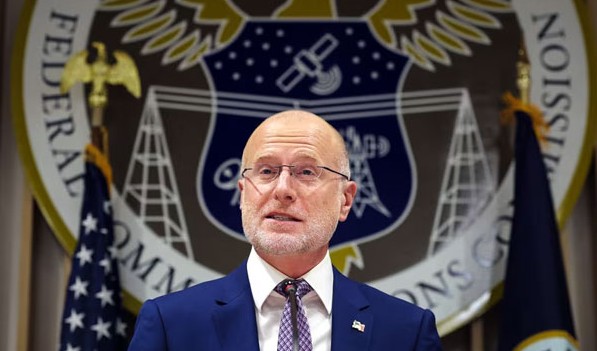
FCC Chairman Brendan Carr has officially ordered an unexpected and deeply controversial early review of the broadcast television licenses held by the Walt Disney Company for its ABC network. This aggressive regulatory maneuver, which firmly demands that ABC file its early license renewals by no later than May 28, has sent profound shockwaves through the American media landscape. As the political temperature in Washington reaches a boiling point, the sudden regulatory scrutiny of one of the nation’s most prominent broadcast networks has raised severe constitutional questions. While the Federal Communications Commission officially cites an ongoing investigation into Disney’s Diversity, Equity, and Inclusion (DEI) practices as the primary justification for this early review, critics and political analysts are pointing to a highly charged sequence of events involving late-night comedy, former President Donald Trump, and an overarching climate of political retaliation. This comprehensive analysis delves into the intricate web of regulatory mechanisms, historical precedents, and the escalating tension between the federal government and massive media conglomerates.
The Catalyst Behind the Early License Review
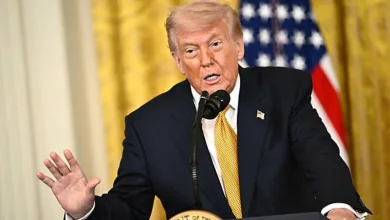
The immediate catalyst for this unprecedented action appears to be deeply intertwined with the volatile intersection of entertainment and high-stakes politics. Just one day before Chairman Carr announced the expedited review process, Donald Trump publicly demanded that late-night host Jimmy Kimmel be immediately fired by ABC. Trump’s fury was directed at a monologue delivered by Kimmel on April 23. The fierce reaction to Kimmel’s broadcast serves as a critical flashpoint in understanding the timing of the FCC’s announcement. While agency sources have repeatedly insisted to the press that the proximity of the license review order to the former president’s public demands is purely coincidental, media watchdogs and First Amendment advocates are scrutinizing the timeline with intense skepticism. In an era where political figures routinely exert immense public pressure on regulatory bodies, the optics of launching an early license review immediately following a political firestorm are impossible to ignore. This sequence of events closely mirrors the escalating nature of federal regulatory interventions that have targeted various sectors when they run afoul of political narratives.
Jimmy Kimmel’s Controversial Monologue
Jimmy Kimmel’s monologue on the evening of April 23 included a highly controversial joke aimed at former First Lady Melania Trump. During his broadcast, Kimmel quipped that Melania possessed a glow like an expectant widow. Under normal circumstances, late-night political satire, regardless of how tasteless some might find it, is fiercely protected by the First Amendment and rarely registers on the radar of federal regulators. However, the context surrounding this specific joke rapidly darkened. Just days after the broadcast, a shocking assassination attempt occurred at the White House Correspondents’ Dinner, casting a grim and retrospectively eerie light on Kimmel’s choice of words. Trump’s subsequent outrage capitalized on the national trauma surrounding the event, framing Kimmel’s joke not merely as poor taste, but as implicitly dangerous rhetoric. The demand for Kimmel’s termination became a rallying cry among Trump’s supporters, effectively weaponizing the late-night segment into a broader referendum on ABC’s corporate governance and editorial oversight.
Brendan Carr and the Regulatory Framework
Brendan Carr, the Chairman of the Federal Communications Commission, has positioned this early review strictly within the confines of statutory authority and regulatory oversight. Carr asserts that the review is legally grounded in an existing, wide-ranging probe into Disney’s DEI practices, an investigation that was quietly launched late last year. According to Carr’s legal framework, there is a legitimate question as to whether Disney’s internal hiring and corporate governance policies violate the Communications Act of 1934. The Communications Act mandates that broadcast licensees must operate in the public interest, convenience, and necessity. Carr’s interpretation seemingly stretches this traditional mandate to encompass corporate diversity policies, suggesting that aggressively ideological DEI frameworks may constitute discriminatory practices that fail to serve the broader public interest. This novel legal interpretation has sparked immediate pushback from legal scholars, who argue that the agency is overstepping its historical boundaries by policing internal corporate HR policies under the guise of broadcast licensing.
The DEI Investigation Connection
The ongoing DEI investigation serves as the official administrative bedrock for the May 28 early renewal deadline. By tethering the license review to Disney’s Diversity, Equity, and Inclusion initiatives, the FCC is tapping into a potent and highly polarizing national debate. Conservative critics of DEI argue that these programs inherently violate civil rights laws by prioritizing race, gender, or sexual orientation in hiring and programming decisions. Carr’s move effectively transitions this cultural grievance into an actionable regulatory threat. If the commission successfully argues that Disney’s DEI policies are exclusionary or discriminatory, it could theoretically rule that ABC is unfit to hold a public broadcast license. However, applying the Communications Act in this manner is entirely untested in modern jurisprudence. The strategic deployment of the DEI probe to trigger a license review is viewed by many industry insiders as a pretext, designed to exert maximum political and financial pressure on the Walt Disney Company during a highly sensitive election cycle.
| Year | Network / Station | Reason for FCC Scrutiny | Outcome |
|---|---|---|---|
| 1969 | WLBT (Jackson, MS) | Racially biased programming and failure to serve the public interest | License formally revoked by federal courts |
| 1998 | RKO General | Lack of candor and financial misconduct | Multiple licenses stripped over time |
| 2026 | ABC (Walt Disney Company) | DEI practices and political controversies surrounding late-night programming | Pending Early Review (Deadline: May 28) |
Historical Context of Broadcast Revocations
To fully grasp the magnitude of Chairman Carr’s order, one must understand the extreme rarity of the FCC utilizing its licensing power as a punitive measure over programming or corporate policy. Historically, the agency has operated with a strong presumption of renewal, treating the license renewal process as a procedural formality for major broadcast networks. The bar for revoking a broadcast license is extraordinarily high, primarily because television and radio frequencies are recognized as vital platforms for free expression. The agency has traditionally restricted its punitive actions to clear violations of technical regulations, egregious financial fraud, or blatant unauthorized transfers of control. Using the licensing process to police the content of a late-night comedy show or the internal HR policies of a parent company represents a seismic shift in regulatory philosophy. This approach has led to widespread fears of a chilling effect across all major broadcast networks, including CBS and NBC, who may now feel compelled to self-censor to avoid similar retaliatory probes.
The 1969 Precedent Explained
The last time a broadcast license was stripped over programming issues was an astounding 57 years ago, highlighting just how unprecedented the current ABC review truly is. In 1969, the D.C. Circuit Court of Appeals ordered the FCC to vacate the license of WLBT, a television station in Jackson, Mississippi. The WLBT case is a landmark moment in media law. During the height of the civil rights movement, WLBT actively promoted segregationist viewpoints while deliberately suppressing the voices of the local Black community, an action that clearly violated the fairness doctrine and the public interest standard of the time. Local activists successfully argued that the station was actively harming a massive portion of its viewership. Comparing the systemic, racially oppressive programming of 1960s WLBT to Disney’s modern DEI practices or a late-night comedy monologue is a massive legal leap. Legal historians note that using the WLBT precedent to justify stripping ABC’s licenses would require a radical reinterpretation of what constitutes harm to the public interest.
Political Pressures and Retaliation Claims
The overarching narrative surrounding this FCC review is dominated by accusations of political retaliation. Critics vehemently argue that the agency is being weaponized to punish a media corporation that has drawn the ire of conservative leaders. This dynamic is not occurring in a vacuum; it closely aligns with Trump’s broader geopolitical and domestic posturing, where state and federal apparatuses are frequently leveraged as tools of enforcement against perceived political enemies. By demanding Kimmel’s firing and subsequently seeing an independent federal agency immediately launch an investigation into Kimmel’s parent network, a chilling message is sent to the entire journalistic and entertainment ecosystem. The assertion by FCC insiders that the timing is merely coincidental has been met with outright derision by media analysts. In the high-stakes theater of Washington politics, coincidences of this magnitude are exceedingly rare. The use of administrative state power to settle political scores represents a profound threat to the independence of the press and the structural integrity of American broadcasting.
Disney’s Impending Legal Strategy
In response to the May 28 deadline, the Walt Disney Company has issued a statement projecting absolute confidence in its legal standing. The corporate behemoth has made it abundantly clear that it is fully prepared to defend itself vigorously through the appropriate legal channels. Disney’s legal strategy will undoubtedly center on the First Amendment. The company’s legal team, consisting of some of the most formidable constitutional lawyers in the country, will likely file injunctions to halt the review process, arguing that the FCC’s actions constitute prior restraint and illegal retaliation for protected speech. Furthermore, Disney will aggressively challenge Chairman Carr’s interpretation of the Communications Act, arguing that the statute was never intended to regulate corporate diversity initiatives. The impending courtroom battles are expected to be protracted and vicious. If the agency decides to push the matter to its ultimate conclusion, it is highly likely that this conflict will reach the highest levels of the judiciary, potentially leading to a scenario where the supreme court erupts in chaos as it attempts to balance federal regulatory authority against corporate free speech rights in the modern era.
Market Reactions and Industry Ramifications
The financial and industrial ramifications of this early license review are already beginning to materialize. Wall Street has reacted with significant apprehension, as investors despise regulatory uncertainty. The threat, no matter how legally tenuous, of a major broadcast network losing its operating licenses introduces a massive risk premium to Disney’s stock and affects broader 2026 corporate market trends. Beyond the immediate financial impact on Disney, the broader media industry is currently operating in a state of heightened anxiety. Network executives are acutely aware that if the FCC can successfully weaponize the license renewal process against ABC over a late-night joke and corporate diversity policies, no network is safe from partisan regulatory attacks. This climate of fear could lead to preemptive capitulation, where networks dilute their programming, strictly police their comedic talent, and abandon progressive corporate policies simply to maintain their operating licenses. Ultimately, the FCC’s action against ABC represents a critical juncture in the history of American media, testing the absolute limits of regulatory power and the enduring strength of the First Amendment in an intensely polarized political environment.