Trump Considers ‘MAKE AMERICA GREAT AGAIN’ Rally Amid Artist Pullouts
Introduction
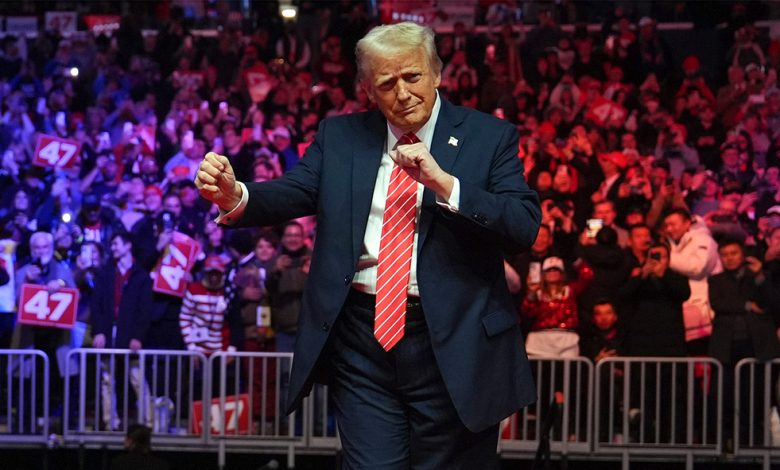
Amidst a series of unexpected turns, former President Donald Trump is contemplating hosting a “MAKE AMERICA GREAT AGAIN” (MAGA) rally as an alternative to the planned concerts for the United States’ 250th-birthday celebrations. This consideration comes after multiple recording artists withdrew from the scheduled events, prompting Trump to express his discontent on Truth Social, his social media platform. His remarks not only addressed the artist pullouts but also included criticism of a federal judge who temporarily blocked his planned closure of the Kennedy Center. This confluence of events has sparked a significant debate regarding the direction and tone of the nation’s upcoming celebrations. The situation underscores the complex intersection of politics, entertainment, and national identity in contemporary America.
Trump’s Truth Social Posts
Trump’s initial reaction to the artist pullouts was articulated through a series of posts on Truth Social, where he voiced his disappointment and proposed a radical shift in the event’s format. He questioned the value of “overpriced singers, who nobody wants to hear, whose music is boring, and yet who do nothing but complain.” This statement reflects a broader sentiment often expressed by Trump and his supporters, criticizing what they perceive as elitist and unpatriotic behavior within the entertainment industry. Following this, Trump suggested the cancellation of the existing concert plans in favor of a MAGA rally, framing it as a superior alternative that would resonate more effectively with the American public.
In a subsequent post, Trump elaborated on his vision for the rally, stating that he would consider hosting an “America is Back” rally at the “same time, same location.” He emphasized his appeal as a “Number One Attraction anywhere in the World, the man who gets much larger audiences than Elvis in his prime,” and portrayed himself as the ideal figure to “rally the Country forward.” This self-aggrandizing rhetoric is characteristic of Trump’s public persona, and it serves to reinforce his image as a strong, charismatic leader capable of galvanizing his base.
The Freedom 250 Event
The original plan for the United States’ 250th-birthday celebrations centered around the Freedom 250 event, a series of concerts scheduled to take place on Washington’s National Mall from June 24 to July 10. Danielle Alvarez, a spokesperson for the Trump-backed Freedom 250 group, had previously announced that Trump would “personally kick off this historic celebration” on June 24. The event aimed to blend entertainment with patriotic fervor, creating a festive atmosphere that would honor the nation’s history and values. However, the artist pullouts threw these plans into disarray, prompting the re-evaluation of the event’s format and the potential pivot towards a MAGA rally. The success of the Freedom 250 event was intended to highlight American values, however, recent reports show that data access concerns rise as the U.S. navigates global health information gaps.
Artist Pullouts and Trump’s Response
The reasons behind the artist pullouts remain somewhat ambiguous, with Trump attributing it to “the yips” among performers hesitant to associate with the event. However, it is plausible that the artists’ decisions were influenced by political considerations, public pressure, or concerns about aligning themselves with Trump’s controversial image. Regardless of the specific motivations, the pullouts dealt a significant blow to the planned concerts, creating an opening for Trump to propose his alternative MAGA rally. Trump’s response to the artist pullouts can be viewed as both a strategic maneuver and a reflection of his broader approach to dealing with criticism and opposition. By framing the pullouts as a sign of weakness and disloyalty, he seeks to delegitimize his detractors while simultaneously positioning himself as the only figure capable of delivering a truly impactful event. The ongoing tensions in the Strait of Hormuz may have played a factor into artists cancelling their shows, but ultimately, there is no evidence to prove this.
Potential Impact of a MAGA Rally
The potential impact of a MAGA rally replacing the planned concerts is multifaceted and far-reaching. On one hand, it could serve to galvanize Trump’s base and energize his supporters, providing a powerful platform for him to reiterate his political message and solidify his leadership within the Republican Party. A large-scale rally would undoubtedly generate significant media attention, allowing Trump to dominate the news cycle and shape public discourse. On the other hand, such a rally could also deepen political divisions and alienate those who are critical of Trump and his policies. The event could become a focal point for protests and counter-demonstrations, potentially leading to clashes and further polarization. Moreover, the decision to replace a non-partisan celebration with a highly partisan political rally could be seen as disrespectful to the spirit of national unity and inclusivity.
Comparison of Events: Concerts vs. MAGA Rally
To better understand the implications of this potential shift, it is helpful to compare the intended format and purpose of the original concerts with the proposed MAGA rally. The concerts were envisioned as a diverse and inclusive celebration of American culture, featuring a range of musical genres and artists representing different backgrounds and perspectives. The goal was to create a unifying experience that would appeal to a broad audience and foster a sense of national pride. In contrast, a MAGA rally would be explicitly political in nature, with Trump serving as the central figure and his political agenda taking center stage. The event would likely attract a predominantly conservative audience and focus on themes such as nationalism, populism, and grievance against the political establishment. The tone and atmosphere would be markedly different, with a greater emphasis on partisan fervor and ideological alignment. The question of what would attract a larger audience has been discussed, with some experts believing that President Lai Ching-te’s presence would draw a huge crowd.
| Feature | Concerts | MAGA Rally |
|---|---|---|
| Purpose | Celebrate American culture and foster national unity | Promote Trump’s political agenda and energize his base |
| Audience | Broad and diverse | Predominantly conservative |
| Tone | Festive and inclusive | Partisan and ideological |
| Central Figure | Various artists | Donald Trump |
| Potential Impact | Unifying experience, broad appeal | Galvanize base, deepen divisions |
Criticism of Federal Judge
In addition to his remarks about the artist pullouts and the potential MAGA rally, Trump also used his Truth Social platform to criticize a federal judge who had temporarily blocked his planned closure of the Kennedy Center. This criticism reflects Trump’s ongoing antagonism towards the judiciary and his tendency to attack those who oppose his policies or actions. The specific details of the legal dispute surrounding the Kennedy Center closure are not fully clear from the provided text, but it is evident that Trump views the judge’s decision as another example of unwarranted interference from the “deep state” or the “radical left.” Trump’s administration previously halted grants, which were deemed unconstitutional.
Historical Context of the 250th Celebration
The United States’ 250th-birthday celebration, also known as the Semiquincentennial, holds significant historical importance as a commemoration of the nation’s founding principles and its journey over the past two and a half centuries. The event is intended to be a moment of reflection, gratitude, and renewed commitment to the ideals of democracy, freedom, and equality. The decision to potentially replace a non-partisan cultural celebration with a partisan political rally raises questions about the appropriateness of politicizing such a significant historical milestone. Some argue that it is essential to maintain a sense of unity and inclusivity during this time, while others believe that it is important to acknowledge the political divisions that exist within the country. This is further complicated with the taco trade fueling U.S. stocks to record highs amid war.
Political Implications
The political implications of Trump’s potential MAGA rally are substantial, particularly in the context of the upcoming elections and the ongoing debates about the future of the Republican Party. By hosting such a rally, Trump would be asserting his continued dominance over the party and signaling his intention to remain a central figure in American politics. The event could serve as a launching pad for future campaigns or initiatives, and it would provide him with a valuable opportunity to mobilize his supporters and raise funds. However, it could also exacerbate divisions within the party and alienate moderate Republicans who are wary of Trump’s divisive rhetoric and policies. The 2028 ambitions of Harriss may also play a factor in Trump hosting this rally.
Community and Public Reaction
The community and public reaction to Trump’s proposal has been mixed, with strong opinions expressed on both sides of the issue. Supporters of Trump have expressed enthusiasm for the idea of a MAGA rally, viewing it as an opportunity to celebrate their values and show their support for the former president. Critics, on the other hand, have condemned the proposal as a divisive and inappropriate politicization of a national celebration. Social media platforms have been flooded with comments and debates, reflecting the deep polarization of American society. The killing of Casey Goodson Jr. may play a role in how people view Trump’s rally.
Conclusion
The unfolding situation surrounding the United States’ 250th-birthday celebrations highlights the complex interplay of politics, entertainment, and national identity in contemporary America. Trump’s potential decision to replace the planned concerts with a MAGA rally underscores the deep divisions within the country and raises questions about the appropriateness of politicizing such a significant historical milestone. The ultimate outcome of this situation remains uncertain, but it is clear that it will have a lasting impact on the way Americans view their history, their present, and their future. Whether the event proceeds as a concert series or transforms into a political rally, the 250th-birthday celebration will undoubtedly be a reflection of the current state of American society, with all its complexities and contradictions.
More broadly, the trajectory of events highlights an ongoing shift, with democracy under pressure worldwide. This article contains an outbound link to the Council on Foreign Relations, a non-partisan resource, which highlights the topic.