Continued Clashes Prompt Newark Curfew Near ICE Facility | Global E Prism
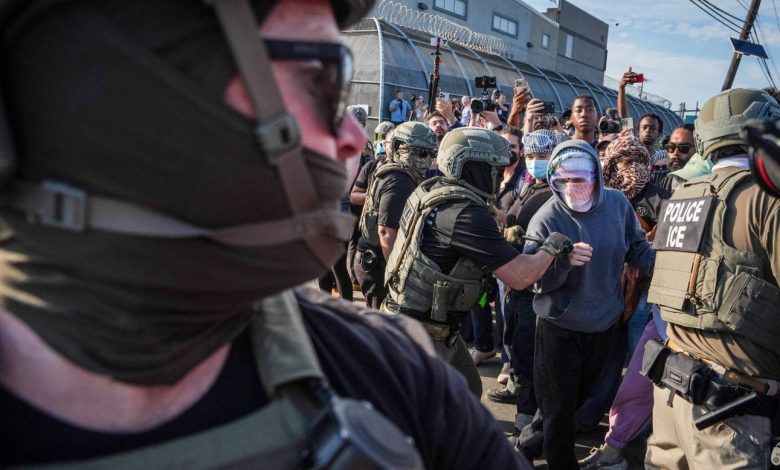
In response to escalating late-night clashes between protesters and authorities outside the U.S. Immigration and Customs Enforcement’s (ICE) Delaney Hall Detention Facility, Newark Mayor Ras Baraka has declared a city-wide curfew effective from 9 p.m. to 6 a.m. until further notice. The curfew encompasses the area within a half-mile radius of Delaney Hall. New Jersey Attorney General Jennifer Davenport released a statement supporting the measure, emphasizing the necessity of maintaining public order and safety. Mayor Baraka has warned that those who breach the curfew will face prosecution, underscoring the city’s commitment to enforcing the restrictions. Doremus Avenue, which directly borders the facility, will be closed to pedestrian traffic, with vehicular access limited to individuals with legitimate business along the street.
Introduction
The imposition of a curfew in Newark near the Delaney Hall Detention Facility marks a significant escalation in response to ongoing protests. The clashes between demonstrators and law enforcement have prompted city officials to take decisive action to maintain public safety and order. This situation raises important questions about the balance between the right to protest and the need to protect communities from violence and disruption. The decision to implement a curfew reflects the gravity of the situation and the city’s resolve to prevent further unrest. The events in Newark occur within a broader context of national debates over immigration policies and the role of ICE facilities [cite: https://globaleprism.com/agency-releases-report-on-bufords-bar-shooting-iran-war-link/].
The Curfew Implementation
The curfew, effective immediately, prohibits all non-essential movement within a half-mile radius of Delaney Hall between the hours of 9 p.m. and 6 a.m. This measure is designed to reduce the likelihood of confrontations and provide law enforcement with greater control over the area. The restrictions on Doremus Avenue, including the pedestrian closure and limited vehicular access, further aim to minimize opportunities for gathering and protest. Residents and businesses within the curfew zone will need to adjust their activities to comply with the new regulations. Law enforcement will be actively monitoring the area to ensure compliance, and violations will be met with arrests and prosecutions. The success of the curfew will depend on the cooperation of the community and the effectiveness of law enforcement in maintaining order.
Mayor’s Statement on Public Safety
Mayor Baraka’s statement underscores the urgency and necessity of the curfew. He cited the escalating situation at Delaney Hall and the increasing demand for police intervention as primary factors in the decision. “Due to the escalating situation at Delaney Hall and the increasing need for police intervention, immediate action is required to protect public safety,” Baraka stated. The mayor also highlighted the arrests of individuals found in possession of weapons as evidence of the serious threat to public safety. His focus is on ensuring the safety and security of Newark residents, and he believes the curfew is a necessary step to achieve that goal. The mayor’s firm stance reflects the city’s commitment to maintaining law and order in the face of ongoing unrest. Public safety concerns have also led to increased security measures in other areas [cite: https://globaleprism.com/wellington-news-bondi-beach-massacre-suspect-faces-new-charges/].
Attorney General’s Perspective
Attorney General Jennifer Davenport’s support for the curfew highlights the state’s alignment with the city’s efforts to restore order. Her statement emphasizes the importance of protecting both law enforcement and the public from further violence. The Attorney General’s office will likely provide legal guidance and support to local law enforcement in enforcing the curfew. This collaboration between city and state authorities underscores the seriousness with which the situation is being addressed. Davenport’s involvement also ensures that the curfew is implemented in accordance with state laws and constitutional principles. The Attorney General’s perspective reinforces the legal basis for the curfew and its necessity in maintaining public order.
Details of the Protests
The protests outside Delaney Hall have been ongoing for an unspecified period, but have recently intensified, leading to clashes with authorities. According to Attorney General Davenport, protesters “attacked” a barrier between law enforcement and demonstrators on Saturday night, charged at officers, threw projectiles, and set a fire. These actions prompted a strong response from law enforcement, resulting in multiple arrests. The protests are likely related to broader concerns about ICE policies and the detention of immigrants at Delaney Hall. The specific grievances of the protesters may vary, but they generally center around issues of human rights, due process, and the treatment of detainees. The escalation of these protests highlights the deep divisions and strong emotions surrounding immigration issues. Similar protests have erupted in response to other government policies [cite: https://globaleprism.com/grants-halted-by-trump-administration-deemed-unconstitutional/].
Delaney Hall Detention Facility Overview
Delaney Hall Detention Facility is a U.S. Immigration and Customs Enforcement (ICE) detention center located in Newark, New Jersey. The facility houses individuals who are awaiting deportation hearings or have been detained for immigration violations. Details about the facility’s capacity, conditions, and specific policies are often subjects of public debate and scrutiny. Protests outside Delaney Hall often aim to raise awareness about the conditions inside the facility and to advocate for the rights of detainees. The detention center is part of a network of similar facilities across the country that are used to enforce U.S. immigration laws. The operations and oversight of these facilities have been a source of controversy and legal challenges. Understanding the role and function of Delaney Hall is essential for comprehending the context of the protests and the city’s response.
Legal and Constitutional Considerations
The implementation of a curfew raises several legal and constitutional questions. The primary issue is whether the curfew infringes on the First Amendment rights of protesters, specifically their rights to freedom of speech and assembly. Courts have generally held that restrictions on these rights are permissible if they are content-neutral, narrowly tailored to serve a significant government interest, and leave open ample alternative channels for communication. In this case, the government’s interest is public safety and order, which is a recognized legitimate concern. The curfew’s geographical and temporal limitations are intended to ensure that it is narrowly tailored to address the specific problems at Delaney Hall. However, civil rights groups may challenge the curfew, arguing that it is overly broad or that it unduly restricts the rights of protesters. The legal analysis will likely focus on balancing the government’s interest in maintaining order with the protesters’ constitutional rights.
Community Reactions and Concerns
The community’s reaction to the curfew is likely to be mixed. Some residents may support the measure as a necessary step to restore order and prevent further violence. Others may oppose it, arguing that it infringes on their rights and that it is an overreaction to the protests. Local businesses within the curfew zone may also have concerns about the impact on their operations. It is important for city officials to engage with the community and address their concerns. This could involve holding public meetings, providing clear information about the curfew, and being responsive to feedback. The success of the curfew will depend, in part, on the community’s willingness to comply and cooperate with law enforcement. Understanding and addressing community concerns is crucial for maintaining trust and ensuring the curfew is effective.
Comparison of Similar Situations
Curfews have been implemented in other cities facing similar situations of unrest and protests. Examining these cases can provide insights into the effectiveness of curfews and the potential challenges in their implementation. For example, curfews were used in Ferguson, Missouri, following the shooting of Michael Brown, and in Baltimore, Maryland, after the death of Freddie Gray. In both cases, the curfews were met with both support and opposition, and their effectiveness was debated. Some studies have suggested that curfews can be effective in reducing violence and property damage, while others have raised concerns about their impact on civil liberties. Comparing the Newark situation to these and other similar cases can help policymakers make informed decisions about the use of curfews and other measures to address unrest. Examining these instances in light of events such as the US military strikes can offer insights into the balance between security measures and civil liberties [cite: https://globaleprism.com/u-s-military-strikes-escalate-in-caribbean-amid-drug-war-deaths-mount/].
Potential Impact on Immigration Debates
The events in Newark could have broader implications for the national debate over immigration policies. The protests and the city’s response may draw attention to the conditions at ICE detention facilities and the treatment of detainees. This could galvanize support for immigration reform and increase pressure on policymakers to address these issues. Conversely, the clashes and violence associated with the protests could strengthen the arguments of those who favor stricter immigration enforcement. The situation in Newark highlights the deep divisions and strong emotions surrounding immigration issues, and it could further polarize the debate. The media coverage of the events will likely play a significant role in shaping public opinion and influencing the political discourse.
Long-Term Implications for Newark
The curfew and the events leading up to it could have long-term implications for the city of Newark. The city’s reputation could be affected, potentially impacting tourism and economic development. The relationship between the community and law enforcement could also be strained, particularly if the curfew is perceived as unfair or discriminatory. It is important for city leaders to address these potential negative consequences by engaging with the community, promoting transparency, and implementing policies that foster trust and understanding. The city’s response to the situation will be closely watched by other municipalities facing similar challenges, and it could serve as a model for how to address unrest and maintain public safety.
Comparison of Curfew Measures in Different Cities:
| City | Reason for Curfew | Curfew Hours | Duration | Impact |
|---|---|---|---|---|
| Newark, NJ | Protests near ICE facility | 9 p.m. – 6 a.m. | Until further notice | Ongoing; potential for reduced unrest but also community tension |
| Ferguson, MO | Unrest after Michael Brown shooting | Midnight – 6 a.m. | Several days | Mixed; some reduction in violence but also criticism for limiting civil liberties |
| Baltimore, MD | Unrest after Freddie Gray’s death | 10 p.m. – 5 a.m. (adults), 9 p.m. – 5 a.m. (youth) | One week | Limited effectiveness; criticism for broad restrictions on movement |
Conclusion
The implementation of a curfew near the Delaney Hall Detention Facility in Newark reflects the city’s determination to address escalating clashes and maintain public safety. While the curfew is intended to restore order and prevent further violence, it also raises important questions about the balance between security measures and civil liberties. The situation underscores the deep divisions and strong emotions surrounding immigration policies and the role of ICE. The long-term implications for Newark will depend on how effectively city leaders engage with the community, promote transparency, and foster trust. As the situation unfolds, it will be closely watched by other municipalities and policymakers grappling with similar challenges. The need to balance public safety with individual rights remains a critical issue in this evolving scenario.
For more information on similar events, see an analysis of border security measures [cite: https://globaleprism.com/north-korea-enhances-border-artillery-implications-analysis/].
U.S. Immigration and Customs Enforcement (ICE) Official Website