TAOYUAN: President Lai Ching-te Defies China’s Blockade, Reinforces Taiwan’s Global Presence in Eswatini Visit
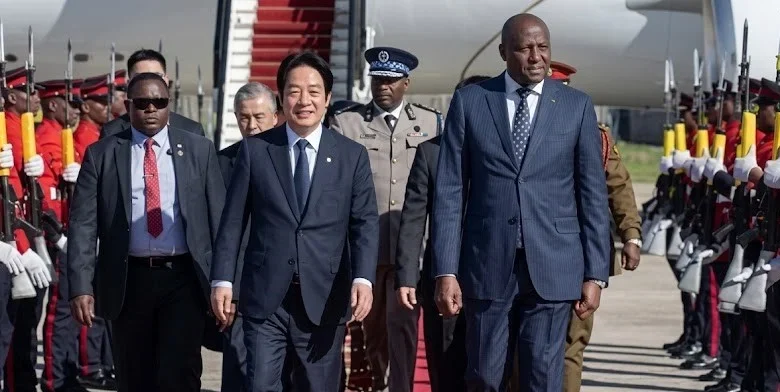
Taiwan, a self-ruled democratic nation, faces relentless diplomatic pressure from Beijing, which considers the island a renegade province to be reunified with the mainland, by force if necessary. Under its stringent “One China” principle, Beijing prohibits countries with which it has diplomatic relations from maintaining formal ties with Taipei. This policy has systematically reduced Taiwan’s official diplomatic allies to a dwindling number, making each remaining partner, such as Eswatini, critically important for Taiwan’s international standing and its assertion of sovereignty on the global stage. President Lai’s journey was not merely a ceremonial visit; it was a reaffirmation of these vital relationships and a testament to Taiwan’s resolve to participate in the international community, irrespective of external obstructions.
TAOYUAN: President Lai Ching-te’s Resilient Diplomatic Journey to Eswatini
The initial plans for President Lai Ching-te’s visit to Eswatini in the previous month were abruptly derailed. According to the Taiwanese government, this cancellation was directly attributable to significant pressure exerted by China on three unspecified countries, compelling them to revoke flight permits and deny Lai transit through their respective airspaces. This alleged interference marked a clear escalation in Beijing’s strategy to isolate Taiwan, moving beyond traditional diplomatic threats to direct logistical obstruction. While China has not officially confirmed these specific actions, it has consistently thanked countries for adhering to its “One China” principle, implicitly acknowledging its role in influencing international decisions related to Taiwan. This form of blockade strategy represents a sophisticated application of diplomatic and economic leverage designed to limit Taiwan’s international mobility and legitimacy.
The Genesis of Obstruction: China’s Alleged Intervention
The precise mechanisms of China’s alleged pressure remain opaque, though they likely involve a combination of economic incentives, political persuasion, and veiled threats. Such tactics are not unprecedented in Beijing’s diplomatic playbook, which frequently employs its considerable economic might and political influence to shape the foreign policy decisions of other nations. For a small nation, denying airspace or transit rights to a high-profile dignitary can have significant diplomatic and economic repercussions from Beijing, making resistance a challenging prospect. The incident highlights the asymmetrical nature of Taiwan’s diplomatic struggle, where every international interaction becomes a high-stakes endeavor against a formidable opponent. The repeated attempts to disrupt Taiwan’s diplomatic engagements underscore a deeper objective: to effectively erase Taiwan’s presence from the international political map, thereby reinforcing Beijing’s claim over the island.
Eswatini: A Pillar of Taiwan’s Remaining Diplomatic Network
Eswatini stands as one of Taiwan’s dwindling number of official diplomatic partners, making its continued allegiance profoundly significant. The African kingdom’s steadfast support provides Taiwan with a crucial foothold in Africa and a valuable platform for demonstrating its commitment to international cooperation. This relationship, rooted in decades of mutual respect and tangible collaboration, contrasts sharply with the broader trend of nations shifting their diplomatic recognition from Taipei to Beijing, often swayed by China’s extensive economic and political inducements. Eswatini’s decision to maintain ties with Taiwan, despite the apparent pressure, speaks volumes about the depth of their bilateral relationship.
Historic Ties and Strategic Cooperation
The diplomatic relationship between Taiwan and Eswatini spans several decades, built on a foundation of mutual development and assistance. Taiwan has provided substantial aid and technical expertise to Eswatini across various sectors, contributing significantly to its socio-economic progress. These initiatives are designed not only to foster development but also to build enduring goodwill and strengthen diplomatic bonds. The strategic importance of Eswatini extends beyond mere numbers; it represents a principled stand against a unipolar diplomatic order and affirms the right of nations, regardless of size, to choose their international partners freely. Such relationships are vital for Taiwan to articulate its narrative and showcase its democratic values on a global platform.
Economic, Agricultural, Cultural, and Educational Exchange
During his recent trip, President Lai Ching-te engaged in comprehensive discussions with Eswatini leadership, focusing on deepening cooperation in key areas. These discussions covered:
* **Economic Ties**: Exploring avenues for increased trade and investment, fostering sustainable economic growth in Eswatini, and creating mutually beneficial commercial opportunities.
* **Agricultural Development**: Building upon existing successful agricultural missions, introducing advanced farming techniques, and enhancing food security in Eswatini through Taiwanese expertise.
* **Cultural Exchange**: Promoting mutual understanding and appreciation between the peoples of Taiwan and Eswatini through cultural programs, arts, and exchanges.
* **Educational Collaboration**: Expanding scholarship programs for Eswatini students to study in Taiwan, facilitating academic partnerships, and enhancing human capital development.
These multifaceted engagements demonstrate Taiwan’s commitment to being a reliable and effective development partner, offering an alternative model of international cooperation that emphasizes genuine partnership over conditional aid. The tangible benefits derived from these collaborations serve as a strong incentive for Eswatini to maintain its diplomatic alignment with Taiwan, providing a counterweight to the diplomatic impasses and pressures exerted by Beijing.
The “One China” Principle: Beijing’s Diplomatic Squeeze
The “One China” principle is the cornerstone of Beijing’s foreign policy regarding Taiwan. It asserts that there is only one sovereign state under the name China, and Taiwan is an inseparable part of it. This principle demands that countries wishing to establish diplomatic relations with the People’s Republic of China (PRC) must formally acknowledge and adhere to this view, effectively severing official ties with the Republic of China (ROC), Taiwan’s official name. This policy has been extraordinarily effective in limiting Taiwan’s international space, reducing its participation in international organizations, and systematically diminishing its diplomatic allies. For an in-depth understanding of the One China policy, its historical context, and its implications, readers may consult resources from reputable international policy think tanks and news organizations. For instance, the Council on Foreign Relations offers extensive explanations on this complex topic. Learn more about the One China Policy.
International Law and Geopolitical Realities
The interpretation and application of the “One China” principle vary significantly across the international community. While many nations acknowledge Beijing’s claim, few explicitly endorse its assertion of sovereignty over Taiwan. Instead, most countries maintain a policy of “acknowledging” or “understanding” Beijing’s position without necessarily agreeing to it, allowing for robust unofficial relations with Taiwan. This delicate balance reflects the complex interplay of international law, geopolitical realities, and economic interests. However, Beijing consistently pushes for stricter adherence to its interpretation, employing its diplomatic and economic leverage to penalize countries that deviate from its line. This often places smaller nations in a difficult position, forced to choose between the economic benefits of aligning with Beijing and the principled stand of supporting Taiwan’s democratic governance.
The Erosion of Taiwan’s Diplomatic Space
The continuous erosion of Taiwan’s diplomatic partners is a direct consequence of the “One China” principle. Each defection represents a strategic victory for Beijing and a significant setback for Taipei. The implications are profound, affecting Taiwan’s ability to participate in international bodies like the World Health Organization (WHO) and other critical forums, where its expertise could be invaluable. This diplomatic isolation not only hinders Taiwan’s practical contributions but also impacts its international recognition and the morale of its 23 million citizens, who increasingly feel marginalized by the global community. The alleged attempt to obstruct President Lai’s travel to Eswatini is a clear example of Beijing’s relentless efforts to further shrink Taiwan’s international footprint.
Taiwan’s Unwavering Determination to Engage Globally
President Lai Ching-te’s successful trip and his subsequent remarks upon returning to Taiwan emphatically reiterated the island nation’s resolve to remain an active and recognized member of the international community. His statement, “Just like going out to visit friends, this is every country’s basic right,” encapsulates Taiwan’s belief in its inherent sovereignty and its right to conduct independent foreign policy, irrespective of Beijing’s objections. This principled stance is not merely rhetoric; it is a core tenet of Taiwan’s democratic identity and a reflection of its aspirations to contribute positively to global affairs.
Lai’s Assertions on National Sovereignty and Rights
President Lai’s insistence on the “basic right” of countries to engage diplomatically serves as a powerful counter-narrative to Beijing’s attempts to portray Taiwan as a mere regional issue. By framing the issue in terms of universal rights and international norms, Taiwan seeks to garner broader international sympathy and support. This narrative resonates with democratic nations worldwide, many of whom share concerns about the potential for larger powers to dictate the foreign policy choices of smaller, sovereign states. His leadership in this diplomatic skirmish reinforces Taiwan’s image as a determined defender of its own autonomy and democratic values.
Public Opinion and International Visibility
“This trip, which was subject to obstruction, actually let the world see the Taiwanese public’s determination and will to be a part of the world,” President Lai declared. This statement highlights the dual impact of China’s alleged actions: while intended to isolate Taiwan, such attempts often inadvertently generate international headlines and draw attention to Taiwan’s predicament. This increased visibility can paradoxically strengthen global awareness of Taiwan’s democratic struggles and foster greater international support. The Taiwanese public, largely united in its desire for international recognition and self-determination, views such presidential visits as crucial affirmations of their national identity and their place in the global order.
Analyzing China’s “Blockade Strategy” and its Implications
China’s alleged attempts to block President Lai’s transit reflect a calculated and increasingly aggressive blockade strategy aimed at stifling Taiwan’s diplomatic outreach. This goes beyond traditional diplomatic protests or economic sanctions, delving into direct interference with travel and logistical arrangements. Such actions have broader implications for international aviation norms, freedom of movement for heads of state, and the principle of non-interference in the internal affairs of other nations.
Tactics of Coercion and Influence
China’s tactics often involve leveraging its immense economic and political influence over smaller nations. The three countries reportedly pressured to revoke flight permits likely faced significant incentives or disincentives from Beijing. This model of coercion can create a chilling effect, deterring other nations from engaging with Taiwan for fear of reprisal. However, it also exposes the extent to which Beijing is willing to go to enforce its “One China” principle, potentially alienating some international observers who perceive these actions as heavy-handed and disruptive to the established international order.
International Repercussions and Norms
Such aggressive diplomatic maneuvers carry significant international repercussions. They challenge the established norms of international travel and diplomatic courtesy. If unchecked, they could set a dangerous precedent, where powerful nations could routinely obstruct the travel of leaders from states they do not recognize. This could lead to a more fragmented and politicized international air travel system, with implications for global aviation and diplomatic engagement. The international community, while often cautious in directly confronting Beijing, is increasingly aware of these tactics and their potential to destabilize regional and global relations.
The Broader Geopolitical Context: Cross-Strait Dynamics and Global Impact
President Lai’s Eswatini visit and the associated diplomatic skirmish are not isolated incidents but integral parts of the broader and increasingly tense cross-Strait dynamics. The struggle for Taiwan’s international space is deeply intertwined with regional security concerns, global economic shifts, and the competition between democratic and authoritarian models of governance. The successful completion of this visit, despite challenges, signifies a small but important victory for Taiwan in its ongoing diplomatic battle.
Beyond Diplomacy: Security and Economic Undercurrents
The diplomatic challenges faced by Taiwan are often symptomatic of deeper security concerns in the Indo-Pacific region. China’s growing military capabilities and its assertive stance in the Taiwan Strait raise fears of potential conflict. Taiwan’s ability to maintain its diplomatic relations, however few, contributes to its perceived sovereignty and deterrence against aggression. Furthermore, the economic implications of geopolitical tensions are significant. Disruptions to trade routes or supply chains, as highlighted by discussions around global oil prices or shifts in global financial influence, such as the petrodollar crisis, underscore the interconnectedness of diplomatic actions and economic stability. Taiwan’s economy, a critical component of the global technology supply chain, makes its stability a matter of international concern, further complicating the diplomatic chessboard.
| Aspect | Description | China’s Approach | Taiwan’s Response | Global Implication |
|---|---|---|---|---|
| **Diplomatic Allies** | Number of countries maintaining formal relations with Taiwan. | Pressure allies to switch recognition to Beijing, offering economic incentives. | Nurtures existing relationships, emphasizes mutual benefit and shared values. | Shrinking international space for Taiwan, questions of sovereignty. |
| **International Transit** | Freedom of movement for Taiwanese officials for state visits. | Allegedly pressures third-party countries to deny airspace/landing rights. | Reschedules, seeks alternative routes, condemns obstruction. | Challenges international aviation norms, highlights diplomatic coercion. |
| **”One China” Principle** | Beijing’s political doctrine asserting Taiwan is part of China. | Demands strict adherence, penalizes countries deviating from it. | Asserts Taiwan’s democratic self-rule and right to international engagement. | Complex geopolitical balancing act for many nations, constant tension. |
| **Economic Relations** | Taiwan’s trade and investment with other nations. | Uses economic leverage to influence diplomatic choices. | Focuses on niche industries, high-tech exports, and strategic partnerships. | Interdependence with global supply chains, potential for economic disruption. |
The Role of International Partners in Sustaining Taiwan’s Autonomy
The support of like-minded international partners, particularly democratic nations, is indispensable for Taiwan’s continued autonomy and its ability to resist Beijing’s diplomatic isolation efforts. While few may offer formal diplomatic recognition, robust unofficial ties, trade agreements, and security cooperation send a clear message that Taiwan is not alone. These partnerships reinforce the global commitment to peaceful resolution of disputes and uphold the principles of self-determination and democratic governance. The incident with President Lai’s flight permits serves as a potent reminder of the fragility of these international norms and the constant vigilance required to protect them.
The Path Forward: Sustaining Diplomatic Ties Amidst Adversity
President Lai Ching-te’s resilient journey to Eswatini is more than a single diplomatic event; it is a microcosm of Taiwan’s ongoing struggle for international recognition and respect. It highlights the ingenuity and determination required to navigate a complex global landscape dominated by the “One China” principle. Taiwan’s government is likely to continue pursuing its pragmatic diplomacy, fostering existing relationships with its remaining allies, and cultivating robust unofficial ties with a broader array of nations. This strategy involves emphasizing shared democratic values, economic cooperation, and humanitarian contributions to demonstrate Taiwan’s value as a responsible and capable member of the international community. The episode with the alleged flight permit revocations will undoubtedly inform future diplomatic strategies, prompting Taiwan to explore innovative ways to secure its international travel and engagement. Ultimately, President Lai’s message upon his return — that global engagement is a “basic right” — serves as a rallying cry for Taiwan’s continued pursuit of its rightful place in the world, a pursuit that, despite formidable obstacles, remains undeterred.