Morocco Beats Canada 3-0 to Reach World Cup Quarterfinals
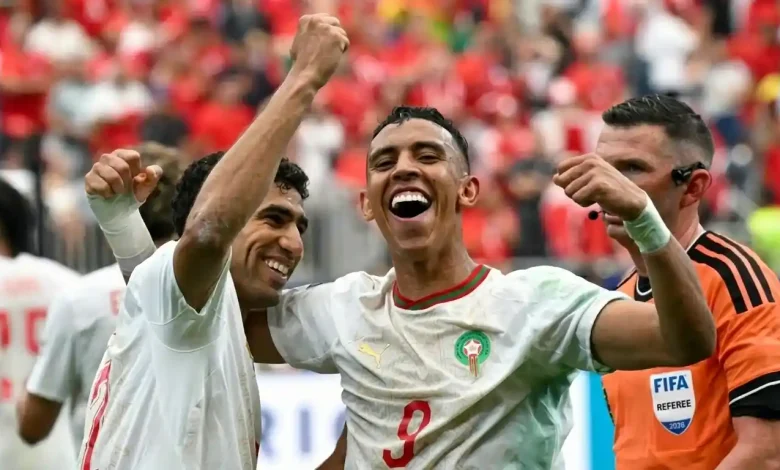
Table of Contents
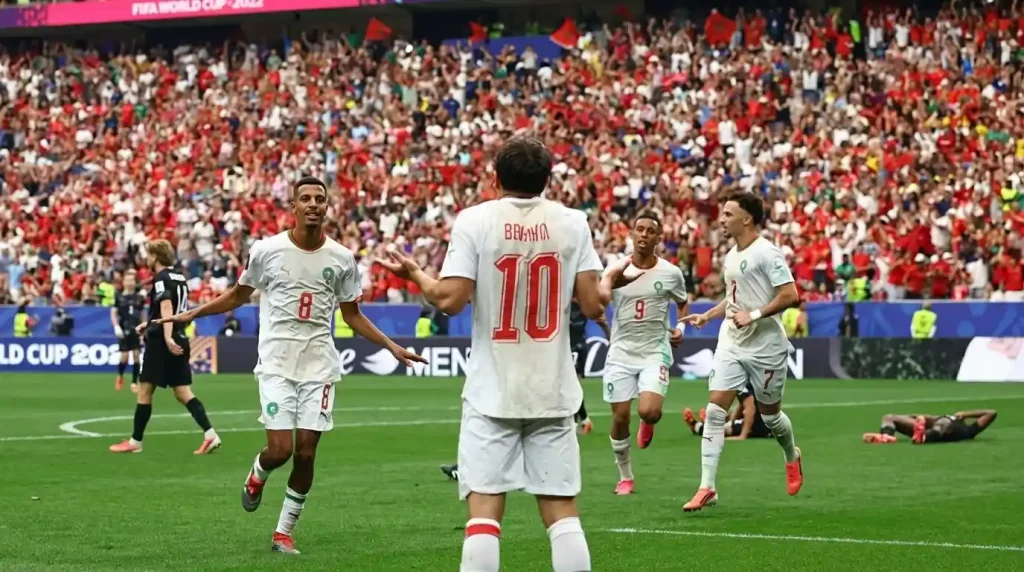
Morocco secured a historic 3-0 victory over Canada in the World Cup Round of 16 on Saturday, sparking jubilant celebrations across the globe and solidifying their place in African football history. By dismantling the co-hosts in front of an energetic crowd of 68,777 at Houston’s air-conditioned NRG Stadium, the Atlas Lions became the first African nation ever to reach the World Cup quarterfinals in back-to-back editions. Following their magical semi-final run in Qatar in 2022, Morocco’s modern golden generation proved that their previous success was no fluke, delivering a tactically superb second-half display led by midfielder Azzedine Ounahi’s brilliant brace and a stoppage-time goal by substitute Soufiane Rahimi.
A Historic Afternoon in Houston: Back-to-Back Quarterfinal Milestones
The triumph in Houston marks a watershed moment for African football. Never before has a country from the African continent secured back-to-back appearances in the quarterfinal stages of the FIFA World Cup. In 2022, Morocco shocked the world by navigating past European giants like Spain and Portugal, ultimately falling to France in the semifinals. Four years later, under the fresh and innovative tactical leadership of head coach Mohamed Ouahbi, who succeeded the legendary Walid Regragui in February 2026, the Atlas Lions have proved that they are a permanent fixture among the world’s elite.
The atmosphere inside Houston’s stadium was electric, heavily dominated by passionate Moroccan fans who made the American venue feel like a home fixture in Casablanca or Rabat. From the opening whistle, the pressure was immense. Morocco carried the expectations of an entire continent, while Canada sought to keep their fairy-tale co-host run alive. By securing this victory, Morocco has not only written a new chapter in their nation’s sporting history, but has also demonstrated the incredible evolution of their domestic football infrastructure, showcasing players who are comfortable dictating the tempo of high-stakes knockout games.
Crucial First-Half Struggles: Canada Dominates Early
Despite the comfortable final scoreline, the opening 45 minutes painted a completely different picture. Jesse Marsch’s Canada came out with intense physical energy, employing a relentless high press that rattled the Moroccan midfield. The co-hosts, buoyed by the prospect of reaching their first-ever World Cup quarterfinal, dominated the territory and possession early on. Canada’s physical midfield, anchored by Richie Laryea, Alistair Johnston, and Stephen Eustáquio, pushed Morocco deep into their own half, forcing a series of defensive errors and earning a staggering 11 corners over the course of the match.
For the first half-hour, Morocco was unable to establish any offensive rhythm. The midfield was congested, and the supply lines to their creative players were completely choked off. Canada looked more confident, moving the ball quickly and exploiting space on the wings. It was a physical and grueling tactical battle that tested Morocco’s defensive organization and mental fortitude to its absolute limits.
Yassine Bounou’s Spectacular Saves Defy Co-Hosts
In the midst of Canada’s early onslaught, Morocco’s veteran goalkeeper Yassine Bounou emerged as the ultimate savior. Bounou, who ironically was born in Montreal, Canada, faced his birth nation with unwavering focus. The critical moment of the first half occurred in the 11th minute when a defensive lapse allowed Canada’s Ali Ahmed to feed a brilliant pass to forward Tani Oluwaseyi. Oluwaseyi turned sharply inside the box, escaping Redouane Halhal, and fired a low, powerful shot toward the bottom corner.
Bounou anticipated the strike perfectly, executing a spectacular reflex save with a fully extended left leg to deny Canada an early lead. Just minutes later, from Canada’s fourth corner of the half, Alistair Johnston found space in the box but failed to keep a free header on target. Bounou’s commanding presence in the penalty area and his vocal leadership settled a nervous Moroccan backline during their most vulnerable period of the match.
Saibari Hamstring Injury Forces Early Tactical Shift
Morocco’s struggles intensified in the 20th minute when star striker Ismael Saibari pulled up holding his hamstring. Saibari, the Bayern Munich-bound forward who had already netted three crucial goals during this tournament, was clearly in agonizing pain and could not continue. This early injury blow threatened to completely derail Ouahbi’s tactical plans, forcing an unexpected substitution in the 22nd minute.
In Saibari’s place, the manager introduced Soufiane Rahimi. While Rahimi brought a different profile of speed and directness, the substitution required Morocco to adjust their attacking shapes. Almost immediately after the drinks break, Rahimi tested Canada’s goalkeeper Maxime Crépeau with a speculative long-range effort, registering Morocco’s first official shot on target. The shift forced Canada to be slightly more cautious, but the tactical adjustment was a difficult challenge for the Atlas Lions to navigate on the fly.
Half-Time Flashpoint and Disciplinary Battle
As the first half drew to a close, the tension on the pitch boiled over. Referee Michael Oliver found himself managing an increasingly physical and hostile game, eventually handing out six yellow cards. The absolute flashpoint occurred shortly before the halftime whistle when Morocco captain Achraf Hakimi and Canadian defender Richie Laryea engaged in a heated shoving match near the touchline. Both players were shown yellow cards, signaling the intense stakes of the encounter.
With four Moroccan players booked in the first half alone, Ouahbi faced a delicate balancing act. His players needed to maintain their aggression without crossing the line and risking a red card. The halftime break came at the perfect time for the Atlas Lions, allowing them to regroup, cool their tempers, and recalibrate their tactical approach for a decisive second half.
The Breakthrough: Ounahi’s Edge-of-Box Masterpiece
Whatever Mohamed Ouahbi said to his players in the locker room worked wonders, as Morocco emerged for the second half with a completely different level of intensity and tactical clarity. The breakthrough finally arrived in the 50th minute, courtesy of a beautifully rehearsed dead-ball routine. Morocco won a free kick on the right flank, and Canada’s defense prepared for a traditional high cross into the penalty area.
Instead, Achraf Hakimi showed his immense footballing IQ, rolling a precise, low pass backward toward the edge of the penalty box (the D). Azzedine Ounahi, arriving with perfect timing, met the ball with a first-time, right-footed sweep. His powerful strike traveled through a maze of Canadian defenders and nestled perfectly into the bottom right corner of the net, leaving Maxime Crépeau completely helpless. The stunning goal sent the Moroccan supporters into absolute rapture and changed the entire complexion of the match.
Double Trouble: Ounahi’s Second Seals Canada’s Fate
Forced to chase an equalizer, Canada committed more players forward, which played directly into Morocco’s transition strengths. Jesse Marsch’s high-tempo system left massive pockets of space in the midfield, which Morocco’s creative stars began to exploit with ease. Morocco’s tactical maturity has been forged through competitive tests on the international stage, including memorable friendlies like the Brazil vs Morocco match, where they held their ground against some of the world’s most elite attackers.
In the 82nd minute, that transition play paid off handsomely. Midfielder Brahim Díaz, who pulled the strings beautifully throughout the second half, led a lightning-fast counter-attack. Díaz chopped inside, drawing several Canadian defenders toward him, before sliding a perfectly weighted pass to Ounahi in the middle of the box. Ounahi, demonstrating world-class composure, smashed a first-time, right-footed shot past Crépeau at the near post to make it 2-0. It was a devastating blow that effectively ended Canada’s hopes of a comeback.
Finishing in Style: Rahimi Caps Off the 3-0 Rout
With the victory securely in hand, Morocco put the exclamation point on a masterful second-half performance in the final minute of stoppage time (90+8′). With Canada completely deflated and physically exhausted, Morocco launched one final counter-attack. The brilliant Brahim Díaz was once again the architect, utilizing his vision and technical skill to slip a pass through to Soufiane Rahimi.
Rahimi, who had worked tirelessly since coming on as a first-half substitute, calmly slotted the ball past an onrushing Crépeau to make it 3-0. The goal was a fitting reward for Rahimi’s incredible work rate and highlighted the outstanding squad depth available to coach Mohamed Ouahbi. As the referee blew the final whistle, the Morocco bench emptied, celebrating a legendary achievement that will be remembered for generations.
Comparing Morocco’s 2022 and 2026 World Cup Campaigns
To fully understand the magnitude of Morocco’s achievement, it is valuable to compare their historic runs in 2022 and 2026. While the 2022 campaign was defined by defensive resilience and a low-block system, the 2026 iteration has showcased a more dynamic, possession-oriented, and clinical style of play. According to the official match statistics reported by FIFA, Morocco was incredibly clinical in Houston, converting three goals from just five total shots.
| Tactical Aspect | 2022 FIFA World Cup (Qatar) | 2026 FIFA World Cup (North America) |
|---|---|---|
| Head Coach | Walid Regragui | Mohamed Ouahbi |
| Core Style | Defensive solidity, low block, counter-attack | Possession fluid, transition-heavy, clinical pressing |
| Key Midfield Catalyst | Sofyan Amrabat / Azzedine Ounahi | Azzedine Ounahi / Brahim Díaz |
| Round of 16 Opponent | Spain (0-0, Won on Penalties) | Canada (Won 3-0) |
| Quarterfinal Opponent | Portugal (Won 1-0) | France (Scheduled) |
| Key Milestones | First African Semifinalist in History | First African team with back-to-back Quarterfinals |
What Lies Ahead: A Rematch with Didier Deschamps’ France
Morocco’s reward for their historic victory is a highly anticipated quarterfinal clash against France on Thursday, July 9, in Boston. This match will be a highly emotional rematch of the 2022 World Cup semifinal, where France ended Morocco’s dream run with a hard-fought 2-0 victory. This upcoming fixture promises to be an absolute blockbuster, pitting two tactical Masterminds against each other.
As they prepare to potentially face the title favorites in the next round, the Atlas Lions know they must elevate their game to another level, particularly given how France’s historic performances have solidified Les Bleus as a powerhouse capable of dismantling any defensive block. However, with Ounahi in career-defining form and Brahim Díaz pulling the strings in midfield, Morocco possesses the offensive firepower to trouble Didier Deschamps’ side. The tactical preparation over the next few days will be critical, as Morocco aims to avenge their 2022 exit and secure their second consecutive semifinal appearance.
End of a Historic Era for Jesse Marsch’s Canada
For Canada, the 3-0 defeat in Houston marks a painful end to an otherwise historic and groundbreaking World Cup campaign. Playing in the biggest game in their soccer history, the co-hosts showed immense heart, courage, and tactical identity. Jesse Marsch’s squad won their first-ever World Cup match, advanced past the group stage, and recorded their first-ever knockout victory to reach the Round of 16.
The rise of African football at the 2026 World Cup has captured global headlines, bringing back memories of other regional breakthroughs such as Egypt’s historic victory over Australia or the stunning resilience displayed during Cape Verde’s World Cup run, which proved that the gap between football’s traditional powerhouses and emerging nations is rapidly closing. Canada’s performance in North America is a clear indication that they are a rising force on the global stage. While they lacked the clinical finishing of the Atlas Lions, Jesse Marsch’s squad can hold their heads high, having inspired millions of young Canadian soccer players and established a solid foundation for the future of the sport in their country.