Somali World Cup 2026 :Referee Denied Entry to United States
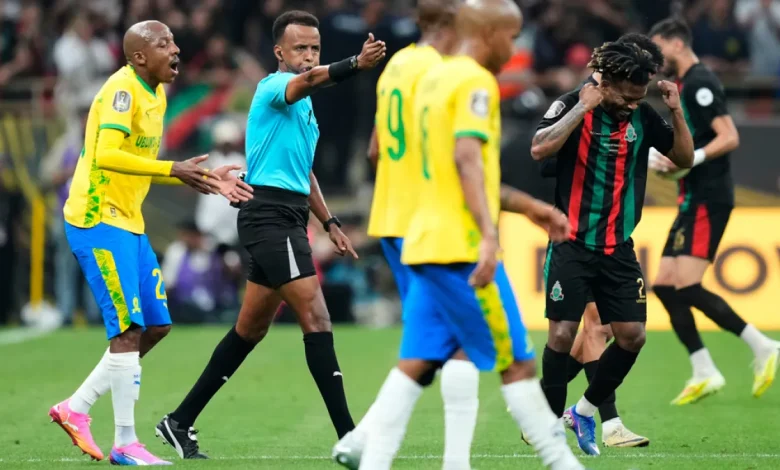
Somali referee Omar Abdulkadir Artan, who made history by becoming the first match official from his nation selected to participate in the prestigious FIFA World Cup, has been officially denied entry into the United States by customs officials. This unexpected roadblock at the border has shattered a landmark achievement for East African sports diplomacy and created a massive logistical and public relations headache for FIFA just as the global tournament is set to kick off across North America in June 2026. Arriving at Miami International Airport on Saturday, June 6, 2026, on a flight from Istanbul, Turkey, Artan was pulled aside by federal immigration officers for additional screening, which ultimately concluded in his immediate deportation and the revocation of his ability to participate in the tournament.
The Dramatic Entry Denial of Omar Abdulkadir Artan at Miami International Airport
The journey was supposed to be a historic celebration of Somali excellence in international sports. Omar Abdulkadir Artan, highly regarded as one of Africa’s premier soccer referees, boarded his flight from Istanbul with what he and his sporting representatives believed was a valid visa to work and reside temporarily in the United States. However, upon landing at Miami International Airport, the dream evaporated. U.S. Customs and Border Protection (CBP) officers flagged Artan during the initial processing phase, detaining him for what is officially described as “additional inspection.”
For several hours, Artan was subjected to rigorous questioning, a common procedure for foreign nationals arriving from regions deemed high-risk under current domestic policies. Despite holding official credentials from FIFA and traveling to participate in a globally co-hosted sporting event, federal authorities ultimately decided that Artan did not meet the stringent criteria required to cross the border. Denied entry on the spot, he was placed on a return flight back to Istanbul, where he has been staying and training for the World Cup over the past several months.
Somali Official Response from U.S. Customs and Border Protection
In a statement released on Monday, June 8, 2026, a spokesperson for U.S. Customs and Border Protection (CBP) confirmed that a Somali national intending to participate in the World Cup had been turned away, though the agency did not mention Artan explicitly by name. However, because Artan is the sole referee from Somalia selected for the tournament, the connection was immediately clear. CBP stated that the decision was based on national security protocols and standard admissibility checks.
“During processing, the traveler underwent additional inspection, a routine part of CBP’s inspection process when officers need to verify information or determine admissibility,” the agency stated in its official press release. “Following inspection, the traveler, a referee for the FIFA World Cup, was determined to be inadmissible due to vetting concerns and was denied entry.” CBP went on to emphasize that all individuals entering the country, irrespective of their status as world-class athletes, coaches, or match officials, are subject to the exact same screening procedures. “Admissibility determinations are made on a case-by-case basis using law enforcement, national security, and immigration information available at the time of inspection,” the agency concluded.
FIFA’s Disassociation and Position on National Immigration Laws
FIFA, soccer’s world governing body, quickly confirmed that Artan would play no role in the tournament, expressing regret but emphasizing its complete lack of leverage over the sovereign immigration laws of host countries. In a statement released late Monday, a FIFA spokesperson clarified that the organization has no power to overturn or bypass federal border decisions.
“FIFA can confirm that match official Omar Abdulkadir Artan will be unable to train and officiate at the FIFA World Cup 2026 after he was denied entry into the United States,” the spokesperson said. “FIFA is not involved in host country immigration processes, including visa adjudications, and has been informed by authorities that Mr. Artan’s status will not be changed at present. In line with previous FIFA events, a host government ultimately determines who receives a visa and who is admitted into their country.” The statement highlights a recurring friction in international sports: while sporting bodies attempt to project an inclusive, borderless community, they remain entirely subservient to the realpolitik of state sovereignty and security controls.
The Travel Ban Context and U.S. Immigration Crackdowns
The denial of Artan’s entry must be examined within the broader geopolitical landscape of the United States. Somalia is currently one of several nations subject to severe travel restrictions. Under the aggressive border policies of the Trump administration, travel restrictions have been heavily tightened to limit the entry of citizens from specific countries on national security grounds. Somalia, in particular, remains on the “fully suspended” list, making visa approvals and entry permissions an uphill battle for any Somali national, regardless of their international prestige.
These restrictions are part of a wider administrative push that has seen numerous unilateral executive actions regarding immigration and international borders. Even though major tournaments like the World Cup are typically granted exceptions and expedited processing for athletes, officials, and support staff, the final decision-making power remains entirely in the hands of the individual CBP officers working at the ports of entry. This means that a visa issued at an embassy abroad does not guarantee entry if “vetting concerns” are flagged during the physical border crossing.
Vetting Concerns Versus Sports Exemptions
While the federal government had previously indicated that special dispensations would be made to ensure the smooth operation of the 2026 World Cup, security agencies have maintained that no exemptions would compromise national security. In Artan’s case, CBP’s citation of “vetting concerns” remains highly ambiguous. The agency has declined to specify whether the concerns were tied to individual administrative anomalies, electronic discrepancies, or broader geopolitical profiling associated with Somali passports. For international sports federations, this highlights a growing vulnerability where years of physical, psychological, and professional training can be nullified in a matter of minutes at a customs desk.
Political and Sporting Backlash: Somalia Condemns the Decision
The decision to bar Artan has sparked deep outrage in Mogadishu and across the broader African sports community. Government officials and sports advocates have condemned the move, arguing that it penalizes an individual who has worked tirelessly to represent his country on the global stage under extreme adversity. Hassan Ali Khaire, the former Prime Minister of Somalia, expressed his profound disappointment, calling Artan an inspiration to millions of young Somalis and Africans.
“Football is at its best when it brings people together and celebrates merit, inclusion, and opportunity. Omar, Africa and the world stand with you,” Khaire remarked. Similarly, Ciise Aden Abshir, a senior adviser to Somalia’s Ministry of Youth and Sports and a former national team captain, told reporters that Artan was highly respected and possessed a valid visa. “Denying him entry to the United States and preventing him from officiating scheduled matches harms not only him personally but also undermines football’s commitment to fairness, merit, and the spirit of fair play,” Abshir said, calling on the global football community to support the referee.
Omar Abdulkadir Artan’s Rise to Global Soccer Prominence
Omar Abdulkadir Artan’s exclusion from the tournament is a major loss for the quality of officiating at the World Cup. At 34, Artan was entering the absolute prime of his refereeing career. He became a registered FIFA referee in 2018 and has steadily built a reputation for composure, tactical intelligence, and strict adherence to the rules. In 2025, his stellar performances earned him the prestigious title of African Referee of the Year, awarded by the Confederation of African Football (CAF).
Artan’s career portfolio includes officiating at the 2023 Africa Cup of Nations (AFCON) in Ivory Coast, where he handled high-stakes knockout fixtures with aplomb. His historic selection as one of the 52 main referees for the 2026 World Cup was met with national celebration in Somalia. In April 2026, Somali President Hassan Sheikh Mohamud publicly praised Artan, calling him a “symbol of inspiration for the new generation of Somalis.” His dismissal from the tournament pool not only deprives him of a career-defining milestone but also limits the representation of East African match officials on the global stage.
Comparative Summary of Key Events
To better understand the timeline and elements surrounding this international sporting incident, the following table summarizes the key milestones and facts:
| Metric / Event Aspect | Details and Specifics |
|---|---|
| Target Official | Omar Abdulkadir Artan (Age 34, Somalia) |
| Official Role | FIFA World Cup Match Referee (First ever selected from Somalia) |
| Major Accolades | CAF African Referee of the Year (2025), FIFA-listed since 2018 |
| Date of Incident | Saturday, June 6, 2026 |
| Port of Entry | Miami International Airport (MIA), Florida, USA |
| Travel Route | Departed Istanbul, Turkey; landed in Miami |
| Primary Agency | U.S. Customs and Border Protection (CBP) |
| Official Reason | Inadmissibility due to undisclosed “vetting concerns” |
| FIFA Status | Removed from tournament pool; unable to train or officiate |
Future Challenges for Co-hosting Global Sporting Tournaments in the United States
The incident involving Artan highlights a growing friction within the North American policy landscape. As the United States, Canada, and Mexico co-host the largest World Cup in history, the vastly different immigration, visa, and border policies of the three host nations are creating structural challenges. While Canada and Mexico have historically maintained more flexible entry policies for visiting international athletes and staff, the United States’ highly securitized border controls pose a continuous risk to the seamless execution of international events.
With the 2028 Summer Olympics in Los Angeles also on the horizon, sports federations are deeply concerned about whether domestic geopolitical priorities will continue to override international athletic participation. If top-tier athletes, coaches, and match officials from restricted countries are routinely barred at ports of entry despite possessing valid visas and tournament credentials, the viability of the United States as a default host for major global events may be questioned by international governing bodies in the future.
Artan’s Graceful Response and Resilient Career Outlook
Despite the devastating personal and professional blow, Artan has chosen to handle the situation with remarkable grace and professionalism. Rather than expressing bitterness, the 34-year-old referee issued a resilient statement through FIFA, turning his focus toward the future of his officiating career.
“Despite the circumstances, I am in a positive mood and I am focused on the next challenges in my refereeing career,” Artan said. “I would like to thank FIFA and CAF for all their support and I promise to keep my refereeing levels up as I concentrate on the future. I want to thank the football family for their messages and wish my colleagues all the best success during the World Cup, and I look forward to joining them again in future competitions.” Artan’s dignified response has won him widespread respect across the sporting world, cementing his legacy not just as a highly skilled referee, but as a class act in the face of geopolitical adversity.