5 Key Reasons Behind Graham’s Decisive Victory Over Mark Lynch in South Carolina Primary
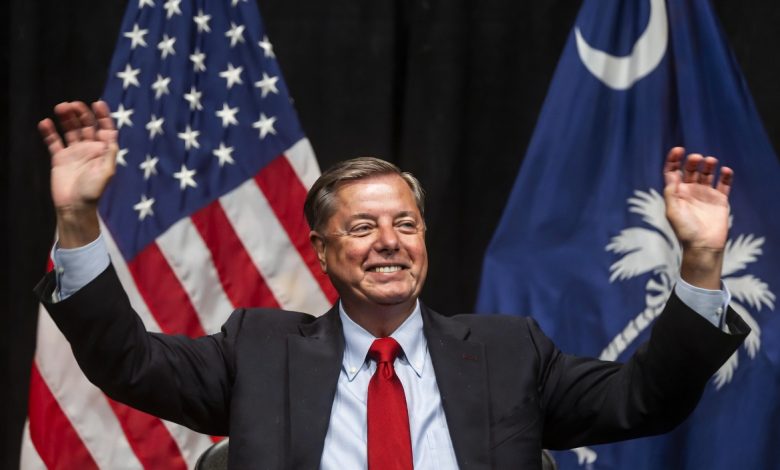
Graham secured a commanding victory on Tuesday night as he defeated multiple Republican primary challengers to advance toward a fifth term in the United States Senate. Representing the Palmetto State since 2003, the senior Senator faced one of the most aggressive and highly funded primary battles of his long career. The chief architect of this primary challenge was Greenville businessman Mark Lynch, a self-funding candidate who poured millions of his own dollars into an insurgent “America First” campaign. Despite Lynch’s deep pockets and the persistent skepticism of grassroots conservative activists, the incumbent utilized a combination of massive advertising spending, a critical endorsement from President Donald Trump, and aggressive counter-attacks on his opponent’s personal background to secure over 50 percent of the vote, successfully avoiding a potentially treacherous runoff election.
The Battle for the Palmetto State: Lindsey Graham’s Primary Campaign
The Republican primary in South Carolina has historically served as a critical testing ground for the soul of the GOP. This election cycle was no exception. As one of the most prominent figures in the national Republican landscape, the incumbent has long walked a tightrope between the establishment wing of the party and its increasingly populist base. This dynamic set the stage for a high-stakes confrontation on June 9, 2026, when voters headed to the polls to decide whether to send the veteran lawmaker back to Washington or opt for a radical shift in representation.
A Fifth-Term Ambition Under Heavy Fire
Seeking his fifth term in the U.S. Senate, the senior lawmaker has enjoyed immense power on Capitol Hill, serving as a leading voice on foreign policy, judicial nominations, and national security. However, his long tenure has also made him a frequent target for grassroots conservative activists within his own home state. Over the past several years, he has faced vocal disapproval at local party conventions and even booing at high-profile rallies. Many conservative purists have accused him of being too quick to compromise with Democrats on key legislative matters and too hawkish on foreign military interventions, arguing that his policy positions are out of step with the modern populist movement. Knowing that his path to reelection required consolidating his support among the party faithful, his campaign mobilized early, treating the threat of a primary challenge with the utmost seriousness.
Inside Mark Lynch’s Self-Funded Insurgency
The primary challenger, Mark Lynch, emerged as the most formidable threat to the incumbent’s reelection hopes. An Upstate businessman with no prior history in elected office, Lynch presented himself as a true political outsider and a pure “America First” populist. Lynch’s platform heavily focused on strict border security, aggressive fiscal conservatism, and a foreign policy centered on non-interventionism. By positioning himself as a candidate who would refuse to compromise with Washington insiders, Lynch tapped into the deep-seated frustration felt by a segment of the South Carolina Republican electorate. His campaign gained traction among far-right lawmakers and anti-abortion advocacy groups who viewed the incumbent as a career politician whose time had passed. Lynch’s political message was simple: South Carolina deserved a senator who would represent the state’s conservative values without hesitation or flip-flopping.
The Financial Landscape: $13 Million Versus a $5 Million Self-Lender
Campaign finance played a defining role in shaping the trajectory and tone of this primary race. In modern American politics, the ability to dominate the airwaves is often the difference between victory and defeat, and both campaigns spared no expense in their efforts to influence public opinion. The financial disparity between the incumbent and his challengers allowed for an unprecedented blitz of media advertisements, transforming South Carolina’s television markets into a continuous battleground of political messaging and character attacks.
AdImpact Data and the Airwave Dominance
To understand the sheer scale of the media campaign, one must look at the tracking data provided by industry analysts. According to comprehensive reports from AdImpact, the incumbent’s campaign spent an astronomical sum of more than $13 million on television, radio, and digital advertisements. This massive expenditure made it one of the most expensive primary defenses in the country, demonstrating the campaign’s determination to crush any potential rebellion before it could gain momentum. The ads ranged from positive spots highlighting the Senator’s conservative achievements to highly aggressive attack ads targeting Lynch’s character. On the other side of the ledger, Lynch sought to level the playing field by leveraging his personal wealth. The Greenville businessman lent his campaign $5 million of his own money, allowing him to bypass the traditional, time-consuming fundraising process and immediately establish a highly visible presence on television screens across the state. Despite this significant self-funding effort, Lynch was ultimately outspent by a margin of nearly three to one, as the incumbent’s campaign and allied political action committees flooded the airwaves.
| Candidate Name | Party Affiliation | Primary Vote Share (%) | Total Votes Received | Reported Campaign Ad Spend / Funding | Key Endorsements |
|---|---|---|---|---|---|
| Lindsey Graham | Republican | 57.4% | 220,215 | Over $13 Million (Ad Spend) | President Donald Trump, Sen. Tim Scott, Gov. Henry McMaster |
| Mark Lynch | Republican | 28.4% | 109,022 | $5.7 Million ($5M self-lent) | Grassroots Conservative Activists, Anti-Abortion Advocacy Groups |
| Thomas Dismukes | Republican | 5.1% | 19,434 | Minimal / Self-Funded | Local Grassroots Leaders |
| Annie Andrews | Democratic | Won Primary | N/A (Won uncontested) | Under $1 Million | Democratic Party Establishment, Healthcare Coalitions |
The Trump Factor: Endorsements, Tele-Rallies, and ‘Lunatic’ Labels
No force in contemporary Republican politics carries more weight than the endorsement of President Donald Trump. In South Carolina, where the former president remains immensely popular among the GOP electorate, his stamp of approval was the most coveted prize of the primary season. Both candidates attempted to align themselves with Trump’s “Make America Great Again” agenda, but only one could claim his official blessing.
From Golfing Partners to Crucial Endorsements
The relationship between the incumbent and Donald Trump has been one of the most fascinating partnerships in modern political history. Transitioning from bitter rivals during the 2016 presidential primary to close political confidants and regular golfing partners, the two have maintained a mutually beneficial alliance. Recognizing the threat posed by a well-funded primary challenger, the senior Senator secured Trump’s endorsement early in the cycle, long before the campaign had officially kicked into high gear. The incumbent actively touted this endorsement throughout the primary, running numerous advertisements that featured footage of him alongside Trump. One particularly prominent campaign ad utilized a narrator to remind voters that Trump had “delivered on his promise to close the border” with the Senator’s direct assistance, adding that the incumbent is “there for South Carolina, delivering for President Trump.” This messaging was designed to reassure skeptical voters that the Senator remained a loyal and effective ally to the leader of the populist movement.
Trump’s Attack on Lynch and the Thomas Massie Connection
While the incumbent worked to project an image of absolute loyalty, Donald Trump took active steps to dismantle Mark Lynch’s credibility among conservative voters. In the final weeks of the primary, Trump utilized his social media platform to launch scathing attacks against Lynch, labeling him a “lunatic” and a “disaster for the Republican Party”. The catalyst for Trump’s ire was Lynch’s outspoken support for Republican Representative Thomas Massie of Kentucky, a lawmaker who has frequently clashed with Trump and the GOP leadership on spending bills and foreign aid. The incumbent’s campaign quickly seized on Trump’s comments, turning them into highly effective television advertisements. By highlighting Trump’s condemnation of Lynch on the airwaves, the campaign successfully sowed doubt among voters who may have been inclined to support Lynch’s populist platform, making it clear that a vote for Lynch was a vote against Trump’s preferred candidate. To further secure the victory, Trump hosted a high-profile tele-rally on the eve of the primary, urging voters to turn out and avoid any unexpected surprises at the ballot box.
The Attack Ads: Personal History, Past Arrests, and Redemption Narratives
As the primary contest entered its final, most intense phase, the political arguments shifted from policy disagreements to deeply personal character attacks. The incumbent’s campaign, armed with an overwhelming financial advantage, launched a targeted assault designed to disqualify Lynch in the eyes of socially conservative South Carolina voters.
Graham’s Campaign Weapons: Spotlighting Cocaine and DUI Charges
The most devastating blow to Lynch’s candidacy came when the incumbent’s campaign aired a series of advertisements focusing on Lynch’s past legal troubles. These spots revealed that Lynch had previously been arrested on charges related to cocaine possession and driving under the influence (DUI). In a state with a large population of evangelical and socially conservative voters, these revelations were highly damaging. The campaign’s strategy was to paint Lynch as an unstable and hypocritical candidate who lacked the moral character and judgment necessary to represent South Carolina in the United States Senate. By shifting the focus of the race from the Senator’s legislative record to Lynch’s personal history, the incumbent’s team successfully put the challenger on the defensive, forcing him to spend valuable campaign time explaining his past rather than criticizing the Senator’s performance in Washington.
Lynch’s Defense: Sobriety, Recovery, and the ‘America First’ Campaign
Faced with the onslaught of negative advertisements, Lynch chose to address his past directly rather than attempting to deny the charges. He released statements and addressed voters at town halls, acknowledging his past mistakes and explaining that he had sought professional treatment for his struggles. Lynch proudly declared that he had “got clean and sober” and had turned his life around, framing his journey as a story of redemption, faith, and personal responsibility. He argued that his experiences with addiction and recovery gave him a deeper understanding of the struggles faced by everyday Americans, making him a more empathetic and authentic representative than a career politician. While this message resonated with some voters who admired his honesty, the sheer volume of negative advertising proved too difficult to overcome. The constant repetition of his past arrests on television screens across the state cemented a negative perception among a decisive portion of the primary electorate.
South Carolina Primary Results and the Road to November
When the ballots were finally counted on the night of June 9, 2026, the results vindicated the incumbent’s aggressive campaign strategy. Despite the intense rhetoric and the millions of dollars spent by his chief opponent, the senior Senator achieved a decisive victory, demonstrating that his coalition of establishment support and Trump-aligned populism remains a potent force in South Carolina politics.
Analyzing the June 9 Ballot Outcomes
The incumbent secured the Republican nomination by capturing 57.4 percent of the vote, representing a total of 220,215 ballots cast in his favor. This solid majority allowed him to comfortably clear the 50 percent threshold required to avoid a June 23 runoff election, which would have prolonged the primary battle and drained additional campaign resources. Mark Lynch finished a distant second, receiving 28.4 percent of the vote (109,022 votes). The remaining votes were split among several minor primary challengers, none of whom managed to break into double digits. The outcome demonstrated that while a significant minority of the state’s Republican base remains deeply dissatisfied with the Senator’s long tenure, the combination of Trump’s endorsement and the campaign’s overwhelming financial dominance was more than enough to secure a comfortable victory.
What Lies Ahead: Annie Andrews and the Democratic Challenge
With the primary victory secured, the Republican nominee now turns his attention to the general election on November 3, 2026. He will face Charleston pediatrician Annie Andrews, who secured the Democratic nomination. Andrews, a high-profile physician who previously ran a competitive campaign for Congress, has centered her platform on healthcare access, gun violence prevention, and criticizing the incumbent’s changing political positions over his long career. While Andrews represents a formidable candidate for the Democrats, winning a statewide race in South Carolina remains an incredibly steep hill to climb. No Democrat has won a United States Senate seat in the Palmetto State in decades, and Republicans routinely win statewide elections by double-digit margins. Backed by a unified party, a substantial campaign war chest, and the continued support of Donald Trump, the veteran Republican enters the general election campaign as the overwhelming favorite to secure a fifth term in Washington.