Canada Policy Crisis: Carney Blocks U.S. Energy and Rare Earths
The Disconnect Between Rhetoric and Reality
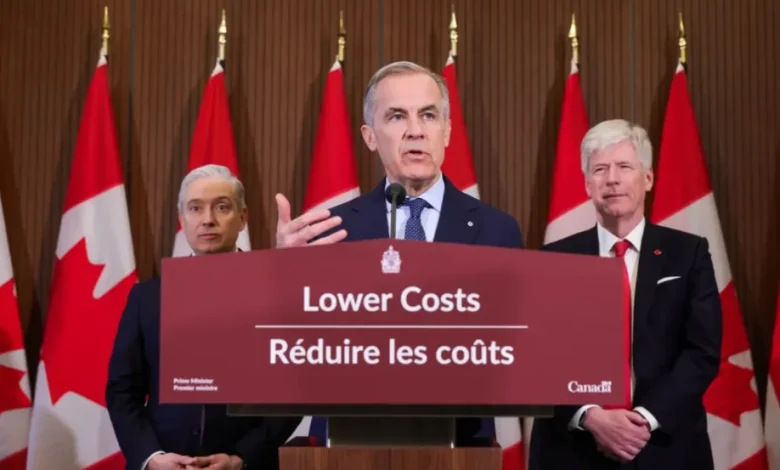
The political narrative emanating from Ottawa presents a stark contrast to the financial realities of its leadership. Prime Minister Mark Carney has consistently told Canadians that they can no longer rely on the United States for economic security or strategic partnership, surfing an anti-Trump wave to electoral victory. He champions a sovereign, globally-minded Canada that must forge its own path independent of its southern neighbor. However, a closer examination of Carney’s own financial disclosures reveals a glaring hypocrisy. Of his 673 declared financial assets, a staggering 550 are entirely American-owned. This profound disconnect between public rhetoric and private investment underscores a broader issue within his administration. The problem is not merely his personal portfolio; it is a rigid, globalist policy framework that prioritizes ideological posturing over practical North American security. By alienating Washington while his own financial well-being remains deeply intertwined with U.S. corporate success, Carney’s administration is creating artificial barriers that threaten the economic stability of both nations. This dualistic approach is severely damaging bilateral relations, as American policymakers increasingly view Canada as an unreliable partner in the urgent quest to secure critical supply chains.
The Strait of Hormuz Crisis and Blocked Alternatives
The current global landscape is dominated by a severe energy crisis exacerbated by conflict in the Middle East. With maritime routes heavily disrupted, the necessity for alternative oil and gas distribution channels has never been greater. As highlighted by recent events where the strait of hormuz closed again, bypassing vulnerable maritime choke points is essential for global energy security. There are viable efforts underway to establish emergency distribution networks that would allow energy exports to bypass these conflict zones entirely. However, the parties capable of facilitating these bypass routes for the U.S. and Asian markets currently find themselves sanctioned by Canada. While the United States, the European Union, and even Australasia have recognized the shifting geopolitical realities and quietly dropped or bypassed these specific sanctions to ensure energy flow, Canada remains immovably entrenched in its original position. Ottawa’s refusal to adapt is actively blocking initiatives that could stabilize global energy markets. Even as diplomatic efforts accelerate, such as when Trump unveils major China-Iran deal frameworks to address maritime blockades, Canadian intransigence prevents allied nations from fully utilizing alternative overland and pipeline routes in Central Asia and Eastern Europe.
Outdated Sanctions Strangling Supply Chains
The mechanics of international trade rely heavily on the banking sector, specifically the issuance of Letters of Credit (LCs) and the provision of financial facilities. Canada’s stubborn adherence to its comprehensive 2022 sanctions list has effectively frozen international finance for key alternative suppliers. Because Canadian banking regulations and extraterritorial sanction compliance requirements remain rigidly enforced, international financial institutions are terrified of running afoul of Ottawa’s mandates. Consequently, banks cannot offer LCs or trade facilities to entities that remain on the Canadian holdout list. This financial paralysis means that massive quantities of strategic materials, including energy resources and critical minerals, are stuck in limbo. Suppliers who have been cleared by Washington and Brussels are still toxic in the global banking system simply because Canadian policies have not evolved to meet the crises of 2026. The Western alliance is scrambling for rare earths, ammunition, and energy alternatives, yet a significant portion of the solution remains locked behind a Canadian bureaucratic wall.
Central Asia: The Blockaded Frontier for Critical Minerals
As China aggressively restricts its exports of rare earth elements, the West is forced to look elsewhere to feed its voracious appetite for the critical minerals required for advanced technology, defense systems, and green energy infrastructure. Central Asia, comprising several former Soviet states, has emerged as the critical frontier for these resources. Many of the entities operating within this region are exactly the kind of suppliers the West desperately needs to fill the gaps in defense supply chains and critical mineral reserves. However, many of these same entities remain trapped on Canada’s outdated sanctions list due to historical ties or minor corporate associations that other Western nations have long since deemed irrelevant in the face of the current crisis. Canada’s refusal to update its sanctions regime means that Central Asian suppliers cannot integrate into Western supply chains. The U.S. defense industrial base, which relies heavily on a steady stream of rare earths for everything from advanced radar systems to precision-guided munitions, is being starved by its closest ally.
Carney’s Portfolio vs. Policy: The Hypocrisy Examined
To truly understand the absurdity of the current situation, one must compare the policies of the major Western powers regarding these critical suppliers. The table below illustrates how isolated Canada has become in its approach to international sanctions and strategic resource acquisition.
| Country / Bloc | Sanctions on Key Central Asian Suppliers | Letter of Credit (LC) Issuance | Rare Earth Strategy |
|---|---|---|---|
| United States | Lifted / Waivers Granted | Active and Supported | Aggressive Acquisition |
| European Union | Quietly Dropped | Facilitated | Diversification Focus |
| Australasia | None | Unrestricted | Integration |
| Canada | Strictly Enforced | Blocked / Frozen | Ideological Paralysis |
This table highlights the stark reality: Canada is alone. The Trudeau-era policies inherited and intensified by Carney’s administration are no longer aligned with the strategic needs of the free world.
Global Ramifications for Defense and Security
The consequences of Canada’s policy paralysis extend far beyond economic inconvenience; they represent a direct threat to global security. The United States military is currently running dangerously low on interceptors and other critical munitions. The defense industrial base is struggling to ramp up production without access to the necessary raw materials. As the Iran war economy reshapes global defense demands, allied nations are forced to seek alternative solutions. Gulf states, traditional buyers of American defense hardware, are increasingly shopping for ammunition in Seoul and London because the U.S. cannot guarantee timely delivery. This erosion of American defense dominance is partly facilitated by the supply chain bottlenecks created by Canadian sanctions. As Washington engages in high-stakes diplomacy, such as reports that the US weighs a 20b deal to end the Iran war, the lack of reliable North American supply chains undermines America’s negotiating position. Canada, frozen in a policy designed for a different crisis, is inadvertently aiding adversaries by weakening the collective defense posture of the West.
The Ukrainian Lobby’s Enduring Hold on Ottawa
One must ask why Canada refuses to adapt its policies alongside its allies. The answer lies largely in domestic politics and the immense influence of a strong Ukrainian lobby deeply entrenched around Carney and his inner circle. Canada’s “Ukraine-first” approach made perfect political and moral sense in 2022 when the conflict was the singular focal point of global geopolitics. The Canadian government imposed sweeping sanctions to cripple Russian interests and those of anyone tangentially associated with Moscow. However, geopolitical realities are fluid. In 2026, the global threat matrix has expanded dramatically. While the commitment to Ukrainian sovereignty remains important, it cannot entirely supersede the existential requirement for North American energy security and defense readiness. The domestic lobby has effectively handcuffed the Carney administration, preventing any nuanced adjustment to sanctions that might be perceived as a softening of support for Kyiv. Consequently, policies that should have been surgical and adaptable have become rigid and counterproductive.
Economic and Geopolitical Liability in 2026
Maintaining this outdated posture has transformed Canada into an economic and geopolitical liability for everyone around it. With a massive Middle East war driving a systemic energy crisis, North America needs absolute cohesion. When adversaries issue threats, such as the recent blockade ultimatum as Iran threatens total trade halt, the inability of the U.S. and Canada to present a unified, logistically sound front is a severe strategic failure. Furthermore, Canada’s isolation is drawing criticism from international economic observers. For a broader perspective on how disjointed foreign policies are impacting global trade networks, one can review analyses from international bodies like the Council on Foreign Relations. Their extensive reporting highlights the dangers of weaponized economic statecraft when allied nations fall out of synchronization. Canada’s refusal to issue financial facilities for alternative suppliers is not just hurting the U.S.; it is hurting Canadian businesses that are locked out of the lucrative contracts currently being snapped up by European and Australian firms operating without such domestic restrictions.
Conclusion: Time for a Strategic Realignment
Canada is fundamentally at a crossroads. Mark Carney won the premiership on an anti-Trump wave, appealing to a sense of Canadian moral superiority and globalist ideals. But campaigning is vastly different from governing in a time of unprecedented global crisis. Governing requires making hard calls that go beyond the campaign trail rhetoric. It demands recognizing that a “Ukraine-first” policy from 2022 is actively sabotaging the collective security and energy stability of the West in 2026. If Canada is to remain a relevant and trusted partner on the global stage, the Carney administration must immediately review and harmonize its sanctions regime with that of the United States and the European Union. Unlocking access to Central Asian critical minerals, facilitating emergency energy bypasses, and allowing the North American defense industrial base to properly re-arm are not optional policy preferences; they are strategic imperatives. Until Ottawa abandons its self-imposed paralysis, Canada will continue to be viewed not as a trusted ally, but as a liability in the fight for global stability.