Christian Eriksen Collapses 2026: Conscious After On-Field Scare
The Shocking Incident in Odense
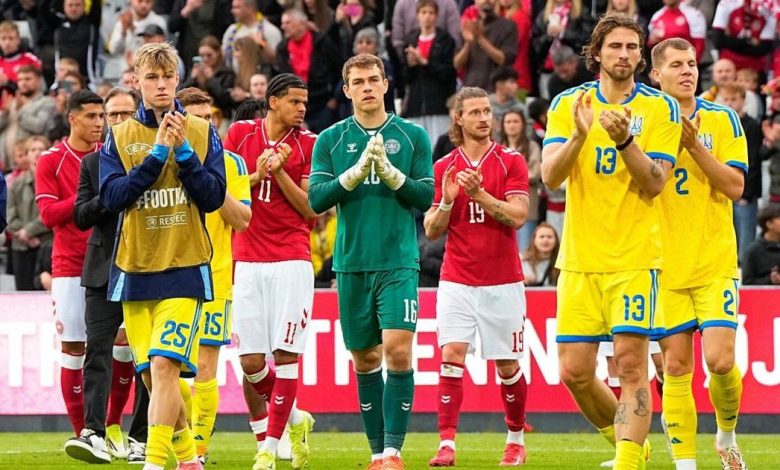
The international friendly match on June 7, 2026, was meant to be a routine post-season fixture at Nature Energy Park. Denmark was leading 2-1 against Ukraine in the 65th minute when the atmosphere in the stadium shifted instantly from cheers to absolute silence. Without any player near him, Christian Eriksen suddenly slowed down, reached his hands to his chest, and collapsed onto the turf.
Cameras quickly panned away as the gravity of the situation became clear to those on and off the pitch. Ukraine’s coaching staff reacted immediately, frantically waving medical personnel to rush onto the field. Players from both sides rushed to his side, forming a protective, respectful barrier around their beloved playmaker. This human shield, a poignant reminder of the Denmark national team’s actions during the 2021 European Championship, shielded Eriksen from the prying eyes of television cameras and spectators alike. Just as media agencies must navigate extreme regulatory standards when broadcasting sensitive issues, as seen in the fcc orders early review of abc licenses amid controversy, sports broadcasters on Sunday had to make rapid ethical calls to balance live journalism with human dignity.
Immediate Medical Intervention and Pacemaker Response
Within seconds of the collapse, the medical staff began administering primary diagnostics. However, the true lifesaver was already implanted within Eriksen’s chest. Following his 2021 cardiac arrest, Eriksen had been fitted with an Implantable Cardioverter-Defibrillator (ICD).
Denmark team physician Morten Boesen, who has accompanied Eriksen throughout his medical journey over the past half-decade, released an official statement shortly after the player was stabilized. “Christian is doing well and walked off the pitch by himself,” Boesen stated. “As I see it, the pacemaker responded as it should. He was briefly unconscious, but regained consciousness very quickly, and we were quickly in contact with him.”
Boesen confirmed that Eriksen was transported directly to Odense University Hospital, where he would remain overnight to undergo exhaustive cardiovascular examinations. The objective is to determine what triggered this specific episode and why the pacemaker was forced to intervene.
Echoes of Euro 2020: The Copenhagen Cardiac Arrest
For football fans, yesterday’s incident was a terrifying callback to June 12, 2021. During Denmark’s opening European Championship group stage match against Finland at Parken Stadium in Copenhagen, Eriksen suffered a sudden cardiac arrest. He was clinically dead on the pitch for nearly five minutes before paramedic teams successfully resuscitated him using a manual defibrillator.
The collective trauma of that day profoundly altered how cardiac issues are perceived and managed in professional sports. Eriksen’s survival and subsequent return to professional football at the highest level—playing for clubs like Brentford, Manchester United, and VfL Wolfsburg—was widely hailed as a medical miracle. This latest collapse in Odense, however, serves as a sobering reminder of the underlying vulnerabilities that high-performance athletes with heart conditions continue to carry.
Comparing the Two Cardiac Scares
To understand how significantly medical technology and emergency response protocols have improved over the last five years, it is useful to analyze the differences between Eriksen’s two collapses.
| Metric / Feature | Euro 2020 Incident (Copenhagen) | 2026 Friendly Incident (Odense) |
|---|---|---|
| Date | June 12, 2021 | June 7, 2026 |
| Opponent & Venue | Finland, Parken Stadium (Copenhagen) | Ukraine, Nature Energy Park (Odense) |
| Minute of Collapse | 43rd minute | 65th minute |
| Device Present | None (No ICD installed prior) | Yes (ICD fitted post-2021) |
| Immediate Response | CPR and manual defibrillator shock on field | Pacemaker/ICD automated response |
| Unconsciousness Duration | Approximately 5 minutes (“clinically dead”) | Briefly unconscious, regained quickly |
| Match Outcome | Resumed and finished later (Finland won 1-0) | Abandoned in 79th minute (Denmark led 2-1) |
The Role of the ICD (Implantable Cardioverter Defibrillator)
An Implantable Cardioverter-Defibrillator (ICD) is an incredibly sophisticated device placed under the skin to monitor a patient’s heart rate. Connected to the heart with tiny wires, it continuously tracks cardiac rhythms. If the device detects a dangerously abnormal rhythm, such as ventricular fibrillation or ventricular tachycardia, it instantly delivers an electrical shock to restore normal heart function.
In Eriksen’s case, his ICD functioned flawlessly on Sunday. When his heart rate experienced a sudden, life-threatening irregularity, the device responded immediately, preventing a prolonged period of oxygen deprivation to the brain and other vital organs. This rapid-fire correction is why Eriksen was able to regain consciousness almost immediately and even walk to the waiting ambulance on his own feet.
Determining clinical accountability and ensuring emergency preparedness is a standard highly scrutinized under law, a parallel we see in modern medical trials such as the shaknovsky manslaughter trial doctors account of patient death. In Eriksen’s case, the strict adherence to preventative sports cardiology protocols saved his life for a second time.
Match Abandonment and Player Reactions
Unlike the match in 2021, which controversially resumed after a lengthy delay, Sunday’s international friendly was called off permanently in the 79th minute. The decision was made after the match referee consulted with both coaching staffs and team captains.
The stadium, initially hushed in collective shock, erupted in emotional chants of “Eriksen, Eriksen” as the player was transported off the pitch. After the match was officially abandoned, players and coaches from both Denmark and Ukraine gathered in the center circle. The scene was one of deep solidarity, with athletes embracing and offering mutual support.
Denmark captain Pierre-Emile Højbjerg spoke to Danish broadcaster TV2 after the game. “I turned around and saw Christian on his way to the floor, and we know a little about how he reacts, what that means,” Højbjerg said. “Everyone reacted super-fast and with respect. I can only compliment how much courage those who took care of Christian on the field had. The most important thing is that Christian is doing well.”
Eriksen’s Remarkable Career and Resilience
Eriksen’s journey highlights the profound triumph of the human spirit over physical adversity, a theme deeply mirrored in the life of zanardi motorsports legend and paralympic icon dies at 59 after life of resilience. Following his collapse in 2021, many medical experts and commentators assumed Eriksen’s playing days were over. Indeed, Italian Serie A regulations prevented him from playing for Inter Milan due to strict rules regarding ICDs.
Undeterred, Eriksen terminated his contract by mutual consent and moved to the English Premier League, joining Brentford on a short-term deal in early 2022. His exceptional performances quickly earned him a high-profile move to Manchester United, where he proved he could still compete at the absolute pinnacle of European club football. Later, he joined VfL Wolfsburg in Germany, demonstrating an unwavering commitment to his passion. For Denmark, he remained an irreplaceable leader, making multiple appearances and guiding the national team through crucial qualifying tournaments.
Medical Perspective: Athletes and Sudden Cardiac Events
The repeat collapse of an elite athlete who has already been diagnosed with a severe cardiac condition raises massive questions regarding sports medicine. How safe is it for players with known cardiac anomalies to continue competing in high-intensity environments?
While clinical oversight and protocol management are heavily discussed in broader public health arenas, such as the indictment exposes fauci adviser in covid records scandal, sports cardiology requires instantaneous, split-second decisions that bypass traditional administrative delays. Cardiologists point out that while an ICD is highly effective at preventing sudden cardiac death, it does not cure the underlying condition that causes the arrhythmia. High-intensity physical exertion increases adrenaline, alters electrolyte levels, and places profound stress on the heart muscle—all of which can act as triggers for an episode.
The coming days will see intense debate among sports medical boards regarding the criteria for allowing athletes with ICDs to participate in professional competitive sports.
What’s Next for the Danish Playmaker
Currently, Eriksen remains stable at Odense University Hospital, surrounded by his family and close medical advisers. As reported by the Associated Press, Eriksen’s condition is currently monitored closely, and further diagnostic imaging, including echocardiograms and electrophysiological studies, will be conducted.
Whether Christian Eriksen will choose to lace up his boots again remains an open question. At 34 years old, with an illustrious career that has spanned Ajax, Tottenham Hotspur, Inter Milan, Brentford, Manchester United, and VfL Wolfsburg, he has nothing left to prove to the world of football. His health, family, and long-term well-being will undoubtedly take absolute priority as he and his medical team navigate the next steps of his recovery.