AI :Google Unveils Space AI Data Centers 2026

Table of Contents
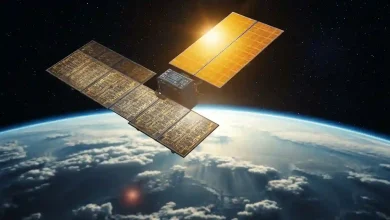
Project Suncatcher represents Google’s audacious initiative to establish high-performance artificial intelligence computing nodes in low Earth orbit, directly addressing the mounting physical and electrical limitations confronting terrestrial cloud architectures. As the demand for generative AI training and inference escalates at an exponential velocity, hyper-scale technology corporations are confronting acute electrical grid constraints, water cooling shortages, and real estate bottlenecks across major metropolitan centers worldwide. In response, Google confirmed the deployment of a prototype satellite scheduled for launch next week, initiating the primary orbital validation flight of Project Suncatcher. This strategic mission seeks to evaluate whether deploying micro-clusters of tensor processing units in orbit can unlock unprecedented access to unfiltered, continuous solar radiation, sidestepping the severe infrastructure logjams currently constraining ground-based installations.
Project Suncatcher: The New Frontier of Space-Based AI Infrastructure
Project Suncatcher is engineered to test the fundamental thermodynamics, electrical harvesting efficiencies, and network throughput of running specialized accelerators within a low Earth orbit profile. For decades, space computing remained limited to fault-tolerant, low-clock-rate processors engineered strictly for telemetry, stabilization, and basic payload operations. The exponential surge in neural network parameter counts has fundamentally inverted compute economics. Under Project Suncatcher, Google engineers are investigating how modern silicon can sustain high-frequency floating-point computations in a microgravity vacuum.
By placing dedicated AI acceleration hardware outside the Earth’s atmospheric filtration blanket, photovoltaic capture efficiency rises substantially. Terrestrial arrays suffer from atmospheric scattering, cloud coverage, diurnal day-night shifts, and seasonal angle variations. In a carefully calibrated Sun-synchronous orbit, an operational satellite platform can achieve near-continuous solar exposure, providing uninterrupted clean energy to drive advanced machine learning workflows without straining legacy power systems on the surface.
Engineering Challenges: Radiation Hardening, Thermal Management, and Vacuum Operations
Operating computational clusters within outer space introduces brutal physical hazards that terrestrial data centers never encounter. Terrestrial facilities rely heavily on ambient air exchange, liquid cooling loops, and massive evaporative cooling towers. In the vacuum of low Earth orbit, conduction and convection cease to function as viable thermal transfer mechanisms. The only method available to reject heat generated by hyper-dense accelerator dies is radiant dissipation. Project Suncatcher integrates novel thermal architectures featuring oscillating heat pipes connected to deployable graphene-infused radiator panels designed to cast thermal energy directly into the cold background of deep space.
Equally critical is radiation protection. Outside the shielding protection of Earth’s thicker atmosphere, galactic cosmic rays and solar energetic particles induce single-event upsets, bit flips, and permanent latch-up damage within dense silicon dies. Rather than relying entirely on heavy, high-mass physical lead or tantalum shields—which would increase launch costs to unsustainable levels—Google is testing a hybrid software-hardware mitigation strategy. This approach combines triple-modular redundancy with intelligent checkpointing, allowing distributed clusters to recover instantaneously from localized radiation strikes without corrupting massive machine learning model matrices.
This aggressive push toward high-density computing mirrors trends across modern aerospace, where rapid hardware qualification and payload miniaturization are revolutionizing orbital mechanics. Similar evolutionary paths are observed across commercial satellite development, such as modern space exploration systems designed to handle complex automated rendezvous protocols and rigorous environmental stresses.
The Terrestrial Energy Crisis: Why Hyperscalers Look Beyond the Power Grid
The imperative driving Project Suncatcher is rooted in terrestrial economics. Modern machine learning training runs demand hundreds of megawatts per facility, triggering contentious public debates over grid stability, water consumption for cooling towers, and carbon emissions. In multiple jurisdictions across North America and Europe, local utility providers have informed hyperscale operators that interconnect requests for new gigawatt-scale data campuses may require wait times extending between five and seven years.
These severe bottlenecks have prompted cloud operators to evaluate radical computational architectures. Just as enterprises navigate financial shifts during broad macroeconomic cycles—such as when unexpected inflation expectations strain long-term capital deployment—technology giants are forced to hedge against foundational resource scarcity by exploring alternative energy domains.
Orbital Architecture: Space-Based Compute vs. Terrestrial Facilities
To fully grasp the viability of Project Suncatcher, one must contrast the operational and engineering metrics governing space-borne computing facilities against traditional ground-based mega-campuses.
| Operational Metric | Terrestrial AI Data Centers | Orbital AI Data Centers (Project Suncatcher) |
|---|---|---|
| Primary Power Source | Terrestrial electrical grids (fossil fuels, nuclear, renewables) | Unfiltered, continuous solar radiation in Sun-synchronous orbit |
| Thermal Dissipation | Evaporative water cooling, chillers, forced convection | Radiative cooling panels directed into deep-space vacuum |
| Interconnect / Backhaul | Terrestrial fiber-optic cables (terabits/sec) | Free-space optical laser inter-satellite links and downlinks |
| Silicon Protection | Standard atmospheric protection; minimal radiation shielding | Triple-modular redundancy, software checkpointing, radiation hardening |
| Deployment Scalability | Constrained by local municipal zoning, water, and power grids | Constrained by launch mass costs, orbital launch cadence, and debris |
| Lifecycle Maintenance | Routine manual technician servicing, modular hardware replacement | Fully autonomous operations; unserviceable once deployed |
Optical Inter-Satellite Links and Ground Station Telemetry
Compute capability in space is entirely dependent on high-speed data transmission pipelines back to terrestrial users. The prototype vehicle slated for launch under Project Suncatcher utilizes free-space optical communications systems capable of transmitting data via targeted lasers. Laser inter-satellite links operate with minimal photon dispersion in a vacuum, allowing orbital nodes to mesh together into an agile constellation without intermediate ground routing hops.
This architecture aligns with ongoing developments in global satellite mesh configurations, akin to how international satellite operators leverage low-latency cross-links to optimize high-volume data streams. Analogous technologies are transforming sovereign telecommunication strategies, as seen in recent structural changes within commercial satellite constellations across Europe and North America.
Data generated or routed via Project Suncatcher will feed into planetary ground stations strategically placed in dry, cloudless geographical locations to prevent atmospheric laser absorption. For latency-tolerant applications—such as batch machine learning model pre-training, fine-tuning, and massive video analytics—orbital routing latency represents a negligible compromise compared to the enormous benefit of abundant, unmetered solar energy.
The Commercial Race: SpaceX, Starcloud, and the Orbital Cloud Economy
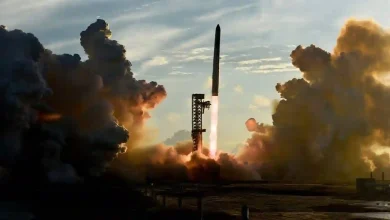
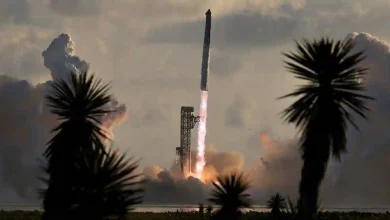
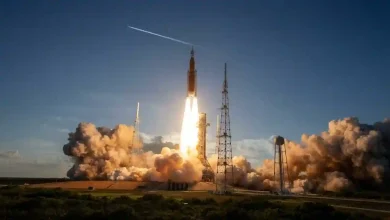
Google is far from alone in seeking to commercialize low Earth orbit for computational infrastructure. Commercial rivals including Starcloud and SpaceX have similarly unveiled plans to loft dedicated compute fabrics into orbit. The exponential reduction in payload costs per kilogram—unlocked primarily by reusable rocketry programs—has drastically lowered the capital barriers required to place heavy power supplies, radiators, and silicon into stable orbits.
The competitive urgency resembles previous historical shifts where legacy digital platforms scrambled to adapt to breakthrough distribution paradigms. For example, during the explosive emergence of early autonomous agent software, enterprises were compelled to revise their underlying infrastructure roadmaps, a dynamic echoed when enterprise AI systems swept across Pacific business sectors. In the orbital arena, whoever establishes an economically viable compute cluster first will define the communication protocols, orbital slots, and spectral allocations for the next generation of computing.
Furthermore, consumer-facing technology organizations are already discovering that specialized algorithmic execution requires massive backend support. As smart wearables, spatial devices, and intelligent consumer accessories—such as next-generation smart glasses and vision hardware—proliferate among users globally, the sheer volume of continuous contextual inferencing will require off-grid computational layers capable of handling immense distributed workloads.
Geopolitical, Regulatory, and Orbital Congestion Dynamics
While Project Suncatcher opens extraordinary technical frontiers, it simultaneously introduces acute geopolitical and regulatory complexities. Deploying high-throughput computational platforms capable of processing massive intelligence streams in orbit falls squarely under international aerospace and telecommunications oversight. The International Telecommunication Union must allocate frequency bands for downlinks, while national regulatory bodies evaluate the space situational awareness profiles of these massive compute arrays.
Orbital debris represents an existential threat to space-based data infrastructure. Satellites equipped with expansive solar collectors and massive radiator panels present substantial cross-sectional areas, significantly increasing collision probabilities with decommissioned hardware and micrometeoroids. Ensuring that Project Suncatcher hardware incorporates autonomous collision avoidance algorithms and verified end-of-life deorbit thrusters is mandatory to prevent compounding orbital crowding. Such defense and security frameworks are increasingly intertwined with global national security priorities, matching the vigilance highlighted in contemporary analysis of defense space integration.
Beyond physical collisions, the cross-border distribution of compute assets in orbit creates diplomatic ambiguity regarding data sovereignty. Under current maritime and international space treaties, orbital payloads are subject to the jurisdiction of the launching state. However, when global enterprises process transnational datasets through orbital nodes that transit sovereign airspace thousands of times per day, international consensus regarding regulatory compliance, digital espionage protections, and privacy enforcement remains largely unresolved.
The Multi-Decade Roadmap for Autonomous Space-Borne Intelligence
Looking past the initial orbital test flight next week, Google’s broader roadmap envisions an evolutionary trajectory from isolated prototype modules to fully distributed, modular space clouds. The maturation of in-orbit servicing, autonomous robotic assembly, and modular component docking will enable future iterations of Project Suncatcher to expand dynamically in orbit without requiring complete satellite replacements for every hardware upgrade.
As robotic manufacturing matures, these orbital nodes could potentially interface with in-space propulsion tugs to adjust altitude, avoid solar storms, or even reposition to optimize data transfer corridors relative to shifting global internet demand. The convergence of reusable heavy-lift launch vehicles and highly miniaturized, low-power neural processing accelerators suggests that the long-term cost curve of orbital computing may eventually intersect with that of land-based facilities constrained by escalating commercial power tariffs.
Just as financial ecosystems react to shifting capital realities—a phenomenon observed during complex shifts in debt markets and real estate yields—the cloud computing industry is preparing for a future where energy availability dictates computational supremacy. Project Suncatcher serves as the opening chapter of this paradigm shift, signaling to the global technology sector that the ultimate answer to Earth’s energy bottleneck may ultimately reside among the stars.