Smart Glasses Unveiled by Meta Address Crucial AI Privacy Issues 2026
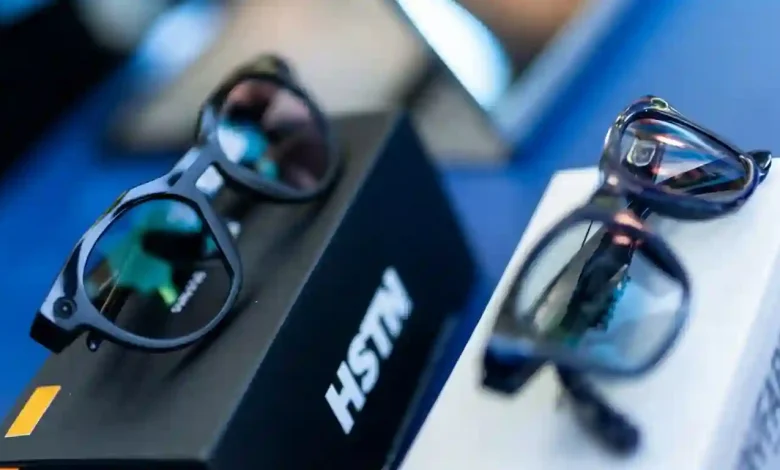
Table of Contents
Smart glasses represent the vanguard of consumer spatial computing, and Meta Platforms is preparing a significant strategic evolution at its annual Connect conference. As the social media and technology conglomerate seeks to solidify its commanding lead in ambient artificial intelligence, it is preparing to introduce a reimagined hardware lineup that includes a specialized model built entirely without integrated camera sensors. This pivot directly confronts escalating international backlash concerning unnotified recording, facial recognition anxieties, and institutional surveillance in spaces where optical capture is strictly prohibited.
Smart Glasses Evolution: Meta’s Connect Strategy
The upcoming showcase marks a turning point in how ambient computing hardware interacts with daily life. Consumer electronics manufacturers have historically operated under the assumption that greater sensor integration inherently delivers superior contextual intelligence. However, Meta’s revised product architecture acknowledges that pervasive optical hardware creates social friction and user apprehension. By designing a camera-free variant focused primarily on contextual audio, voice queries, and high-fidelity directional speakers, the company aims to broaden consumer acceptance while deploying advanced models such as Meta’s new AI assistant across everyday settings.
This dual-track strategy ensures that users requiring full multimodal capture—such as hands-free video recording, live image analysis, and immediate object translation—retain access to standard flagship frames, while privacy-conscious demographics gain access to a dedicated audio-only alternative. The streamlined design significantly reduces production overhead, minimizes battery drain from optical image processing engines, and removes the physical presence of camera lenses that frequently make bystanders uncomfortable in semi-private environments.
Addressing the Camera Dilemma and Public Surveillance
Mounting privacy concerns surrounding ambient computer vision have placed wearable hardware manufacturers under unprecedented regulatory and societal scrutiny. The subtle light indicators implemented on previous generations of camera-enabled eyewear frequently faced criticism for being easily obscured, bypassed, or missed in brightly lit settings. In medical clinics, corporate research facilities, locker rooms, educational institutions, and secure government offices, the presence of forward-facing video capture represents an unacceptable operational risk.
By removing visual sensors from designated editions, Meta eliminates the possibility of surreptitious video recording at the hardware level. This architectural choice bypasses complex software permission layers and physically reassures nearby individuals that their facial expressions, movements, and environments are not being parsed by machine vision pipelines. Moreover, it coincides with broader enterprise discussions regarding AI safety notification standards across consumer electronics, establishing a clean operational separation between visual capture and ambient voice assistance.
Market Dominance and the EssilorLuxottica Partnership
Meta’s current supremacy in the nascent market for AI-powered wearables did not happen by chance; it was catalyzed by its extensive commercial alliance with eyewear conglomerate EssilorLuxottica. By housing microelectronics inside iconic Ray-Ban frames, the partnership circumvented the awkward, bulky aesthetic pitfalls that doomed earlier heads-up displays. Industry estimates indicate that sales of the co-developed Ray-Ban smart frames exceeded 7 million units in the preceding annual cycle, giving the Menlo Park company an overwhelming share of active daily users.
This substantial commercial success demonstrated that traditional eyewear wearers prioritize style, optical comfort, and weight distribution over radical, screen-heavy form factors. The collaboration has forced traditional electronics brands to reconsider their industrial design paradigms. Furthermore, the supply chain resilience forged through EssilorLuxottica gives the enterprise an immense distribution footprint across global retail optometry networks, a crucial defensive moat as broader semiconductor and hardware logistics navigate volatile conditions within the AI supply chain US China axis.
Hardware Comparison: The AI Eyewear Landscape
The consumer wearables sector has fragmented into distinct philosophies: pure audio intelligence, camera-equipped contextual platforms, and complex augmented reality systems utilizing micro-displays. The table below illustrates the structural and technical differences between these emerging categories:
| Device Category | Primary Sensor Array | Core AI Functionality | Weight Profile | Primary Privacy Vector |
|---|---|---|---|---|
| Camera-Free Smart Frames | Beamforming microphones, IMUs, capacitive touch | Low-latency conversational queries, real-time voice translation, audio navigation | 38g – 44g | Hardware-level camera omission; passive microphone indicators |
| Flagship Vision Frames | Ultra-wide video sensor, multi-mic array, light ring | Visual search, livestreaming, contextual scene summarization, photo capture | 48g – 52g | Active optical recording LED, local on-device encryption |
| Full AR Smart Eyewear | Depth sensors, dual cameras, waveguide micro-displays | Spatial mapping, 3D holographic overlays, contextual heads-up navigation | 70g – 85g+ | Continuous environmental mapping, high sensor density disclosure |
| Chinese Market Competitors | Single camera, integrated HUD micro-OLED, mic array | Visual assistance, instant transcription, optical translation overlays | 50g – 60g | Varying regional data protection standards and optical shutter indicators |
The Rise of Audio-First Generative Interfaces
While visual inputs provide rich contextual data, natural language processing and advanced voice synthesis have matured to the point where speech-driven interactions provide immense utility on their own. High-performance conversational agents handle task management, real-time linguistic translation, scheduled summaries, and hands-free messaging without requiring optical feedback. Stripping the camera hardware allows engineering teams to optimize internal volume, reallocating weight toward acoustic resonance chambers and battery density.
The shift toward audio-first ambient computing reduces cognitive overload for users. Instead of navigating visual interfaces or checking miniature displays, users receive discrete whispered prompts through open-ear directional speakers. As companies navigate broader market challenges where specialized AI companies fail to find sticky consumer retention models, robust audio interactions offer immediate, tangible utility that embeds seamlessly into routine communication habits without causing social ostracization.
Navigating Competition from RayNeo, Xiaomi, and Global Rivals
Despite Meta’s early North American and European dominance, aggressive competition is rapidly coalescing in Asian markets. Hardware innovators such as RayNeo (incubated by TCL) and consumer electronics giant Xiaomi have introduced sophisticated optical frames targeting productivity-minded consumers. These manufacturers have prioritized integrated micro-displays that project immediate message notifications, turn-by-turn walking maps, and teleprompter scripts directly into the user’s peripheral field of vision.
Moreover, these Eastern rivals are deeply integrated into manufacturing hubs that produce cutting-edge micro-OLED components, enabling rapid iteration cycles. The emergence of nimble regional players echoes the broader international tech arena, where firms frequently pivot toward sophisticated mechatronics and embodied agents, reminiscent of breakthroughs across Chinese humanoid robotics. Meta must balance its Western consumer appeal with competitive pricing strategies if it hopes to insulate its international distribution channels from aggressive hardware alternatives.
Enterprise Adoption and Workplace Compliance
One of the primary beneficiaries of camera-free intelligent eyewear is the commercial sector. Corporate campuses, secure software development facilities, financial trading floors, and healthcare networks maintain strict confidentiality policies that bar optical recording apparatuses. Employees wearing standard camera-equipped frames are frequently forced to remove them at security checkpoints, severely limiting the daily utility of wearable smart devices.
By delivering enterprise-compliant frames stripped of image-capturing hardware, Meta unlocks access to corporate contracts and professional workers who require instant information retrieval, hands-free dictation, and real-time audio interpretation during executive meetings. Enterprise IT administrators can seamlessly deploy voice-driven AI workflows without conducting exhaustive optical compliance audits or risking regulatory penalties associated with involuntary corporate data collection.
Regulatory Scrutiny and Future Wearable Trajectories
Government regulators across the European Union and North America continue to monitor wearable personal technologies closely. Data protection authorities have repeatedly scrutinized how companies manage passive data retention, audio buffer caching, and biometric voiceprints. The implementation of robust, on-device compute frameworks ensures that basic operational queries remain localized, limiting the volume of telemetry sent across external cloud networks.
In the United States, legislative bodies are examining how continuous consumer data ingestion affects broader societal wellness and privacy protections. As legal frameworks evolve in response to technological deployment—similar to legislative actions analyzed regarding AI safety legislation across state houses—hardware developers must prove that consumer wearables enhance personal autonomy rather than erode communal privacy. By providing diversified hardware configurations tailored to varying comfort levels, tech titans hope to preempt punitive statutory bans.
Ultimately, Meta’s Connect announcements represent an essential phase of market maturation. The initial novelty of mounting video cameras onto prescription frames has yielded to the pragmatic realities of global enterprise compliance, bystander privacy ethics, and social etiquette. By giving users the choice to participate in ambient AI ecosystems through purely acoustic channels, hardware developers are demonstrating the flexibility required to transform niche consumer novelties into permanent components of the modern computing landscape.