TerraPower Targets UK Launch: Gates-Backed Natrium Reactor Set for 2034
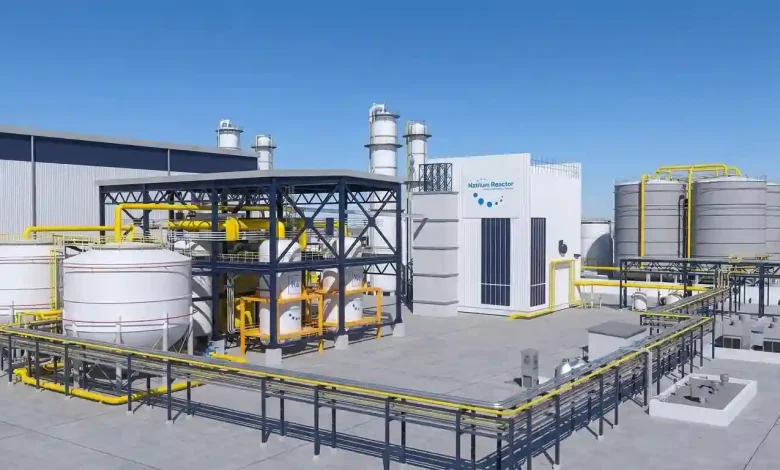
Table of Contents
TerraPower, the innovative U.S. nuclear developer backed by billionaire Bill Gates, is officially expanding its global footprint by targeting Britain as its first international market outside the United States. According to Chief Executive Officer Chris Levesque, the company expects its revolutionary Natrium reactors to begin generating commercial electricity on the British grid by 2034. This aggressive timeline underscores a rapid evolution in the advanced nuclear sector, driven by a global push for clean, secure, and resilient energy systems. The announcement comes at a critical juncture as Britain intensifies its decarbonization initiatives and seeks to revitalize its domestic energy infrastructure. To support this vision, the UK government has vigorously backed the development of small modular reactors (SMRs) and advanced modular reactors (AMRs). These systems are seen as essential components for ensuring long-term national energy security while meeting ambitious legally binding net-zero climate targets. As part of this commitment, Britain launched its highly anticipated Advanced Nuclear Framework this year. This newly established framework is designed to provide robust regulatory and financial support for privately funded nuclear projects, effectively smoothing the pathway for pioneering companies to deploy next-generation fission technologies. While the energy transition requires immense capital and structural planning, much like how U.S. job growth continues to demonstrate structural resilience across high-tech manufacturing and engineering sectors, the UK aims to leverage international nuclear partnerships to create thousands of highly skilled engineering jobs and stimulate regional economies.
Introduction: The UK Expansion and 2034 Target
Expanding into the British market represents a landmark milestone for advanced nuclear developer TerraPower. The choice of the UK as the company’s first international market is a strategic response to the British government’s aggressive decarbonization targets and its welcoming regulatory posture toward private energy developers. Chris Levesque, TerraPower’s president and CEO, stated that progress on the company’s first Natrium reactor, currently under construction in Wyoming, United States, and scheduled for completion by 2031, indicates that achieving commercial electricity in the UK by 2034 is highly feasible. This ten-year horizon aligns perfectly with Britain’s goals of phasing out remaining fossil-fuel baseload generation and securing clean energy sovereignty. By introducing advanced modular designs, the UK aims to replace its aging fleet of traditional nuclear power stations, most of which are scheduled for decommissioning in the coming decade.
The Technological Edge of Natrium: High-Assay, Low-Enriched Uranium (HALEU)
At the heart of the company’s UK strategy is the Natrium technology, an advanced reactor design that represents a departure from conventional light-water nuclear systems. Each Natrium facility features a 345-megawatt sodium-cooled fast reactor paired with an integrated, gigawatt-scale molten salt energy storage system. This unique thermal storage capability allows the plant to temporarily boost its electrical output to 500 megawatts for more than five hours. This capability is crucial for grid operators, as it provides the flexible, dispatchable power needed to complement intermittent renewable energy sources like wind and solar. Unlike older reactors that struggle to adjust their output rapidly, Natrium can load-follow, stepping in to stabilize the grid when weather conditions fluctuate. The reactor operates on High-Assay, Low-Enriched Uranium (HALEU), which is enriched between 5% and 20% with Uranium-235. HALEU fuel allows for higher fuel utilization, longer operating cycles, and reduced volumes of high-level waste. Historically, Russia held a virtual monopoly on the commercial supply of HALEU, presenting a significant geopolitical risk for Western nations. However, both the United States and Great Britain are rapidly building domestic processing plants to establish a secure, independent fuel supply chain. Funding these high-tech energy ecosystems requires substantial capital allocations. We have witnessed a similar trend across other capital-intensive deep-tech sectors, such as when Muon Space raises $250M to build out advanced satellite networks, proving that private investors and governments are increasingly willing to fund long-horizon, high-impact technologies to secure strategic advantages.
Regulatory Milestones: Navigating the UK Generic Design Assessment (GDA)
Transitioning an advanced nuclear reactor design from conceptualization to commercial operation requires overcoming rigorous regulatory hurdles. In the United Kingdom, this process is governed by the Generic Design Assessment (GDA), which is jointly managed by the Office for Nuclear Regulation (ONR), the Environment Agency, and Natural Resources Wales. TerraPower formally initiated Step 1 of the GDA process for the Natrium reactor in mid-2026, marking its first formal regulatory submission in an international market. This process assesses the safety, security, and environmental impacts of the reactor design independently of any specific construction site, allowing the regulators to identify potential design modifications before capital-intensive construction begins. The formal assessment is supported by the 2025 Atlantic Partnership for Advanced Nuclear Energy, a bilateral agreement between the United States and the United Kingdom aimed at accelerating the deployment of advanced nuclear technologies. Navigating these regional regulatory environments requires immense diplomatic and commercial foresight. Trade friction and policy shifts can quickly complicate international supply chains, much like how global trade dynamics are altered by tariffs imposed on Canadian steel and aluminum or European industrial components. By engaging with the ONR early, TerraPower aims to de-risk its British deployment plan and establish a standardized, repeatable licensing pathway that can serve as a template for other European markets.
Comparative Analysis: Natrium vs. Traditional Nuclear Systems
To understand the commercial and operational advantages of the Natrium reactor, it is useful to compare its design parameters with traditional light-water reactors that currently dominate the global nuclear fleet. The integration of liquid sodium coolant and thermal storage makes Natrium uniquely suited for the modern decarbonized grid.
| Parameter | Natrium Reactor (TerraPower) | Traditional Light Water Reactor (LWR) |
|---|---|---|
| Primary Coolant | Liquid Sodium | Light Water (H2O) |
| Operating Pressure | Near-Atmospheric (Low Pressure) | High Pressure (~155 atm) |
| Baseload Output | 345 MWe | 1,000 to 1,600 MWe |
| Energy Storage | Molten Salt Thermal Storage (up to 500 MWe output) | None (Baseload only) |
| Fuel Enrichment | HALEU (5% to 20% U-235) | LEU (3% to 5% U-235) |
| Primary Safety Mechanism | Passive (Natural convection, air-cooling) | Active (Pumps, backup generators, water supply) |
The Geopolitical and Economic Framework of Advanced Nuclear Energy
The global energy landscape has been redefined by extreme volatility, pushing national security and grid resilience to the top of geopolitical agendas. As gas prices surge in the U.S. and European nations face high costs for natural gas imports, governments are recognizing that traditional fossil fuels can no longer guarantee cheap, reliable power. Advanced nuclear reactors represent a compelling solution to this dilemma, offering a steady, carbon-free source of baseload power that does not rely on volatile fuel markets. Even during periods when international oil prices slip due to shifting macroeconomic indicators, the structural long-term demand for electrification keeps the economic case for nuclear power robust. Decarbonizing heavy industry, powering massive AI data centers, and charging millions of electric vehicles requires an enormous volume of clean electricity. The UK’s Advanced Nuclear Framework addresses this by creating a welcoming investment climate for private developers, ensuring that companies do not have to rely solely on public balance sheets to fund new reactors.
Strategic Corporate Collaborations and Fleet Deployment Models
A critical component of TerraPower’s business model is its focus on corporate partnerships and fleet-scale deployment. In early 2026, the company signed a landmark agreement with the technology conglomerate Meta to build up to eight Natrium reactors in the United States, providing a massive 2.8 gigawatts of clean baseload power to support the tech giant’s rapidly expanding artificial intelligence and data center infrastructure. CEO Chris Levesque has indicated that TerraPower plans to seek similar strategic corporate partnerships in the United Kingdom. Technology companies, heavy manufacturers, and chemical producers in Britain are actively searching for dedicated, zero-carbon power sources to meet their corporate sustainability mandates. This trend towards massive private investment in physical tech infrastructure is mirrored across the broader market. For instance, advanced engineering and automation are experiencing a major boom, as seen when Unitree stock surges 460% due to the rising adoption of industrial robotics. By partnering directly with large energy consumers, TerraPower can secure long-term power purchase agreements (PPAs) that make these multi-billion-dollar nuclear projects highly bankable and economically sustainable.
The Industrial Supply Chain and Regional Impact in Northwest England
While a specific construction site for the first British Natrium reactor has not yet been finalized, TerraPower has made strategic decisions regarding its regional operational base. The company announced that its UK-based subsidiary, TerraPower UK Ltd, is highly likely to establish its corporate headquarters in Liverpool, in northwest England. This location is geographically strategic, placing the company in close proximity to the UK’s Office for Nuclear Regulation, which is headquartered in nearby Bootle. Furthermore, the Northwest of England has a rich industrial and nuclear heritage, boasting an established supply chain, a skilled engineering workforce, and world-class research institutions. Establishing a presence in Liverpool will enable TerraPower to collaborate closely with local manufacturing partners to source high-precision components, specialized metals, and engineering services. This regional concentration of advanced technology is reminiscent of other pioneering engineering hubs. Just as high-altitude technology and commercial aerospace startups have seen a massive renaissance, with projects like a space startup balloons expanding access to the upper atmosphere, the development of a regional advanced nuclear cluster in the UK will lift local industries, train the next generation of nuclear scientists, and position northwest England as a global exporter of advanced fission expertise.
Challenges on the Horizon: Fuel Bottlenecks and Grid Integration
Despite the overwhelming optimism surrounding the 2034 target, TerraPower and the UK government face several significant challenges. The foremost obstacle is securing a reliable, non-Russian supply of HALEU fuel. While both the U.S. and UK have committed hundreds of millions of dollars to build domestic enrichment facilities, scaling up these chemical processing plants to meet commercial demand will take several years. Any delay in the domestic fuel supply chain could directly impact the construction timeline of the first Natrium reactor in Wyoming (scheduled for completion in 2031) and subsequently push back the 2034 UK target. Another critical challenge is grid integration. The British electrical grid was originally designed for large, centralized coal and gas plants. Integrating a decentralized network of small modular reactors and advanced reactors like Natrium—which operate with integrated molten salt storage—will require significant upgrades to transmission infrastructure and regulatory changes to reward reactors for providing grid-balancing services. If these transmission and regulatory bottlenecks are resolved, the UK’s 2034 target will mark the beginning of a new era of clean energy prosperity, providing a blueprint for advanced nuclear deployment worldwide.