Abbas Araghchi Meets Putin In St Petersburg Summit
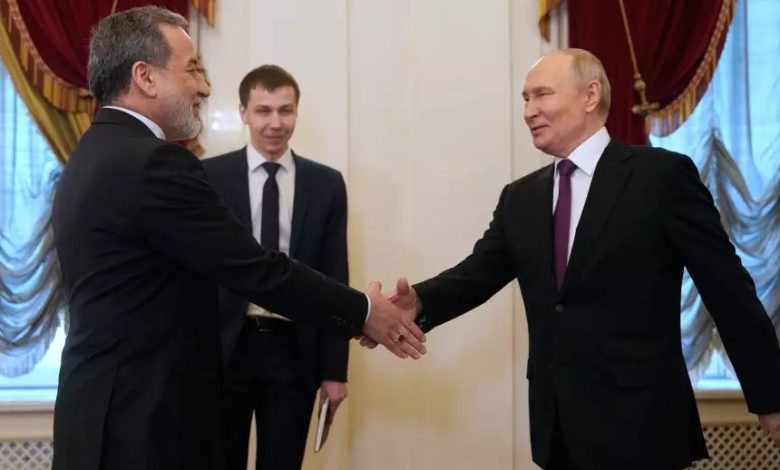
Abbas Araghchi, the seasoned Iranian Foreign Minister, has officially arrived in the historic city of St. Petersburg to commence a highly anticipated series of diplomatic engagements, marked profoundly by a direct meeting with Russian President Vladimir Putin. Fresh off his arrival, Araghchi delivered a pointed statement, highlighting that this summit will serve as a vital opportunity to discuss critical war developments. Furthermore, he emphasized the continuation of close consultations between Tehran and Moscow concerning a myriad of regional and international issues. This high-level dialogue occurs at a pivotal juncture in global geopolitics, where the traditional unipolar world order is being aggressively challenged by burgeoning multipolar alliances. The intersection of Russian and Iranian geopolitical interests has never been more pronounced, with both nations navigating complex landscapes of sanctions, proxy conflicts, and shifting global economic paradigms.
Abbas Araghchi Arrives in St. Petersburg for Crucial Summit
The arrival of the Iranian delegation in St. Petersburg signals a deliberate escalation in the strategic coordination between the Islamic Republic of Iran and the Russian Federation. As Araghchi stepped off the plane, the diplomatic optics were carefully curated to project unity and mutual resolve. St. Petersburg, a city deeply embedded in Russia’s imperial history and contemporary political strategy, provides the perfect backdrop for discussions that are expected to reshape Eurasian security architectures. The meeting with Vladimir Putin is not merely a courtesy call; it is a meticulously planned strategic session aimed at harmonizing the foreign policies of two nations heavily embargoed by Western powers. Araghchi’s mandate is clear: to solidify the tactical agreements that have evolved since the onset of the Ukraine conflict and to ensure that Tehran’s strategic interests are comprehensively integrated into Moscow’s broader geopolitical calculus.
The Immediate Agenda: War Developments and Strategic Alignment
When Araghchi explicitly mentioned discussing “war developments,” the international community immediately understood the dual nature of this reference. On one front, it pertains to the ongoing attrition war in Eastern Europe, where Iranian military hardware has played a controversial yet undeniably significant role in bolstering Russian capabilities. On the other front, it addresses the volatile situation in the Middle East, characterized by the devastating conflict in Gaza, the volatile borders of Lebanon, and the persistent skirmishes in the Red Sea. The synchronization of military strategies in these disparate yet connected theaters is paramount for both leaders. By sharing intelligence, coordinating logistical supply chains, and offering mutual diplomatic cover at the United Nations Security Council, Tehran and Moscow are establishing a formidable axis of resistance against NATO and its allies. The agenda will likely delve into the nuances of technological transfers, cyber warfare collaboration, and the optimization of military-industrial complexes to sustain prolonged operational tempos in their respective conflict zones.
Deepening Tehran and Moscow Regional Consultations
The “close consultations” referenced by the Iranian Foreign Minister underscore a broader institutionalization of the bilateral relationship. Historically, relations between Iran and Russia have been characterized by cautious pragmatism, oscillating between cooperation and historical mistrust. However, the contemporary geopolitical climate has catalyzed an unprecedented deepening of ties. These consultations span across various geopolitical theaters, notably the South Caucasus, Central Asia, and the Levant. In the South Caucasus, both nations are carefully monitoring the peace process between Armenia and Azerbaijan, aiming to prevent the intrusion of extra-regional forces, particularly Western military alliances. In Central Asia, the focus remains on counter-terrorism, border security, and mitigating the spillover effects from Afghanistan. This diplomatic synergy requires constant calibration, which is exactly what the Araghchi-Putin summit seeks to achieve. By aligning their regional policies, Tehran and Moscow aim to create a cohesive bloc that can dictate regional security terms independent of Western interference.
Military Cooperation and Defense Pacts
A cornerstone of the modern Iranian-Russian alliance is their exponentially expanding military cooperation. Over the past few years, the world has witnessed a significant transfer of defense technologies. Iran’s prowess in asymmetrical warfare, particularly in the domain of unmanned aerial vehicles (UAVs) and ballistic missile technology, has found a willing and eager partner in Russia. Conversely, Iran is heavily reliant on Russian advancements in air defense systems, fighter jets, and cyber infrastructure. Recent developments indicate that this defense relationship is transcending mere transactional arms sales into comprehensive joint research and development initiatives. For instance, the integration of advanced satellite imagery and orbital tracking has become a focal point. Observers have drawn parallels to Iran’s growing aerospace ambitions, noting how recent orbital capabilities and space collaborations have significantly augmented Tehran’s reconnaissance capabilities, a domain where Russian expertise is invaluable. The St. Petersburg meeting is expected to fast-track negotiations on a comprehensive bilateral defense pact that could legally binding their mutual security commitments for decades to come.
Economic Integration Amidst Global Sanctions
Beyond the battlefield, economic survival and growth constitute a massive portion of the bilateral dialogue. Both Russia and Iran are subjected to some of the most stringent and comprehensive economic sanctions regimes in modern history. Consequently, their economic integration is not just a matter of prosperity, but of national survival. Central to this integration is the International North-South Transport Corridor (INSTC), a massive infrastructure project designed to link India, Iran, Azerbaijan, and Russia via ship, rail, and road. This corridor dramatically reduces transit times and costs compared to the traditional Suez Canal route, fundamentally undermining Western maritime chokepoints. Furthermore, de-dollarization efforts are accelerating. The synchronization of the Russian Mir payment system with Iran’s Shetab banking network exemplifies a concerted effort to bypass the SWIFT messaging system. Discussions in St. Petersburg will likely focus on expanding these financial mechanisms, fostering energy sector investments, and examining economic resilience post-revolution in the face of ongoing global financial isolation.
International Implications of the Putin-Araghchi Dialogue
The optics and outcomes of this summit reverberate far beyond the borders of Russia and Iran. The international community is intensely analyzing every statement, handshake, and leaked agreement emerging from St. Petersburg. For the Global South, the burgeoning alliance presents an alternative paradigm to the Western-led liberal international order. It demonstrates that nations can sustain themselves and even project power despite crushing sanctions. To further understand the global reaction, numerous international geopolitical analysts have pointed out that the Moscow-Tehran axis is successfully creating a blueprint for sanctions evasion and parallel economic structures. This reality forces Western policymakers to reassess the efficacy of unilateral economic coercion as a tool of statecraft.
Reactions from Western Nations and NATO
In Washington, London, and Brussels, the meeting is viewed with deep alarm. NATO planners recognize that a fully synchronized Russian-Iranian military apparatus complicates the strategic calculus in multiple theaters simultaneously. The United States has consistently warned against the deepening defense ties, threatening secondary sanctions on entities facilitating this cooperation. However, the deterrence value of these threats appears to be diminishing. European nations, particularly those adjacent to the Ukrainian conflict, are increasingly concerned about the introduction of advanced Iranian ballistic missiles into the European theater. The diplomatic cables exchanging hands across Western capitals reflect an urgent need to counter this alliance, potentially through increased military aid to proxy forces or enhanced naval deployments in critical maritime corridors.
Analyzing the Geopolitical Shifts in the Middle East
The Middle East remains one of the most volatile arenas where Russian and Iranian interests align. The ongoing crisis in the Strait of Hormuz, the proxy conflicts in Yemen and Syria, and the broader Israeli-Arab dynamics are deeply influenced by the decisions made in St. Petersburg. Iran’s ability to project power across the “Axis of Resistance” is implicitly backed by Russian diplomatic support at the international level. For instance, discussions regarding escalating maritime tensions and military blows in Hormuz are critical, as any disruption in this maritime chokepoint has catastrophic implications for global energy markets, a scenario that Moscow monitors closely given its status as an energy superpower. The summit will likely yield coordinated strategies on how to manage these tensions without igniting a full-scale regional war that could overstretch both nations’ military capacities.
| Cooperation Domain | Primary Objectives | Recent Developments | Strategic Impact |
|---|---|---|---|
| Military & Defense | Technology transfer, asymmetrical warfare integration | Exchange of UAVs, negotiations for Su-35 fighter jets | Erosion of Western air superiority in regional conflicts |
| Economic Integration | De-dollarization, sanctions evasion | Integration of Mir and Shetab banking networks | Creation of parallel financial systems bypassing SWIFT |
| Infrastructure | Securing alternative trade routes | Expansion of the International North-South Transport Corridor (INSTC) | Reduced reliance on Western-controlled maritime chokepoints |
| Energy Sector | Market stabilization, joint exploration | Russian investments in Iranian gas fields | Consolidated influence over global hydrocarbon pricing |
The Expanding BRICS and SCO Security Architecture
A crucial backdrop to the St. Petersburg meeting is the overarching framework of multilateral organizations like BRICS and the Shanghai Cooperation Organisation (SCO). Both Iran and Russia view these platforms as essential instruments for transitioning towards a multipolar world. Iran’s recent full membership in the SCO and its integration into the expanded BRICS mechanism offer institutional legitimacy to its alliance with Russia. Araghchi and Putin are expected to discuss strategies for leveraging these organizations to counter Western hegemony. By advocating for intra-BRICS trade using local currencies and proposing new collective security frameworks within the SCO, they are systematically dismantling the mechanisms of Western economic and political dominance across Eurasia.
Overcoming Internal and External Pressures
Despite the outward projection of unity, both leaders must navigate significant domestic and external pressures. For Araghchi, representing the Iranian establishment means balancing the demands of hardliners who advocate for aggressive regional postures with the pragmatic necessities of diplomacy. The domestic economic situation in Iran remains precarious, and any diplomatic misstep could exacerbate public dissatisfaction. Similarly, understanding the domestic leadership dynamics and internal cracks is vital for Russian policymakers, as they must ensure that their primary partner in the Middle East remains internally stable. Putin, on the other hand, faces the relentless pressure of sustaining the war effort in Ukraine while managing the long-term socio-economic impacts of isolation from European markets. The summit serves as a mutual reinforcement mechanism, allowing both governments to project strength and stability to their domestic audiences.
The Road Ahead for Eurasian Security Cooperation
As the diplomatic engagements unfold in St. Petersburg, the trajectory of Eurasian security cooperation is being fundamentally rewritten. The meeting between Abbas Araghchi and Vladimir Putin is a definitive declaration that the alliance between Tehran and Moscow is not a temporary marriage of convenience, but a profound, long-term strategic partnership. The discussions surrounding war developments and regional consultations will undoubtedly lead to new military pacts, deeper economic integration, and a unified diplomatic front on the global stage. For the West, this summit represents a formidable challenge that requires a sophisticated, multifaceted response rather than reliance on outdated paradigms of containment. As the multipolar world order takes shape, the decisions forged in the halls of St. Petersburg will echo across battlefields, financial markets, and diplomatic corridors for decades to come, signaling a new era of geopolitical realism and fierce great-power competition.