Trump Warns Iran of Annihilation While Teasing UN Deal 2026
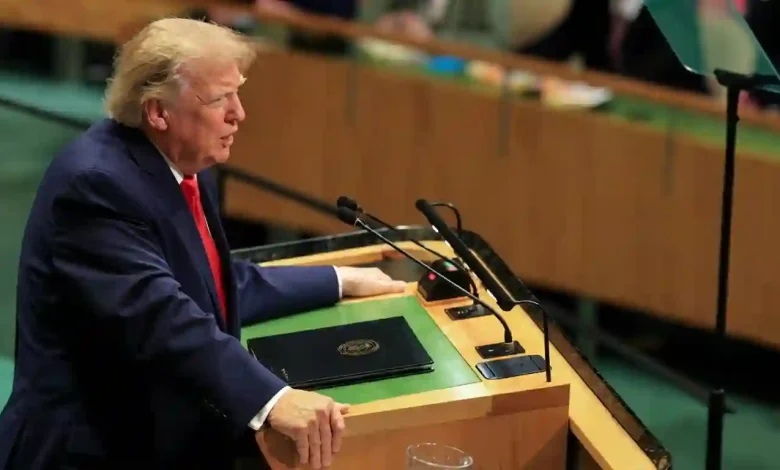
Table of Contents
Trump warns Iran that catastrophic military consequences await Tehran if ongoing negotiations fail to produce an enforceable agreement, delivering a stark ultimatum before world leaders at the United Nations General Assembly in New York. Simultaneously, the American president signaled that an unprecedented peace accord might be secured within days, creating a tense atmosphere of high-stakes brinkmanship. The balance between total devastation and comprehensive rapprochement has captivated international diplomats, defense planners, and global markets during one of the most volatile phases of modern geopolitical history.
Iran :UN General Assembly Standoff: Rhetoric and Realpolitik
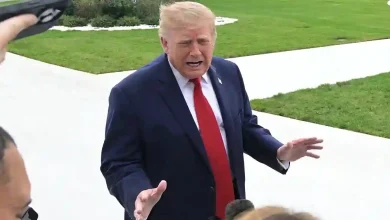
Addressing the assembled heads of state and delegates in the iconic green-marble hall, the United States president delivered an address defined by stark contrasts. The speech alternated between explicit threats of overwhelming force and surprising optimism regarding diplomatic negotiations. Describing the ongoing standoff as an inflection point for the broader Middle East war, the administration underscored that the tolerance for protracted regional hostilities has expired. Washington is demanding a decisive resolution that includes verifiable halts to sensitive centrifuge activities, strict caps on ballistic delivery architectures, and an immediate cessation of regional militia financing.
International observers noted the precise choreography surrounding the appearance. Rather than issuing a standard diplomatic boilerplate, the administration chose to project maximalist power while keeping backchannel pathways conspicuously open. The timing coincides with acute international friction, where international bodies and third-party mediators have struggled to bridge the divide between American terms and Tehran’s insistence on sanctions relief and sovereign defense autonomy.
Iran :The Dual Track: Total Annihilation Versus Rapid Accord
The stark warning that the United States possesses the capability and resolve to decisively destroy strategic state apparatuses marks an escalation in public messaging. Observers argue that the maximalist rhetoric is designed as psychological leverage to accelerate concessions from Tehran’s leadership council. However, invoking such extreme deterrence concurrently with optimistic statements about a imminent pact has produced confusion among foreign ministries worldwide.
According to administration sources, the threat is directly tied to the technical milestones recently highlighted by Iran’s nuclear chief regarding advanced subterranean enrichment programs. By warning of catastrophic retaliation, Washington seeks to demonstrate that the window for prevarication is shutting rapidly. The president framed the moment not merely as a diplomatic pause, but as a final fork in the road where failure leads directly to kinetic intervention.
Iran :Deconstructing the ‘Big Decision’ Facing Washington
Trump remarked plainly during his address, “I have a big decision to make.” This public acknowledgment of executive crossroads reveals the conflicting pressures within the American national security establishment. On one flank, hawkish defense officials urge conclusive decapitation strikes against hardened command bunkers, naval command centers, and industrial facilities. On the opposing flank, pragmatic realists caution that any kinetic assault risks triggering an unmanageable chain reaction across the Persian Gulf, the Levant, and international sea lanes.
This dilemma is further compounded by domestic political calculations. The fluctuating Trump approval rating reflects public fatigue with open-ended foreign entanglements alongside a clear demand for demonstrated national strength. Entering an expansive conflict without an obvious exit strategy carries immense domestic risk, whereas brokering a dramatic, high-profile peace deal on the global stage would offer significant political validation.
Iran :Military Realities: Deterrence, Strike Packages, and Logistical Limits
Behind the podium rhetoric lies an extensive military realignment throughout US Central Command. Carrier strike groups, guided-missile cruisers, and heavy stealth bombers maintain round-the-clock readiness across regional installations. Military planners have developed complex strike packages capable of degrading hardened command facilities and coastal missile batteries.
Yet, military planners acknowledge the serious complications involved in neutralizing hardened underground facilities. Retaliatory swarms of ballistic weapons and loitering munitions present defensive challenges even for state-of-the-art interceptor batteries. The vulnerability of commercial shipping lines in proximity to the Strait of Hormuz crisis ensures that any offensive operation carries immediate operational and economic fallout.
Iran :Diplomatic Maneuvers on the Sidelines of New York
While bellicose statements dominated the morning headlines, intensive closed-door diplomacy commenced in diplomatic compounds and luxury suites across Manhattan. Swiss and Omani envoys operated as direct liaisons between American officials and the Iranian delegation, exchanging detailed technical memorandums regarding phased enforcement mechanisms.
Key elements of the discussed framework involve verified suspensions of high-grade fissile processing, verified monitoring regimes, and phased unfreezing of commercial escrow funds. Notably, Beijing has also played an influential role behind the scenes; diplomatic reports indicate that China urges Iran to accept basic technical safeguards to avoid a catastrophic maritime disruption that would jeopardize Far Eastern manufacturing supplies.
Iran :Regional Dimensions: Proxies, Gulf Allies, and Maritime Chokepoints
The geopolitical ramifications of the showdown extend far beyond the direct bilateral friction between Washington and Tehran. Regional security architectures remain on hair-trigger alert as allied proxy networks monitor the signals emerging from New York. In southern maritime corridors, reports confirm that Houthi fighters advance tactical positions along coastal checkpoints, threatening to unleash secondary barrages if military strikes are launched.
Gulf monarchies find themselves caught in a perilous balancing act. While Riyadh, Abu Dhabi, and Doha share deep anxieties concerning non-state missile proliferation, they are equally terrified of cross-gulf retaliation that could devastate oil desalination facilities, refining complexes, and civilian infrastructure. Consequently, Gulf diplomats in New York are actively imploring Washington to exhaust every conceivable diplomatic compromise before greenlighting offensive military action.
Iran :Energy Market Fragility and International Economic Repercussions
Global financial centers reacted with immediate volatility to the mixed signals emerging from the United Nations. Crude benchmarks spiked by several dollars upon the initial warning of annihilation, only to pare gains rapidly as references to an imminent deal circulated across news terminals. The potential interruption of maritime flows poses severe threats to global inflation metrics.
The uncertainty has already rippled into broader sovereign debt assets, contributing to a volatile global bond market rout as investors reassess macro risks and prolonged supply disruptions. Concurrently, international trade flows are adjusting to geopolitical vulnerabilities, directly impacting commodity contracts such as US LNG exports to China that rely heavily on open sea corridors and stable global shipping insurance premiums.
Strategic Assessment: Paths Facing Washington and Tehran
To fully understand the scope of the current impasse, it is essential to evaluate the strategic alternatives under active consideration by both governments:
| Strategic Track | Core Demands / Actions | Primary Advantages | Inherent Risks & Vulnerabilities |
|---|---|---|---|
| Comprehensive Accord | Immediate suspension of enrichment; international monitoring; phased sanctions removal. | Restores regional maritime safety; settles oil markets; prevents broad regional war. | High political friction internally; complex verification hurdles; proxy compliance doubts. |
| Limited Kinetic Campaign | Precision strikes targeting enrichment plants, naval ports, and drone infrastructure. | Direct degradation of offensive capabilities; reaffirms international red lines. | Triggers asymmetrical missile responses against Gulf energy installations and shipping. |
| Protracted Standoff | Heightened sanctions enforcement; ongoing cyberwarfare; dynamic deterrence patrols. | Avoids full kinetic catastrophe while maintaining steady pressure on Tehran. | Vulnerable to accidental escalation; prolongs economic instability and maritime friction. |
| Uncontrolled Escalation | Decapitation strikes aimed at core state leadership and systemic infrastructure. | Total neutralization of conventional defense frameworks. | Full-scale asymmetric war, severe global economic shock, unpredictable regional chaos. |
The Window for De-Escalation: What Comes Next
The coming forty-eight hours at the United Nations General Assembly will test whether aggressive public posturing can produce genuine diplomatic concessions. If Tehran interprets the presidential statements as an intolerable personal affront, hardline elements within the regime may double down on defiant enrichment milestones and regional aggression. Conversely, if intermediaries succeed in crafting an agreement that offers meaningful economic relief while preserving diplomatic face, the crisis could transform into an unexpected breakthrough.
What remains undeniable is that the status quo has become untenable. Washington’s open warning of ultimate force underscores that strategic ambiguity has reached its expiration point. Whether the next development takes the form of an historic signing ceremony or unprecedented joint military strikes will depend entirely on how both governments navigate the narrowing window of opportunity currently open in New York.