Tennessee Congressional Redistricting: Court Clears New Map for 2026
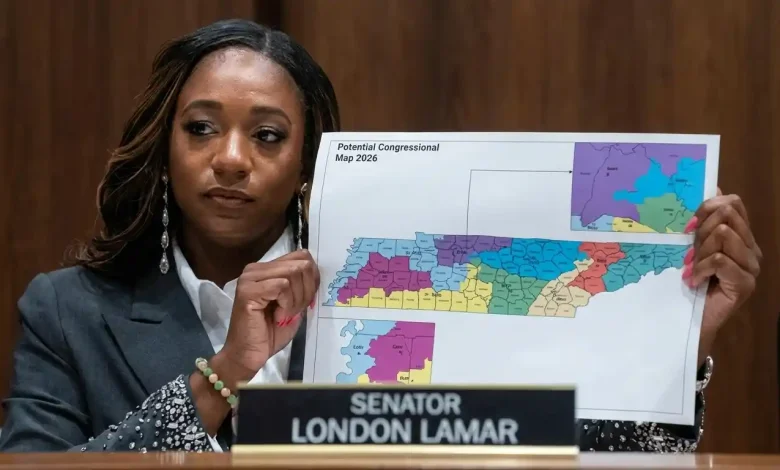
Table of Contents
Tennessee congressional redistricting took center stage on Thursday as a federal three-judge panel declined to issue a preliminary injunction against the state’s newly redrawn maps, clearing the path for their deployment in the upcoming August 6 primary elections. This pivotal ruling marks a substantial victory for state Republicans, who have sought to maximize their electoral advantage ahead of the highly anticipated November midterm contests. By refusing to block the implementation of the new district boundaries, the federal judiciary has solidified a controversial map that splits a long-standing majority-Black congressional district in Memphis. This decision is poised to reshape the political landscape of Tennessee, with profound national implications as both major political parties vie for control of a closely divided U.S. House of Representatives.
Introduction: The Ruling on Tennessee Congressional Redistricting
The legal and political battles surrounding the redrawing of electoral maps have intensified in recent months, culminating in this landmark federal court decision. Opponents of Tennessee’s new congressional districts had argued passionately in court that Republican lawmakers, who passed the aggressive redistricting plan in May 2026, were motivated at least in part by racial discrimination. The plaintiffs, including voter advocacy groups, civil rights organizations, and local citizens, argued that the slicing of Shelby County systematically dilutes the political influence of Black voters in Memphis. However, the federal judicial panel remained unconvinced that racial animus was the primary driver of the redistricting effort, instead pointing to partisan advantage as the clear, legally permissible explanation for the legislative boundaries.
The Judicial Panel’s Rationale and the Lack of Racial Evidence
In their written opinion, the three-judge panel—comprising two appointees of former President Donald Trump and one appointee of former President Barack Obama—clarified that the plaintiffs failed to meet the high burden of proof required for a preliminary injunction. The judges asserted that the lawsuit is highly unlikely to succeed on its merits because the plaintiffs lack any direct evidence of racial motivation on the part of the General Assembly. Unlike typical civil disputes or school district lawsuits, constitutional challenges to state voting maps require a high threshold of proof showing that race was the predominant factor overriding traditional redistricting principles. The judges concluded that the state’s explanation was not only plausible but highly consistent with the political reality of the region.
Understanding Partisan vs. Racial Gerrymandering
The distinction between partisan gerrymandering and racial gerrymandering is central to this judicial outcome. Under current federal jurisprudence, state legislatures are permitted to draw district lines to maximize their party’s electoral advantage, a principle cemented by the U.S. Supreme Court’s 2019 decision in Rucho v. Common Cause (see Oyez case profile). Conversely, drawing lines based on race remains strictly prohibited under the Fourteenth and Fifteenth Amendments. Amid ongoing national debates regarding federal overreach and First Amendment legal battles, Tennessee’s redistricting case stands as a stark example of how lawmakers can defend major structural changes by claiming pure political self-interest. By admitting that their goal was strictly to capture the state’s sole remaining Democratic-held seat, Tennessee Republicans successfully shielded their map from racial gerrymandering claims.
The National Political Strategy of Mid-Decade Redistricting
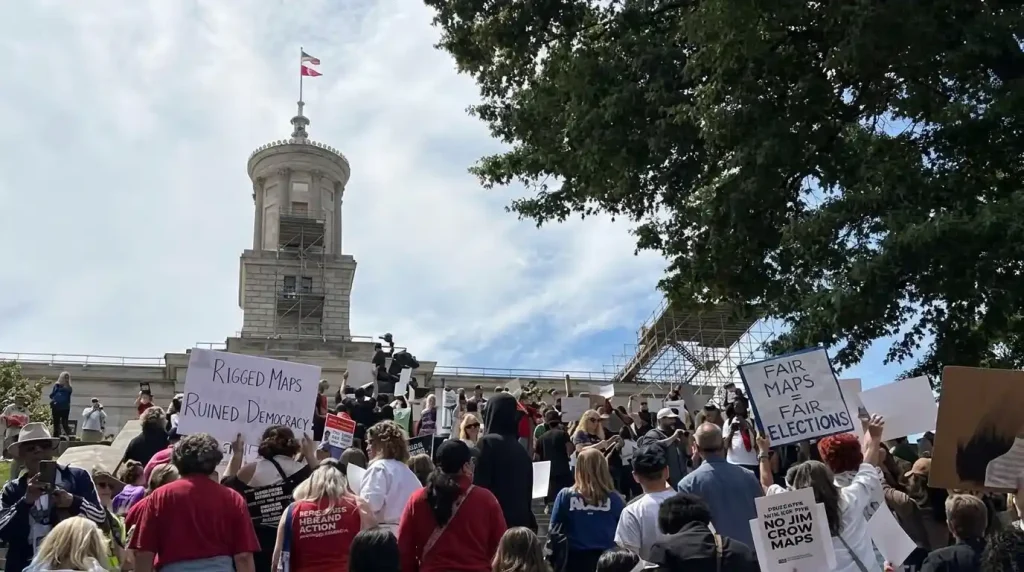
Tennessee is not acting in a vacuum; rather, it is part of a coordinated national strategy. President Donald Trump has repeatedly urged Republican-led state legislatures to aggressively redraw congressional districts mid-decade to protect and expand their slim majority in the U.S. House of Representatives. Historically, the party of the sitting president tends to lose seats during midterm elections. By reshuffling the electoral deck in favorable states, Republicans hope to buck this historical trend. Just as we see sudden shifts in other states like congressional campaign disruptions, the redistricting in Tennessee highlights how localized redistricting battles directly influence the national balance of power in Washington.
The Push from the Executive Branch and Republican Supermajorities
With Tennessee serving as one of eight GOP-dominated states to engage in mid-decade redistricting since last year, the legislative maneuver showcases the immense power of state-level supermajorities. When the General Assembly convened a specialized session in May 2026, they acted rapidly to dismantle the structural protections of the old map. While federal judges are usually bogged down with local criminal cases or federal law enforcement matters, high-stakes constitutional panels are forced to act with extreme speed when elections are looming. The speed of the legislative action and the subsequent court approval mean that candidates must immediately adapt to completely different demographic and geographic realities before the August and November votes.
Impact on Memphis and the Dilution of Minority Voting Power
The epicenter of the Tennessee redistricting controversy is Memphis and surrounding Shelby County. For decades, this region anchor-voted as a cohesive Democratic stronghold, providing a reliable baseline of representation for the state’s minority communities. By splitting Memphis into three distinct congressional districts, the new map distributes these concentrated urban voters across vast, deeply conservative rural tracts in West and Middle Tennessee. These domestic political shakeups also carry economic undertones, which can be seen when broader economic instability is triggered by shifting domestic policies and the realignment of political representation in economically critical cities like Memphis.
Breaking Down Shelby County’s Splitting
The mathematical and geographic reality of splitting Shelby County means that the consolidated voting block of Black residents is effectively dismantled. Instead of having a single representative who is highly responsive to the urban, majority-Black core of Memphis, these voters are now minorities within three separate, rural-dominated congressional districts. Critics argue that this represents a textbook case of “cracking”—a redistricting technique used to disperse a group of voters so they cannot achieve a majority in any single district. The three-judge panel acknowledged this dilutive effect but noted in their opinion: “The road to a reliably 9-0 map runs through Memphis. Thus, political motivations readily explain the map’s dilutive effects.” Under this view, the dilution is an incidental byproduct of permissible partisan warfare rather than prohibited racial targeting.
Summary of the Redistricting Legal Battle
To better understand the core elements of the legal challenges and the current structural realignment of Tennessee’s congressional map, we can examine the following summary table:
| Aspect of Redistricting | Previous District Structure | New Approved Map Structure | Primary Political Impact |
|---|---|---|---|
| Shelby County (Memphis) | Consolidated mainly within District 9; served as a Democratic stronghold with majority-Black representation. | Cracked into three separate districts (District 7, District 8, and District 9), extending far into rural counties. | Dilutes Democratic concentration, making it extremely difficult for a Democrat to win representation in Memphis. |
| Statewide Partisan Balance | 8 Republicans, 1 Democrat in the U.S. House of Representatives. | Designed to achieve a 9-0 Republican sweep in the November general elections. | Eliminates the sole Democratic congressional foothold in Tennessee, shifting the delegation to total GOP control. |
| Judicial Status | Under constant challenge by civil rights coalitions (ACLU, NAACP, and local voters). | Preliminary injunction denied on July 23, 2026; maps cleared for the August 6 primary elections. | The redrawn maps will be used for the entire 2026 election cycle while full trial litigation proceeds. |
Constitutional and Legal Precedents Shaping the Ruling
The legal landscape enabling this redistricting began to shift dramatically earlier this year. In late April, a landmark U.S. Supreme Court ruling struck down a majority-Black congressional district in Louisiana as an unconstitutional racial gerrymander, which legal analysts argue weakened traditional federal Voting Rights Act protections. While courts frequently adjudicate civil lawsuits and injunctions to maintain the status quo, blocking an entire statewide election framework requires an overwhelming demonstration of constitutional violation. The Supreme Court’s shifting posture on the Voting Rights Act gave Tennessee lawmakers the confidence to execute this mid-decade redistricting, knowing that federal courts would look more skeptically at claims of racial dilution without smoking-gun evidence of racial bias.
The Role of the Voting Rights Act and the Supreme Court
For over half a century, Section 2 of the Voting Rights Act was the primary shield used by minority voters to challenge dilutive maps. However, recent Supreme Court decisions have steadily elevated the standard of proof required to establish a violation. Legislatures have learned to meticulously document their proceedings, framing every line-drawing decision in purely partisan terms. In Tennessee, legislative leaders openly stated that their goal was partisan: to capture the 9th District. Because the U.S. Supreme Court has explicitly declared that partisan gerrymandering is beyond the reach of federal courts, this defense has become an almost bulletproof shield against Voting Rights Act litigation.
Legal Reactions and the Future of Voting Rights Challenges
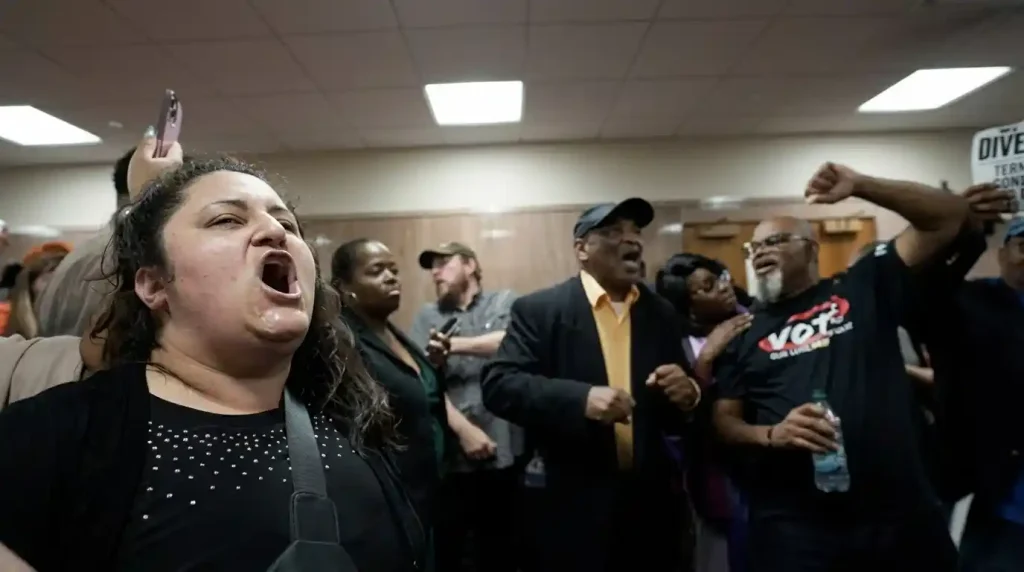
The denial of the preliminary injunction has drawn sharp criticism from civil rights advocates, who argue that the court’s decision sets a dangerous precedent. The American Civil Liberties Union (ACLU) of Tennessee, which representing several local plaintiffs, expressed deep disappointment, stating that the ruling ignores the real-world impact of the map on minority communities. They contend that by allowing partisan intent to excuse racial dilution, the court has effectively carved a massive loophole in constitutional protections. On the other side, state attorneys defended the ruling as a victory for the rule of law and legislative sovereignty, asserting that elected representatives, not unelected judges, should determine district boundaries.
Consolidated Lawsuits and Next Legal Steps
While the denial of the preliminary injunction is a significant setback for opponents, the legal battle is far from over. Multiple federal lawsuits—originally brought by the ACLU, the NAACP, the League of Women Voters, and various Democratic candidates—have been consolidated under Chief U.S. District Judge William Campbell Jr. Although the maps will definitely be used for the upcoming August 6 primaries and the November general elections, the litigation will proceed to a full trial on the merits. Just as unstable commodity markets can disrupt planning on a global scale, legislative shifts in local state districts introduce high volatility into the planning of national political campaigns, making long-term planning extremely difficult for candidates and political parties.
Broader Implications on American Democracy and Elections
The outcome of the Tennessee redistricting case highlights a structural trend in American politics: the decline of competitive congressional districts and the rise of safe, highly polarized seats. By shifting boundaries to secure a 9-0 Republican delegation, Tennessee joins a growing list of states where the primary election has effectively replaced the general election as the only meaningful contest. While the administration works to handle international geopolitical friction abroad, the domestic front is equally combative, as both parties utilize state legislative power to entrench their political advantage. As mid-decade redistricting becomes more common, the battle for the U.S. House of Representatives will increasingly be fought in courtrooms and statehouses long before voters ever cast their ballots.