5 Alarming Reasons Ashaninka Lands Face New Amazon Sovereignty Threats
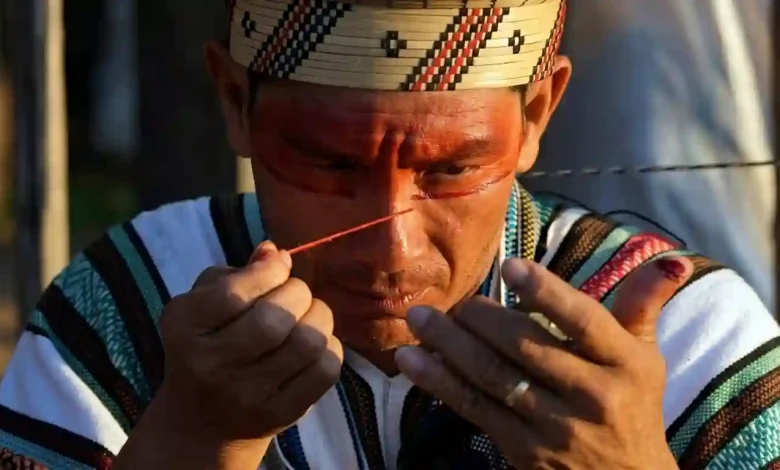
Table of Contents
Ashaninka communities in the deep Amazon are facing a critical security crisis as drug cartels and heavily armed syndicates systematically encroach on their sovereign territory. Over the past three decades, the Ashaninka people have served as an inspiring model of self-governance, environmental protection, and active territorial stewardship on the border between Brazil and Peru. After reclaiming their traditional lands from predatory settlers, they established a highly organized system of collective governance and sustainable farming that successfully kept deforestation at bay. However, as international criminal networks expand their operations deep into the Amazon Basin, this peaceful way of life is under severe and violent threat. Organized crime groups and drug traffickers are increasingly seizing local waterways and adjacent forests to facilitate highly lucrative transshipment channels, putting native populations on the front lines of a dangerous geopolitical struggle.
The escalating situation highlights a profound irony: the very forests that these indigenous groups have spent generations protecting are now being weaponized against them. Experts consistently point out that securing indigenous lands is among the most effective strategies for preventing deforestation in the Amazon rainforest—a vital ecosystem that serves as a global climate regulator. Yet, the dense canopy and remote geography of these reserves present highly attractive hiding spots and operational hubs for trafficking networks. As a result, the Ashaninka find themselves disproportionately vulnerable, bearing the ecological and physical brunt of a modern narcotic boom that operates deep within the wilderness, far from the watchful eyes of state authorities.
The Solimões River Route: A Criminal Superhighway
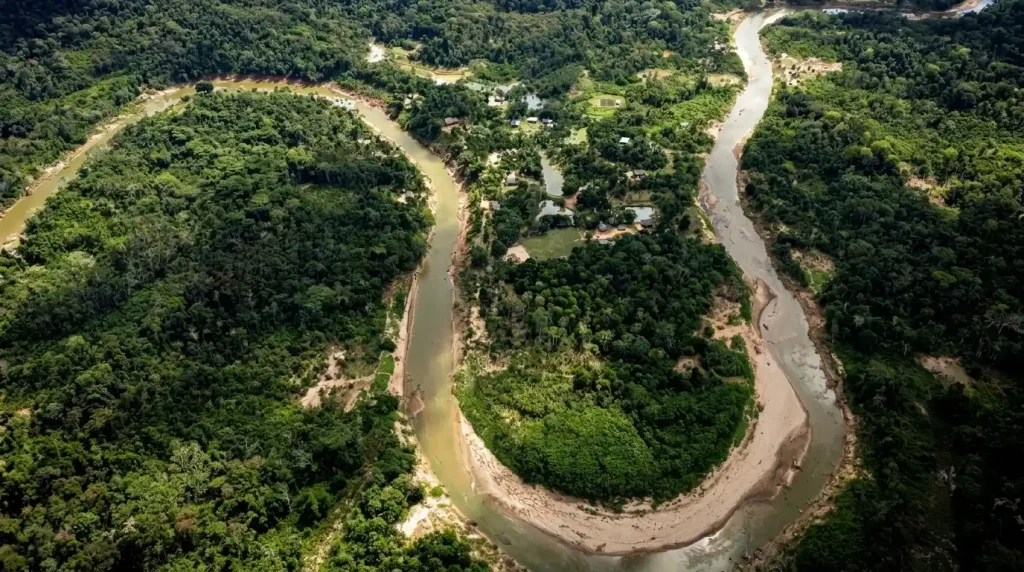
To understand the current crisis, one must analyze the geographical mechanics of the Solimões River route. Stretching across the porous borders of Peru, Colombia, and Brazil, this vast river network acts as the primary highway for transporting cocaine hydrochloride and base paste from highland processing labs to international distribution centers. This breakdown in regional security echoes worldwide security alerts and warnings regarding how non-state armed actors exploit remote corridors where state governance is historically weak.
The Solimões River is highly navigable, allowing traffickers to deploy high-powered speedboats that move illicit cargo rapidly from Peruvian borderlands downstream toward the major hub of Manaus, and eventually onto Atlantic ports. Historically, remote forest communities were relatively isolated from these macro-level dynamics. However, as international enforcement pressures rise and supply chains mutate, syndicates have increasingly relied on tributary systems and adjacent indigenous lands—including Ashaninka reserves—to stash product, refuel transport vessels, and establish clandestine transit paths. The surge in drug transit is intimately linked to fluctuating international supply chains and shifting global consumer markets, which continuously demand cheaper, faster, and more secure routes for contraband. Major Brazilian prison gangs, such as the Primeiro Comando da Capital (PCC) and the Comando Vermelho (CV), have formed loose alliances with local Peruvian producers, transforming these quiet riverways into highly contested combat zones.
Indigenous Land as a Climate Shield and Vulnerability
The modern consensus among environmental scientists and international policy bodies is that indigenous territories act as critical barriers against the destruction of the Amazon. By sustainably managing their forests and preventing large-scale logging or agriculture, communities like the Ashaninka preserve millions of metric tons of carbon, mitigating the global effects of climate change. Yet, this highly successful environmental stewardship has created a tragic paradox. The dense, unbroken tree cover, while essential for biodiversity and climate regulation, provides ideal cover for clandestine operations. Traffickers routinely carve out hidden camps, construct illegal refueling stations, and clear small, temporary airstrips under the thick foliage, rendering them virtually invisible to aerial and satellite monitoring.
For decades, the Ashaninka’s robust internal governance and active community patrols served as a strong deterrent against external threats. But the financial firepower and high-caliber weaponry of contemporary drug cartels have changed the calculus of defense. Indigenous leaders find themselves severely outgunned. The encroaching criminal footprint not only threatens lives but also brings environmental destruction in its wake, as traffickers clear patches of pristine forest for secondary supply trails and pollute pristine waterways with the chemical byproducts of drug transit. The defense of the Amazon is thus no longer just an ecological challenge; it is a direct battle against heavily armed transnational criminal organizations who view the rainforest not as a natural treasure, but as an unregulated warehouse.
The Threat Landscape: Violent Episodes and Political Demands
The situation has reached a boiling point in recent weeks, with Ashaninka leaders reporting a series of violent incursions. Armed traffickers have directly threatened local monitoring patrols, fired warning shots near community settlements, and attempted to coerce local youth into assisting their logistics networks. These dangerous encounters culminated in a high-stakes journey by Ashaninka leaders to Brazil’s capital, Brasília, on Thursday. The leaders sought urgent, high-level meetings with federal officials, presenting detailed evidence of the incursions and pleading for permanent security guarantees to prevent a humanitarian disaster on the border.
These grassroots indigenous protests draw parallels to broader civil rights movements worldwide demanding systemic justice and the protection of basic human rights from institutional neglect. In Brasília, the Ashaninka delegation made it clear that while the government occasionally deploys armed forces in response to violent flare-ups, these reactive measures do nothing to resolve the underlying systemic threats. The state’s response remains frustratingly transient, leaving the community entirely exposed the moment the military units pack up their equipment and return to their urban bases. This cycle of brief intervention and long-term abandonment has left the communities deeply cynical of federal promises.
The Intercultural and Institutional Blind Spot
The systematic failure of remote policing cannot be easily solved without addressing wider shifts in political representation and structural funding for border security. This disconnect is acknowledged even by some forward-thinking officials on the ground. Major Jonatas Soares, a prominent police officer stationed in the strategic border city of Tabatinga—where the frontiers of Brazil, Colombia, and Peru meet—has publicly identified a deep, structural flaw in the state’s approach to the crisis. Soares noted that “there is an institutional and intercultural blind spot in the public security services provided to Indigenous peoples.” He explained that while the Brazilian state formally recognizes the borders of these indigenous lands, it fundamentally fails to translate that nominal sovereignty into continuous, culturally adapted protective security.
This “blind spot” stems from a combination of geographical isolation, bureaucratic inertia, and a lack of cultural competence within mainstream law enforcement agencies. Traditional police forces are rarely trained to operate in dense rainforest environments, nor are they equipped to collaborate effectively with indigenous self-governing structures. Instead of partnering with the communities to establish permanent, cooperative security frameworks, federal agencies rely on heavy-handed, short-lived military excursions. When indigenous advocates attempt to hold the state accountable under international treaties and legal accountability frameworks, they are often met with complex jurisdictional disputes between state police, federal police, and the military, leaving them in a state of perpetual legal and physical limbo. The lack of native language translators, specialized border training, and sustained funding ensures that these remote communities remain practically invisible to the judicial system.
Comparative Analysis of Border Vulnerabilities
To better understand the structural challenges that indigenous communities face across different border zones, it is useful to examine the varying operational dynamics of the drug trade. The following comparative data table outlines the primary vulnerabilities, security challenges, and community impacts across three key regions in the Western Amazon borderlands:
| Border Vulnerability Metric | Solimões River Route (Amazonas State) | Alternative Southern Routes (Acre / Rondônia) | Peruvian Amazon Border (Junín / Cusco) |
|---|---|---|---|
| Primary Transport Method | Navigable riverways and speedboats | Clandestine airstrips and highway networks | Foot trails (backpackers) and rivers |
| Dense Canopy Coverage | Extremely high, limiting aerial surveillance | Moderate to high, fragmented by ranching | High altitude and rugged montane forests |
| State Security Infrastructure | Highly temporary, reactive naval patrols | Permanent border checkpoints, sparse coverage | Heavy military presence, highly localized |
| Impact on Indigenous Territories | Direct territorial invasions and coercion | Land grabbing, illegal logging, and deforestation | Assassinations of leaders and forced crop growth |
As illustrated by the data, the Solimões River route presents a highly distinct set of challenges characterized by rapid riverine transit and severe state neglect. While some southern routes in Brazil face threats from land-grabbers and cattle ranchers, the triple-border region near Tabatinga is uniquely dominated by heavily armed, multinational drug networks. While state security forces have engaged in state-sponsored crackdowns on activism elsewhere, in the remote Amazon, actual protection is remarkably scarce, leaving these critical border zones virtually unpoliced for months at a time.
Local Resistance and the Danger of Abandonment
In response to the state’s inaction, the Ashaninka have been forced to rely on their own community organization to survive. Traditional self-defense guards, equipped with bows, arrows, and occasional hunting rifles, patrol the perimeters of their territory. However, confronting modern cartels—which utilize assault rifles, satellite communication systems, and professional scouts—is an incredibly dangerous endeavor. The psychological toll on the community is immense, as families live under the constant fear of retaliatory violence or sudden displacement.
In an era of rapid technological advancement and evolving corporate landscapes, the traditional territories of the Amazon remain isolated from modern security infrastructure. The Ashaninka are not asking for the militarization of their lands; rather, they are demanding persistent, intelligent policing that respects their autonomy and integrates local knowledge. When temporary operations packing high-powered hardware pack up and leave after a few weeks, it leaves a power vacuum that cartels quickly fill, often seeking out and punishing the indigenous leaders who cooperated with the state. This cycle of temporary intervention followed by total abandonment must be broken if the region is to achieve true stability. The Ashaninka have attempted to deploy basic drone mapping technology and camera traps to secure their borders, but without official judicial backup, these tools only serve to document their own victimization.
Conclusion: A Plea for Sovereign Security
Protecting these vital areas is not merely an environmental priority; it is a fundamental test of national sovereignty and regional unity. The battle for the Amazon is being fought on multiple fronts, but none is more urgent than the protection of its original guardians. If the Ashaninka and other indigenous groups are driven out or coerced into silence by the drug trade, the world will lose both its most effective environmental protectors and an invaluable cultural heritage.
The solution requires a fundamental shift in how South American nations view border security and indigenous rights. Only by eliminating the institutional and intercultural blind spots can the Brazilian government hope to build a security model that matches the permanent nature of the criminal threat. For the Ashaninka, the time for half-measures has long passed; they require continuous, respectful, and unwavering state protection to ensure their survival and the preservation of the world’s most critical rainforest. The future of global climate stability rests directly on the shoulders of these frontline defenders, and they cannot be left to fight this battle alone.