Melat Kiros Defeats Diana DeGette in Colorado Primary Upset
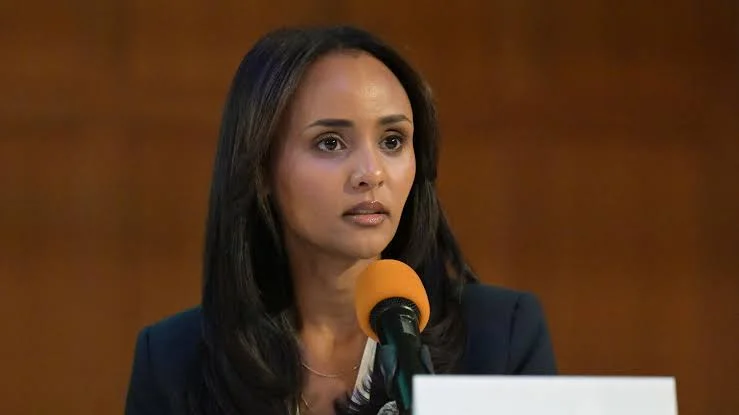
Table of Contents
Melat Kiros has pulled off one of the most stunning primary upsets of the decade, defeating 15-term incumbent Representative Diana DeGette in Colorado’s 1st Congressional District Democratic primary. The victory represents a major milestone for the progressive insurgent wing of the Democratic Party, sending shockwaves through both local and national political establishments. DeGette, a fixture of Colorado politics who has held her Denver-based seat since 1997, was widely expected to secure reelection despite mounting grassroots opposition. However, the emergence of Kiros, a 29-year-old democratic socialist and political newcomer, transformed the race into a high-stakes referendum on the future direction of the Democratic Party, generational leadership, and the limits of establishment politics.
The Dawn of a New Political Era in Denver
For nearly three decades, Denver’s congressional representation has been synonymous with Diana DeGette. First elected during the Clinton administration, DeGette built a reputation as a reliable liberal champion, leading key fights on reproductive rights, federal land conservation, and stem cell research. However, Denver’s political and demographic landscape has shifted dramatically over the last ten years. Rapid gentrification, skyrocketing housing costs, and an influx of younger, ideologically progressive residents have fundamentally altered the electorate. These new voters are increasingly skeptical of incrementalist policies and are eager for systemic economic reforms that directly address the material challenges of working-class citizens.
This shifting ideological current was highlighted in a September 2025 survey conducted by the Colorado Polling Institute, which revealed that 52% of Denver voters held a favorable view of socialism compared to 48% who favored capitalism. For political analysts, this poll was a harbinger of a deeper alignment with democratic socialist ideals. Kiros tapped directly into this sentiment, building a campaign designed to give voice to those who feel left behind by the current economic order. By combining unapologetic economic populism with a strong anti-establishment message, she successfully mobilized a coalition of young voters, renters, and labor activists who felt that the entrenched leadership in Washington was no longer capable of delivering meaningful change.
Who is Melat Kiros? From Ethiopia to the Halls of Congress
To understand the magnitude of this victory, one must look at the unique personal history and rapid political rise of Melat Kiros. Her journey is a testament to the changing face of American leadership and the power of grassroots organizing. Kiros’s narrative resonated deeply in a district that is becoming increasingly diverse and working-class, offering a stark contrast to the traditional pedigree of long-serving congressional representatives.
A Gen Z and Immigrant Story
Born in Addis Ababa, Ethiopia in 1997, Kiros migrated to the United States with her family when she was just an infant, after her father was selected in the U.S. Diversity Visa Lottery. Ironically, her family settled in Denver the very same year that Diana DeGette was first sworn into the House of Representatives. Growing up in Denver, Kiros experienced firsthand the struggles of immigrant families navigating the American economic landscape. She went on to attend public schools and eventually graduated with a law degree from the University of Notre Dame in 2022.
Despite her legal education, Kiros’s career path took an unconventional turn that ultimately strengthened her connection to everyday Denverites. At the time of her campaign, she was working as a barista while pursuing a graduate degree in public policy. This working-class status became a cornerstone of her campaign, allowing her to speak with authentic authority on issues like wage stagnation, labor rights, and the soaring cost of living. Voters saw in Kiros a candidate who shared their daily struggles, rather than a polished professional politician insulated by wealth and tenure.
The Spark That Ignited Her Campaign
The turning point that propelled Kiros into the political arena occurred in late 2023. While working at a prominent New York-based law firm, Kiros wrote a public blog post defending university students who were protesting Israel’s military operations in Gaza. She argued that peaceful anti-war advocacy should not be equated with antisemitism. When the law firm’s partners demanded she remove the post, Kiros refused on principle and was subsequently fired. This event catalyzed her entry into politics, transforming her from a legal professional into a national figurehead for free speech and anti-war advocacy. Rather than backing down, she returned to Denver to launch a grassroots challenge against one of the state’s most powerful political figures.
How the Historic Primary Upset Unfolded
The campaign in Colorado’s 1st District was a masterclass in grassroots organizing versus establishment resource advantage. While DeGette possessed a massive fundraising lead, deep connections to traditional party donors, and the endorsement of major labor unions, Kiros focused her efforts on direct voter contact and localized assembly politics. The first major sign of trouble for the DeGette campaign came during the Colorado Democratic Party’s assembly process. According to her official candidate profile on Ballotpedia, Kiros won a staggering 67% of the delegate vote at the district-level assembly, while DeGette only secured 33%. This early victory guaranteed Kiros a prominent spot on the primary ballot and signaled that the party’s most active grassroots base had already moved on from the incumbent.
Breaking Down the Election Results
On election night, the Associated Press officially called the race at 10:03 p.m. MT, projecting Kiros as the winner. The final vote breakdown illustrated a decisive victory for the challenger in a three-way race that also featured University of Colorado Regent Wanda James.
| Candidate | Vote Percentage | Political Alignment | Key Campaign Theme |
|---|---|---|---|
| Melat Kiros | 49.3% | Democratic Socialist | Systemic economic change, anti-corporate PACs, human rights-focused foreign policy |
| Diana DeGette (Incumbent) | 43.5% | Establishment Progressive | Legislative seniority, reproductive rights advocacy, incremental policy victories |
| Wanda James | 7.2% | Moderate Progressive | Economic development, educational reform, business-friendly progressive policies |
Kiros’s victory was fueled by outstanding turnout in Denver’s dense urban neighborhoods, particularly around university campuses and lower-income rental districts. Young voters and unaffiliated residents, who are allowed to participate in Colorado’s open primaries, broke heavily for Kiros, neutralizing DeGette’s historical advantage among older, high-propensity suburban voters.
The Core Platform: Democratic Socialism vs. Established Progressive Politics
The ideological debate between Kiros and DeGette highlighted a growing rift within the modern Democratic Party. While both candidates claimed the progressive label, their approaches to governance, policy implementation, and systemic reform could not have been more different. DeGette campaigned on her long legislative record and her ability to work within the existing congressional system to secure funding for local projects. Kiros, by contrast, argued that the system itself was fundamentally broken and required a democratic socialist restructuring.
Medicare for All, Housing First, and Universal Childcare
Economically, Kiros’s platform was built on the premise that healthcare, housing, and education are fundamental human rights. While DeGette supported universal healthcare, she advocated for building upon the Affordable Care Act through a public option. Kiros rejected this incremental approach, demanding an immediate transition to a single-payer Medicare for All system that completely outlaws private insurance companies. Furthermore, Kiros addressed Denver’s worsening housing crisis by proposing a bold “Housing First” initiative. This policy includes national rent control guidelines, a massive federal investment in green social housing, and an end to the criminalization of homelessness. She also campaigned heavily on universal childcare and the total cancellation of all federal student loan debt, policy positions that resonated deeply with Gen Z and millennial voters struggling under the weight of inflation.
Foreign Policy and the Israel-Gaza Wedge Issue
Perhaps the most contentious aspect of the primary was foreign policy. Following her personal experiences, Kiros made opposition to U.S. military aid to Israel a central focus of her campaign. She criticized DeGette for her voting record on foreign defense spending and for accepting campaign contributions from defense contractors. Kiros aligned herself with the international anti-war movement, calling for an immediate and permanent ceasefire in Gaza and an end to all unconditional U.S. military assistance to foreign nations engaged in human rights violations. DeGette’s more traditional foreign policy stance, which emphasized diplomacy and conditional humanitarian aid, was painted by the Kiros campaign as out of touch with the moral imperatives of the progressive base. This foreign policy wedge successfully galvanized activist networks and drove high volunteer turnout throughout the district.
The National Implications of the Colorado 1st District Race
The outcome in Colorado’s 1st District is not an isolated incident; rather, it is part of a broader national trend of left-wing insurgents challenging and defeating powerful, long-serving Democratic incumbents. This victory serves as a powerful reminder that high-ranking party officials are no longer safe from primary challenges if they fail to align with the shifting ideological priorities of their local electorates.
A Massive Victory for Progressivism and Democratic Socialists
For organizations like the Democratic Socialists of America (DSA) and Justice Democrats, Kiros’s victory is a monumental validation of their electoral strategy. Coming just a week after similar high-profile progressive victories in New York’s primary elections, the Colorado upset proves that the democratic socialist movement has sustained grassroots momentum. Endorsements from national figures like Senator Bernie Sanders provided Kiros with invaluable political legitimacy and helped mobilize national small-dollar fundraising networks. This win demonstrates that a well-organized grassroots campaign can defeat a heavily funded, 15-term incumbent even in a compressed primary window.
Generational Shift and the Fight Against Corporate PACs
The race also highlighted a stark generational divide. Kiros, representing Gen Z, framed her candidacy as a necessary passing of the torch. She argued that a new generation of leaders is required to face unprecedented challenges like the climate crisis, severe wealth inequality, and systemic political corruption. A key element of this generational message was her absolute rejection of corporate PAC money. By relying solely on small-dollar donations from individual contributors, Kiros drew a sharp contrast with DeGette, whom she accused of being beholden to corporate donors in the pharmaceutical, energy, and defense sectors. This anti-corporate fundraising model is increasingly becoming a litmus test for progressive candidates nationwide.
What Lies Ahead: The General Election and Washington D.C.
With the primary victory secured, Melat Kiros is all but guaranteed to become Denver’s next representative in Congress. Colorado’s 1st Congressional District is a Democratic stronghold that has not elected a Republican to the House of Representatives since 1970. In the upcoming November general election, Kiros will face Republican candidate Christy Peterson, whose platform focuses on fiscal conservatism and business deregulation. Given the heavy partisan tilt of the district, political analysts expect Kiros to cruise to a decisive victory.
Upon her arrival in Washington, D.C., Kiros is poised to make history as the first Black woman to represent Colorado in Congress, as well as the first Gen Z woman elected to federal office. She is expected to quickly align herself with “The Squad,” joining prominent progressive lawmakers like Alexandria Ocasio-Cortez, Ilhan Omar, and Rashida Tlaib. While she will undoubtedly face immense pressure from both the Republican opposition and moderate elements within her own party, Kiros has made it clear that she intends to bring her uncompromising, grassroots-driven brand of democratic socialism directly to the halls of Congress, setting the stage for a new chapter in Colorado and national politics.





One Comment