Michigan’s Democratic Senate Debate: 3 Critical Updates From Stevens vs El-Sayed Contest
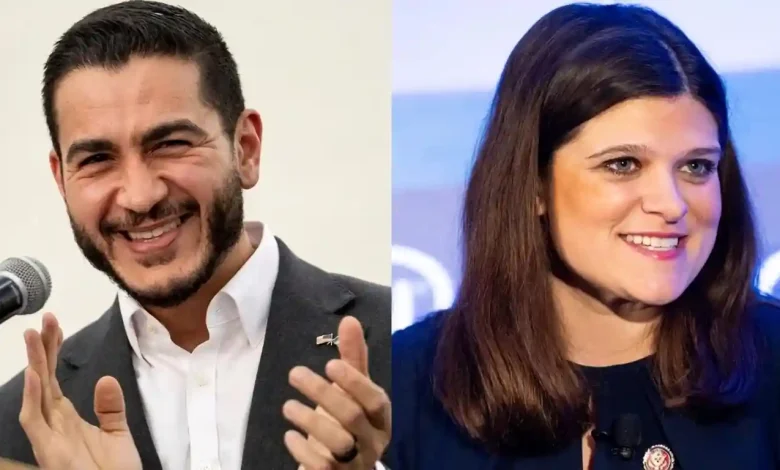
Table of Contents
Michigan’s Democratic U.S. Senate primary erupted into a fierce battle of ideology, integrity, and future vision on Tuesday night, as the two remaining candidates went head-to-head in Grand Rapids. Hosted by local television station WOOD-TV, the debate marked a major turning point in a high-stakes campaign to succeed retiring Democratic Senator Gary Peters. With state Senator Mallory McMorrow recently suspending her campaign, the race has transformed into a direct, two-way ideological duel. On one side is U.S. Representative Haley Stevens, a moderate establishment favorite backed by Senate leadership. On the other side is Dr. Abdul El-Sayed, a progressive former public health director championed by democratic socialist factions and grassroots activists. The combative hour-long encounter exposed deep-seated fractures within the Democratic coalition, particularly regarding foreign policy in the Middle East, campaign finance, and domestic immigration enforcement.
The Grand Rapids Debate: A Factional Battlefront
The debate in Grand Rapids represented more than just a contest between two individuals; it served as a microcosm of the national struggle for the soul of the Democratic Party. For months, the primary had been a three-way contest. However, the dynamics shifted overnight when State Senator Mallory McMorrow announced the suspension of her campaign, clearing the stage for a clean, head-to-head comparison between Representative Haley Stevens and Dr. Abdul El-Sayed. Held at the WOOD-TV studios, the debate was characterized by sharp exchanges, pointed personal critiques, and clear policy contrasts. Throughout the night, both candidates made aggressive pitches to primary voters, aware that the winner of the August 4 primary will face a formidable Republican opponent in November.
Ideological Fault Lines: Pragmatism vs. Progressivism
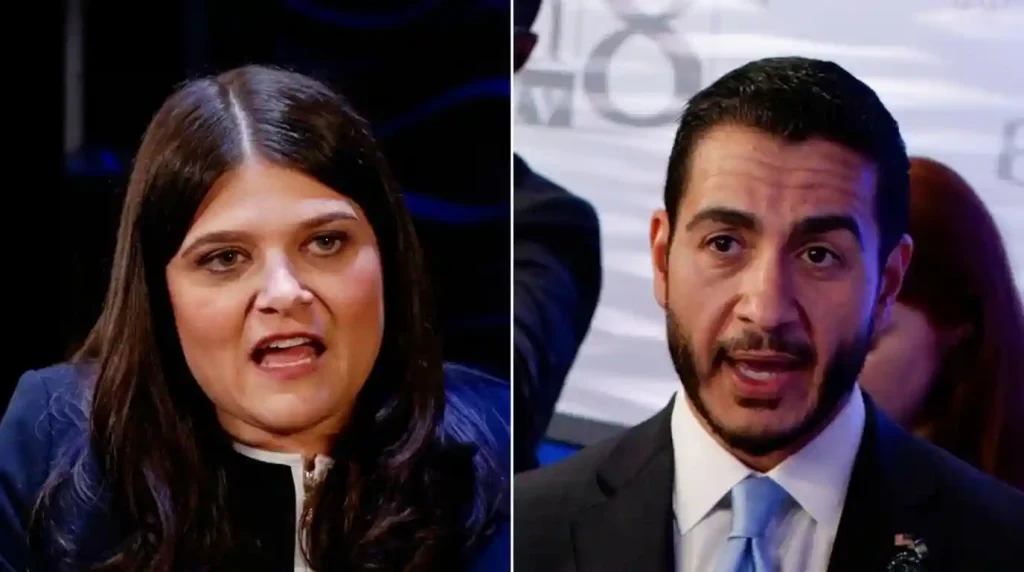
The ideological divide was evident from the opening statements. Stevens and El-Sayed offered fundamentally different theories of change and governance, leaving voters with a stark choice regarding the legislative style they want to represent Michigan in Washington.
Haley Stevens: The Pragmatic Establishment Frontrunner
U.S. Representative Haley Stevens, who has served in the House of Representatives since 2019, pitched herself as a pragmatic, results-driven workhorse. Highlighting her bipartisan legislative accomplishments and her work on manufacturing policy, Stevens argued that she has the necessary experience to navigate the complexities of Capitol Hill. She repeatedly warned that pursuing overly idealistic platforms without a realistic path to passing legislation would only lead to gridlock and disappointment. For Stevens, pragmatism is not a compromise of values, but the most effective mechanism for delivering tangible benefits to working-class families in Michigan.
Abdul El-Sayed: The Insurgent Progressive Voice
Dr. Abdul El-Sayed, the former Wayne County health director, offered a contrasting vision of systemic, structural change. He argued that incrementalism has failed to address the root causes of economic inequality, climate change, and healthcare access. Backed by progressive heavyweights like Senator Bernie Sanders and various democratic socialist groups, El-Sayed sought to capture the energy of the party’s left wing. The energy behind El-Sayed’s campaign mirrors other successful progressive insurgencies nationwide, where grassroots activists have successfully challenged entrenched party leaders, much like when socialists swept New York democratic primaries. El-Sayed asserted that the Democratic Party can only defeat the rising populist right by offering an equally bold, populist left alternative that directly challenges corporate power.
The Israel-Gaza Divide: Divergent Foreign Policy Visions
Perhaps the most intense and emotional exchanges of the evening focused on foreign policy, specifically the ongoing war in the Middle East. With Michigan being home to one of the largest Arab-American populations in the country, as well as a robust Jewish-American community, foreign policy issues carry immense local domestic weight in state politics.
Dr. El-Sayed launched a direct attack on Stevens’ record on Israel, arguing that the United States must stop providing unconditional military aid to Israel. He accused Israeli Prime Minister Benjamin Netanyahu of committing human rights abuses in Gaza and attempting to drag the United States into a broader regional war. El-Sayed urged an immediate and permanent ceasefire, emphasizing that continuing to supply weapons only perpetuates instability. He pointed out that diplomatic failures are visible globally, citing instances where Hezbollah leaders reject U.S.-brokered negotiations, demonstrating that the current military-centric policy of the United States is fundamentally failing to secure long-term peace or stability in the Middle East.
Representative Stevens, who has long been a staunch supporter of Israel and has received financial backing from pro-Israel groups, defended her position by emphasizing Israel’s right to self-defense against terrorist organizations. However, reflecting the changing political winds within the Democratic electorate, Stevens also adopted a noticeably more critical posture toward Netanyahu’s government than in previous years. While she rejected El-Sayed’s call to halt all military aid, she argued that U.S. assistance should be leveraged to ensure the flow of humanitarian aid into Gaza and to push for a sustainable two-state solution. Still, El-Sayed criticized her position as an unacceptable middle ground, arguing that half-measures do nothing to stop the violence.
Campaign Finance and Corporate Influence
The debate over personal integrity was closely tied to campaign finance. El-Sayed repeatedly targeted Stevens for her reliance on corporate PAC money and independent expenditure committees. He highlighted the millions of dollars spent by outside super PACs to support her campaign, arguing that candidates who rely on high-dollar donors are inevitably beholden to their financial benefactors rather than the working-class voters they seek to represent. ‘If we want a government that works for regular people, we must elect leaders who are not funded by billionaires,’ El-Sayed declared.
Stevens strongly defended her integrity, stating that her campaign is supported by a broad and diverse coalition of tens of thousands of individual donors, labor unions, and local advocacy groups. She argued that her fundraising success reflects her deep roots in the state and her ability to build the massive, well-funded campaign infrastructure necessary to defeat a Republican opponent in a competitive general election. Stevens countered that purity tests on fundraising are counterproductive and could ultimately hand the Senate seat to the Republican Party by forcing the Democratic nominee to fight with one hand tied behind their back.
Immigration Reform and the Future of ICE
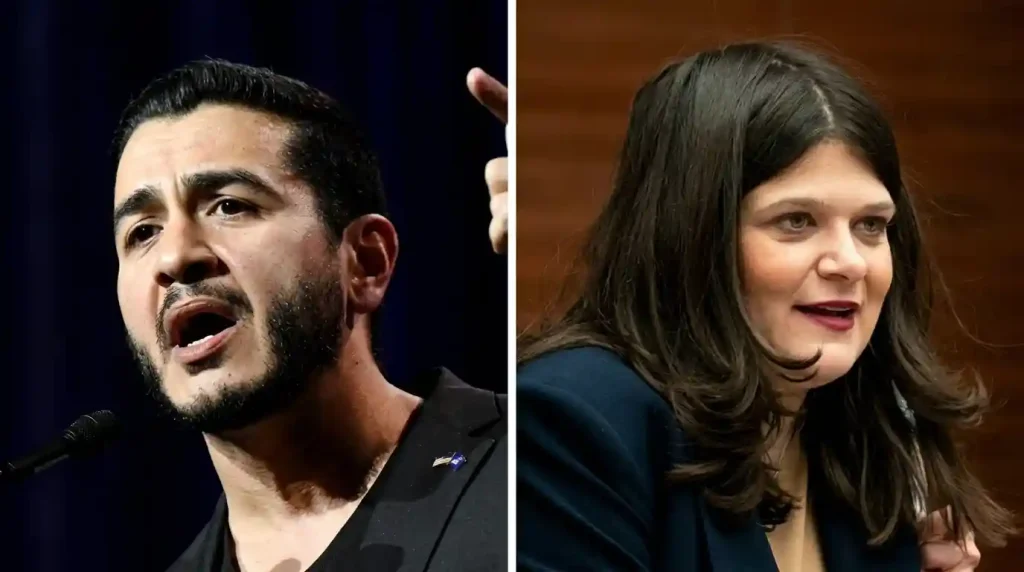
On domestic issues, the candidates clashed sharply over immigration enforcement and border security. As a state that shares a northern border with Canada and has a significant agricultural sector dependent on immigrant labor, Michigan has a direct interest in federal immigration policy.
The conversation turned to the role of federal law enforcement agencies, such as Immigration and Customs Enforcement (ICE). Stevens argued that while the United States must maintain secure borders, ICE has frequently engaged in overreach and lacked proper accountability. She called for a series of comprehensive reforms, including increased judicial oversight, humanitarian standards for detention, and a pathway to citizenship for undocumented immigrants. Stevens argued that reform is the only realistic way to restore trust and efficiency to the system. This debate over ICE’s role has taken on added significance nationally, particularly when federal leadership appointments stir controversy, such as when Trump nominated Lance Schroyer to lead ICE. Stevens maintained that having responsible, accountable leadership within existing federal agencies is critical to protecting national security while upholding humanitarian values.
El-Sayed rejected Stevens’ reformist approach, reiterating his call to completely abolish ICE. He argued that the agency is fundamentally corrupt and built on a foundation of xenophobia and systemic bias. El-Sayed advocated for dismantling the agency entirely and replacing it with a new immigration system focused on human rights, integration, and legal processing. Stevens responded by calling El-Sayed’s proposal to abolish the agency unrealistic and politically dangerous, arguing that it would alienate moderate voters and leave the country without an essential law enforcement mechanism.
Key Differences Between the Candidates
To help primary voters understand the core distinctions between the two candidates, the following table outlines their contrasting positions on major policy issues debated in Grand Rapids:
| Policy Area | Haley Stevens (Pragmatic/Moderate) | Abdul El-Sayed (Progressive/Democratic Socialist) |
|---|---|---|
| Foreign Policy (Israel & Gaza) | Supports Israel’s self-defense; advocates leveraging diplomatic aid to ensure humanitarian access and a two-state solution. | Advocates halting all military aid to Israel; demands an immediate, permanent ceasefire and structural changes to U.S.-Israel ties. |
| Campaign Finance | Accepts traditional PAC funding and labor union support; emphasizes building a robust financial infrastructure to defeat Republicans. | Rejects all corporate PAC and super PAC money; relies exclusively on small-dollar grassroots donations. |
| Immigration & ICE | Supports comprehensive border security, humanitarian reforms, and strict oversight/accountability for ICE. | Calls for the complete abolishment of ICE and its replacement with a human-rights-centered immigration agency. |
| Economic & Technology Policy | Promotes targeted investments in manufacturing, clean energy, and public-private partnerships. | Advocates for public ownership stakes in major AI companies and sweeping wealth taxes to fund social programs. |
Strategic Implications for the November General Election
The ideological clash between Stevens and El-Sayed has profound strategic implications for the general election in November, where Michigan is expected to be one of the most closely contested states in the nation.
The Stakes: Retaining Gary Peters’ Open Senate Seat
The retirement of Senator Gary Peters has left Democrats in a highly vulnerable position. Keeping Michigan’s Senate seat in the Democratic column is absolutely critical for the party’s hopes of maintaining or reclaiming a majority in the U.S. Senate. Historically, Michigan has voted for Democrats in statewide Senate races, but these victories have often depended on high turnout in urban centers like Detroit, Grand Rapids, and Flint, combined with competitive performance in suburban counties. The primary election on August 4 will decide which strategic philosophy Democrats believe is better suited to replicate this winning coalition.
The Republican Threat: Mike Rogers and the Swing State Challenge
Waiting in the wings is the presumptive Republican nominee, former U.S. Representative Mike Rogers. Unopposed in his primary, Rogers has spent months consolidating his support and building an impressive war chest of more than $4.2 million. Rogers, a skilled campaigner with deep ties to the business community and security establishment, is positioned to appeal to moderate and independent voters who may be alienated by a highly polarized political environment. Establishment Democrats argue that nominating El-Sayed would hand Rogers a powerful rhetorical weapon, allowing him to paint the entire Democratic ticket as out-of-touch radicals. Conversely, progressives argue that Stevens’ moderate record will fail to inspire the high level of youth and minority voter turnout required to secure a Democratic victory. Both campaigns must weigh these strategic calculations as they head into the final weeks of the primary season.
Conclusion: A Defining Moment for Michigan Democrats
As the August 4 primary approaches, Michigan’s Democratic voters face a critical, defining decision. The debate in Grand Rapids clearly demonstrated that this contest is not merely about choosing a candidate, but about deciding the overarching identity of the party. Whether the electorate chooses the pragmatic, experienced legislative style of Haley Stevens or the bold, transformative progressive vision of Abdul El-Sayed, the choice will have lasting consequences for Michigan and the national political landscape. With the balance of power in Washington hanging in the balance, the outcome of this primary will be watched closely by observers across the nation.