Hezbollah leader Naim Qassem Rejects US-Brokered Security Pact
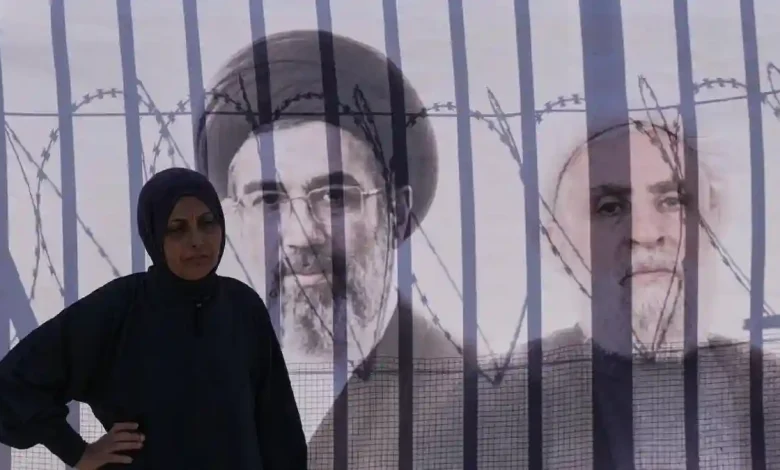
Table of Contents
Hezbollah leader Naim Qassem has formally rejected the newly signed, U.S.-brokered security framework agreement between Lebanon and Israel, describing the deal as a total surrender to Israeli demands. In his first public statement following the conclusion of the high-stakes negotiations in Washington, Qassem declared the bilateral agreement “null and void.” He accused the Lebanese government of making severe unilateral concessions that compromise Lebanon’s territorial integrity and sovereign rights. This critical political rupture comes exactly one day after representatives from Beirut and Tel Aviv signed the framework, which was presented by U.S. diplomats as a historic breakthrough aimed at ending months of intense cross-border violence. Despite the signing of this security document, the ground reality in southern Lebanon remains volatile, characterized by persistent military strikes and ongoing blockades that continue to disrupt the lives of over a million displaced citizens.
Hezbollah Leader Naim Qassem Rejects the Security Agreement
The swift and absolute rejection of the security deal by Hezbollah Secretary-General Naim Qassem has cast a long shadow over the diplomatic efforts led by the United States. Speaking from an undisclosed location, Qassem argued that the document signed in Washington does not represent the interests of the Lebanese people, but rather serves as a unilateral capitulation to the security demands of Tel Aviv. He asserted that Hezbollah, as a prominent armed resistance movement, was not a party to these specific negotiations and therefore is not bound by any of its terms. Qassem stressed that the group would not leave the battlefield under any circumstances, vowing that their military readiness remains fully intact despite the political maneuvers occurring in foreign capitals.
This development has effectively frozen expectations of a rapid de-escalation along the Blue Line. By labeling the agreement “null and void,” Hezbollah has signaled its intention to maintain its defensive posture, directly challenging the authority of the Lebanese state apparatus that endorsed the treaty. According to regional defense analysts, Qassem’s defiant rhetoric is intended to reassure Hezbollah’s political base while warning the central government in Beirut against attempting to enforce the agreement’s controversial disarmament clauses. The friction between Hezbollah’s independent military stance and the official diplomatic path of the Lebanese cabinet represents a profound constitutional and security crisis for the nation, threatening to further destabilize an already fractured domestic political landscape.
Inside the U.S.-Brokered Security Agreement
The framework agreement, concluded on Friday after five grueling rounds of ambassador-level negotiations in Washington, was designed to establish a phased pathway toward a permanent cessation of hostilities. Initiated under the direct mediation of senior U.S. officials, including U.S. Secretary of State Marco Rubio, the treaty was hailed by its proponents as a landmark diplomatic achievement. The main objective was to create a secure environment that would allow displaced civilians on both sides of the border to return to their homes. However, the compromise required to reach this agreement has left several critical issues unresolved, leading to immediate pushback from Lebanon’s heavily armed political factions.
To understand the structural differences between this newly signed framework and the diplomatic understandings that preceded it, we can examine the core mechanics of both documents. The following table highlights the diverging priorities of the Washington framework agreement and the previously negotiated Iran-U.S. memorandum of understanding.
| Strategic Parameters | U.S.-Brokered Security Agreement (June 26, 2026) | Iran-U.S. Memorandum of Understanding (Early June 2026) |
|---|---|---|
| Primary Goal | Phased security arrangement along the Israel-Lebanon border to establish a buffer zone. | Immediate and permanent ceasefire on all regional fronts to end the wider Iran war. |
| Israeli Troop Withdrawal | Gradual and phased withdrawal from designated sectors, allowing temporary presence in a buffer zone. | Immediate, complete withdrawal of Israeli forces from all occupied Lebanese territories. |
| Sovereignty & Security | Grants Israel operational leverage and links withdrawal directly to Hezbollah’s disarmament. | Guarantees Lebanon’s complete territorial integrity with no unilateral security concessions. |
| Military Mandates | Deployment of the Lebanese Armed Forces (LAF) to replace non-state armed groups in the south. | Establishment of state-to-state agreements within a broader 60-day diplomatic roadmap. |
| Political Legitimacy | Signed by Lebanese state envoys; rejected by Hezbollah and the Amal Movement. | Acknowledged by Tehran and Washington; supported by regional resistance factions. |
The Core Tenets of the June 2026 Framework
At the center of the Washington framework is a multi-step plan for the gradual withdrawal of Israeli forces from specific pockets of southern Lebanon. This process is supposed to occur in parallel with the progressive deployment of the Lebanese Armed Forces (LAF) to the border region, filling the vacuum left by departing troops. Proponents of the deal argue that reinforcing the national military is the only viable method to restore state authority over the entirety of Lebanese territory. Additionally, the plan calls for international observers to monitor the border, providing an objective mechanism to report violations and maintain a fragile peace.
However, the controversial core of the agreement permits Israeli defense forces to maintain their presence in an expanded “security buffer zone” for an undefined transition period. This buffer zone, which extends approximately ten kilometers into Lebanese territory, is viewed by critics as a de facto occupation. The Lebanese government’s decision to accept this temporary arrangement has drawn fierce criticism from various political quarters. Opponents argue that by consenting to an ongoing foreign military presence, the Lebanese state has effectively legalized a breach of its own borders, setting a dangerous precedent for future territorial disputes.
Disarmament of the Resistance: A Dangerous Red Line
The most explosive element of the security agreement is the clause that links the complete withdrawal of Israeli troops to the disarmament of Hezbollah across all regions of Lebanon. For Hezbollah, its arsenal is not merely a political chip but the cornerstone of its strategic deterrence against Israeli military power. Naim Qassem emphasized that demanding the disarmament of the resistance as a precondition for national liberation crosses “all red lines” and constitutes an existential threat to Lebanon. He argued that stripping the country of its primary defensive shield would turn Lebanon into a “plaything in the hands of the Israeli enemy,” exposing it to future incursions without any credible means of resistance.
From Hezbollah’s perspective, the Lebanese Armed Forces, while respected as a national institution, currently lack the advanced defensive capabilities and heavy weaponry required to repel a full-scale Israeli offensive. Therefore, any move to disarm non-state actors before a comprehensive, fair, and permanent peace is established is seen as a strategic trap. Qassem’s speech made it clear that the organization views the disarmament clause as an attempt to achieve through diplomacy what Israel could not fully accomplish through military force on the battlefield, thereby ensuring that the group will actively resist any enforcement of this provision.
Ongoing Hostilities and the Nabatieh al-Fawqa Drone Strike
Demonstrating the extreme fragility of the diplomatic tract, a lethal Israeli drone strike targeted the southern Lebanese town of Nabatieh al-Fawqa just one day after the framework agreement was signed in Washington. The town, situated outside the officially designated security buffer zone, became the latest flashpoint in a conflict that refuses to subside. According to the state-run Lebanese National News Agency, the strike resulted in significant structural damage and casualties, underscoring the immediate danger faced by residents even in areas supposedly protected from active combat operations. The continuous nature of these operations indicates that the signed document has done little to alter the kinetic reality on the ground.
The Israeli military confirmed the drone operation to foreign press agencies, including Reuters, explaining that the strike was carried out using an unmanned aerial vehicle because ground forces were not deployed in that specific sector. The Israeli Defense Forces (IDF) stated that the mission targeted an individual who posed an immediate threat to their forces, though they declined to provide public evidence or elaborate on the identity of the target. This preemptive action highlights Israel’s ongoing strategy of maintaining operational freedom of action across Lebanese airspace, a policy that directly contradicts Beirut’s demands for full territorial sovereignty and a halt to all unauthorized military flights over its sovereign territory.
The Broader Geopolitical Context: The Iran-U.S. Memorandum
The current confrontation cannot be viewed in isolation; it is deeply intertwined with the broader regional war involving Iran and its allied networks. Just two weeks prior to the signing of the Washington agreement, a separate memorandum of understanding (MoU) was reached between the United States and Iran. According to senior diplomatic sources in Tehran, that prior agreement was intended to establish a comprehensive framework to end the wider regional conflict. Both Iran and Hezbollah maintain that during those negotiations, Washington had pledged to guarantee an immediate end to all hostilities in Lebanon as an essential component of the regional package.
Hezbollah leader Naim Qassem pointed to this prior U.S.-Iran MoU as the only legitimate roadmap for peace, arguing that its terms should take precedence over the newly signed Washington bilateral agreement. The MoU reportedly guaranteed Lebanon’s complete territorial integrity and envisioned a process that would lead to a comprehensive ceasefire without demanding unilateral concessions from the resistance. By shifting the diplomatic focus to a bilateral arrangement that imposes severe restrictions on Lebanon while allowing temporary Israeli occupation, Hezbollah argues that the United States has reneged on its prior diplomatic commitments, prioritizing Israeli security interests at the expense of regional stability.
Humanitarian Toll and Mass Displacement in Lebanon
The political and military stalemate continues to exact a devastating toll on the civilian population of Lebanon. Over the past year of parallel hostilities, more than one million Lebanese citizens have been forced to flee their homes, creating an unprecedented humanitarian emergency. Entire villages in the south have been reduced to rubble, and major urban centers are struggling to accommodate the massive influx of internally displaced persons (IDPs). The lack of adequate shelter, medical supplies, and basic utilities has pushed Lebanon’s fragile social infrastructure to the brink of total collapse, with non-governmental organizations warning of a deepening public health crisis.
For hundreds of thousands of displaced families, the signing of the Washington framework agreement brought a brief glimmer of hope, which was quickly extinguished by Hezbollah’s rejection and the subsequent drone strikes. Many of those displaced belong to the Shi’ite Muslim communities of the south, who are now caught in a painful dilemma: they cannot return to their homes due to the ongoing Israeli military presence, yet they face increasingly hostile economic conditions in other parts of the country. Without a comprehensive and universally accepted ceasefire, the prospects for a safe, dignified, and organized return of these displaced populations remain distant, cementing a state of permanent exile for a significant portion of Lebanon’s citizenry.
Political Divergence Within Lebanon and Israel’s Stance
The division over the U.S.-brokered agreement has exposed deep political fault lines within the Lebanese state, highlighting the chronic lack of national consensus on critical security matters. While some government officials and moderate media outlets have characterized the framework as a “historic milestone” and a necessary lifeline to secure international aid, nationalist and resistance-aligned factions view it as a betrayal. This divergence prevents the state from presenting a unified front, leaving it highly vulnerable to external diplomatic and military pressures.
Local Reactions: Amal Movement and Lebanese Civil Debate
Opposition to the Washington security agreement is not confined to Hezbollah alone. The Amal Movement, a major Shi’ite political party led by Parliament Speaker Nabih Berri, has also voiced strong reservations about the terms of the deal. In a public statement, Amal representatives criticized the framework as heavily unbalanced, arguing that its provisions disproportionately favor Israeli security interests while failing to provide concrete guarantees for Lebanese sovereignty. The party warned that accepting a phased withdrawal that legitimizes an expanded Israeli security zone would undermine decades of national struggle and divide the Lebanese public at a time when national unity is desperately needed.
Conversely, some political factions in Beirut, particularly those critical of Hezbollah’s armed status, have quietly supported the agreement. They argue that Lebanon cannot afford to remain in a perpetual state of war to satisfy regional geopolitical agendas. Proponents of this view assert that the deployment of the Lebanese Army along the southern border is the only logical step toward building a modern, sovereign state where the monopoly on the legitimate use of force rests solely with national institutions. This ongoing domestic debate has paralyzed the decision-making process, making it highly unlikely that the Lebanese government can effectively implement any aspect of the agreement without risking a severe internal conflict.
Israeli Strategy and Security Buffer Zones
In Tel Aviv, the reaction to the framework agreement has been largely positive, though characterized by a firm resolve to maintain strict security measures. Israeli Defence Minister Israel Katz welcomed the signing of the agreement, describing it as a vital step toward protecting northern Israeli communities from cross-border rocket fire and incursions. However, Katz made it clear that the Israeli military would not hesitate to operate inside Lebanon if its security parameters were violated, regardless of diplomatic objections from Washington or Beirut. The insistence on maintaining a self-declared security buffer zone extending ten kilometers into southern Lebanon remains a non-negotiable point for the Israeli defense establishment.
This strategy of establishing a buffer zone is designed to push Hezbollah’s anti-tank missiles and elite forces away from the border, thereby creating a physical barrier to protect Israeli civilian centers. However, by maintaining troops and conducting drone strikes beyond this zone, as seen in Nabatieh al-Fawqa, Israel has shown that its definition of security is highly flexible and proactive. This approach ensures that any ceasefire agreement remains highly precarious, as any perceived movement or threat along the border can trigger a preemptive military response, instantly shattering the diplomatic framework and reigniting active hostilities.
Analysis of the Strategic Impasse in the Middle East
The rejection of the security agreement by Hezbollah leader Naim Qassem underscores the profound difficulty of resolving complex asymmetric conflicts through traditional state-to-state diplomacy. When international mediators negotiate exclusively with official state representatives, they often overlook the powerful non-state actors who possess actual veto power on the ground. In Lebanon, the weak central government lacks the military power to disarm Hezbollah or enforce international treaties against its will. Consequently, any agreement that does not secure the consent of all major armed factions is unlikely to succeed, serving merely as a temporary diplomatic pause rather than a durable peace.
As long as the root causes of the conflict—including territorial disputes, the status of Palestinian refugees, and the broader regional rivalry between Washington and Tehran—remain unaddressed, tactical security agreements will continue to fail. The parallel wars in Gaza, Lebanon, and the wider region are deeply interconnected, meaning that a localized truce in one theater is constantly vulnerable to escalation in another. For a lasting peace to be realized, a comprehensive regional diplomatic framework is required—one that respects the sovereignty of all nations involved while addressing the core security concerns of both state and non-state actors. Until such a holistic approach is adopted, the cycle of violence, displacement, and diplomatic failure is destined to continue indefinitely.



2 Comments