Democratic Primaries 2026: Socialists Sweep New York City
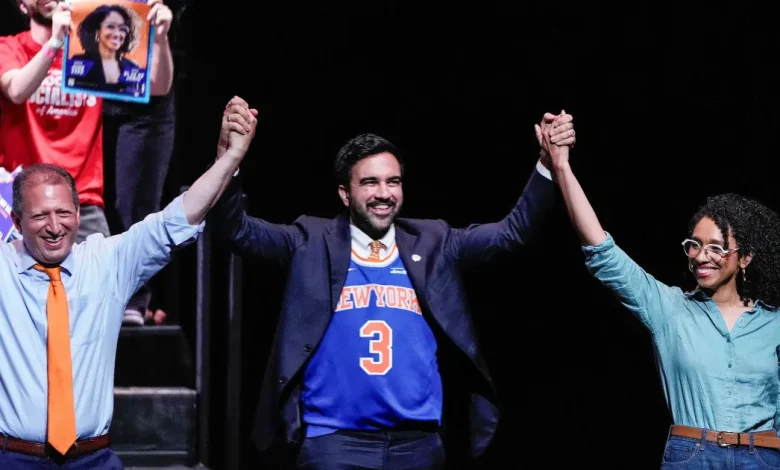
Table of Contents
Democratic primaries in New York City have delivered an unprecedented electoral earthquake, highlighting an ongoing tale of two distinct Democratic parties. Left-wing candidates running to smash the status quo are gaining substantial ground in big blue cities like New York, while the center-left establishment is holding its own in suburban areas. The results paint a complicated picture for Democrats, with lingering questions about whether the democratic socialist movement will stick to deep-blue areas where it can take risks because Republicans stand no chance of victory, or whether it will expand to competitive areas and complicate the party’s calculus in general elections. This ideological tug-of-war has been dramatized by yesterday’s primary contests, which saw high-profile progressive challengers sweep aside established incumbents under the banner of a rising democratic socialist movement.
Introduction: The Tale of Two Democratic Parties
The intra-party divide within the Democratic coalition is not a new phenomenon, but the June 2026 primaries have accelerated this cleavage to a historic degree. For years, the party has functioned as a big tent, balancing the moderate instincts of suburban swing voters with the progressive, transformation-oriented passion of urban activists. However, the latest results suggest that this big tent is splitting along geographic and ideological fault lines. In deep-blue metropolitan areas, the appetite for radical structural change has reached a boiling point, driven by frustrations over housing affordability, corporate influence in politics, and international conflicts.
Conversely, the center-left establishment continues to maintain a secure grip on the suburbs, where voters often view democratic socialism with skepticism. Moderate suburbanites tend to prioritize incremental progress, fiscal caution, and political stability, viewing the far-left’s policy proposals as electoral liabilities in general elections. This geographical sorting has created two highly distinct Democratic parties: one that is deeply socialist and urban, and another that is moderate and suburban. Understanding this dichotomy is essential to decoding the future trajectory of American progressive politics.
The New York City Cleavage: A Clean Sweep for Mayor Mamdani’s Allies
In New York City, democratic voters delivered a resounding rebuke to their party’s establishment by ousting two veteran congressional incumbents in favor of progressive champions. The undisputed architect of this progressive takeover is Mayor Zohran Mamdani, a self-described democratic socialist who was elected to lead America’s largest city in late 2025 and took office in January 2026. Mamdani, who previously served as a New York State Assemblymember representing Queens, has rapidly built a formidable political machine that is now translating municipal power into federal influence.
By actively endorsing and campaigning alongside a trio of left-wing challengers, Mamdani successfully gambled his political capital to secure a perfect three-for-three sweep in the city’s congressional primaries. The victories not only solidify Mamdani’s status as a kingmaker but also demonstrate the durability of the Democratic Socialists of America (DSA) in urban organizing. The results have sent shockwaves through the national party, proving that the ‘Mamdani effect’ is capable of dismantling even the most entrenched establishment operations in the country.
Darializa Avila Chevalier’s Historic Defeat of Adriano Espaillat in NY-13
Perhaps the most shocking result of the night occurred in New York’s 13th Congressional District, where public defense investigator and community organizer Darializa Avila Chevalier unseated five-term incumbent Representative Adriano Espaillat. Espaillat, a towering figure in congressional politics, serves as the chair of the powerful Congressional Hispanic Caucus and was famously the first formerly undocumented immigrant elected to Congress. Despite his deep ties to the community and a multi-million-dollar war chest backed by corporate donors, Espaillat was defeated by the 32-year-old political newcomer in a stunning 49% to 45% upset.
Chevalier’s campaign, heavily backed by Mayor Mamdani, ran on an unapologetically left-wing platform that criticized Espaillat’s cozy relationship with real estate developers and pro-Israel lobbying groups like AIPAC. The race turned highly contentious in its final weeks, marked by racially-charged and Islamophobic attacks against Chevalier—who is Afro-Dominican and Muslim—by Espaillat’s senior adviser. Chevalier’s ability to withstand these attacks and overcome a barrage of negative super PAC advertising highlights a profound generational and ideological shift within the diverse, working-class communities of Upper Manhattan and the Bronx.
Brad Lander’s Left-Wing Surge Against Dan Goldman in NY-10
Further downtown, in New York’s 10th Congressional District, former City Comptroller Brad Lander completed another high-profile progressive coup by handily unseating two-term incumbent Representative Dan Goldman. Goldman, a wealthy former federal prosecutor who served as lead counsel for House Democrats during Donald Trump’s first impeachment, was widely seen as a rising star in the party’s moderate wing. However, Lander ran a highly coordinated campaign to Goldman’s left, tapping into progressive anger over housing and foreign policy.
The primary in NY-10, which spans Lower Manhattan and progressive enclaves of Brooklyn like Park Slope, became a proxy war over campaign finance and the war in Gaza. Goldman matched every grassroots dollar with his personal fortune, while Lander relied on small-dollar donations and the enthusiastic backing of Mamdani’s coalition. Lander’s aggressive criticism of Israeli military actions and corporate influence resonated deeply with the district’s highly educated, progressive electorate, resulting in a landslide victory that redefined the political standards of the district.
Claire Valdez and the ‘Commie Corridor’ Triumph in NY-7
Completing the trifecta of socialist victories, State Assemblymember and union organizer Claire Valdez won a decisive victory in New York’s 7th Congressional District. Valdez ran to succeed the retiring icon Representative Nydia Velázquez, who represented the Brooklyn and Queens-based seat for over three decades. Valdez easily defeated Brooklyn Borough President Antonio Reynoso—who had the endorsement of both Velázquez and the Working Families Party—as well as City Councilmember Julie Won.
The 7th District, encompassing neighborhoods like Bushwick, Greenpoint, and Ridgewood, has earned the nickname ‘Commie Corridor’ due to its young, highly progressive, and renter-heavy demographic. Valdez, a Texas transplant and former Columbia University visual arts program assistant, leveraged her background as a United Auto Workers (UAW) Local 2110 organizer to build a diverse coalition of labor activists and democratic socialists. Her 20-point victory over the institutional left’s preferred candidate cements the DSA as the dominant political force in western Queens and northern Brooklyn. According to The Guardian’s coverage of the race, this victory signals a permanent structural realignment of the city’s progressive movement.
Comparison of Key NYC Congressional Primary Results
The following table provides a comprehensive overview of the three pivotal congressional primary races in New York City, outlining the candidates, the key issues that defined the campaigns, and the political backing that drove the outcomes.
| District Name & Geography | Winning Challenger | Defeated Incumbent / Rival | Primary Campaign Focus | Key Backers & Endorsements |
|---|---|---|---|---|
| NY-13 (Upper Manhattan & parts of the Bronx) | Darializa Avila Chevalier | Rep. Adriano Espaillat (Incumbent) | Housing justice, anti-corporate funding, criticism of AIPAC | Mayor Zohran Mamdani, NYC-DSA |
| NY-10 (Lower Manhattan & Brooklyn Heights) | Brad Lander | Rep. Dan Goldman (Incumbent) | Campaign finance reform, anti-genocide stance, wealth inequality | Mayor Zohran Mamdani, Progressive Activists |
| NY-7 (Bushwick, Williamsburg, & Ridgewood) | Claire Valdez | Antonio Reynoso / Julie Won | Renter protections, union building, green transition | Mayor Zohran Mamdani, UAW Local 2110, NYC-DSA |
The National Horizon: Washington D.C. and Los Angeles Join the Wave
The leftward shift of urban Democratic electorates is by no means isolated to New York City. Across the United States, municipal centers are increasingly embracing democratic socialist leadership. In Washington D.C., Ward 4 Councilmember Janeese Lewis George recently won the Democratic primary for mayor, putting her on track to lead the nation’s capital. Lewis George, a self-described democratic socialist, campaigned on a bold platform of mixed-income social housing, child care expansion, and environmental justice, securing a decisive double-digit victory over moderate Kenyan McDuffie. Her victory has already ignited a fierce response from conservative leaders, with Donald Trump threatening to revoke D.C.’s home rule in response to her win.
Meanwhile, in Los Angeles, progressive champion Nithya Raman has successfully advanced to a runoff election against incumbent mayor Karen Bass. Raman, an urban planner and progressive City Councilmember, has campaigned on a platform centered on the city’s severe housing shortage and homelessness crisis. By positioning herself as a democratic socialist alternative to Bass’s more moderate administration, Raman has drawn direct comparisons to Zohran Mamdani. Together, these municipal breakthroughs in New York, Washington D.C., and Los Angeles suggest that the progressive left has successfully established a permanent governing foothold in America’s largest and most economically vital cities.
The Suburban Divide: Why the Establishment Holds the Outside
While the democratic socialist movement celebrates historic gains in urban centers, the political reality changes dramatically once one crosses the city limits. In suburban congressional districts across New York and the nation, center-left establishment Democrats have successfully held their ground. Suburban primary voters, who are statistically older, more likely to own homes, and highly focused on local economic stability, have repeatedly rejected the more disruptive rhetoric of the democratic socialist wing.
Moderate establishment candidates in suburban areas have built winning coalitions by focusing on pragmatic issues: preserving reproductive rights, passing sensible gun safety legislation, lowering healthcare costs, and securing federal funding for local infrastructure. To these voters, the far-left’s platforms—including calls to reduce police funding, dismantle corporate structures, and condition military aid to allies—are seen as radical and electorally toxic. This resistance ensures that the suburban ‘firewall’ remains intact, preventing the progressive wing from achieving a total takeover of the party’s national apparatus.
General Election Implications: A Complicated Calculus for 2026 and Beyond
The divergence between urban progressives and suburban moderates creates a highly complicated electoral calculus for national Democrats as they prepare for the 2026 midterm elections and beyond. On one hand, the energy, passion, and organizing power of the democratic socialist movement are vital assets for driving voter turnout, particularly among young people, renters, and voters of color who feel alienated by mainstream politics. In deep-blue, non-competitive districts, allowing these candidates to run and win poses little general election risk, as Republicans stand virtually no chance of victory.
On the other hand, the rise of high-profile democratic socialists provides ample political ammunition to the Republican Party. Conservative strategists have already begun weaponizing the primary results, arguing that moderate ‘establishment’ Democrats are merely a facade for a party increasingly controlled by far-left radicals. If the democratic socialist brand expands into competitive swing districts, it could alienate moderate suburban voters who are essential to winning congressional majorities. National Democratic leaders must navigate this delicate balance, deciding whether to embrace the populist energy of their urban base or distance themselves to protect vulnerable moderates in the suburbs.