3 Alarming Facts About National Security Act Sentencing in London Spy Case
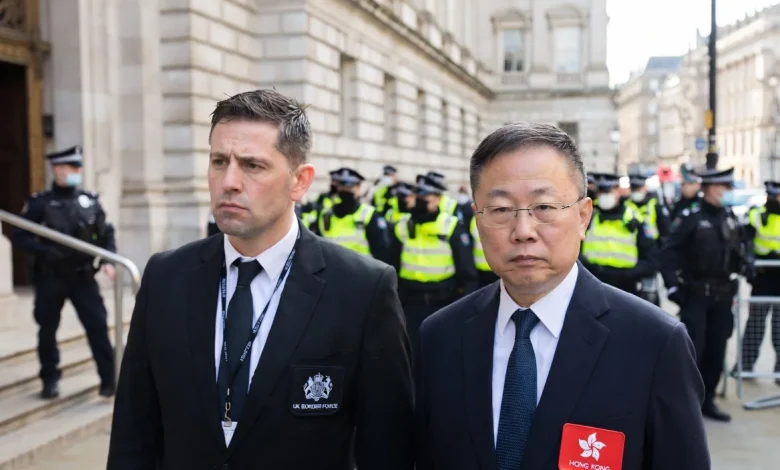
Table of Contents
National Security Act sentencing at London’s Central Criminal Court has concluded with substantial prison terms for two Chinese-British nationals convicted of conducting illegal ‘shadow policing’ operations on British soil. Chi Leung ‘Peter’ Wai, 41, a serving UK Border Force officer and former police constable, was sentenced to 10 years in prison. His co-defendant, Chung Biu ‘Bill’ Yuen, 66, a retired Hong Kong police superintendent who served as an office manager at the Hong Kong Economic and Trade Office (HKETO) in London, received an eight-year term. The landmark trial at the Old Bailey marks the first-ever convictions under the UK’s newly minted National Security Act 2023, sending a defiant message to foreign intelligence agencies attempting to conduct transnational repression in the United Kingdom.
Mrs. Justice Bobbie Cheema-Grubb, presiding over the televised sentencing on Thursday, June 18, 2026, characterized the defendants’ activities as “deliberate, concerted, and serious”. She emphasized that the espionage ring had caused “real and significant” harm, leaving those targeted in a state of constant fear and distress. The judge pointedly addressed Wai’s “arrogant” demeanor, stating that he exhibited a profound “sense of entitlement” to abuse his position of public trust for the benefit of a hostile foreign power.
Landmark Justice at the Old Bailey
The trial, which captivated the National Security British public and drew intense international scrutiny, has exposed the highly sophisticated and chilling methods used by foreign states to monitor, intimidate, and suppress political dissidents living abroad. As detailed in the official sentencing remarks published by the UK Courts and Tribunals Judiciary, the gravity of these acts cannot be overstated. Modern espionage has evolved beyond the traditional theft of state secrets or military plans; it now actively targets human rights, individual liberties, and the sovereign integrity of democratic nations.
The prosecution successfully argued that between December 2023 and May 2024, Wai and Yuen acted as proxy agents for the Hong Kong National Security intelligence services, executing a coordinated campaign of surveillance, information gathering, and harassment. Their targets were not military secrets or state infrastructure, but rather human lives—specifically, prominent pro-democracy activists and British politicians who have dared to criticize Beijing’s authoritarian policies.
Shadow Policing and the Harassment of Dissidents
Under the guise of legitimate security and trade operations, the duo established a physical and digital surveillance network designed to track individuals who had sought asylum in the UK. This included former National Security Hong Kong lawmaker Nathan Law, a high-profile figure in the pro-democracy movement who was granted political asylum by the British government in 2021. The defendants systematically tracked Law’s movements, mapped his social circles, and sought to compile detailed profiles of his daily routine, posing a direct threat to his safety.
This “shadow policing” operated as an unauthorized extension of the Hong Kong National Security police force, operating on British streets without the knowledge or consent of local authorities. By monitoring dissidents, compiling dossiers, and feeding this information back to intelligence handlers in Hong Kong, Wai and Yuen directly undermined the safety and security that the UK legal system promises to those fleeing persecution.
Targets Labeled as ‘Cockroaches’
The communications recovered from the defendants’ electronic devices exposed a chilling ideological hostility towards their targets. In encrypted messaging exchanges, National Security Wai and Yuen routinely referred to the pro-democracy campaigners as “cockroaches”—a highly derogatory term widely used by the Hong Kong Police Force and state-backed media during the 2019 protests to dehumanize civic activists.
The trial revealed that this hostile terminology was not merely rhetorical; it guided their operational focus, framing their surveillance activities as a crusade to neutralize political opponents of the Hong Kong regime. The scope of the espionage ring extended beyond activists to encompass British politicians who have championed human rights in Hong Kong and Xinjiang. By monitoring political figures, the network sought to provide Beijing with actionable intelligence on the inner workings of British parliamentary opposition to Chinese policies, representing a direct and dangerous assault on the UK’s democratic processes.
Inside the Spy Ring: Who Are Wai and Yuen?
The two convicted men operated at different levels of the conspiracy, combining diplomatic cover with domestic law enforcement access to create an incredibly dangerous intelligence-gathering apparatus. Their profiles reveal how deeply foreign interference can penetrate key domestic institutions if left unchecked.
Chi Leung ‘Peter’ Wai: The Double Agent in the Border Force
Chi Leung “Peter” Wai, 41, was a dual Chinese-National Security national who managed to secure employment within the UK Border Force at Heathrow Airport. Prior to this, Wai had served as a regular police officer with the Metropolitan Police based in Hounslow from February 2015 to April 2019, and later worked as a special constable within the City of London Police. This background gave him extensive knowledge of police databases, tracking systems, and official protocols.
Wai abused this access to its absolute limit. Alongside his conviction under the National Security Act, he was found guilty of misconduct in public office for repeatedly using secure Home Office computer systems to search for, identify, and track individuals of interest to the Hong Kong authorities. His position at Heathrow Airport allowed him to monitor incoming and outgoing passengers, providing his handlers with real-time border movement data on high-value targets.
Chung Biu ‘Bill’ Yuen: The HKETO Handler
Chung Biu “Bill” Yuen, 66, acted as the primary coordinator and handler of the operation. A retired superintendent from the Hong Kong Police Force, Yuen moved to London to take up the post of office manager at the National Security Hong Kong Economic and Trade Office (HKETO). The HKETO, which operates as a representative trade body, enjoys diplomatic protections and consular privileges, which Yuen used as a shield to mask his illicit intelligence activities.
Yuen utilized his office’s substantial, publicly funded resources to finance surveillance operations, hire private investigators, and coordinate with Wai. By positioning himself within a diplomatic trade body, National Security Yuen was able to communicate directly with state security officials in Hong Kong while operating in plain sight in the heart of London, orchestrating a campaign of transnational repression under the guise of bilateral trade promotion.
The National Security Act 2023: A New Era of Deterrence
The landmark convictions of Wai and Yuen represent the first major successful prosecution under the UK’s National Security Act 2023. This piece of legislation was specifically introduced by Parliament to address the evolving and adaptive nature of modern espionage, which has shifted from the classic cold-war theft of military blueprints to sophisticated state-sponsored harassment, digital intrusion, and political interference.
As the Metropolitan Police’s Counter Terrorism Command (SO15) continues to monitor foreign interference, the scale of internal security investigations has grown exponentially. This heightened vigilance mirrors other critical municipal protection initiatives, including the complex security investigation operations carried out by British police to protect foreign embassies and sensitive diplomatic sites in London. By testing the boundaries of the National Security Act 2023, the British legal system has established a powerful legal precedent, demonstrating that proxy agents of foreign regimes will face severe, double-digit prison sentences if caught operating on British soil.
The York Plot: The Failed Snatch of Monica Kwong
The conspiracy eventually unraveled due to an overly ambitious, highly illegal operation targeting Monica Kwong, a suspect wanted by Hong Kong authorities in connection with an alleged £16 million fraud. Instead of utilizing formal extradition channels, Yuen, Wai, and their co-conspirators took matters into their own hands, launching a rogue “snatch” operation in Pontefract, West Yorkshire, where Kwong was residing.
The group traveled to Yorkshire, posed as British police officers, and attempted to force entry into Kwong’s flat to seize her. This aggressive and unauthorized intrusion alarmed local residents, prompting a swift response from the local police. When British counter-terrorism and intelligence officers began examining the digital footprints and communications of the individuals involved in the attempted raid, they uncovered a massive, interconnected espionage network that extended all the way back to the HKETO in London.
The Tragic and Mysterious Fate of Matthew Trickett
A dark and tragic chapter of this espionage case involves the third defendant, Matthew Trickett. Trickett, 37, was a former Royal Marine who had transitioned into private security, working as a private investigator and occasionally as a Home Office immigration officer. He was arrested and charged alongside Wai and Yuen in May 2024 for assisting a foreign intelligence service.
However, just days after being released on court bail, Trickett’s body was found in a park in Maidenhead, Berkshire. His sudden and unexplained death cast a long shadow over the subsequent trial, fueling widespread speculation and anxiety among the Hong Kong dissident community regarding the potential dangers of state-sanctioned retaliation. While the coroner’s investigation concluded, the proceedings against Trickett were officially abated, leaving Wai and Yuen to face the jury alone at the Old Bailey.
Diplomatic Tremors: London and Beijing Clash
The sentencing of Wai and Yuen has triggered a massive diplomatic standoff between the UK and the People’s Republic of China. Following the initial guilty verdicts, the British Foreign Office took the extraordinary step of summoning the Chinese Ambassador to demand a full explanation for the “shadow policing” operations conducted on UK soil. Security Minister Dan Jarvis issued a stern warning, stating that the UK would not tolerate hostile foreign states targeting domestic investigators, activists, or political systems.
Conversely, the Chinese Embassy in London vehemently condemned the trial, labeling the entire prosecution as a “political show” and an abuse of the judicial process designed to smear China’s reputation. In Hong Kong, authorities defended the actions of the HKETO, insisting that the trade office operates strictly within its mandated economic boundaries. This aggressive geopolitical pushback from Beijing mirrors other international theaters of friction, including Lai Ching-te’s defense of Taiwan’s sovereignty against diplomatic blockades, demonstrating a growing global pattern of authoritarian regimes attempting to project their state power far beyond their physical borders.
Summary of the Espionage Network and Sentencing
To understand the full dimensions of this historic case, the key details of the defendants, their roles, and their judicial outcomes are summarized below:
| Defendant | Age | UK/HK Official Roles | Espionage Activity & Charges | Sentence (June 18, 2026) |
|---|---|---|---|---|
| Chi Leung ‘Peter’ Wai | 41 | UK Border Force Officer; former Metropolitan Police Officer | Assisting foreign intelligence; Misconduct in public office (database misuse) | 10 Years Imprisonment |
| Chung Biu ‘Bill’ Yuen | 66 | HKETO London Office Manager; retired HK Police Superintendent | Assisting foreign intelligence; acting as the operational coordinator | 8 Years Imprisonment |
| Matthew Trickett (Deceased) | 37 | Former Royal Marine; private investigator; Home Office immigration officer | Assisting foreign intelligence; charged alongside Wai and Yuen | Abated (Deceased May 2024) |
The Deepening Threat of Transnational Repression
The successful prosecution of Wai and Yuen highlights the escalating global threat of transnational repression, wherein authoritarian regimes use proxy agents, surveillance networks, and intimidation to silence critics who have fled abroad. For the thousands of Hong Kongers who relocated to the United Kingdom under the British National (Overseas) passport scheme, this trial confirms their deepest fears: that the reach of the Chinese state extends far into their newly adopted sanctuaries.
While Beijing continues to project its security apparatus globally, the Chinese leadership is simultaneously forced to manage deep systemic domestic crises, including the economic threat of a China energy crisis and regional resource reallocations. Despite these domestic pressures, the state continues to dedicate immense financial and human resources to keeping tabs on its overseas diaspora, viewing any independent civic voice as a direct threat to its monopoly on power. As the UK coordinates with international partners on various international defense missions, the internal defense of civil liberties and the protection of political asylum seekers remain a top-tier national security priority. The jailing of Peter Wai and Bill Yuen stands as a monument to Britain’s resolve to extinguish the reach of hostile state actors on its soil.