Mystikal Sentenced to 20 Years in Shocking Louisiana Rape Case Verdict
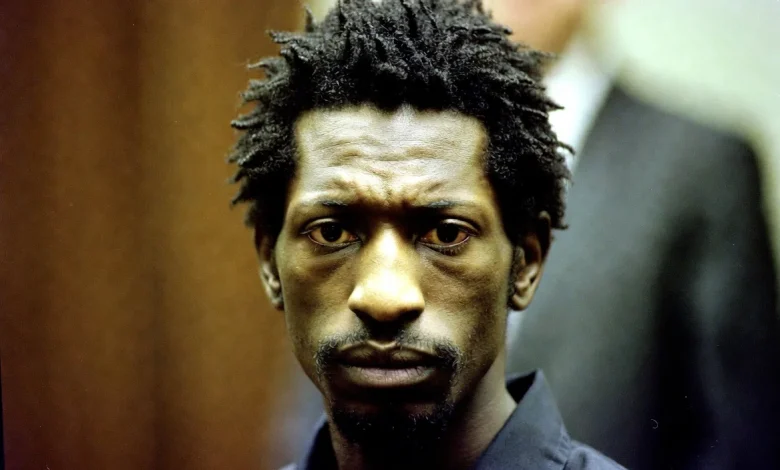
Mystikal Sentenced to 20 Years: The Shocking Conclusion to the Michael Lawrence Tyler Case
Mystikal, whose given name is Michael Lawrence Tyler, has officially been sentenced to 20 years in a Louisiana state prison. This long-awaited ruling represents the maximum possible penalty under his negotiated plea agreement. Handed down on Tuesday, June 16, 2026, the sentencing marks the definitive and dramatic conclusion of a multi-year legal saga that has gripped both the music industry and the public. The 55-year-old hip-hop artist, once celebrated for his explosive and raspy vocal delivery, pleaded guilty in March 2026 to third-degree rape. The plea deal allowed him to avoid a mandatory life sentence associated with his original charge of first-degree rape. However, the final days leading up to his appearance in court were anything but quiet. Tyler’s legal defense team launched a last-minute effort to withdraw his guilty plea, asserting that the rapper did not have a complete opportunity to fully consider the long-term consequences of his decision. The judge’s subsequent denial of this motion set the stage for a tense courtroom confrontation. The victim confronted Tyler directly, detailing the horrifying abuse she endured at his Prairieville residence. This article explores the full trajectory of the case, analyzing the legal maneuvers, the victim’s powerful courtroom testimony, and Tyler’s extensive history of criminal offenses.
Detailed Timeline of the 2022 Prairieville Assault
The origins of this high-profile criminal case date back to the summer of 2022. On a late July night, sheriff’s deputies in Ascension Parish were called to a local hospital where a woman was receiving emergency treatment for injuries sustained during a violent assault. Upon speaking with detectives, the victim identified Tyler as her assailant, outlining a harrowing sequence of events that occurred at his residential property in Prairieville, located about 18 miles southeast of Baton Rouge. The victim reported that Tyler had physically attacked her by punching her repeatedly, choking her to the point of near-unconsciousness, and violently pulling out her hair braids. In addition to the physical assault, she explained that Tyler confiscated her mobile phone and her vehicle keys, effectively trapping her inside the home and rendering her unable to escape or summon help. Following the forced sexual assault, Tyler reportedly refused to let her leave until she transferred money to him via the CashApp digital platform. Tyler was arrested on July 31, 2022, and subsequently booked into the Ascension Parish Jail, where he was held without bond for nearly four years as his legal proceedings crawled through the state court system.
Inside the Louisiana Courtroom: The Victim’s Emotional Impact Statement
The climax of the sentencing hearing on June 16, 2026, was undoubtedly the raw, unedited victim impact statement delivered in open court. Stepping up to the podium, the unnamed victim spoke directly to the judge, recounting the immense physical agony and lingering psychological trauma she has battled since the night of the assault. She provided a vivid description of the absolute terror she felt while trapped in Tyler’s Prairieville home, recounting the sensation of being choked and the agonizing pain of having her braids forcibly ripped from her head. She did not mince words, imploring the judge to hand down the absolute maximum penalty allowed under the plea deal. Her emotional testimony highlighted the profound impact of Tyler’s actions, demonstrating that his crimes went far beyond simple physical assault, leaving deep-seated psychological wounds that may never fully heal. The courtroom was described as incredibly tense as she spoke, with spectators and legal representatives alike witnessing the powerful presentation of her trauma and her firm demand for complete accountability.
Deciphering the Plea Agreement: First-Degree vs. Third-Degree Rape
To understand the legal mechanics of Tyler’s 20-year sentence, it is necessary to examine the structure of his plea bargain. In March 2026, Tyler’s defense team finalized an agreement with Ascension Parish prosecutors. Tyler had originally been charged with first-degree rape, simple robbery, domestic abuse battery by strangulation, false imprisonment, and simple criminal damage to property. Under Louisiana state law, first-degree rape is an extremely severe charge that carries an automatic, mandatory sentence of life imprisonment at hard labor without the benefit of parole, probation, or suspension of sentence. Realizing that a trial could result in his permanent incarceration, Tyler agreed to plead guilty to the lesser charge of third-degree rape. While third-degree rape carries a maximum statutory penalty of 25 years in prison, the terms of Tyler’s specific plea deal capped his exposure at 20 years. This arrangement provided a guaranteed conviction for the state while offering Tyler a definitive end-date to his sentence, albeit one that will keep him behind bars until his mid-seventies.
The Defense’s Last-Minute Bid to Withdraw the Guilty Plea
The path to the final sentencing was briefly derailed days before the Tuesday hearing when Tyler’s legal counsel submitted a formal motion to withdraw his guilty plea. According to investigative reports from ABC affiliate WBRZ, the motion claimed that Tyler “did not have sufficient opportunity to fully consider the consequences” of his actions when he admitted guilt in March. The defense argued that Tyler was experiencing extreme emotional duress and felt overwhelming pressure from his legal representatives and family to make an immediate, life-altering decision. Under Louisiana law, a defendant does not possess an automatic right to withdraw a plea of guilty once it has been entered and accepted by the court. To successfully withdraw a plea, the defense must demonstrate a clear defect in the plea colloquy or prove that the plea was not made voluntarily. The presiding judge quickly rejected Tyler’s motion, finding that the rapper had been thoroughly questioned about his understanding of the agreement in March and had voluntarily waived his right to a trial. This ruling allowed the court to proceed with the scheduled sentencing.
“If I Did That, I Deserve the Max”: Analyzing the Rapper’s Courtroom Response
Following the victim’s powerful impact statement, the judge granted Tyler the opportunity to speak. Standing before the bench, Tyler delivered a brief but stunning address that captivated everyone in the courtroom. Rather than offering a traditional defense or attempting to minimize the severity of the allegations, Tyler looked toward the judge and stated, “If I did that to you, I deserve the max sentence”. This statement has generated significant debate among legal scholars and the general public. Some view his words as a moment of total defeat and a recognition of the overwhelming evidence stacked against him. Others interpret it as an acknowledgment of the victim’s pain, albeit packaged in a highly unusual courtroom declaration. By essentially agreeing that the maximum sentence was justified, Tyler sealed his own fate. The judge wasted no time in executing the terms of the plea agreement, sentencing the disgraced rapper to the full 20-year cap, with no opportunity for early release or probation.
A Pattern of Offenses: Mystikal’s Extensive Legal History and Past Convictions
The severity of Tyler’s sentence must be viewed through the lens of his extensive history of violent and sexual offenses, a track record that spanned over two decades. This was far from Tyler’s first encounter with the Louisiana criminal justice system. In 2003, Tyler pleaded guilty to sexual battery and extortion charges in connection with a violent incident involving his personal hairstylist. He was subsequently sentenced to six years in state prison, which he served at the Elayn Hunt Correctional Center before being released in 2010. This conviction required him to register as a lifetime sex offender, a designation that severely restricted his personal and professional life. His legal issues continued in 2012 when he served 81 days in the East Baton Rouge Parish Jail on a misdemeanor domestic abuse charge. In 2017, he was indicted in Caddo Parish on charges of first-degree rape and second-degree kidnapping. Tyler spent 18 months in jail before securing his release on a $3 million bond. Ultimately, those charges were dismissed in 2020 when a second grand jury declined to bring an indictment, citing a lack of corroborating evidence. This persistent pattern of behavior played a massive role in the state’s aggressive prosecution of the 2022 incident.
Comparing Mystikal’s Legal Cases Across Decades
To better understand the scale and history of the legal proceedings involving Michael Lawrence Tyler, the following table summarizes his key cases, charges, jurisdictions, and outcomes over the last twenty-three years:
| Year of Incident | Primary Charges | Location / Jurisdiction | Plea / Trial Outcome | Actual Sentence Imposed / Served |
|---|---|---|---|---|
| 2003 | Sexual Battery & Extortion | East Baton Rouge Parish, LA | Guilty Plea | Sentenced to 6 years in state prison (Served in full) |
| 2012 | Domestic Abuse Battery (Misdemeanor) | East Baton Rouge Parish, LA | Guilty Plea / Convicted | Served 81 days in county jail |
| 2016 (Arrested 2017) | First-Degree Rape & Second-Degree Kidnapping | Caddo Parish, LA | Charges Dismissed (2020) | Spent 18 months in jail before posting bond; case dropped |
| 2022 (Sentenced 2026) | First-Degree Rape, Robbery, Strangulation, False Imprisonment | Ascension Parish, LA | Guilty Plea to Third-Degree Rape | Sentenced to 20 years in state prison (No probation/early release) |
Legal Experts Weigh in on the 20-Year Prison Sentence and Parole Eligibility
The legal technicalities surrounding Tyler’s 20-year sentence are remarkably strict, largely due to Louisiana’s tough-on-crime statutes. Because third-degree rape is categorized as a crime of violence under state law, Tyler will be required to serve the vast majority of his sentence without any possibility of parole, probation, or early release for good behavior. Furthermore, Louisiana’s Department of Public Safety and Corrections maintains highly restrictive guidelines for incarcerated individuals who are registered sex offenders. Legal experts emphasize that given Tyler’s age of 55, a 20-year prison sentence carries significant health and logistical challenges, essentially functioning as a life sentence. The defense’s failed attempt to withdraw the plea suggests a desperate, last-minute realization of the harsh conditions Tyler will face inside a state correctional facility. The court’s refusal to grant any form of leniency reflects a broader societal push to ensure that repeat offenders of sexual violence are permanently removed from the public sphere.
The Cultural Fallout: From Chart-Topping Hits to Institutional Confinement
The formal sentencing of Michael Lawrence Tyler marks the final, tragic chapter of a career that once represented the pinnacle of Southern hip-hop. In the late 1990s and early 2000s, performing under the moniker Mystikal, Tyler was one of the most recognizable voices in rap music. His aggressive, raspy vocal style and high-energy delivery propelled tracks like “Shake Ya Ass” (featuring Pharrell Williams) and “Danger (Been So Long)” (featuring Nivea) to the top of the Billboard charts. As a flagship artist for Master P’s No Limit Records, Tyler achieved multi-platinum sales status and earned multiple Grammy nominations, including a nod for Best Rap Album for his project “Tarantula”. However, his monumental musical achievements have now been completely overshadowed by his violent crimes. Today, the music industry has largely erased his legacy, with streaming services and radio stations heavily restricting his catalog. The tragic trajectory of Mystikal stands as a stark, cautionary tale about the devastating consequences of repeated criminal violence and the absolute triumph of justice for survivors of sexual abuse.