Shocking FBI Probe: ICE Agent Struck by Van in Stafford Township, NJ — 3 Key Updates
ICE agent struck by van in Stafford Township, New Jersey, on Monday morning, triggering a high-stakes investigation by the FBI and a widespread search for a suspect who fled after a targeted vehicle stop. The incident occurred at approximately 9:30 a.m. along the busy Route 72 corridor, near Mermaid Drive, in the Manahawkin section of Stafford Township. As federal immigration officers attempted to execute an arrest, the situation escalated rapidly into a chaotic and violent confrontation, leaving a federal agent injured, a suspect on the run, and a community in shock.
The Federal Bureau of Investigation (FBI) has taken the lead on the investigation, treating the incident as an assault on a federal officer. Meanwhile, the Stafford Township Police Department, while not involved in the planning or execution of the operation due to statewide policies restricting cooperation with immigration enforcement, responded to provide crucial emergency medical aid to the injured officer and secure the crime scene. As investigators piece together the events of Monday morning, details have emerged about the suspect’s identity, the tactics employed, and the broader debate surrounding the enforcement of immigration warrants in New Jersey.
Anatomy of the Route 72 and Mermaid Drive Incident
The confrontation occurred in a highly visible commercial sector of Stafford Township, specifically along Route 72 East near the intersection of Mermaid Drive. This area of Manahawkin is heavily trafficked, characterized by strip malls, shopping centers, and popular local businesses, including a Wawa convenience store that sits near the scene of the incident. Route 72 is the primary state highway linking mainland Ocean County to Long Beach Island, making it a critical route for commuters, residents, and visitors alike.
According to reports from the Stafford Township Police Department and federal law enforcement sources, a team of ICE agents had tracked a target vehicle to this location. At approximately 9:30 a.m., the agents initiated what ICE later described as a “targeted vehicle stop” to take a suspect into custody. However, the attempt did not go as planned. Rather than complying with commands to step out of the vehicle, the suspect—who was behind the wheel of a white van—attempted to flee the scene.
In the process of fleeing, the suspect drove the vehicle directly toward one of the apprehending agents. The van struck the agent with substantial force, causing the officer to sustain injuries. In response to being hit, and fearing for his life and the safety of his fellow officers, the injured agent pulled his service weapon and opened fire. Eyewitnesses near the Wawa reported hearing several gunshots. Sources indicate that at least some of the discharged bullets struck the fleeing white van, with onlookers reporting that the gunfire possibly shattered the vehicle’s rear window. Despite the gunfire, the suspect managed to accelerate away from the scene, fleeing onto Route 72 and successfully evading immediate capture.
The Suspect Profile: Who Is Friedrich Castillo-Ormeno?
Following the incident, ICE officials released the identity of the suspect. The individual sought is Friedrich Castillo-Ormeno, a Peruvian national. According to a statement issued by ICE, Castillo-Ormeno had entered the United States and was subsequently given a final order of removal by an immigration judge on January 30, 2026. This order legally required him to depart the country, making him a priority target for Enforcement and Removal Operations (ERO), the civil law enforcement branch of ICE tasked with executing deportation orders.
While the federal agency identified Castillo-Ormeno as being in the country illegally, they provided minimal details regarding any prior criminal history or the specific reasons why he was targeted for a vehicle stop in Stafford Township. Under federal immigration procedures, a final order of removal is issued after an individual has exhausted their legal remedies or failed to appear for their scheduled court hearings. For ICE ERO, tracking down individuals with final orders of removal is a core component of their daily operations, though executing these arrests in public parking lots or along major traffic routes carries inherent operational risks.
Tactical Operational Analysis: Targeted Vehicle Stops
Conducting a targeted vehicle stop in a public area is one of the most high-risk maneuvers a law enforcement officer can perform. For ICE agents, who often operate in plain clothes and unmarked vehicles, these operations require meticulous planning and execution. The primary goal is to minimize the suspect’s ability to flee, typically by boxing the vehicle in at a stoplight, parking lot, or low-speed street. However, if a suspect is determined to escape, the vehicle itself can quickly be transformed into a deadly weapon.
ICE officials highlighted this specific danger in their statement following the Stafford Township incident, noting that the suspect “weaponized his vehicle” to strike the agent. This term is frequently used in law enforcement to describe instances where a suspect uses a multi-ton automobile as an instrument of physical assault or deadly force. When a driver accelerates toward an officer, the officer’s reaction window is measured in split seconds, forcing them to make instantaneous decisions regarding the use of lethal force to stop the threat.
The Escalation of Force: Firing at a Fleeing Vehicle
The decision by the injured ICE agent to fire his weapon at the fleeing van highlights a complex and often controversial aspect of police tactical training. In many municipal police departments across the United States, policies strictly prohibit or severely restrict officers from firing at a moving vehicle. The logic behind these local restrictions is clear: hitting a driver can cause them to lose consciousness, turning a speeding vehicle into an unguided projectile that poses an even greater risk to nearby pedestrians, motorists, and property.
However, federal law enforcement guidelines, including those governing ICE and other Department of Homeland Security (DHS) agencies, provide different standards. Federal agents are generally permitted to use deadly force, including firing at a vehicle, if they reasonably believe the vehicle poses an immediate threat of death or serious physical injury to the officer or others. In this case, because the agent had already been struck by the vehicle, the use of force was initiated in direct response to an active vehicular assault. Investigators are currently reviewing the sequence of events to determine if the gunfire occurred while the vehicle still posed an active threat, or if shots were fired as the vehicle was driving away—a key distinction in both administrative and criminal reviews of officer-involved shootings.
New Jersey’s Immigrant Trust Directive: Jurisdictional Friction
What makes the Stafford Township shooting particularly noteworthy from a policy standpoint is the total separation of duties between federal agents and local police. Immediately following the incident, the Stafford Township Police Department issued a public statement clarifying that their officers were not involved in the planning, coordination, or execution of the ICE operation. This public distancing is not merely a logistical choice; it is mandated by state law.
In New Jersey, the relationship between local law enforcement and federal immigration authorities is governed by the “Immigrant Trust Directive,” originally issued by the state’s Attorney General in 2018. This directive was officially codified into permanent state law in March 2026 when Governor Mikie Sherrill signed legislation banning local law enforcement agencies from partnering with ICE or assisting in civil immigration enforcement operations. The policy is designed to build trust between New Jersey’s immigrant communities and local police, ensuring that victims and witnesses feel safe reporting crimes to municipal officers without fearing deportation.
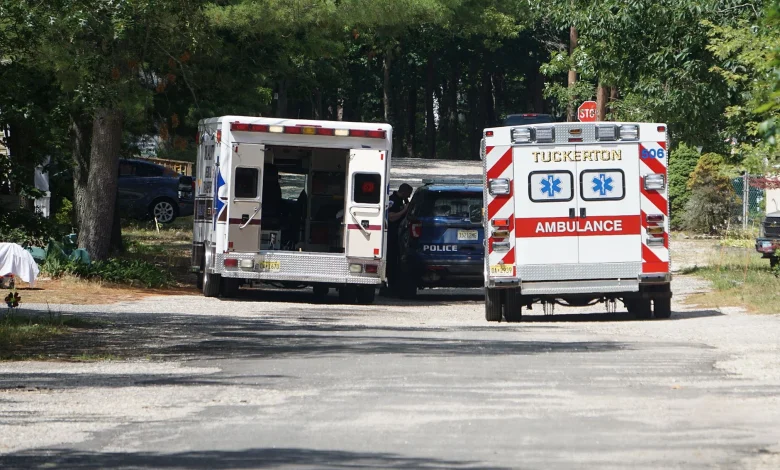
Under the Immigrant Trust Directive, local officers are strictly prohibited from stopping, questioning, searching, or detaining any individual based solely on their immigration status, participating in civil immigration sweeps or targeted operations conducted by ICE, or providing ICE with access to non-public databases, local police facilities, or specialized equipment. Consequently, when ICE agents planned the targeted stop of Friedrich Castillo-Ormeno on Route 72, they did so entirely independently of the Stafford Township Police. Local officers only became involved after the incident occurred, responding to the 911 reports of an officer-involved shooting. Stafford police officers administered immediate first aid to the injured ICE agent and managed the heavy traffic on Route 72, which had to be partially shut down to allow emergency services and investigators to secure the area.
The FBI-Led Federal Investigation and Forensic Scene Analysis
Because the victim of the vehicular assault was a federal agent acting in the line of duty, the Federal Bureau of Investigation (FBI) has assumed lead jurisdiction over the criminal investigation. Under federal law, particularly Title 18 of the United States Code, Section 1114, assaulting, resisting, or impeding certain federal officers or employees while engaged in their official duties is a serious federal felony carrying severe prison sentences.
According to reporting by CBS News, the Federal Bureau of Investigation (FBI) immediately took charge of the scene, deploying forensic teams and special agents to Route 72 and Mermaid Drive. Investigators could be seen placing yellow evidence markers on the pavement near the local Wawa, designating the locations of spent shell casings and other physical evidence. A critical part of the forensic investigation will involve bullet trajectory analysis to determine the angle of the shots fired by the agent, which will help establish the position of both the agent and the van at the moment of the shooting.
Federal authorities are also working in tandem with the Ocean County Prosecutor’s Office and the Ocean County Sheriff’s Department to analyze local surveillance footage. Given the commercial nature of Route 72 in Manahawkin, investigators are reviewing security video from nearby businesses, gas stations, and traffic cameras to trace the flight path of the white van. They are also seeking information from the public, urging anyone who may have captured dashcam footage of the incident or the fleeing vehicle to come forward.
Comprehensive Summary of the Stafford Township Incident
To provide a clear overview of the key details surrounding the June 15, 2026 incident, the following table summarizes the operational facts, profiles, and jurisdictional actions currently known to investigators:
| Key Aspect | Details / Incident Information |
|---|---|
| Date & Time | Monday, June 15, 2026, at approximately 9:30 a.m. |
| Location | Route 72 and Mermaid Drive, Manahawkin section of Stafford Township, NJ |
| Agency Involved | U.S. Immigration and Customs Enforcement (ICE) |
| Suspect Profile | Friedrich Castillo-Ormeno (Peruvian national, final order of removal dated Jan. 30, 2026) |
| Suspect Vehicle | White van / vehicle with shattered back window (suspect fled) |
| Officer Action | Discharged service weapon at the fleeing vehicle after being struck |
| Officer Status | Recovering in a local hospital (non-life-threatening injuries) |
| Investigating Agency | Federal Bureau of Investigation (FBI) Newark Field Office |
| Local Police Action | Stafford Township Police provided first aid, secured scene, managed traffic (no active role in operation) |
Officer Medical Recovery and Patterns of Vehicle Attacks
The injured ICE agent, whose name has not been publicly released due to agency security protocols, is currently recovering in a local medical facility. Following the vehicular strike, Stafford Township police officers on the scene quickly applied emergency first aid, stabilizing the agent before paramedics arrived. He was then transported to a nearby hospital for treatment. Law enforcement sources have confirmed that while the agent sustained painful injuries from the impact of the van, they are non-life-threatening, and he is expected to make a full recovery.
This incident has renewed discussions within federal law enforcement regarding the safety of agents executing field arrests. In a public statement addressing the Stafford Township confrontation, an ICE spokesperson raised concerns about what the agency describes as a highly dangerous national trend. According to ICE, there has been a dramatic, documented rise in vehicle-involved assaults against its personnel. The spokesperson claimed that law enforcement officers are facing a staggering 3,300% increase in vehicle attacks nationwide, highlighting the increasingly volatile environment that field agents encounter during removal operations.
While immigrant advocacy groups often argue that aggressive, unannounced tactical approaches by plainclothes federal agents can cause panic and lead to dangerous, defensive reactions from motorists, federal agencies maintain that suspects are actively choosing to weaponize vehicles to avoid legal deportation. As the FBI continues its search for Friedrich Castillo-Ormeno and his white van, this incident serves as a stark reminder of the physical dangers inherent in immigration enforcement and the deep political and jurisdictional divides that characterize the issue in New Jersey.