Mbappé Breaks French Goal Record in 1 Historic World Cup Win
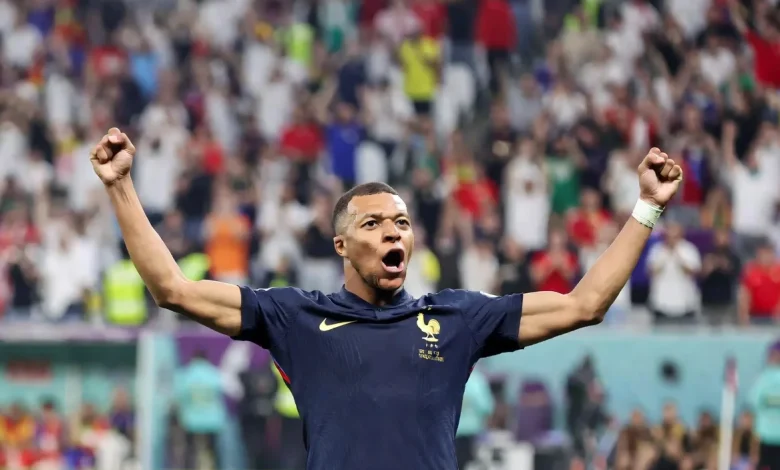
Mbappé has officially cemented his place at the absolute pinnacle of French football history. In an electrifying opening match of the 2026 FIFA World Cup, the French captain scored a magnificent brace to guide Les Bleus to a hard-fought 3-1 victory over Senegal at the New York/New Jersey Stadium. Beyond securing three crucial points in Group I, the historic night saw the 27-year-old superstar write his name into the record books twice over, surpassing Olivier Giroud as France’s all-time leading goalscorer and ascending the ranks of the greatest World Cup scorers in history.
France vs Senegal: A Sleepy Start and an Electrifying Finish
The opening match of any major tournament is filled with immense pressure, but for France, the stakes at the New York/New Jersey Stadium felt remarkably high. Despite possessing one of the most star-studded offensive lineups on paper, including Ousmane Dembélé, Désiré Doué, and Michael Olise, Didier Deschamps’ squad looked sluggish in the opening 45 minutes. Senegal, led by their talismanic veteran Sadio Mané and bolstered by a rock-solid defense anchored by Kalidou Koulibaly, took full advantage of France’s early lethargy.
The Lions of Teranga pressed effectively, disrupting France’s buildup play and exploiting space on the counter-attack. Nicolas Jackson rattled the post in the 25th minute, and Ismaila Sarr missed a glorious opportunity just before the halftime whistle. France, meanwhile, could only muster a single shot in the first half—and it wasn’t even on target. It was a worrying display that evoked memories of France’s infamous 1-0 upset loss to Senegal in the opening match of the 2002 World Cup, a tournament from which Les Bleus were shockingly eliminated in the group stage. Fans and critics began to wonder if history was repeating itself as the team walked down the tunnel at halftime in desperate need of a tactical spark.
The 64th Minute: A Near Miss and the Pinch of Air
The second half began with a heightened sense of urgency, but the breakthrough still eluded the French side. The tension reached a boiling point in the 64th minute. France’s Michael Olise, who had begun drifting inward to assume a creative playmaker role, was leading a rapid charge upfield. Spotting a gap in Senegal’s disciplined backline, Olise threaded a sensational, defense-splitting pass right into the path of the darting French captain.
Mbappé lunged forward at full stretch, desperate to make contact and direct the ball past Edouard Mendy. However, the timing was just a fraction of a second off; he could not quite reach the ball to handle it cleanly. As the chance went begging, Mbappé’s frustration was visible. He grimaced, looking up at the sky, and pinched the air with his thumb and index finger—a universal sign indicating he was this close to breaking the deadlock. Up to that point, the entire game had gone like that for France: near-misses, miscommunications, and a lack of clinical precision. Yet, in elite international football, the difference between frustration and ecstasy is often a matter of inches and seconds.
Tactical Analysis: How Didier Deschamps Unlocked Senegal
Didier Deschamps is no stranger to high-pressure adjustments, and his tactical choices in the second half of this matchup proved why he is one of the most successful international managers in history. Recognizing that Senegal was effectively clogging the middle of the pitch and neutralizing France’s wingers, Deschamps instructed Michael Olise to act as a floating number 10, giving him the freedom to dictate play.
By moving Bradley Barcola on for Dembélé later in the game and allowing Désiré Doué to stretch the pitch on the opposite flank, France forced Senegal’s defensive block to widen. This tactical shift created micro-pockets of space in the half-spaces, which Mbappé and Olise exploited beautifully. The addition of energetic midfielders to support the high press prevented Senegal from launching clean counter-attacks, turning the second half into a display of sustained French dominance. This level of tactical flexibility is reminiscent of other legendary sporting stories where strategic patience pays off, much like the meticulously planned training regimes documented in ultimate sporting sagas such as Devaux’s equestrian journey.
Michael Olise’s Vision Catalyzes the French Breakthrough
Just minutes after the heartbreaking near-miss in the 64th minute, Olise again found himself with the ball at his feet deep inside the Senegalese half. The Bayern Munich forward showed remarkable composure, refusing to rush. As he surveyed the defense, he noticed the subtle, explosive movement of Mbappé making a diagonal run toward the right side of the penalty box.
With exquisite technique, Olise curled a sublime pass around four lunging Senegalese defenders. The weight of the pass was perfect, taking the entire backline out of the equation. Mbappé turned and shot in one fluid, continuous motion, leaving Mendy with absolutely no chance. In a split second, the atmosphere in the stadium transformed. The French bench erupted, and Mbappé was once again the hero, wheels in motion as France took a 1-0 lead. This lethal connection between Olise and Mbappé proved to be the turning point of the game, demonstrating a level of telepathic understanding that will strike fear into the hearts of France’s upcoming opponents.
Record-Breaking Brilliance: Overtaking Olivier Giroud
While Bradley Barcola would double France’s lead in the 82nd minute, and Senegal’s Ibrahim Mbaye would claw one back in the 94th minute to make it 2-1, it was Mbappé who ultimately had the final say. In the 95th minute, deep into stoppage time, Mbappé struck again with a powerful, clinical finish to put the match to bed, securing a 3-1 victory for Les Bleus.
This second goal was not just a match-icer; it was a historic milestone. The strike brought Mbappé’s international career goal tally to 58, officially moving him past the legendary Olivier Giroud (57) to become France’s all-time leading goalscorer. At just 27 years old, Mbappé has accomplished what many thought would take a full career to achieve. His incredible scoring rate cements his status as a global icon, whose cultural footprint extends far beyond the pitch into high-profile global cultural events like the Met Gala, where athletes increasingly represent the intersection of modern sport, celebrity, and high fashion.
The French All-Time Goalscoring Leaderboard
To fully appreciate Mbappé’s accomplishment, it is essential to look at the caliber of players he has surpassed. Olivier Giroud’s record of 57 goals was achieved through years of remarkable consistency and physical grit. Before Giroud, Thierry Henry held the crown with 51 goals, a record that stood for over a decade. Mbappé has shattered these milestones at an unprecedented pace, showing a level of dominance that suggests he will set a record that may never be broken.
Below is the updated list of France’s top male international goalscorers:
| Rank | Player | Goals | Caps | Active Years |
|---|---|---|---|---|
| 1 | Kylian Mbappé | 58 | 85 | 2017–Present |
| 2 | Olivier Giroud | 57 | 137 | 2011–2024 |
| 3 | Thierry Henry | 51 | 123 | 1997–2010 |
| 4 | Antoine Griezmann | 44 | 135 | 2014–Present |
| 5 | Michel Platini | 41 | 72 | 1976–1987 |
Comparing Legends: Just Fontaine and World Cup History
Mbappé’s brace against Senegal also propelled him further up the ladder of World Cup royalty. With 14 career World Cup goals, he is now tied for fourth all-time, matching the legendary French forward Just Fontaine—who famously scored all 13 of his goals in a single tournament in 1958—and German icon Gerd Müller.
At his current trajectory, Mbappé is poised to challenge the absolute greatest goalscorers the tournament has ever seen. He is now just one goal behind Brazil’s legendary Ronaldo (15) and two behind Germany’s clinical marksman Miroslav Klose (16). Given his age and physical prime, it is highly likely that Mbappé will not only break the all-time World Cup scoring record during his career but could potentially establish a gap that will remain untouched for generations. Fans can track his live statistics and goal updates through the official FIFA tournament tracker.
Messi Answers Back: The Battle for World Cup Immortality
However, the race for footballing immortality is never a solitary journey. Later that very same night, defending champions Argentina took the pitch in Kansas City against Algeria. Lionel Messi, playing in his record sixth World Cup just shy of his 39th birthday, put on an absolute masterclass. Despite dealing with pre-tournament hamstring concerns, Messi scored a breathtaking hat trick in a comfortable 3-0 victory.
This virtuoso performance brought Messi’s career World Cup goal tally to 16, tying him with Miroslav Klose for the most World Cup goals of all time. In doing so, Messi instantly leapfrogged Mbappé’s newly achieved mark of 14, reminding the world that the aging master is not ready to hand over the crown just yet. The contrasting narratives of the young, explosive French king and the seasoned, magical Argentine maestro setting records on the same night provided one of the most memorable days in modern football history.
How the Golden Boot Race Shapes Up
The dual performances of Mbappé and Messi have set the stage for an explosive Golden Boot race in the 2026 World Cup. While young talents and other legendary figures are vying for the prestigious award, the focus remains firmly on these two generational icons. The tournament’s expanded format, featuring 48 teams, means more matches and potentially more goals, providing both players with an unprecedented platform to inflate their tallies.
Historically, iconic footballing matches have captivated audiences around the world, bridging cultural divides and showcasing peak human performance. This global passion is highlighted by other historic matchups, such as the upcoming cross-border matches like the planned historic football matches between Pyongyang’s Naegohyang FC and Suwon FC, which demonstrate how football serves as a universal language. As Mbappé and Messi trade blows on the world stage, their rivalry elevates the tournament into a cultural spectacle that captivates billions.
What’s Next for Les Bleus in Group I
For France, the 3-1 victory over Senegal is a massive step toward securing qualification from Group I. With Norway and Iraq completing the group, Didier Deschamps will feel confident but remain wary of complacency. The first-half performance against Senegal highlighted areas of vulnerability, particularly in midfield transition and dealing with high-pressing physical opponents.
As Les Bleus prepare to face Iraq and Norway in their subsequent group-stage fixtures, Deschamps will look to build on the fluid attacking movements seen in the second half. The partnership between Michael Olise and Kylian Mbappé will undoubtedly remain the cornerstone of France’s offensive strategy. If France can replicate the clinical efficiency they displayed in the final thirty minutes against Senegal, they will not only breeze through Group I but will solidify their status as the formidable favorites to hoist the World Cup trophy once again.