Navy Strikes Iran: Self-Defense near Strait of Hormuz
Introduction
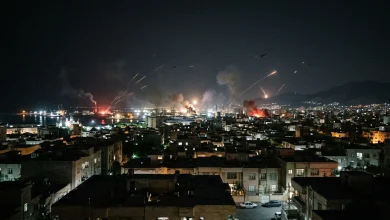
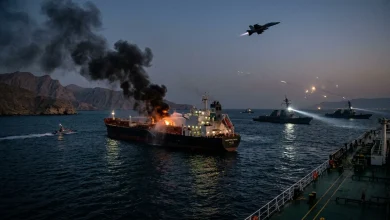
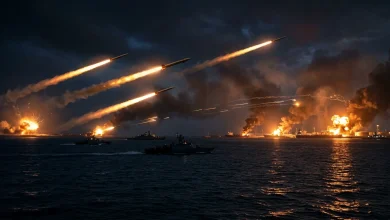
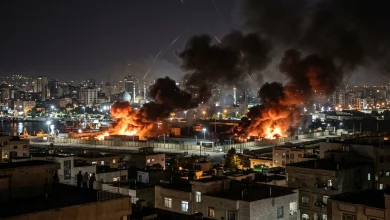
The U.S. Navy, under the directive of U.S. Central Command, recently carried out what it described as self-defense strikes in the vicinity of Bandar Abbas, a strategic port city in southern Iran located near the Strait of Hormuz. According to Navy Capt. Tim Hawkins, these strikes targeted missile launch sites and Iranian boats allegedly involved in deploying mines. The incident occurred amidst a temporary ceasefire between the U.S. and Iran, which had been in effect since April 8. This action raises critical questions about the stability of the ceasefire and the broader implications for regional security. Semiofficial Iranian media acknowledged reports of explosions in the area but downplayed the severity, stating that the situation was under control. This event underscores the volatile nature of U.S.-Iran relations and the strategic importance of the Strait of Hormuz, a vital waterway for global oil supplies.
The U.S. Central Command Statement
Navy Capt. Tim Hawkins, acting as the spokesman for U.S. Central Command, issued a statement emphasizing that the strikes were conducted in self-defense. The statement highlighted that the targets included missile launch sites and Iranian vessels actively attempting to lay mines in the region. Capt. Hawkins asserted that U.S. Central Command remains committed to defending its forces while exercising restraint during the ongoing ceasefire. This careful wording suggests a calculated effort to prevent escalation while addressing immediate threats. The U.S. military’s posture in the region is designed to protect American assets and personnel, as well as to maintain freedom of navigation in international waters. The decision to publicize the strikes as defensive measures aims to justify the use of force under international law and to mitigate potential backlash from both domestic and international audiences.
Details of the Strikes
The self-defense strikes occurred in Bandar Abbas, a city strategically located in southern Iran, near the Strait of Hormuz. A defense official confirmed that the targeted sites included missile launch facilities and Iranian boats allegedly engaged in mining activities. The specific types of missiles and mines were not disclosed, but the presence of such weaponry in this sensitive maritime area poses a significant threat to both military and commercial vessels. The precision and scope of the strikes remain unclear, but the U.S. military likely employed intelligence, surveillance, and reconnaissance (ISR) assets to identify and verify the targets before engagement. This operation highlights the ongoing tensions in the region and the potential for rapid escalation. For example, tensions in the region remain high, especially regarding freedom of navigation, as exemplified by the recent transit of the superyacht Nord through the Strait of Hormuz.
Iranian Media Response
In the immediate aftermath of the U.S. strikes, Iranian media outlets offered a measured response. Semiofficial news sources reported that explosions were heard in Bandar Abbas and nearby coastal areas but emphasized that the situation was under control. The Mehr news agency specifically stated that there was no cause for concern. This downplaying of the incident likely serves multiple purposes for the Iranian government. First, it aims to prevent public panic and maintain stability within the country. Second, it seeks to portray Iran as a strong and resilient nation that is not easily intimidated by foreign powers. Third, it allows Iran to control the narrative and avoid escalating the conflict further. However, it is important to note that these reports may not fully reflect the actual situation on the ground, and independent verification is often difficult to obtain in such circumstances. The government might want to prevent panic or further escalation of tensions. The situation can be compared to the ongoing tensions in the Strait of Hormuz.
Geopolitical Context
The recent U.S. strikes against Iranian targets must be viewed within the broader geopolitical context of the region. The relationship between the U.S. and Iran has been fraught with tension for decades, marked by periods of both direct confrontation and indirect conflict. The Strait of Hormuz, through which a significant portion of the world’s oil supply passes, has consistently been a flashpoint. The temporary ceasefire, which went into effect on April 8, represented a fragile attempt to de-escalate tensions and create an environment for potential negotiations. However, the latest incident demonstrates the precarious nature of this truce and the ever-present risk of renewed hostilities. Regional dynamics, including the involvement of other actors such as Saudi Arabia, Israel, and various proxy groups, further complicate the situation. Understanding these complexities is crucial for assessing the potential implications of the strikes and predicting future developments.
The Strait of Hormuz: Strategic Importance
The Strait of Hormuz is one of the world’s most strategically important waterways. This narrow channel, located between Oman and Iran, connects the Persian Gulf with the Gulf of Oman and the Arabian Sea. It serves as the primary transit route for oil exports from major producers such as Saudi Arabia, Iran, the United Arab Emirates, and Kuwait. Any disruption to navigation through the Strait of Hormuz could have a significant impact on global energy markets, leading to price spikes and economic instability. Both the U.S. and Iran recognize the strategic importance of this waterway, and each has taken measures to protect its interests there. The U.S. Navy maintains a strong presence in the region to ensure freedom of navigation, while Iran has repeatedly threatened to close the strait in response to perceived threats or sanctions. The delicate balance of power in the Strait of Hormuz makes it a constant source of potential conflict.
Analysis of the Temporary Ceasefire
The temporary ceasefire between the U.S. and Iran, initiated on April 8, was intended to provide a window for diplomatic engagement and de-escalation. However, the recent U.S. strikes raise serious questions about the viability of this truce. Several factors could have contributed to the breakdown in the ceasefire. First, there may have been disagreements over the terms of the agreement or a lack of clear communication between the two sides. Second, hardliners within both the U.S. and Iranian governments may have opposed the ceasefire from the outset and actively sought to undermine it. Third, regional actors, such as Saudi Arabia or Israel, may have taken actions to provoke a response from either side. The fact that the strikes were described as self-defense suggests that the U.S. military perceived an imminent threat that could not be addressed through diplomatic means. Assessing the long-term prospects of the ceasefire requires a deeper understanding of these underlying dynamics. The current events can be added to the history of the failed deals like the one detailed in this analysis of a failed US-Iran deal.
Potential Implications of the Strikes
The U.S. strikes near the Strait of Hormuz could have far-reaching implications for regional stability and global security. One immediate concern is the potential for escalation. Iran may respond to the strikes with retaliatory measures, either directly or through its proxy groups in the region. This could lead to a cycle of tit-for-tat attacks that spiral out of control. Another potential consequence is the collapse of the temporary ceasefire, which would further reduce the prospects for diplomatic engagement. The strikes could also embolden hardliners within both the U.S. and Iranian governments, making it more difficult to find common ground. In the longer term, the incident could undermine international efforts to prevent nuclear proliferation and maintain regional peace. A more detailed analysis of these potential implications is essential for policymakers and analysts seeking to understand the evolving dynamics of the region.
Historical Context: U.S.-Iran Relations
The relationship between the United States and Iran has been complex and often adversarial, marked by a series of pivotal events that have shaped their interactions. The 1953 Iranian coup, orchestrated by the CIA, overthrew the democratically elected Prime Minister Mohammad Mosaddegh and reinstated the Shah, Mohammad Reza Pahlavi, setting the stage for decades of resentment and mistrust. The 1979 Iranian Revolution, which ousted the U.S.-backed Shah and established an Islamic Republic, further strained relations. The Iran hostage crisis, in which Iranian students seized the U.S. embassy in Tehran and held American diplomats captive for 444 days, deepened the animosity between the two countries. The Iran-Iraq War in the 1980s saw the U.S. supporting Iraq, further alienating Iran. More recently, the 2015 Iran nuclear deal, officially known as the Joint Comprehensive Plan of Action (JCPOA), offered a brief period of detente, but the U.S. withdrawal from the agreement in 2018 under the Trump administration and the subsequent reimposition of sanctions have brought the two nations to the brink of conflict once again. The historical context is crucial for understanding the deep-seated tensions and mutual suspicions that continue to plague U.S.-Iran relations, as well as the impact of historical events such as Trump’s letters after the death of 45,000 protestors.
Reactions from the International Community
The international community’s reaction to the U.S. strikes near the Strait of Hormuz is likely to be varied and nuanced. Close allies of the United States, such as the United Kingdom and Israel, may offer tacit support for the strikes, emphasizing the need to deter Iranian aggression and protect freedom of navigation. Other countries, particularly those that rely heavily on oil exports from the region, may express concern about the potential for escalation and call for restraint on both sides. Russia and China, which have close ties with Iran, are likely to condemn the strikes and accuse the U.S. of undermining regional stability. The United Nations Security Council may convene to discuss the situation, but divisions among its members could prevent any meaningful action. The European Union, which has sought to maintain the Iran nuclear deal despite U.S. opposition, may attempt to mediate between the two sides and de-escalate tensions. A comprehensive assessment of international reactions will provide valuable insights into the broader implications of the strikes and the potential for diplomatic solutions.
Possible Scenarios Moving Forward
Several scenarios could unfold in the aftermath of the U.S. strikes near the Strait of Hormuz. One possibility is that Iran will choose to de-escalate the situation and avoid direct confrontation, focusing instead on diplomatic efforts to resolve the underlying issues. This scenario would require both sides to exercise restraint and demonstrate a willingness to compromise. Another scenario is that Iran will retaliate with a limited strike against U.S. assets or allies in the region, seeking to send a message without triggering a full-scale conflict. This could lead to a period of heightened tensions and uncertainty, with the risk of miscalculation and escalation. A third scenario is that the situation will spiral out of control, resulting in a wider regional conflict involving multiple actors. This could have catastrophic consequences for the region and the world. Predicting which scenario is most likely to occur requires a careful analysis of the motivations and capabilities of all the key players involved. The situation is especially precarious given other geopolitical challenges like Lebanon demanding a ceasefire and rejecting Iran.
Conclusion
The recent U.S. self-defense strikes near the Strait of Hormuz represent a significant escalation in the ongoing tensions between the United States and Iran. While the U.S. Central Command maintains that the strikes were necessary to protect American forces and deter Iranian aggression, the incident raises serious questions about the viability of the temporary ceasefire and the potential for a wider regional conflict. The strategic importance of the Strait of Hormuz, the complex history of U.S.-Iran relations, and the diverse reactions from the international community all contribute to the uncertainty surrounding this event. Moving forward, it is essential for policymakers and analysts to carefully assess the potential implications of the strikes and to pursue diplomatic solutions that promote regional stability and prevent further escalation. The situation remains highly volatile, and the risk of miscalculation and unintended consequences is ever-present. A continued focus on de-escalation, communication, and mutual understanding is crucial for navigating this challenging period and safeguarding global security. The need for diplomacy becomes ever more critical given the analysis provided regarding a potential trillion-dollar war with Iran.
| Aspect | Details |
|---|---|
| Event | U.S. self-defense strikes near Bandar Abbas, Iran |
| Location | Near the Strait of Hormuz |
| U.S. Rationale | Targeting missile launch sites and Iranian boats deploying mines |
| Iranian Response | Downplaying the incident, stating the situation is under control |
| Ceasefire Status | Temporary ceasefire between U.S. and Iran remains in effect, but strained |
| Strategic Importance | Strait of Hormuz is vital for global oil supplies |
| Potential Implications | Risk of escalation, regional conflict, impact on global energy markets |
| International Reaction | Varied, ranging from support to condemnation, calls for restraint |