Lebanon South Strategy: Aoun Pledges Army Over Hezbollah
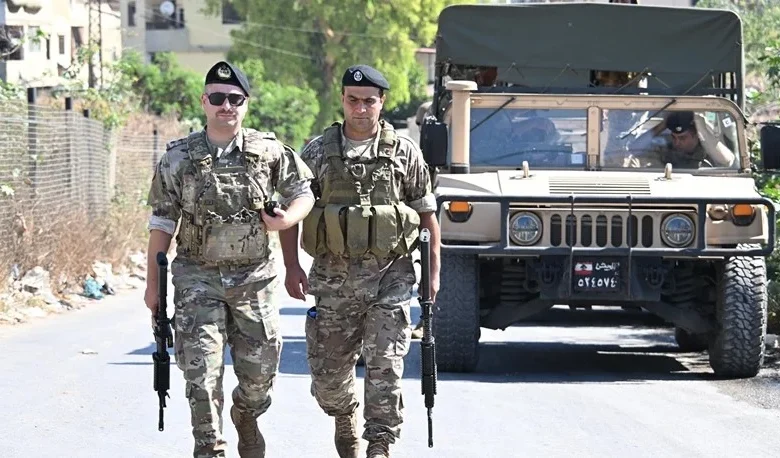
Lebanon stands today at a monumental crossroads, one that could redefine its geopolitical identity and domestic security apparatus for generations to come. The southern region of the nation, long dominated by non-state actors and characterized by cyclical warfare, is poised for a dramatic transformation. With the recent promises made by Lebanese leadership, specifically signaling that the Lebanese Armed Forces (LAF) will take absolute control once Israel pulls back to the internationally recognized boundary, the stakes have never been higher. This maneuver essentially requires the dismantling of Hezbollah’s deeply entrenched military control over the borderlands. It is a massive gamble, betting that a financially crippled state can actually project power, hold territory, and enforce international resolutions. This represents the ultimate endgame equation: either the nation successfully reasserts its sovereignty and monopolizes the use of force, or the southern border deteriorates into an irreconcilable frozen conflict, trapping millions in a perpetual state of uncertainty and fear.
Lebanon Stands at the Precipice of a Historic Transition
For over half a century, the southern territory has been a staging ground for regional proxies, foreign occupations, and devastating conflicts. The transition of power currently being proposed is not merely a military repositioning; it is a fundamental shift in the social and political contract of the nation. By asserting that the national army will replace partisan militias, the state is making a claim to absolute territorial integrity. This transition requires navigating an incredibly complex web of domestic political factions, international diplomatic mandates, and deeply rooted sectarian divides. The success of this transition hinges on the credibility of the military institution and the willingness of the international community to provide unprecedented logistical and financial backing. Without this support, the promise of a sovereign border remains an illusion, easily shattered by the first border skirmish or political assassination. The world watches closely as the nation attempts to pivot from a fragile battleground to a robust, self-determining republic.
The Geopolitical Context of the Southern Border
The geopolitical landscape surrounding the Blue Line is fraught with historical grievances and strategic calculations. Since the withdrawal of foreign occupying forces in 2000 and the devastating war of 2006, the area has been governed by United Nations Security Council Resolution 1701. However, the implementation of this resolution has been notoriously asymmetrical, allowing armed groups to maintain covert infrastructure while state forces remained severely under-equipped. In the current crisis, as international diplomats scramble to forge a lasting peace, the historical context serves as a grim reminder of past failures. The international community, led by Western powers and regional stakeholders, is demanding structural guarantees that past mistakes will not be repeated. In this delicate diplomatic dance, the government refuses Netanyahu talks in a direct manner, emphasizing that the border file must be separated from broader regional entanglements and handled strictly through institutional frameworks to maintain national dignity and state legitimacy.
Aoun’s Strategic Promise: Replacing Hezbollah in the South
The strategic promise to deploy the national army effectively signals a direct challenge to the status quo that has allowed Hezbollah to operate as a state within a state. This pledge is not simply rhetorical; it outlines a comprehensive vision where the legitimate armed forces of the republic take exclusive responsibility for national defense. For this to materialize, there must be a systematic and verifiable dismantling of militia infrastructure south of the Litani River. This process involves immense domestic risks, as the armed faction possesses substantial political power in the parliament and deeply rooted support among certain demographics. The leadership’s promise effectively corners the militia, forcing a choice between violent domestic confrontation or gradual integration into the state apparatus. It is a high-wire act of political maneuvering that requires balancing the demands of foreign peace brokers with the volatile realities of local power dynamics. The ultimate goal is to strip the pretext for preemptive foreign strikes by eliminating the presence of unauthorized weaponry on the border.
The Role of the Lebanese Armed Forces (LAF)
The Lebanese Armed Forces (LAF) are widely regarded as one of the few unifying, cross-sectarian institutions remaining in the country. However, their capacity to fulfill this massive mandate is heavily scrutinized. The ongoing economic collapse has decimated the value of soldiers’ salaries, leading to concerns about troop morale and operational readiness. To secure the southern border, the LAF will require rapid deployments of thousands of well-equipped troops, comprehensive intelligence-gathering capabilities, and the logistical supply lines to sustain long-term border outposts. The international community, particularly the United States and France, has initiated specialized funding mechanisms to support the LAF, recognizing that a capable national army is the only viable alternative to militia rule. The deployment must be robust enough to deter infractions from either side of the border and maintain strict adherence to international law. This monumental task will test the resilience, discipline, and absolute loyalty of the military command structure to the civilian government.
Israel’s Withdrawal to the International Border
A critical prerequisite for this power play is the complete withdrawal of Israeli military units back to the internationally recognized boundary. This withdrawal is fraught with strategic anxieties for the northern neighbor. Historical precedents dictate that withdrawals often leave power vacuums that are quickly exploited by hostile actors. To mitigate this, the withdrawal is contingent upon ironclad guarantees that the arriving state forces will actively suppress any militant activity. If the withdrawal is delayed or marred by skirmishes, the entire framework could collapse. Observers and analysts have frequently warned that a delayed ceasefire prolongs the truce in a way that inherently destabilizes the region, giving radical elements the time to regroup and sabotage the diplomatic process. Therefore, the timeline for the withdrawal must be strictly enforced, coupled with transparent verification mechanisms overseen by international peacekeepers, to ensure that the vacuum is immediately filled by the legitimate state authorities.
Diplomatic Pressures and International Oversight
The transition of power cannot happen in a vacuum; it requires sustained and coercive diplomatic pressure from the global community. The United Nations Interim Force in Lebanon (UNIFIL) will play a crucial, albeit modified, role in this new paradigm. Their mandate will likely shift from passive observation to active facilitation of the army’s deployment. European and American envoys are continuously shuttling between regional capitals to ensure that all parties adhere to the agreed-upon frameworks. Independent conflict monitors, such as the International Crisis Group, emphasize that without punitive measures for non-compliance, international agreements quickly become meaningless text. The diplomatic architecture must include financial incentives for the state’s compliance and severe sanctions for any entity attempting to subvert the army’s monopoly on force. This multifaceted diplomatic approach is the invisible shield that protects the fragile military deployment from immediate collapse under the weight of regional interference.
The Endgame Equation: State Sovereignty vs. Frozen Conflict
We are witnessing the ultimate endgame equation for the nation’s territorial integrity. If the state successfully asserts its sovereignty, establishing a secure and peaceful border, it paves the way for desperately needed economic recovery and political stabilization. A secure border removes the constant threat of catastrophic war, encouraging foreign direct investment, the return of diaspora capital, and the revitalization of the critical tourism sector. Conversely, if this initiative fails—if the army is unable to secure the area or if militias refuse to cede control—the south will descend into a frozen conflict. A frozen conflict means perpetual militarization, continuous low-level violence, and the permanent displacement of civilian populations. It means the state has officially surrendered its sovereignty, cementing its status as a failed state beholden to the whims of warlords and foreign powers. The stakes are existential; there is no middle ground between true sovereignty and endless proxy warfare.
Military Control Comparison: LAF vs. Non-State Actors
| Entity characteristics | Lebanese Armed Forces (LAF) | Hezbollah (Non-State Militia) | UNIFIL Peacekeepers |
|---|---|---|---|
| Legitimacy & Mandate | High (Constitutional, State-backed) | Low (Ideological, Proxy-backed) | High (UN Security Council) |
| Primary Objective | National Defense & Internal Stability | Resistance & Regional Deterrence | Observe, Report & De-escalate |
| Weaponry & Tactics | Conventional, Western-supplied arms | Asymmetric, Missiles, Drones, Tunnels | Lightly Armed (Self-Defense only) |
| International Support | Backed by US, EU, and Arab states | Sanctioned globally, backed by Iran | Funded by UN member states |
This table illustrates the stark contrast between the entities vying for control or influence over the southern border. The transition from an asymmetric, ideologically driven militia to a conventional, state-backed military force is the crux of the current strategic pivot. It requires fundamentally altering the security architecture of the region.
The Economic and Structural Ramifications
The economic implications of reclaiming the southern border cannot be overstated. The nation has been enduring one of the most severe economic depressions in modern history, characterized by hyperinflation, banking sector collapse, and mass poverty. The perpetual state of conflict in the south has been a massive drain on national resources, driving away investors and disrupting vital agricultural production. Reestablishing state control over this fertile region would allow for the rehabilitation of the agricultural sector, providing food security and export opportunities. Furthermore, a stable border is a prerequisite for any future exploration and extraction of offshore natural gas reserves, which represent the country’s best hope for long-term economic salvation. The successful deployment of the army is not just a security measure; it is the foundational step required to unlock international bailout funds from institutions like the IMF. Without a secure and sovereign state, economic recovery remains an absolute impossibility.
Analyzing Regional Shifts: What Changes for the Middle East?
The ripple effects of this domestic power play extend far beyond the immediate border, threatening to reshape the broader geopolitical dynamics of the Middle East. If the state successfully curtails the influence of armed proxies, it represents a significant strategic setback for foreign powers relying on these militias to project influence across the Mediterranean. This shift aligns with broader regional normalization efforts aimed at prioritizing economic development over ideological warfare. Many diplomatic circles view recent developments, including the high-stakes historic break from Hezbollah during bilateral meetings in Washington, as indicative of a profound strategic realignment. Arab states, particularly in the Gulf, are closely monitoring the situation, ready to inject massive reconstruction funds only if they are guaranteed that their investments will not end up in the coffers of hostile militias. The Middle East is watching to see if a model of state resurgence can successfully triumph over the deeply entrenched proxy militia model that has defined the region for decades.
How Surrounding Nations View the Power Play
Surrounding nations are calculating their foreign policy responses based on the success or failure of the army’s deployment. For Israel, a secured border managed by a responsible state actor removes the immediate existential threat of cross-border raids and short-range missile barrages, fundamentally altering their northern defense posture. In fact, many security analysts argue that moving beyond Netanyahu and Hezbollah brings stability to the entire Levantine corridor, allowing both nations to focus on internal crises. Meanwhile, Syria and Iran face the prospect of losing a critical forward operating base in their strategic depth against Western and Israeli interests. The international community’s unified front in demanding state sovereignty is putting immense pressure on these regional actors to recalibrate their strategies. The successful assertion of Lebanese sovereignty would serve as a powerful precedent for other fractured states in the region, proving that national institutions can reclaim power from deeply entrenched non-state actors through a combination of domestic resolve and coordinated international backing.
Conclusion: A Sovereign Future or an Unending Stalemate?
Lebanon is facing its most consequential test of statehood since the end of its civil war. The promise to deploy the Lebanese Armed Forces to the southern border, replacing the entrenched militia infrastructure, is a bold and necessary step toward reclaiming national sovereignty. However, the execution of this promise is fraught with profound military, political, and economic challenges. It requires unparalleled unity among domestic political factions, unwavering support from the international community, and the professional resilience of the military institution. The endgame equation is brutally clear: either the state rises to the occasion, enforces its monopoly on violence, and secures a prosperous future for its citizens, or it succumbs to the pressures of proxy warfare, relegating the southern border—and by extension the entire nation—to the misery of a frozen conflict. The coming months will undoubtedly dictate the trajectory of the nation’s history, determining whether it emerges as a sovereign republic or remains a tragic chessboard for regional powers.