Iran Reveals Undersea Internet Cable Map in Strait of Hormuz
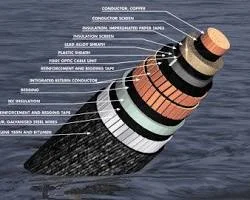
Iran has drastically escalated geopolitical tensions by publishing a highly detailed map of undersea internet cables traversing the Strait of Hormuz, explicitly describing these crucial digital arteries as highly vulnerable. This unprecedented disclosure serves as a stark warning to neighboring nations and global superpowers alike. The Strait of Hormuz, long known as the world’s most critical chokepoint for global oil supplies, is now being spotlighted for its equally vital role in global communications. At least seven major undersea cables pass through this narrow waterway, carrying over 97% of the global internet traffic responsible for e-commerce, cloud services, and international communications in the region. By releasing this comprehensive map, military and political analysts suggest that Tehran is openly demonstrating its capability to paralyze the digital economy of Gulf countries should regional conflicts escalate.
The Publication of the Vulnerability Map
The sudden release of the detailed underwater infrastructure map has sent shockwaves through the global cybersecurity and maritime communities. The documentation provided outlines the exact coordinates, landing stations, and shallow-water vulnerabilities of the fiber-optic lines that connect the Middle East to Asia, Europe, and the rest of the world. State-affiliated media accompanying the map release pointedly described the Strait of Hormuz as a fragile bottleneck for the modern technological ecosystem. The calculated move to highlight these vulnerabilities is widely interpreted as a deterrent, showcasing a non-kinetic option that could instantly freeze financial markets, disrupt aviation logistics, and sever communication networks without necessarily firing a single traditional weapon. The sheer granularity of the mapped data suggests months, if not years, of meticulous hydrographic surveys and intelligence gathering by state-aligned naval forces.
Strategic Context of the Disclosure
Understanding the timing of this publication requires analyzing the broader geopolitical theater. As economic sanctions and diplomatic standoffs continue to isolate various regional actors, the threat of infrastructure sabotage becomes a potent leverage tool. The map’s release coincides with heightened naval posturing in the Persian Gulf and the Arabian Sea. It is a direct signal to nations heavily invested in transitioning away from oil-based economies toward digital and knowledge-based frameworks. If diplomacy fails, the collateral damage of a severed cable network would be catastrophic. This is particularly relevant given recent diplomatic shifts, as seen when Iran halts U.S. talks over blockades, setting the stage for alternative methods of international pressure. The implicit threat is clear: any blockade or military strike against Iranian interests could trigger reciprocal actions targeting the invisible, underwater backbone of the global economy.
Seven Critical Undersea Arteries
At the heart of this unfolding crisis are seven primary submarine cable systems that snake through the shallow and treacherous waters of the Strait of Hormuz. These cables, some no thicker than a garden hose, contain bundled glass fibers that transmit terabits of data per second using light pulses. The systems include vital regional loops as well as massive transcontinental lines that link the financial hubs of London and Frankfurt to Dubai, Mumbai, and Singapore. Because the Strait is notoriously shallow—averaging just 50 to 90 meters in depth—these cables are highly susceptible to both accidental damage from dragging ship anchors and intentional sabotage from autonomous underwater vehicles or specialized diving units.
Analyzing the Data Flow and Connectivity
The concentration of so much critical infrastructure in a single, volatile geographic chokepoint defies the foundational internet engineering principle of redundancy. While some terrestrial routes exist, they lack the immense bandwidth capacity required to handle the daily data deluge of the modern Gulf. To understand the scale of the risk, one must look at the specific capacities and economic sectors reliant on these seven arteries.
| Cable System Indicator | Primary Regional Connections | Global Routing Reliance | Estimated Vulnerability Level |
|---|---|---|---|
| FALCON System | Kuwait, Saudi Arabia, UAE, Oman | High (Connects Gulf to India/Egypt) | Critical (Shallow waters in Hormuz) |
| SEA-ME-WE Series | Global (Europe to Asia via Middle East) | Extreme (Backbone of international traffic) | High (Multiple exposed landing points) |
| TW1 (Transworld) | UAE, Oman, Pakistan | Medium (Regional redundancy) | Critical (Path heavily trafficked by tankers) |
| GBI (Gulf Bridge) | Iraq, Iran, Gulf States | High (Inter-Gulf communications) | Moderate (Deep trenching in select areas) |
| Orient Express | UAE, Oman, Europe | High (Financial sector priority) | High (Requires specialized protection) |
Economic Impact on Gulf Countries
The Iranian report explicitly describes the Strait of Hormuz as a vulnerable point for the digital economy of Gulf countries. Over the past decade, nations such as the United Arab Emirates, Saudi Arabia, and Qatar have invested hundreds of billions of dollars into economic diversification strategies like Vision 2030. These blueprints rely entirely on establishing the region as a global hub for artificial intelligence, fintech, blockchain technologies, and digital logistics. A sustained disruption of the undersea cable network would grind these initiatives to a halt. Financial institutions would be unable to process international trades, smart city grids would lose connectivity, and the burgeoning tech sectors in Dubai and Riyadh would face existential operational challenges.
E-commerce and Cloud Service Disruption Risks
More than 97% of global internet traffic for e-commerce, cloud services, and communications relies on these fiber-optic lifelines. Massive data centers operated by multinational giants like Amazon Web Services (AWS), Google Cloud, and Microsoft Azure have been strategically placed in the Gulf to serve the Middle East and Africa. These hyperscale facilities synchronize constantly with global servers. If the cables in the Strait of Hormuz were severed, the resulting latency and packet loss would render local cloud environments useless for high-frequency trading, real-time logistics tracking, and enterprise software operations. E-commerce platforms would experience catastrophic downtimes, resulting in billions of dollars in lost revenue within hours.
Historical Precedents: The Red Sea Cable Disruptions
The threat outlined by Iran’s map is not merely theoretical; there is a stark recent precedent. Similar undersea cables in the Red Sea have already been disrupted during ongoing regional conflicts. In recent months, international telecom consortiums reported significant drops in bandwidth and total severances of multiple lines running through the Bab el-Mandeb strait. Investigations revealed that damaged vessels, dragging their immense anchors along the seabed after being abandoned or struck, had sliced through the vital fiber-optic links. The repair process in the Red Sea proved agonizingly slow due to the prohibitive insurance premiums for cable-laying and repair ships operating in active conflict zones. A similar scenario in the Strait of Hormuz would be exponentially worse due to the sheer volume of global shipping traffic and the higher density of critical data lines.
Parallels to Ongoing Conflicts and Hybrid Warfare
The weaponization of geographic chokepoints has evolved from maritime blockades to digital strangulation. The disruption of the Red Sea cables demonstrated how easily the global internet backbone can be fractured by asymmetric warfare tactics. When Iran threatens new military blows amid the Hormuz crisis, the international community must interpret these warnings through a multi-domain lens. It is no longer just about oil tankers and frigates; it is about the structural integrity of the digital age. By mapping these vulnerabilities, state actors are participating in advanced hybrid warfare, signaling that conventional military deterrence may not protect a nation’s most valuable asset: its data.
Global Internet Traffic Dependence
The interconnected nature of the global internet means that a localized crisis in the Strait of Hormuz would have immediate global cascading effects. Data packets do not respect national borders; they seek the path of least resistance. If the seven major cables in the Strait were compromised, global routing protocols like BGP (Border Gateway Protocol) would automatically attempt to push the massive terabytes of data through alternative paths. However, terrestrial routes traversing the Middle East or bypassing the continent entirely via the Cape of Good Hope lack the requisite capacity. The resulting bottleneck would drastically slow down internet speeds across Europe and Asia, leading to degraded services for consumers and corporations worldwide. Keeping abreast of the Strait of Hormuz news on global shipping and geopolitics is now just as critical for chief technology officers as it is for energy commodity traders.
Mitigating the Bottleneck: Alternatives and Solutions
In response to this glaring vulnerability, telecom consortiums and regional governments are scrambling to develop mitigation strategies. Terrestrial fiber-optic networks spanning from Saudi Arabia through Jordan to Israel and Europe are being accelerated, though these routes face their own distinct geopolitical and physical security challenges. Furthermore, there is an increasing reliance on low-earth orbit (LEO) satellite internet constellations to provide emergency communications redundancy. However, even the most advanced satellite networks cannot currently replace the raw bandwidth capacity of deep-sea fiber optics required by modern cloud infrastructure and hyper-scale data centers. For a deeper understanding of the global submarine infrastructure, one can examine the intricate layouts on TeleGeography’s Submarine Cable Map, which illustrates the profound lack of diverse routing in the Persian Gulf.
Geopolitical Ramifications and Future Outlook
The publication of this map marks a paradigm shift in Middle Eastern geopolitics. It legally and operationally moves underwater communication lines from the realm of protected civilian infrastructure into the crosshairs of potential military targets. The Gulf nations are now acutely aware that their economic transformation is tethered to the fragile glass threads resting on the seabed of a strait dominated by their primary regional rival. Ensuring the security of these cables will require unprecedented international cooperation, advanced naval patrols, and massive investments in localized data caching to ensure regional survivability during network isolations. As diplomatic backchannels work to de-escalate tensions, highlighted by events such as the Strait of Hormuz diplomatic maneuvering, the world watches closely. The map has been drawn, the vulnerabilities exposed, and the fragility of our interconnected digital global economy has never been more apparent.