Denise Powell Secures Democratic Nomination in Nebraska’s 2nd District
Introduction
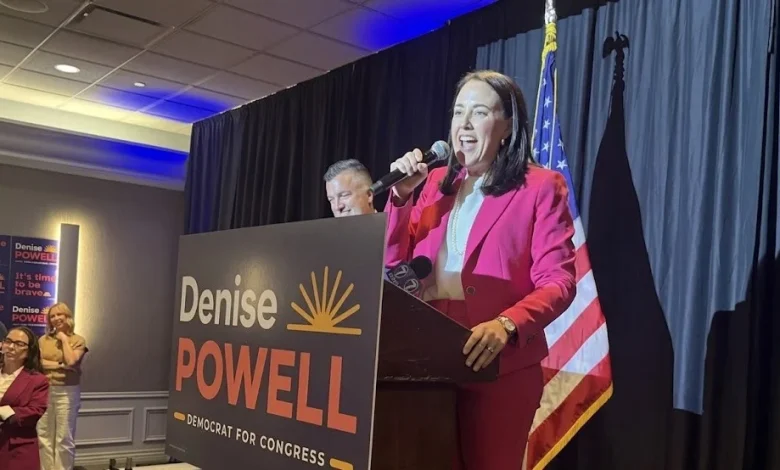
Political organizer Denise Powell has clinched the Democratic nomination in Nebraska’s 2nd Congressional District, according to projections from NBC News, marking a significant victory in a highly contested primary. This win positions Powell as a key contender in one of the Democratic Party’s prime targets for flipping a swing seat in the upcoming general election. Powell’s success in a crowded field underscores the evolving dynamics within the Democratic Party and the strategic importance of Nebraska’s 2nd District in the broader national political landscape.
Denise Powell’s Primary Victory
Powell’s path to the nomination was hard-fought, culminating in a narrow victory over state Sen. John Cavanaugh. The primary race included five other Democratic candidates, making it a diverse and competitive field. With approximately 90% of the expected vote tallied, Powell secured 39% of the vote, edging out Cavanaugh, who garnered 37%. This close margin reflects the intensity of the primary contest and the deep engagement of Democratic voters in the district. The victory is particularly noteworthy given the diverse range of candidates and the varying ideological positions they represented, highlighting Powell’s ability to appeal to a broad spectrum of Democratic voters.
Candidate Profiles: Powell vs. Cavanaugh
Denise Powell and John Cavanaugh presented distinct profiles to Democratic primary voters. Powell, often characterized as a more moderate candidate, emphasized pragmatic solutions and a focus on local issues pertinent to the 2nd District. Her campaign highlighted her extensive experience as a political organizer and her deep roots in the community. Cavanaugh, on the other hand, ran on a progressive platform, advocating for policies such as Medicare for All and aggressive action on climate change. His campaign resonated with progressive voters and labor unions, who saw him as a champion for working families. The contrast between Powell and Cavanaugh offered voters a clear choice between different visions for the district’s future.
The Endorsement Landscape
The primary race saw significant intervention from major outside groups, reflecting the high stakes and national attention focused on Nebraska’s 2nd District. Powell’s campaign benefited from the support of prominent organizations such as EMILY’s List, the Congressional Black Caucus, the Congressional Hispanic Caucus BOLD PAC, and Elect Democratic Women. These endorsements signaled Powell’s alignment with mainstream Democratic values and her potential to represent diverse constituencies. Cavanaugh, meanwhile, received endorsements from the Congressional Progressive Caucus PAC, the Nebraska AFL-CIO, and nearly a dozen other local unions. These endorsements underscored his commitment to progressive causes and his strong ties to organized labor. The division in endorsements highlighted the ideological fault lines within the Democratic Party and the strategic calculations of national organizations seeking to influence the outcome of the primary.
General Election Matchup: Powell vs. Harding
With the primary concluded, Denise Powell now faces Omaha City Council member Brinker Harding in the general election. Harding, who ran unopposed for the Republican nomination, presents a formidable challenge in a district that has been closely contested in recent election cycles. The general election is expected to be a high-profile and closely watched race, with significant implications for the balance of power in Congress. Powell’s campaign will focus on mobilizing Democratic voters, appealing to independent voters, and highlighting the differences between her policy positions and those of Harding. Harding, meanwhile, will seek to consolidate Republican support, attract moderate voters, and frame the election as a choice between conservative principles and liberal policies. The outcome of the general election will depend on a variety of factors, including voter turnout, campaign strategy, and the national political environment.
Nebraska’s 2nd District: A Battleground Overview
Nebraska’s 2nd Congressional District is known for its competitive political landscape, making it a perennial battleground in national elections. The district encompasses the city of Omaha and its surrounding suburbs, reflecting a mix of urban and suburban demographics. The district’s voters are diverse, including a significant number of working-class families, college-educated professionals, and minority communities. The 2nd District has a history of supporting both Democratic and Republican candidates, often swinging between parties in presidential and congressional elections. This swing district status makes it a crucial target for both parties, as its outcome can significantly impact the balance of power in Congress and the White House. Understanding the district’s demographics and voting patterns is essential for both Powell and Harding as they seek to craft winning campaign strategies.
National Implications of the Race
The race in Nebraska’s 2nd District carries significant national implications, particularly in the context of the broader political landscape. With the House of Representatives closely divided, every congressional seat is crucial for determining which party controls the chamber. A Democratic victory in the 2nd District would bolster the party’s efforts to maintain or expand its majority, while a Republican win would strengthen their position and potentially pave the way for regaining control. The race is also seen as a bellwether for national trends and voter sentiment, providing insights into the mood of the electorate and the effectiveness of different campaign strategies. National political organizations and donors are likely to invest heavily in the race, recognizing its importance in the overall battle for control of Congress. The outcome in Nebraska’s 2nd District could therefore have far-reaching consequences for the future of American politics.
Voting Trends and Analysis
Analyzing voting trends in Nebraska’s 2nd District reveals a complex and dynamic electorate. Voter turnout in the district has been increasing in recent election cycles, reflecting heightened political engagement and the intensity of national debates. Demographic shifts, such as the growth of minority populations and the increasing number of college-educated residents, are also influencing voting patterns. Understanding these trends is crucial for both Powell and Harding as they seek to tailor their campaigns to specific voter segments. For example, Powell may focus on mobilizing younger voters and minority communities, while Harding may target suburban voters and those concerned about economic issues. By analyzing voting data and demographic trends, campaigns can identify key areas of opportunity and develop strategies to maximize their support.
Influence of Outside Groups
The influence of outside groups in the primary race highlights the increasing role of money and organized interests in American elections. Organizations like EMILY’s List and the Congressional Progressive Caucus PAC play a significant role in shaping the outcome of elections by providing financial support, mobilizing volunteers, and running advertising campaigns. While these groups can help candidates reach a wider audience and amplify their message, they also raise concerns about the potential for special interests to exert undue influence on policy decisions. The involvement of outside groups in the Nebraska 2nd District race underscores the need for campaign finance reform and greater transparency in political spending. Understanding the role and impact of these groups is essential for voters as they evaluate the candidates and make informed decisions.
Powell’s Policy Platform
Denise Powell’s policy platform focuses on a range of issues relevant to the voters of Nebraska’s 2nd District. Her key priorities include strengthening the local economy, improving access to affordable healthcare, and investing in education and job training programs. Powell has also emphasized the importance of addressing climate change and protecting the environment, advocating for policies that promote clean energy and sustainable development. On social issues, Powell supports reproductive rights, LGBTQ+ equality, and comprehensive immigration reform. Her platform reflects a pragmatic approach to governance, seeking to find common ground and build consensus on pressing issues. Powell’s ability to articulate her policy positions and connect with voters on these issues will be crucial to her success in the general election. For example, her stance on job training might resonate with voters concerned about the future of work, while her commitment to healthcare access could appeal to those struggling with rising medical costs.
Harding’s Policy Platform
Brinker Harding’s policy platform centers on conservative principles and a focus on fiscal responsibility, limited government, and individual liberty. He advocates for lower taxes, reduced regulation, and a balanced budget. Harding also emphasizes the importance of national security, supporting a strong military and a robust defense posture. On social issues, Harding generally holds conservative views, opposing abortion rights and supporting traditional family values. His platform aligns with the Republican Party’s core principles and seeks to appeal to voters who prioritize economic growth, national security, and conservative social values. Harding’s ability to effectively communicate his policy positions and contrast them with those of Powell will be critical to his campaign strategy. His emphasis on fiscal responsibility, for instance, may resonate with voters concerned about government spending and the national debt.
Expert Analysis and Predictions
Political analysts and election forecasters are closely monitoring the race in Nebraska’s 2nd District, recognizing its potential to be a pivotal contest in the battle for control of Congress. Most experts predict a close and competitive race, with both Powell and Harding having a realistic chance of winning. The outcome will likely depend on factors such as voter turnout, campaign effectiveness, and the national political environment. Some analysts believe that Powell’s moderate stance and strong support from outside groups could give her an edge, while others argue that Harding’s conservative message and Republican base could prove decisive. The race is also seen as a test of the Democratic Party’s ability to win in swing districts and appeal to a broad range of voters. Ultimately, the outcome will likely come down to which candidate can best mobilize their supporters and persuade undecided voters to cast their ballots.
The race also highlights the ongoing debates within both the Democratic and Republican parties. Powell’s victory in the primary suggests a preference for more moderate candidates who can appeal to a wider range of voters, while Harding’s conservative platform reflects the Republican Party’s continued emphasis on traditional values and limited government. These internal dynamics will likely play a significant role in shaping the campaigns and influencing voter choices.
Furthermore, the influence of national issues, such as healthcare, the economy, and social justice, cannot be overstated. Voters in Nebraska’s 2nd District are likely to be influenced by national debates and policy discussions, and the candidates’ ability to address these issues effectively will be crucial to their success.
Here is a summary table of the candidates:
| Candidate | Party | Ideology | Key Endorsements | Platform Highlights |
|---|---|---|---|---|
| Denise Powell | Democratic | Moderate | EMILY’s List, Congressional Black Caucus | Affordable healthcare, education investment |
| Brinker Harding | Republican | Conservative | N/A (Unopposed in primary) | Lower taxes, limited government |
| John Cavanaugh | Democratic | Progressive | Congressional Progressive Caucus PAC, Nebraska AFL-CIO | Medicare for All, climate action |
Conclusion
Denise Powell’s victory in the Democratic primary for Nebraska’s 2nd Congressional District sets the stage for a highly competitive and closely watched general election. Her matchup against Brinker Harding presents a clear choice for voters between different visions for the district’s future. The race carries significant national implications, with the potential to impact the balance of power in Congress and provide insights into broader political trends. As the campaign unfolds, voters will be closely scrutinizing the candidates’ policy platforms, their ability to connect with the community, and the influence of outside groups. The outcome in Nebraska’s 2nd District will undoubtedly be a key indicator of the political landscape heading into the next election cycle.
The focus on key districts like Nebraska’s 2nd also underscores the strategic importance of local races in shaping national politics. As the parties invest more resources in these competitive areas, the outcomes will reflect the effectiveness of different campaign strategies and the evolving demographics of the American electorate. You might also be interested in the the Feds treasury. Or the shut down of spirit airlines. Or maybe even Iran’s issue with UAE.
For more information, you can visit NBC News.