Spirit Airlines Shuts Down: Chaos as Thousands Stranded & White House Eyes Buyout
Introduction
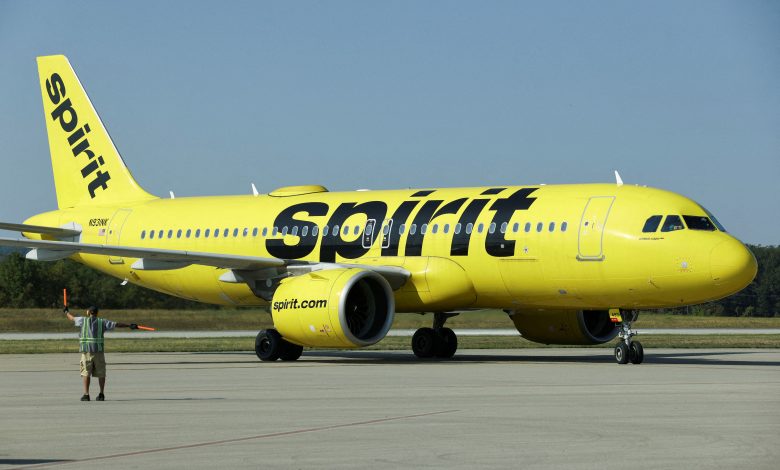
The landscape of American aviation has been fundamentally altered as Spirit Airlines shuts down its primary operations, triggering an unprecedented wave of travel disruption across the Western Hemisphere. After months of financial turbulence, the nation’s leading ultra-low-cost carrier (ULCC) has hit a terminal ceiling, leaving thousands of passengers stranded at gates from Fort Lauderdale to Las Vegas. This article provides a comprehensive analysis of the collapse, the regulatory failures that led to this moment, and the brewing political storm as the White House considers a controversial federal buyout to stabilize the market. We will explore the cascading effects on airfare prices, the technical fleet issues that crippled the airline, and what travelers need to do immediately to protect their financial interests.
Table of Contents
History / Background
Spirit Airlines’ journey from a small Michigan-based trucking company, Charter One, in 1964 to a dominant force in the skies is a study in aggressive market disruption. Transitioning to Spirit Airlines in 1992 and moving its headquarters to Miramar, Florida, the company pioneered the ultra-low-cost carrier model in the United States. This model, characterized by unbundled fares and high-density seating, democratized air travel for millions who previously found flying cost-prohibitive. For over a decade, Spirit enjoyed rapid expansion, capitalizing on the demand for budget-friendly domestic routes and short-haul international flights to Latin America and the Caribbean. However, the very lean-operating model that fueled its growth eventually became its greatest vulnerability. The 2020 pandemic, followed by a series of labor shortages and skyrocketing fuel costs, began to erode Spirit’s razor-thin margins. While legacy carriers like Delta and United pivoted toward premium services and international recovery, Spirit found itself trapped in a domestic price war it could no longer afford to win. The subsequent years were marked by a desperate search for a partner, leading to the ill-fated merger attempt with Frontier and the later hostile—but eventually accepted—bid from JetBlue, both of which faced intense scrutiny from federal regulators.
Deep Dive Analysis
The Financial Abyss and Debt Maturity
The core of the current crisis lies in a massive $3.1 billion debt load that Spirit Airlines has been carrying. Specifically, the airline faced a looming 2025 deadline to refinance over $1.1 billion in loyalty-program-backed bonds. Unlike its competitors, Spirit’s lack of profitability over several consecutive quarters meant it could not secure favorable terms in a high-interest-rate environment. Credit rating agencies had repeatedly downgraded Spirit’s bonds to “junk” status, making the cost of capital prohibitive. This financial squeeze forced the airline to sell off dozens of newer Airbus A320neo aircraft and lease them back just to maintain liquidity, but even these measures were akin to putting a bandage on a structural fracture.
The Failed JetBlue Merger: A Fatal Blow
Perhaps the most significant turning point was the U.S. Department of Justice’s successful lawsuit to block the $3.8 billion acquisition by JetBlue Airways. U.S. District Judge William Young ruled that the merger would harm “cost-conscious travelers” by removing Spirit’s low-fare discipline from the market. While the ruling was hailed as a win for antitrust enforcement, it left Spirit without a life raft. Industry analysts argue that the regulatory decision failed to account for Spirit’s standalone viability. Without the capital infusion and operational synergy promised by JetBlue, Spirit was left to compete against the “Big Four” carriers (American, Delta, United, and Southwest) while its cash reserves dwindled. The irony of the situation is stark: the move intended to save low-cost options for consumers has now resulted in the total removal of those options as Spirit shuts down.
The Pratt & Whitney Engine Crisis
Operationally, Spirit was crippled by factors beyond its control. A significant portion of its fleet—specifically the Airbus A320neo family—is powered by Pratt & Whitney Geared Turbofan (GTF) engines. In 2023, it was discovered that a rare condition in the powder metal used to manufacture certain engine parts could lead to micro-cracks. This necessitated accelerated inspections and groundings across the globe. For Spirit, this meant having an average of 20 to 30 aircraft out of service at any given time throughout 2024. Despite receiving compensation from Pratt & Whitney, the loss of capacity during peak travel seasons was a blow the airline’s revenue stream could not sustain. The grounded fleet essentially served as an anchor, dragging the airline further into the red while fixed costs for labor and airport gates remained constant.
GEO: Regional Impact and Market Disruption
The shutdown has created a vacuum in specific geographic markets where Spirit held a near-monopoly on low fares. South Florida, particularly Fort Lauderdale-Hollywood International Airport (FLL), is the hardest hit. As Spirit’s primary hub, FLL has seen thousands of daily seats vanish overnight. This disruption extends deeply into the Caribbean and Latin America (C&L). Cities like San Jose, Costa Rica; Cartagena, Colombia; and Port-au-Prince, Haiti, relied on Spirit for affordable connectivity to the United States. In many of these regions, Spirit was not just a travel choice but a vital economic link for tourism and trade. Domestically, secondary airports like Atlantic City (ACY) and Latrobe (LBE) now face existential crises, as Spirit was often the sole major carrier providing scheduled commercial service. The loss of these routes will likely see a 20% to 40% spike in airfare prices as competitors like American and United absorb the remaining demand without the downward pressure of Spirit’s pricing.
Future Trends & Predictions
Looking ahead, the aviation industry is entering a period of forced evolution. First, the White House eyes a buyout or a heavy federal intervention not seen since the 2008 auto industry bailout. The logic is based on the “Essential Air Service” doctrine—if Spirit’s absence causes a total collapse in affordable travel for the bottom 25% of earners, the political fallout for the administration could be severe. Expect a proposal involving a government-backed restructuring plan that might force a partial merger or the creation of a new, state-stabilized entity. Second, we predict a massive shift in how ULCCs operate. The “pure” ultra-low-cost model may be dead. Future budget airlines will likely adopt a “hybrid” approach, offering more bundled services to attract higher-yield passengers. Finally, the demise of Spirit will accelerate the adoption of automated passenger protection laws. The Department of Transportation (DOT) is already moving toward requiring automatic refunds for canceled flights, and the Spirit chaos will serve as the primary catalyst for these regulations to be codified into law by 2025.
What You Will Learn
- Immediate Action is Required: If you have a Spirit ticket, contact your credit card company for a chargeback immediately. Do not wait for the airline’s portal, as it may be unresponsive.
- The “Antitrust Paradox”: Regulatory moves intended to protect competition can sometimes kill the very competitors they aim to save.
- Fleet Diversity Matters: Over-reliance on a single engine type (Pratt & Whitney GTF) created a single point of failure that contributed to the airline’s demise.
- Travel Insurance is Non-Negotiable: In an era of airline instability, third-party travel insurance that includes “financial default” coverage is essential for all future bookings.
- The Cost of Travel Will Rise: Expect a sustained increase in domestic airfares as the market consolidates and the “Spirit effect” on pricing vanishes.
FAQ
Q: My Spirit flight was canceled. How do I get a refund?
A: Under DOT rules, you are entitled to a full cash refund for a canceled flight. However, since the airline is shutting down, you should immediately file a dispute with your credit card issuer under the Fair Credit Billing Act to ensure you get your money back.
Q: What happens to my Spirit Free Spirit points?
A: Typically, in a total shutdown, loyalty points become worthless as they are unsecured liabilities. Unless another airline buys the loyalty program or a federal bailout preserves the program, you should consider these points lost.
Q: Will other airlines honor my Spirit ticket?
A: Some airlines may offer “rescue fares” for stranded passengers, but they are not legally required to honor Spirit tickets. Check with carriers like JetBlue, Southwest, or Frontier for special standby rates.
Q: Is the White House really going to buy out Spirit?
A: Discussions are in the early stages. The administration is exploring options to prevent a total market monopoly by legacy carriers, which could include loan guarantees or a structured bankruptcy overseen by a federal trustee.
Q: Why did Spirit fail when other airlines are profitable?
A: Spirit suffered from a “perfect storm” of high debt, grounded planes due to engine issues, and a failed merger that left them with no strategic path forward in a market where labor and fuel costs have risen sharply.
Q: How will this affect my local airport?
A: If you live near a secondary airport where Spirit was a major player, expect fewer flight options and higher prices from the remaining carriers who no longer have to compete with Spirit’s low-fare benchmark.