Iran Slams UAE’s ‘Inappropriate’ OPEC Exit, Cites Regional Aid
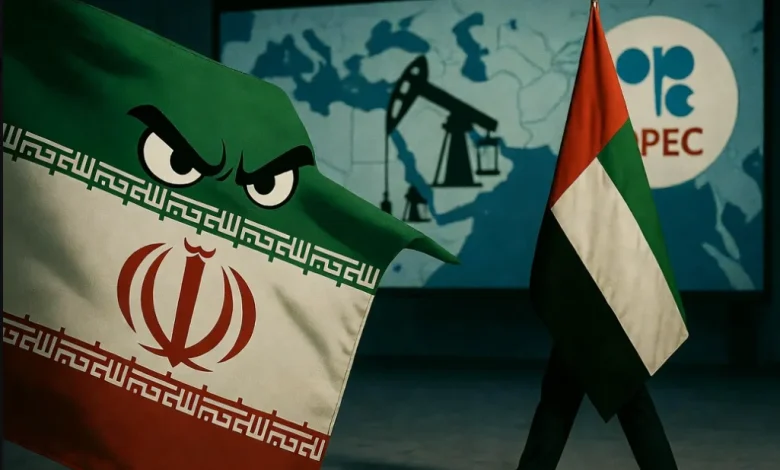
Iran has unequivocally denounced the United Arab Emirates’ (UAE) potential departure from the Organization of the Petroleum Exporting Countries (OPEC), labeling such a move as “inappropriate” and “not constructive.” The strong diplomatic rebuke from Tehran extends further, with Iran accusing Abu Dhabi of actively assisting both Israel and the United States amidst ongoing regional conflicts. This contentious exchange underscores a widening chasm between two significant Middle Eastern powers, with profound implications for regional stability, energy politics, and the future cohesion of OPEC.
The OPEC Rift: Iran’s Strong Rebuke of UAE’s Proposed Departure
The pronouncement by Iran’s Foreign Minister marks a significant escalation in rhetoric concerning the internal dynamics of OPEC and the broader geopolitical landscape of the Middle East. The potential withdrawal of the UAE, a vital oil producer and a prominent voice within the organization, is perceived by Tehran not merely as an economic decision but as a politically charged maneuver with far-reaching consequences. Iran’s condemnation highlights its deep-seated concerns over the unity and collective bargaining power of OPEC, particularly at a time when global energy markets face considerable volatility and geopolitical tensions remain high. The language employed by Iran’s top diplomat – “inappropriate” and “not constructive” – leaves little room for ambiguity regarding Tehran’s disapproval, signaling a potential fracturing within the cartel that could reshape its influence on international oil prices and supply strategies.
A Deep Dive into the Diplomatic Fallout
The diplomatic fallout from this dispute is multifaceted, extending beyond the immediate concerns of oil production quotas. Iran’s posture suggests a belief that the UAE’s contemplation of an OPEC exit is not purely an economic calculation rooted in national interest, but rather a move influenced by external actors. This interpretation is amplified by Iran’s direct accusation that the UAE is providing assistance to Israel and the United States during the current regional conflict. Such an accusation injects a significant geopolitical dimension into what might otherwise be viewed as an internal OPEC debate. For Tehran, any perceived alignment of an Arab state with its primary regional adversaries, particularly in the context of ongoing hostilities, is a severe breach of regional solidarity and trust. The diplomatic rhetoric suggests that Iran views the UAE’s actions as potentially undermining regional efforts to counter what Tehran perceives as foreign interference and destabilizing actions. The implications for bilateral relations between Iran and the UAE, which have seen intermittent periods of tension and de-escalation, are undoubtedly severe, threatening to roll back any progress towards rapprochement.
The Historical and Geopolitical Context of OPEC Unity
OPEC, founded in 1960, has historically served as a crucial platform for coordinating petroleum policies among its member states. Its primary objective has been to stabilize oil markets to ensure a steady income for producers and a reliable supply for consumers. However, the organization has frequently navigated internal disagreements and geopolitical rivalries among its members. The relationship between Iran and the UAE, while often complex, has typically operated within the broader framework of OPEC’s collective interest in market stability. This latest dispute, however, appears to challenge the very foundation of this cooperative spirit, introducing political accusations that transcend traditional economic disagreements over production levels or market share. The historical context reveals that while disagreements are not new to OPEC, direct accusations of assisting adversaries during conflict represent a significant departure from typical intra-OPEC diplomatic norms, potentially signaling a deeper, more irreconcilable divide.
Understanding OPEC’s Mandate and Regional Power Dynamics
OPEC’s mandate is intrinsically linked to the economic prosperity and political stability of its member states. For decades, the organization has leveraged its collective production capacity to influence global oil prices, thereby bolstering the revenues of its members. However, the influence of individual member states within OPEC has always been a reflection of their production capabilities, geopolitical standing, and willingness to adhere to collective decisions. The UAE, as a major crude oil producer, holds considerable sway within OPEC, and any move towards its departure would naturally be scrutinized through both an economic and geopolitical lens. Iran, a founding member and a country deeply reliant on oil exports, views OPEC as a vital instrument for projecting its economic power and securing its national interests, especially under the pressure of international sanctions. Therefore, the prospect of a significant member like the UAE stepping away is seen by Iran as a direct threat to the organization’s integrity and, by extension, to its own strategic interests within the global energy architecture. The incident underscores the delicate balance of power within OPEC, where economic decisions are invariably intertwined with complex regional rivalries and strategic allegiances.
Iran’s Accusations: Allegations of Regional Assistance
Central to Iran’s strong condemnation are the specific accusations leveled against Abu Dhabi. Tehran alleges that the UAE has been actively assisting Israel and the United States during the ongoing conflict. While the precise nature of this alleged assistance remains unspecified in public statements, such accusations typically encompass a range of support mechanisms, including intelligence sharing, logistical facilitation, economic backing, or even diplomatic alignment that bolsters the positions of Israel and the U.S. in the region. These allegations are particularly inflammatory given the historical context of Arab-Israeli relations and the ongoing tensions between Iran and both Israel and the United States. For Iran, these accusations likely serve multiple purposes: to delegitimize the UAE’s potential OPEC withdrawal by framing it as a politically motivated act of betrayal, to rally regional opposition against what it perceives as foreign influence, and to underscore its own position as a bulwark against perceived external aggression. The gravity of these accusations cannot be overstated, as they touch upon sensitive issues of national sovereignty, regional alliances, and the conduct of foreign policy during conflict.
The Nexus of Energy, Geopolitics, and Conflict
The current dispute vividly illustrates the inseparable link between energy politics, broader geopolitical strategies, and the realities of regional conflict. In the Middle East, oil revenues are not merely economic lifelines; they are fundamental tools of state power, enabling nations to fund their militaries, develop their infrastructure, and project influence. When a major oil producer like the UAE considers altering its relationship with OPEC, especially when simultaneously accused of aiding adversaries, it exposes the intricate web of interests at play. The accusations suggest that Iran perceives the UAE’s potential move as part of a larger strategy to undermine Iran’s regional standing and to align with a bloc of nations seen as hostile to Tehran. This complex interplay means that decisions about oil production, which might appear purely commercial on the surface, are often deeply embedded in calculations of national security, regional dominance, and the dynamics of ongoing conflicts. The energy sector, in this context, becomes a battleground where diplomatic disputes and geopolitical rivalries play out with significant economic consequences.
The UAE’s Assertive Stance: Prioritizing National Interests
In response to Iran’s sharp criticism and accusations, the UAE’s state oil chief firmly pushed back, asserting that any decision regarding OPEC membership or production strategy would be driven purely by national interests and not directed at any specific entity or nation. This categorical denial underscores the UAE’s commitment to sovereign decision-making in matters of economic policy and resource management. The UAE, a nation that has diversified its economy significantly but still relies heavily on oil and gas revenues, consistently seeks to optimize its economic returns and ensure long-term stability. The rationale for a potential OPEC exit, from the UAE’s perspective, could stem from a desire for greater flexibility in setting production targets, attracting foreign investment into its energy sector, or pursuing an independent energy strategy that aligns with its own economic diversification goals and market outlooks. The UAE’s insistence on national interests as the sole driver of its decisions is a familiar refrain from nations seeking to assert greater control over their economic destinies, even if such moves challenge established international frameworks.
Economic Sovereignty vs. Collective Strategy
The core of the UAE’s argument rests on the principle of economic sovereignty: the right of a nation to independently control its economic affairs, including its natural resources and their exploitation. For a country with vast oil reserves and significant production capacity, adhering to OPEC quotas can sometimes be perceived as limiting its economic potential or its ability to respond dynamically to market changes. The UAE might see greater advantage in operating outside the collective framework, allowing it to increase production as it deems fit, potentially capturing a larger market share or responding more swiftly to global demand fluctuations. This pursuit of economic sovereignty, however, often comes into direct tension with the collective strategy that underpins organizations like OPEC. OPEC’s strength lies in its members’ willingness to coordinate and, at times, sacrifice individual gains for the collective good of market stability and higher prices. A significant member prioritizing its own national interests to the extent of leaving the cartel represents a profound challenge to this foundational principle, raising questions about the future viability and influence of such cooperative economic bodies in an increasingly fragmented global order.
Implications for OPEC: Cohesion, Influence, and Future Stability
The potential departure of a major producer like the UAE would undoubtedly send shockwaves through OPEC, challenging its cohesion, influence, and long-term stability. The organization’s effectiveness hinges on its members’ ability to agree on production targets and adhere to them, thereby managing global supply. If the UAE, a nation producing millions of barrels per day, were to operate independently, it could complicate OPEC’s efforts to influence oil prices and market stability. Such a move might encourage other members to reconsider their own commitments, potentially leading to a fragmentation of the cartel’s collective power. The precedent set by a UAE exit could embolden other members to prioritize individual national interests over collective discipline, weakening OPEC’s ability to act as a unified force in the global energy landscape. Furthermore, a reduced membership, especially by a high-capacity producer, would diminish OPEC’s overall market share, thereby reducing its leverage against non-OPEC producers and major consumers. This scenario would introduce greater uncertainty into the oil market, potentially leading to increased volatility.
Examining the Precedent of a Major Producer’s Exit
While OPEC has seen members come and go in the past, the potential exit of a country of the UAE’s stature carries particular weight. Past withdrawals, such as those by Indonesia or Qatar, often involved members with smaller production capacities or those who saw their long-term economic future diverge from primary oil exports. The UAE, however, remains a cornerstone of global oil supply. Its departure would mark a significant shift, signaling a potential weakening of the consensus-driven approach that has long characterized OPEC’s decision-making process. The ramifications extend beyond mere numbers; it concerns the very philosophy of collective action among sovereign states. If a key player chooses to go it alone, it could encourage a ‘every nation for itself’ mentality, making future coordinated responses to market crises or long-term strategic planning immensely more challenging. The precedent would be clear: national interest, even if it runs counter to group solidarity, can override collective commitments, potentially ushering in a new era of less predictable oil market dynamics.
Broader Geopolitical Ripple Effects
The dispute between Iran and the UAE, framed around the latter’s potential OPEC exit and accusations of aiding Israel and the U.S., has profound geopolitical ripple effects across the Middle East and beyond. It highlights the intricate and often volatile nature of regional alliances and rivalries. The accusation of assisting Israel and the U.S. during a conflict is particularly significant, as it touches upon long-standing fault lines in the region. Should the UAE indeed depart from OPEC under these circumstances, it could be interpreted by some as a further step towards aligning with a bloc that includes Israel and the U.S., potentially deepening existing divisions within the Arab world and with Iran. This scenario would complicate efforts towards regional de-escalation and dialogue, potentially entrenching opposing geopolitical camps. The stability of the Middle East, already fragile, stands to be further tested by such a significant divergence among key regional actors, affecting everything from security arrangements to economic cooperation. The implications could even extend to global diplomatic efforts aimed at resolving regional conflicts and ensuring maritime security.
The Shifting Sands of Middle Eastern Alliances
The Middle East has long been characterized by shifting alliances and a complex web of rivalries. The recent Abraham Accords, which saw some Arab nations normalize relations with Israel, have already reshaped the regional geopolitical landscape. Iran’s accusations against the UAE must be viewed through this lens, as Tehran likely interprets the UAE’s actions – both its potential OPEC exit and its alleged assistance to Israel and the U.S. – as part of a broader strategic realignment. This perceived realignment could exacerbate existing security concerns for Iran and lead to increased proxy competition in various regional arenas. Conversely, from the perspective of the UAE and its allies, such moves might be seen as necessary steps to counter what they perceive as Iranian expansionism and destabilizing activities. This ongoing struggle for influence, punctuated by economic decisions with clear political undertones, continues to reshape the contours of Middle Eastern alliances, creating an environment of heightened uncertainty and requiring careful diplomatic navigation by all parties involved. The situation underscores the fluidity of power dynamics and the constant re-evaluation of national interests in a region perpetually in flux.
The Economic Calculus: Global Oil Markets in Focus
Beyond the geopolitical sparring, the economic implications of a potential UAE departure from OPEC for global oil markets are substantial. The UAE is a top-tier global oil producer, and its ability to freely increase or decrease production without OPEC constraints could significantly alter global supply dynamics. Analysts would closely watch whether an independent UAE would pursue a strategy of maximizing production to gain market share, or whether it would continue to exercise caution to prevent a price collapse. A surge in UAE production could lead to an oversupply in the market, exerting downward pressure on oil prices, which would impact the revenues of all oil-exporting nations, including OPEC members and Russia-led non-OPEC allies (OPEC+). Conversely, if an independent UAE chose to limit production, perhaps to maintain higher prices, its actions would still need to be factored into global supply forecasts, adding a new layer of complexity to market analysis. The stability of the global oil market hinges on a delicate balance of supply and demand, and the removal of a major producer from the OPEC framework would undeniably introduce an element of unpredictable volatility.
Potential Volatility and Supply Dynamics
The prospect of the UAE operating outside OPEC quotas introduces significant potential for market volatility. Currently, OPEC+ decisions provide a degree of predictability to global oil supply. Without the UAE’s adherence to these collective targets, the market would lose a key element of stability. Traders and investors thrive on certainty, and an independent UAE, free to set its own course, would be a new variable that could lead to more pronounced price swings. Furthermore, the capacity of the UAE to quickly ramp up or scale back production is substantial, meaning its independent decisions could have rapid and significant impacts on global supply. This could challenge the ability of other major producers to respond effectively, potentially leading to periods of either glut or shortage, depending on global demand and geopolitical events. The entire supply dynamic, from long-term investment strategies to short-term trading decisions, would need to be re-evaluated in light of this potential shift, underscoring the profound economic stakes involved in the ongoing dispute.
Comparative Oil Production (Select OPEC+ Members)
This table illustrates recent average daily crude oil production figures for key OPEC+ nations, offering context to the significance of the UAE’s contribution and the potential impact of its strategic decisions.
| Country | Average Daily Crude Production (Million Barrels Per Day)* | OPEC Status |
|---|---|---|
| Saudi Arabia | ~9.0 – 10.5 | OPEC Member |
| Russia | ~9.5 – 10.0 | Non-OPEC (OPEC+) |
| United Arab Emirates | ~3.0 – 3.5 | OPEC Member |
| Iraq | ~4.0 – 4.5 | OPEC Member |
| Iran | ~2.5 – 3.0 | OPEC Member |
| Kuwait | ~2.5 – 2.8 | OPEC Member |
For more insights into global energy trends, visit the U.S. Energy Information Administration (EIA).
Iran’s Steadfast Commitment to OPEC
Despite the heated exchange and the profound disagreement with the UAE, Iran has reaffirmed its commitment to its own OPEC obligations. This stance is significant, as it indicates Tehran’s continued belief in the fundamental principles of OPEC and its strategic value, even amidst internal strife. For Iran, maintaining its position within OPEC and adhering to its quotas is likely viewed as a matter of principle and a strategic necessity. As a nation heavily impacted by international sanctions, leveraging its position within a powerful international cartel remains crucial for its economic survival and its ability to influence global energy policy. By reiterating its commitment, Iran also seeks to differentiate itself from the UAE, positioning itself as a reliable and committed member of the organization, thereby potentially garnering support from other member states who may also be wary of a significant departure. This commitment underscores Iran’s long-term strategy of asserting its influence within multilateral forums, even when facing external pressures and internal disagreements with fellow members.
A Strategic Gambit Amidst Disagreement
Iran’s unwavering commitment to its OPEC obligations can be interpreted as a strategic gambit designed to highlight the perceived errancy of the UAE’s potential actions. By contrasting its own steadfastness with the UAE’s contemplation of an exit, Iran aims to cast itself as the defender of OPEC’s unity and purpose. This approach not only reinforces its own legitimacy within the organization but also places indirect pressure on other OPEC members to consider the broader implications of such a departure. In the complex chess game of Middle Eastern diplomacy and energy politics, such declarations are rarely purely altruistic; they serve to advance national interests while shaping the narrative. Iran is essentially signaling that despite the accusations and disagreements, it believes in the collective power of OPEC and will continue to work within its framework, perhaps hoping to isolate the UAE or encourage a reconsideration of its proposed move. It’s a delicate balancing act, maintaining a critical voice while affirming loyalty to the institution.
Navigating the Future: Pathways and Projections
The path forward for OPEC, and for relations between Iran and the UAE, remains uncertain. The immediate future will depend on whether the UAE formally announces its departure from OPEC, and how other member states react to such a decision. If the UAE proceeds with its exit, OPEC would be forced to adapt to a new reality, potentially re-evaluating its quota system and collective strategies without one of its key producers. The geopolitical ramifications would continue to unfold, with regional alliances potentially becoming more rigid and dialogue more challenging. For the global oil market, increased volatility would be a likely outcome, as a major supply source operates independently. Conversely, intense diplomatic efforts might be undertaken behind the scenes to persuade the UAE to remain within OPEC, perhaps through concessions or renewed assurances of addressing its national interests within the existing framework. The ongoing dialogue, however contentious, signals that the future of energy politics in the Middle East will be shaped by a complex interplay of economic imperatives, national sovereignty, and deeply entrenched geopolitical rivalries. The international community will undoubtedly watch closely as these crucial dynamics continue to evolve.