Britain Axes Israel Tracking Unit as Trump Weighs Iran Deal

Britain Shutters Sole Unit Tracking International Law Violations
Britain has abruptly shut down the only governmental unit dedicated to tracking whether Israel is breaching international law in its ongoing military campaigns. This startling geopolitical maneuver arrives with suspicious timing, radically altering the landscape of international accountability. Merely two weeks prior to this sudden closure, the foreign secretary publicly lauded the department’s unwavering commitment to international law, explicitly calling respect for these legal frameworks the fundamental “linchpin” of her entire department’s operational philosophy. The sheer hypocrisy of dismantling the unit immediately following such a resolute public declaration has sent shockwaves through human rights organizations, diplomatic circles, and global intelligence communities alike. Observers are aggressively questioning the underlying motives, suggesting intense backdoor lobbying and severe diplomatic pressures have forced London to capitulate and eliminate a highly inconvenient source of objective data regarding the conflict’s grim realities.
The Vanishing Database of 26,000 Verified Incidents
The closure of this specialized monitoring unit effectively wipes out immediate access to a meticulously maintained database comprising precisely 26,000 verified incidents of potential international law violations. This monumental catalog of data traces its origins back to the deeply consequential events of October 7, 2023, meticulously documenting every airstrike, infrastructure collapse, and civilian casualty report that warranted legal scrutiny under the Geneva Conventions. The vanishing of this database represents a catastrophic blow to investigative journalism, legal transparency, and international oversight. By deliberately obfuscating this repository of 26,000 verified incidents, the government is effectively blinding its own policymakers to the very intelligence required to make ethical, legally sound decisions on the global stage. Critics argue this is not merely a bureaucratic reorganization but a calculated destruction of evidence designed to insulate political alliances from the strict parameters of international humanitarian law, particularly at a time when the Israel Supreme Court erupts in chaos over October 7 inquiry hearing.
Hypocrisy and Arms Export Licenses in Limbo
Perhaps the most damning consequence of eliminating this critical database revolves around its direct integration with the United Kingdom’s arms export control infrastructure. That exact same database was actively being used by independent regulatory bodies to critically evaluate whether to keep lucrative arms export licenses to Israel suspended. Without the granular, verified incident data feeding into these ethical assessments, the regulatory framework governing the multi-billion-dollar weapons trade is left completely hollowed out. Arms manufacturers and defense contractors can now operate within a pervasive fog of informational darkness, free from the stringent legal checks that the tracking unit formally provided. The timing is doing an extraordinary amount of heavy lifting here, suggesting a coordinated, deliberate effort to forcefully clear the administrative path for resumed weapons shipments by fundamentally destroying the mechanism that mandated their suspension in the first place.
| Geopolitical Event | Immediate Action Taken | Strategic Global Consequence |
|---|---|---|
| British Legal Database Closure | Disbandment of the unit tracking 26,000 Israeli incidents since Oct 7, 2023. | Arms export licenses continue without rigorous legal oversight or verified data constraints. |
| Iran’s Naval Ultimatum | Tehran demands the immediate lifting of the naval blockade before any peace talks. | The United States risks losing its primary strategic leverage ahead of any nuclear negotiations. |
| Trump’s Situation Room Meeting | Emergency convention of the full U.S. National Security Team to formulate a response. | Decides whether Washington calls Iran’s bluff or escalates toward an unprecedented regional conflict. |
The Diplomatic Chessboard: Iran’s Ultimatum to Washington
Simultaneously unfolding on the grand diplomatic chessboard is a staggering new development from Tehran. Iran’s proposal, long shrouded in back-channel whispers and diplomatic ambiguity, is now fully and unequivocally visible to the global community. The regime has laid down a severe, uncompromising ultimatum designed to dramatically flip the balance of power in the Middle East. The central pillar of their demand is stark: Lift the suffocating naval blockade first, firmly end the regional war, and only then will they consider returning to the table for nuclear negotiations. This audacious restructuring of diplomatic priorities deliberately places the burden of de-escalation squarely on the shoulders of the United States. As Iran halts U.S. talks over blockade and Trump demands, Tehran is effectively weaponizing its strategic patience, projecting an aura of invulnerability while cornering Western powers into a high-stakes diplomatic corner where any concession appears as an immediate surrender.
Lifting the Naval Blockade First
The insistence on lifting the naval blockade as an initial precondition highlights the severe economic and logistical strangulation Tehran is currently enduring. By demanding the removal of this naval barrier before any other concessions are even discussed, Iran is systematically attempting to dismantle the primary economic leverage the United States holds. The blockade has severely restricted Iran’s ability to covertly export petroleum, acquire advanced military technologies, and fund its extensive network of proxy militias across the Levant and the Arabian Peninsula. If Washington concedes to this demand, it essentially gifts Tehran a monumental economic lifeline without securing a single guarantee regarding uranium enrichment caps or ballistic missile limitations. This strategy is a masterclass in brinkmanship, betting that Western war fatigue will ultimately override long-term strategic containment protocols.
The Nuclear Negotiation Deferral Strategy
By explicitly stating that nuclear negotiations will come later—much later—Iran is executing a calculated deferral strategy designed to buy invaluable time for its subterranean atomic development programs. De-coupling the immediate military conflict from the broader nuclear issue allows Iranian scientists to continuously push the boundaries of uranium enrichment while diplomatically feigning a desire for regional peace. The international community, desperate for an end to kinetic warfare, may be tempted to accept this bifurcated approach, prioritizing a temporary cessation of hostilities over the existential threat of a nuclear-armed Tehran. However, defense analysts universally warn that this deferral is a perilous trap. Separating the immediate blockade lift from the nuclear portfolio entirely neutralizes the West’s most potent negotiating chips, empowering a regime that has historically utilized delays to solidify irreversible military advancements, especially as Iran threatens new military blows amid Hormuz crisis.
Trump Convenes Situation Room Amid Historic Demands
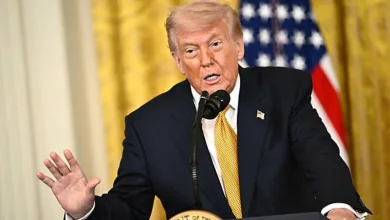
In direct response to this unprecedented diplomatic provocation, Donald Trump is not hesitating to escalate the internal calculus, forcefully responding by convening a high-stakes Situation Room meeting tomorrow with his full, unmitigated national security team. This emergency gathering is poised to be one of the most defining moments of his administration’s foreign policy legacy. The atmosphere surrounding the impending meeting is highly charged, with intelligence directors, top military brass, and senior diplomatic advisors converging to meticulously dissect Tehran’s volatile proposal. The urgency of the situation cannot be overstated; decisions synthesized within the heavily fortified walls of the Situation Room over the next forty-eight hours will undeniably dictate the trajectory of Middle Eastern stability for the next decade. The primary objective will be determining whether this is a genuine avenue for a transformative peace accord or a catastrophic strategic pitfall cleverly disguised as a diplomatic olive branch.
Assessing Tehran’s Opening Bid
Within the Situation Room, intelligence analysts will be aggressively assessing the true nature of Tehran’s opening bid. The core question dominating the discussion is profound: Tehran is directly asking Washington to unconditionally remove its primary leverage before the most consequential negotiation even begins. That is either a highly serious opening offer from a regime desperate for economic relief, or it is an outright test of whether Trump will blink under the immense pressure of global scrutiny. Evaluating the psychological profile of the Iranian leadership is crucial here. Do they actually believe the United States will preemptively disarm its most effective economic weapon, or is this demand a calculated maneuver to cast America as the definitive obstructionist to peace when the talks inevitably collapse? The national security apparatus must swiftly decouple the political rhetoric from the raw strategic reality to prevent falling victim to Tehran’s intricate diplomatic snare, especially when they sanctions seven militia commanders blacklisted by OFAC.
National Security Strategy at a Crossroads
America’s broader national security strategy stands at a precarious crossroads. Yielding to the demand to lift the naval blockade first could project disastrous weakness to adversarial coalitions worldwide, signaling that sustained pressure and proxy warfare can successfully erode American diplomatic resolve. Conversely, maintaining a rigid, uncompromising posture risks igniting a broader, uncontrollable regional conflagration that could easily suck U.S. forces into a protracted, devastating ground war. The intelligence community is deeply fragmented on the optimal path forward. Hawkish advisors advocate for instantly doubling down on the economic strangulation to forcefully bring Iran’s economy to the brink of total collapse, while more pragmatic diplomats urge caution, suggesting a carefully phased, reciprocal easing of tensions that simultaneously guarantees immediate concessions from Tehran regarding its nuclear enrichment timeline.
The Intertwined Crisis: Middle East Stability Hangs in the Balance
The alarming closure of the tracking unit by the British government and the aggressive diplomatic maneuvering by Iran are not isolated geopolitical incidents; they are deeply intertwined symptoms of a rapidly deteriorating international order. As traditional mechanisms for accountability and legal oversight are systematically dismantled by Western democracies to protect short-term military alliances, adversarial states like Iran are emboldened to push the boundaries of their aggressive regional strategies. The Middle East’s stability currently hangs by the thinnest of threads, suspended precariously between the collapse of human rights enforcement and the escalation of nuclear brinkmanship. Global financial markets, energy sectors, and international shipping lanes are all bracing for the immense fallout that will inevitably result from this dangerous convergence of crises, awaiting guidance from influential Middle East policy monitors.
How Regional Actors Are Exploiting the Vacuum
In the expansive vacuum left by retreating international legal standards and wavering Western resolve, various regional actors are ruthlessly exploiting the chaos to aggressively advance their own localized agendas. Proxy militias, emboldened by the prospect of a lifted naval blockade, are intensifying their aggressive rhetoric and stockpiling advanced munitions. Simultaneously, nations reliant on an unfettered flow of international commerce through crucial maritime chokepoints are desperately seeking alternative alliances, recognizing that traditional Western security guarantees are becoming increasingly conditional and fragmented. Ultimately, as the United States heavily debates its pivotal next move within the sterile confines of the Situation Room, the tangible realities on the ground in the Middle East are being actively reshaped by actors who clearly perceive that the once-unbreakable rules of the global geopolitical game are now entirely negotiable.