Starship engine failure risks NASA moon timeline 2026
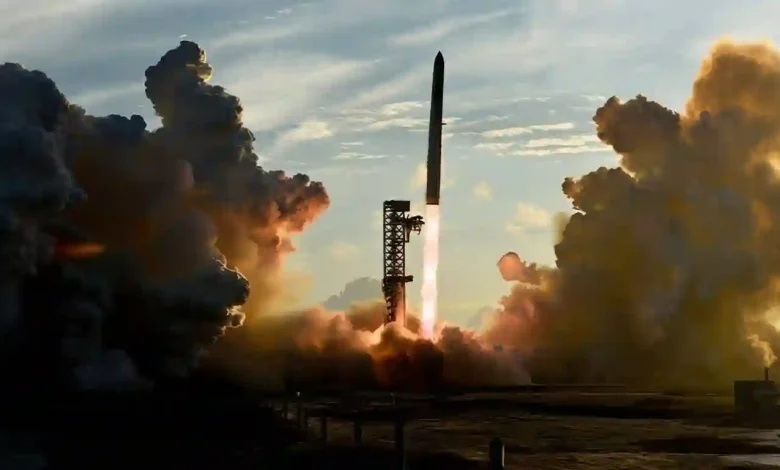
Table of Contents
Starship engine failure during the high-stakes 14th uncrewed test flight of SpaceX’s next-generation spacecraft has sparked serious concerns across the aerospace sector, casting a long shadow over NASA’s schedule for returning astronauts to the lunar surface. The launch, designed as a pivotal demonstration of orbital insertion and controlled atmospheric reentry, experienced unexpected propulsion anomalies that pushed ground controllers and guidance software to their operational limits. While the vehicle managed to avert complete structural loss, the near-catastrophic malfunction exposed vulnerabilities in the Raptor propulsion suite that directly impact the Human Landing System contract awarded under NASA’s flagship lunar initiative.
Space exploration programs operate under uncompromising physics and unforgiving engineering margins. When an anomaly occurs within an upper-stage propulsion system designed for high-energy insertion, every downstream milestone is subject to rigorous regulatory and technical reassessment. The recent close call on starship flight test 14 underscores the fundamental difficulty of scaling methane-fueled, full-flow staged combustion cycles to meet crew-rated safety thresholds. Starship is not merely an orbital transport system; it represents the primary mechanism selected by NASA to transport astronauts from lunar orbit to the South Pole of the moon, an ambition that has not been executed since Apollo 17 departed the lunar surface in December 1972.
Flight 14 Breakdown: How the Anomaly Unfolded
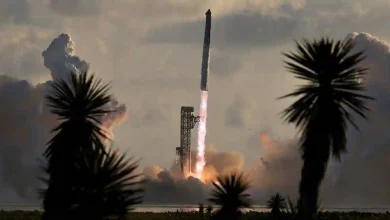
The mission originated from the Starbase facility in Boca Chica, Texas, utilizing the Super Heavy booster paired with the latest revision of the Ship upper stage. Stage separation proceeded according to nominal parameters, with the hot-staging ring executing its jettison sequence cleanly. However, during the ignition burn of the Ship’s six Raptor engines—comprising three sea-level engines and three vacuum-optimized variants—telemetry indicated rapid oscillations in combustion chamber pressure on engine number four.
Within seconds, automated vehicle health monitoring systems detected an anomalous temperature rise across the powerhead turbopump assembly. The onboard avionics commanded an emergency shutdown of the affected unit to prevent catastrophic uncontained engine failure. While the remaining five Raptors throttled up to compensate for the asymmetric thrust deficit, the burn duration was substantially extended, depleting orbital maneuvering reserves. The vehicle achieved an eccentric trajectory that skirted the operational baseline, yet the propulsion loss severely restricted planned in-space maneuvers, including critical propellant transfer demonstrations.
Raptor Engine Architecture and Combustion Challenges
At the center of SpaceX’s heavy-lift architecture is the Raptor engine, an extraordinary engineering accomplishment that employs a full-flow staged combustion cycle. This cycle routes both fuel-rich and oxygen-rich preburners through separate turbopumps, allowing lower turbine temperatures and maximizing thermodynamic efficiency. However, the operational complexity of managing high-pressure liquid methane and liquid oxygen near cryogenic limits introduces severe fluid dynamics and metallurgical challenges.
The propulsion anomaly during Flight 14 has renewed technical debates regarding high-frequency combustion instability and turbine blade degradation. In long-duration burns, dynamic pressure waves inside the main combustion chamber can erode copper-alloy liner jackets, resulting in catastrophic burn-through if cooling channel flow drops even slightly. NASA technical liaison teams monitoring propulsion qualification have continuously noted that while high chamber pressures produce exceptional specific impulse, they simultaneously narrow the safety margin required for crew certification under nasa commercial crew safety mandates.
Impact on the Artemis Lunar Landing Schedule
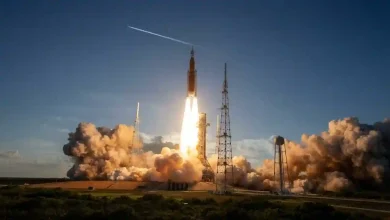
NASA’s Artemis III mission, slated as the historic return of human boots to lunar regolith, depends fundamentally on a fully functional Starship Human Landing System (HLS). Current mission architecture mandates that the Orion spacecraft deliver four astronauts into Near-Rectilinear Halo Orbit (NRHO), where two crew members will transfer into the waiting Starship lander. The lander must then descend to the lunar surface, sustain operations for up to a week, and ascend back to rendezvous with Orion before returning the astronauts safely to Earth.
A disruption in Starship’s orbital qualification path ripples directly into the Artemis operational timeline. Before any human steps aboard Starship, SpaceX must execute an uncrewed lunar landing demonstration, verifying guidance, autonomous hazard avoidance, and cryogenic life-support survival through the harsh lunar thermal cycle. The setback from Flight 14 threatens to push this uncrewed landing deep into late 2027 or early 2028, making an Artemis III landing within the targeted window virtually impossible. Program managers are increasingly weighing how delays will alter national space goals, especially as international competitors accelerate parallel lunar surface development.
Orbital Refueling and Cryogenic Transfer Obstacles
Perhaps the most technically demanding facet of Starship’s lunar architecture is orbital propellant transfer. Because Starship requires massive quantities of propellant to depart Low Earth Orbit (LEO) and brake into lunar orbit, it cannot launch with full tanks. Instead, SpaceX must launch a dedicated propellant depot into LEO, followed by anywhere from eight to sixteen successive tanker flights to load hundreds of tons of liquid methane and liquid oxygen into the depot.
The near-miss on Flight 14 directly impacts the timeline for testing large-scale cryogenic fluid transfer in zero-gravity environments. Managing propellant boil-off, fluid sloshing, and vapor-free docking requires ultra-precise orbital burns. The propulsion anomaly prevented ground controllers from gathering crucial microgravity fluid-transfer telemetry scheduled for the secondary phase of the flight. As private aerospace companies scale infrastructure, such as commercial space launch networks, master fluid mechanics in orbit remains an unprecedented industrial obstacle.
The HLS Rivalry: SpaceX vs. Blue Origin’s Blue Moon
NASA’s Human Landing System procurement was deliberately structured to maintain commercial competition, though SpaceX was awarded the initial contract for the early landing flights. To mitigate programmatic vulnerability, NASA subsequently awarded an Option B contract and selected Blue Origin’s National Team—which includes Lockheed Martin, Boeing, and Draper—to develop the Blue Moon lander under the Artemis V framework. As Starship experiences engineering bottlenecks, the strategic calculus between these two divergent aerospace philosophies has sharpened.
Blue Origin’s approach relies on liquid hydrogen and liquid oxygen propulsion, which presents distinct operational hurdles regarding hydrogen leakage and ultra-cold cryogenics, yet involves fewer complex orbital refueling flights than Starship’s monolithic architecture. As scrutiny mounts over SpaceX’s development cadence, aerospace analysts suggest NASA leadership may face mounting political pressure to reconsider early mission assignments if Starship’s Raptor reliability cannot be established unequivocally through consecutive, flawless flights.
Technical Metrics: Artemis Lunar Landers
To contextualize the monumental engineering scale and technical requirements demanded by NASA, the following data table compares key operational metrics between the competing Human Landing System architectures and the historic Apollo Lunar Module.
| Architecture | Primary Propellant | Orbital Refueling Required | Target Lunar Payload (Tons) | Target Crew Capacity | Operational Role |
|---|---|---|---|---|---|
| SpaceX Starship HLS | Liquid Methane / LOX | Yes (8 to 16 flights) | 100+ | Up to 4 | Artemis III & IV Landings |
| Blue Origin Blue Moon | Liquid Hydrogen / LOX | Yes (3 to 5 flights) | 20 – 30 | Up to 4 | Artemis V+ Missions |
| Apollo Lunar Module | Aerozine 50 / N2O4 | No (Direct Apollo Launch) | 1.2 | 2 | Apollo Era (1969-1972) |
Engineering Remediation and Flight Readiness Reviews
In response to the Flight 14 engine failure, SpaceX engineers have initiated extensive inspections across the Raptor manufacturing and testing facilities at McGregor, Texas. Preliminary data suggests that vibration loads during hot-staging may have induced mechanical stress on fuel inlet valves, precipitating cavitation inside the turbopump intake manifolds. Corrective actions will likely include structural hardening of fuel feedlines, software adjustments to throttle ramp rates, and enhanced thermal barrier coatings applied to preburner combustion chambers.
NASA safety panels, including the Aerospace Safety Advisory Panel (ASAP), have continually warned against treating complex propulsion failures merely as iterative learning opportunities when human safety is ultimately on the line. While SpaceX’s iterative build-and-test philosophy has revolutionized orbital access, human-rating standards require verifiable stability over rigorous sample sizes. NASA’s ongoing partnership with commercial entities must balance the rapid development philosophy with the catastrophic operational risk inherent in deep space transit, mirroring broader national efforts to maintain spacex iss missions without compromising structural safeguards.
Furthermore, launch clearance from the Federal Aviation Administration (FAA) will necessitate a thorough mishap investigation report before Flight 15 can receive a flight modification license. This regulatory review process will scrutinize every telemetry anomaly recorded during the terminal phase of the burn, introducing additional administrative lead times into an already compressed development calendar.
The Broader Architecture of Deep Space Exploration
The challenges facing Starship cannot be viewed in isolation; they are deeply intertwined with the broader geopolitical race to establish permanent human presence at the lunar south pole. Scientific instruments, such as the upcoming nancy grace roman space telescope, depend on heavy-lift capability to advance observational astrophysics, while lunar infrastructure depends on reliable delivery systems to transport habitats, rovers, and life support systems. As global powers accelerate their own lunar surface timetables, maintaining an active, reliable heavy-lift cadence becomes an urgent national priority.
Emerging missions, from starfall spacex space initiatives to deep-space autonomous probes, rely entirely on the foundational success of high-capacity propulsion architectures. If SpaceX successfully resolves the Raptor powerhead anomalies, Starship will provide an order-of-magnitude reduction in payload delivery costs, permanently reshaping lunar and interplanetary logistics. However, should engine reliability remain elusive, NASA will be forced to adapt its exploration architecture, potentially delaying human landings and re-evaluating the commercial partnership model that currently anchors its deep space exploration ambitions.
The coming months will serve as a defining test of SpaceX’s agile engineering paradigm. Resolving the Flight 14 anomaly requires not just rapid hardware swaps, but definitive proof that the world’s most powerful propulsion cluster can operate under extreme thermodynamic limits with absolute, repeatable precision. Until that milestone is reached, the journey back to the lunar surface will remain fraught with operational uncertainty.