Project Suncatcher: Google In-Orbit AI Satellite Test 2026
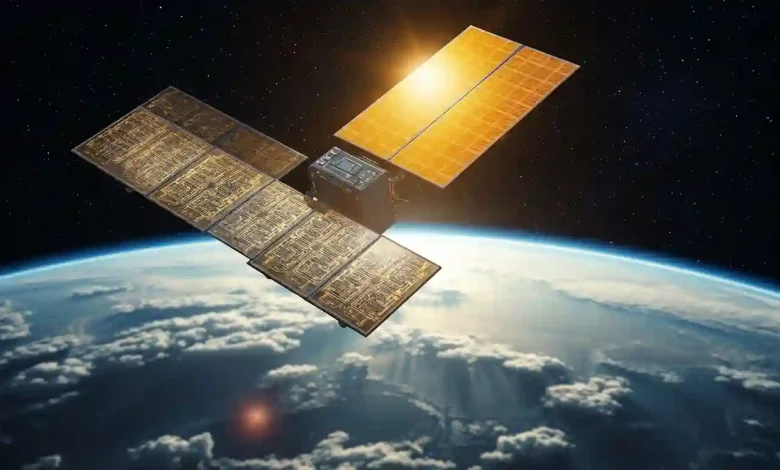
Table of Contents
Project Suncatcher is Alphabet’s ambitious leap beyond earthly infrastructure limitations, deploying prototype hardware into low Earth orbit to assess the viability of space-based artificial intelligence supercomputing. As energy networks around the world buckle beneath the immense power requirements of modern neural architectures, Alphabet’s research team is exploring whether positioning silicon clusters in orbit can permanently resolve power bottlenecks. Under this initiative, Google intends to leverage near-constant photovoltaic capture and high-throughput inter-satellite communications to establish autonomous computational pods capable of handling massive model fine-tuning and inference operations far above the atmosphere.
Overview of Orbital AI Compute
The core concept powering Project Suncatcher is the physical relocation of compute hardware away from municipal power utilities and toward direct, uninterrupted solar capture. Terrestrial data facilities face increasing resistance from utility providers, environmental regulators, and regional governments as aggregate electricity demand threatens to destabilize traditional regional infrastructure. Modern foundational models require sustained megawatts of consistent energy, forcing hyperscalers to search for novel options that break free from regional zoning mandates. By launching a demonstrator satellite equipped with customized low-power Tensor Processing Units (TPUs) and high-efficiency photovoltaic cells, Google aims to collect empirical data on thermal equilibrium, error rates caused by ionizing cosmic radiation, and real-time downlink efficiencies.
This initiative coincides with a wider industry recognition that terrestrial data center expansion faces a looming plateau. While major tech companies aggressively back high-performance silicon development—a trend reflected across broader market valuations such as ai u s stock indexes set by enterprise optimism—the physical reality of multi-gigawatt power grids creates hard limits for continuous scaling. Google’s orbital research program seeks to establish whether high-density compute fabrics can operate as autonomous nodes within low Earth orbit constellations, executing distributed model jobs without consuming a single kilowatt from ground-based utility grids.
Terrestrial Power Constraints and Energy Demands
Over the past decade, the rapid surge in transformer parameter sizes has driven power density across commercial server racks to historic highs. Data centers that once operated efficiently at 10 to 15 kilowatts per rack are now facing demands surpassing 100 kilowatts per rack to support modern accelerator topologies. In key hubs across North America, Europe, and Asia, energy providers are placing multi-year moratoriums on new commercial grid interconnections. This gridlock has spurred significant debt financing for infrastructure, creating situations where companies face unprecedented debt issuance for ai capacity buildouts simply to fund power generation projects and proprietary microgrids.
Because the physical capacity of traditional utilities cannot keep up with this exponential growth curve, space presents a distinct thermodynamic alternative. In low Earth orbit, photovoltaic panels can achieve energy collection rates uninterrupted by cloud cover, atmospheric particulate scattering, or cyclical weather degradation. Depending on altitude and orbital inclination, a sun-synchronous satellite can experience near-continuous solar illumination, yielding power collection efficiencies significantly higher than identical installations on the Earth’s surface. Project Suncatcher intends to evaluate this advantage under actual mission conditions, testing solar array configurations engineered specifically to support pulsed accelerator workloads.
Technical Architecture of Space-Based Data Nodes
Operating computational nodes in space requires an overhaul of the traditional server chassis, switching architecture, and interconnect topology. Terrestrial hardware relies on dense air-cooling manifolds or direct liquid circulation loops that transfer heat into ambient environments. In orbit, the total absence of atmospheric pressure eliminates convection entirely, leaving thermal radiation as the only viable mechanism for dissipating heat. Silicon running high-throughput transformer pipelines generates intense localized thermal spikes that must be routed immediately away from sensitive logic gates toward dedicated thermal radiators.
Project Suncatcher approaches this design challenge through high-conductivity vapor chambers, copper-carbon composite thermal spreaders, and articulated radiator fins designed to project heat into deep space. The computing module itself is paired with radiation-hardened memory controllers that preserve matrix calculation accuracy. Compute jobs are orchestrated through distributed, fault-tolerant compilers that anticipate bit-flips caused by galactic cosmic rays and solar particle events, executing automatic checkpointing and weight redundancy to prevent system interruptions.
Radiative Heat Dissipation and Radiation Hardening
Beyond thermal management, the orbital environment exposes semiconductor wafers to harsh particle flux. Terrestrial data facilities benefit from the geomagnetic field and atmospheric shielding, both of which mitigate cosmic radiation. In low Earth orbit, single-event upsets (SEUs) and total ionizing dose (TID) effects pose operational hazards to high-density silicon fabricated on advanced nanometer nodes. Project Suncatcher tackles this challenge by combining physical shielding with algorithmic error-resilience, avoiding the excessive mass penalties typical of legacy spaceflight hardware.
Rather than relying entirely on heavy lead or tantalum encasements, Google’s engineering team employs parity checks, Triple Modular Redundancy (TMR) across primary instruction paths, and software-level fault tolerance integrated into their custom compiler. These mechanisms allow the satellite to execute floating-point matrix multiplications reliably even when individual gates suffer transient radiation interference. Optical laser links form the communication backbone, bridging the prototype with terrestrial ground stations and existing orbital relays, similar to developments seen with platforms like the amazon leo satellite mesh network.
The Competitive Landscape: SpaceX and Starcloud
Google is far from the only company eyeing the orbital frontier. A growing ecosystem of specialized aerospace startups and commercial space leaders are racing to establish functional space computing nodes. SpaceX, leveraging its launch cadence and satellite constellation architecture, has steadily advanced its commercial orbit capabilities. With the progression of heavy-lift platforms like the starship flight test 14 program and regular launches powered by the spacex falcon 9 launch architecture, the cost per kilogram to low Earth orbit has dropped to levels that make space-based infrastructure economically feasible.
Startups such as Starcloud have actively promoted the concept of orbital data centers, proposing multi-megawatt constellations dedicated solely to off-world machine learning processing. This aerospace transition mirrors similar strategic realignments across the technology sector, where massive corporate scale and launch integration drive forward-thinking projects, reminiscent of the muskonomy singularity inside the 1 25t spacex xai merger the pivot to orbital compute ecosystem. Concurrently, other tech heavyweights are examining alternative off-grid hardware optimizations, from local on-device silicon like meta muse charm to private microgrid power initiatives on the ground.
Comparative Analysis: Terrestrial vs. Orbital AI Infrastructure
The decision to deploy computational clusters into orbit involves structural tradeoffs across thermodynamics, power delivery, transport logistics, and maintenance lifecycles. The following table highlights the core operational distinctions between traditional ground-based data centers and proposed low Earth orbit installations:
| Operational Metric | Terrestrial Data Center | LEO Orbital Compute Cluster |
|---|---|---|
| Power Source | Municipal Power Grid / On-site Gas & Solar | Near-Continuous High-Efficiency Solar Capture |
| Cooling Mechanism | Chilled Water, Evaporative Cooling, Fans | Radiative Heat Rejection into Deep Space |
| Interconnection Latency | Sub-millisecond to Regional Fiber Hubs | 5–30 ms via Optical Intersatellite Relays |
| Hardware Upgradability | Modular, Real-Time Hot-Swappable Racks | Static Payload; Replaced via De-orbit and Launch |
| Radiation Exposure | Protected by Earth’s Magnetosphere & Atmosphere | Direct Exposure to Cosmic Rays, Solar Winds, SEUs |
| Carbon Footprint | Dependent on Regional Utility Generation Mix | Launch Emission Overhead; Zero Operational Emissions |
| Deployment Bottleneck | Grid Approvals, Zoning, and Transformer Lead Times | Launch Vehicle Capacity, Fairing Volume, Payload Mass |
Launch Economics and Hardware Deprecation
The primary barrier to deploying data centers off-planet has historically been the high cost of rocket launches. Historically, lifting complex silicon clusters and extensive thermal management arrays into orbit was financially prohibitive. However, rapid commercial reusable rocketry has transformed that math. As launch prices per kilogram fall below critical cost thresholds, launching specialized computing satellites becomes competitive with the expensive acquisition of terrestrial land, substation buildouts, high-voltage transformers, and complex cooling systems.
Yet hardware depreciation introduces a significant logistical hurdle. Terrestrial server racks are routinely decommissioned, refurbished, or upgraded every three to five years to keep pace with new silicon generations. A satellite, once deployed, cannot be physically reconfigured. Once in orbit, the hardware package remains unchanged until its orbital lifespan ends and it de-orbits into the upper atmosphere. Consequently, orbital computing clusters must be designed with architectures flexible enough to remain commercially viable throughout their entire operational life, or deployable at low enough capital cost to justify short operational lifespans before automated disposal.
The Strategic Future of Orbital Machine Learning
Looking ahead, Project Suncatcher marks the opening chapter of an architectural shift toward decentralized, extraterrestrial computing fabrics. If Google’s prototype validation yields positive telemetry regarding radiation tolerance, radiative cooling performance, and optical backhaul stability, it will validate a path toward larger orbital data arrays. Advanced aerospace platforms, such as those evaluated in deep-space and crewed transit programs like boeing starliner eyes, continually drive structural advancements in autonomous avionics, communications, and power management that directly benefit commercial computing in orbit.
Rather than completely replacing terrestrial data centers, space-based computing clusters will likely handle specialized, high-intensity computational tasks. Unattended model pre-training, large-scale dataset tokenization, and compute-intensive optimization algorithms are prime candidates for orbital execution because they tolerate the latency of inter-satellite links while demanding colossal energy reserves. By shifting these energy-heavy computational loads to orbit, cloud providers can ease pressure on urban power grids while maintaining the computing capacity required to train future artificial intelligence models.