Starfall: SpaceX and Space Cargo Partner for 2028 Starship Mission
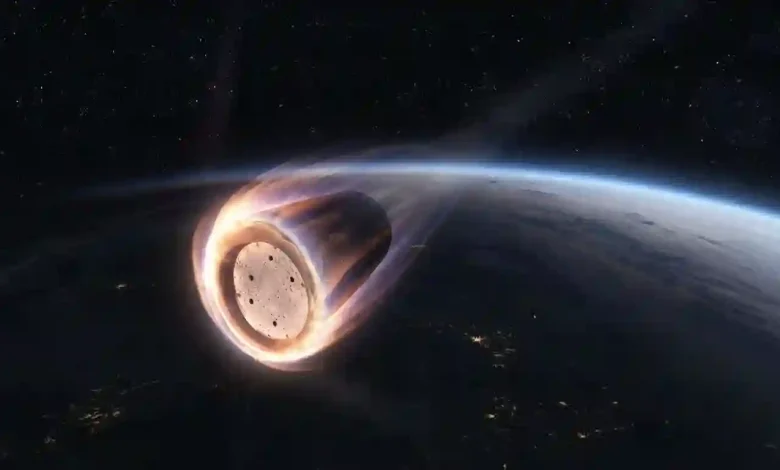
Table of Contents
Starfall represents a revolutionary leap forward in the orbital economy, establishing SpaceX’s newest dedicated line of business focused on the safe, rapid, and scalable return of products, biological samples, and high-value materials from space directly back to Earth. For decades, the primary challenge of space commercialization has been a highly asymmetric logistical pipeline: getting cargo into orbit is increasingly simple and affordable, but bringing materials safely back to the surface remains an elite, expensive, and bottlenecked capability. With this brand-new initiative, SpaceX intends to democratize the orbital return market, changing how pharmaceutical developers, material scientists, and commercial entities view space-based manufacturing.
As reported by Reuters, this specialized return business has officially secured its inaugural commercial client. Space Cargo, a prominent European logistics and orbital services integrator, has signed a historic mission agreement to utilize Starfall as part of the first commercial flight of Starship. Managed by Chief Executive Nicolas Gaume, Space Cargo is positioning itself at the vanguard of the next-generation space supply chain, promising its institutional and commercial partners an unprecedented route for downmass transportation.
The Strategic Alliance: SpaceX and Space Cargo
The contract between SpaceX and Space Cargo marks a pivotal shift toward a more mature orbital marketplace. In the past, return logistics were handled on a case-by-case basis, heavily dependent on governmental spacecraft. By partnering with Space Cargo, SpaceX is leveraging an experienced intermediary capable of handling payload preparation, customer compliance, and end-to-end mission architecture. Space Cargo acts as a crucial liaison, consolidating various payloads from global researchers and commercial enterprises into the standardized Starfall recovery system.
This cooperative model mirrors the early days of satellite launch integration. The historical success of the previous SpaceX Falcon 9 launch capabilities paved the way for Starship to revolutionize up-mass logistics; similarly, Starfall is poised to do the same for downmass. Under Nicolas Gaume’s leadership, Space Cargo intends to aggregate microgravity experiments, manufactured biological crystals, high-purity semiconductor materials, and other products that can only be successfully synthesized in the absence of gravity. This initial deal guarantees Space Cargo a premier spot on the manifest of Starship’s inaugural fully commercial voyage.
Timeline and Milestones for the 2028 Commercial Launch
The operational roadmap targeting a 2028 mission is highly ambitious yet meticulously planned. Between now and the launch date, both SpaceX and Space Cargo must clear a sequence of stringent engineering and regulatory hurdles. The integration process requires that Space Cargo design payload bays that seamlessly interface with the Starfall capsule’s unique dimensions, ensuring thermal, vibration, and atmospheric controls are strictly maintained throughout the violent transit to and from orbit.
As the sector expands, sophisticated satellite integration services will be required to coordinate orbital trajectories and ensure that the deployment of Starfall does not interfere with surrounding spacecraft. The year 2028 is projected to be a transformative era for Starship operations, transitioning the mammoth launch system from a prototype development vehicle into a highly reliable, high-cadence heavy-lift orbital asset capable of deploying secondary recovery vehicles like Starfall on demand.
Technological Breakdown: The Disk-Shaped Return Capsule
The heart of the Starfall business is its uniquely engineered disk-shaped capsule. Unlike traditional conical capsules—such as the SpaceX Dragon or historical Apollo-era spacecraft—the disk configuration offers distinct aerodynamic and thermal distribution benefits during atmospheric reentry. The wide surface area acts as a natural aerobrake, distributing the intense frictional heat of reentry across a larger thermal protection system (TPS) shield. This geometry reduces peak localized temperatures and lessens the severe G-forces typically experienced by returning payloads.
Furthermore, the disk-shaped structure maximizes usable internal volume while maintaining a low-profile exterior. This compact design allows multiple Starfall capsules to be stacked efficiently inside the payload bay of Starship, or carried alongside primary satellite deployments. Its short-trip orbital design means it does not require complex, heavy life-support machinery, long-term power generation, or excessive thruster fuel, allowing the vehicle to remain lightweight and optimized exclusively for orbital storage and rapid, safe landing.
Starship Deployment Dynamics
Deploying a recovery vehicle from Starship involves a choreographed series of orbital maneuvers. After Starship reaches its designated orbital plane and completes its primary mission directives, the payload bay doors will open to release the Starfall capsule. The capsule will utilize its integrated cold-gas or low-thrust hypergolic propulsion systems to perform a deorbit burn, altering its trajectory to intersect Earth’s upper atmosphere at a highly precise angle.
This historic endeavor must navigate evolving commercial space launch regulations established by global aviation and space authorities. Because Starfall is designed to return to Earth autonomously, its descent path must be tracked with extreme accuracy, landing either in remote oceanic splashdown zones or designated dry-land recovery facilities equipped with specialized recovery teams to retrieve delicate scientific cargo immediately.
Solving the Orbital Return Bottleneck
The space industry is currently suffering from an acute downmass bottleneck. While private enterprises and national space agencies can deploy tons of equipment into orbit weekly, the global capacity to return items to Earth safely is restricted to a fraction of that volume. Only a few spacecraft, such as the SpaceX Cargo Dragon and the Russian Soyuz, possess active reentry capabilities, and their manifests are largely monopolized by government-backed scientific agencies. While smaller European efforts like Isar Aerospace launches aim to secure regional micro-launcher segments, they currently lack the heavy thermal recovery systems necessary to bring material back from orbit.
For years, scientific research conducted on the International Space Station was limited by how long samples had to wait in onboard freezers before a return slot became available. This delay can degrade sensitive biological materials and slow down iterative commercial research cycles. Starfall completely alters this equation by introducing a dedicated, high-frequency commercial service that bypasses governmental backlogs entirely, putting cargo return capabilities directly in the hands of private corporations and research institutions.
Comparative Analysis: Starfall vs. Existing Reentry Platforms
To fully appreciate the market disruption Starfall introduces, it is valuable to compare its architectural targets against legacy and existing orbital return systems. The table below outlines key operational differences:
| Feature / Metric | SpaceX Starfall | SpaceX Cargo Dragon | Soyuz Recovery Capsule |
|---|---|---|---|
| Primary Geometry | Disk-shaped high-drag capsule | Conical capsule | Spherical/Bell-shaped capsule |
| Target Market | 100% Commercial Integration | Govt & ISS Resupply | Government / Crew Return |
| Downmass Capacity | Optimized for high-density materials | Approx. 3,000 kg | Very limited (under 100 kg for cargo) |
| Deployment Platform | Starship Payload Bay | Falcon 9 Rocket | Soyuz Rocket |
| Turnaround Time | Rapid, designed for high cadence | Months of refurbishment | Single-use / Expendable hull |
Industrial and Research Applications in Microgravity
The availability of a reliable, commercially accessible return vehicle unlocks massive potential for space-based manufacturing. In microgravity, physical processes behave differently: convection currents are absent, sediments do not settle, and liquid surface tension dominates. This environment allows for the creation of perfect protein crystals, which are vital for pharmaceutical drug discovery and structure-based design. With Starfall, biotech firms can launch active compounds, grow crystals in orbit, and have them returned to Earth within weeks for laboratory analysis.
Globally, countries are looking to expand orbital logistics, with countries representing Italy’s space industry developments investing heavily in advanced materials research. Additionally, high-purity ZBLAN optical fibers and advanced semiconductor substrates can be manufactured in orbit without the structural defects induced by Earth’s gravity. Starfall acts as the physical conveyor belt that brings these premium orbital products down to terrestrial consumers, turning theoretical space factories into viable, profit-generating realities.
Regulatory and Integration Landscape
Executing an autonomous orbital return requires seamless integration between onboard guidance systems, satellite tracking networks, and ground-based recovery systems. The Starfall capsule will feature advanced automated guidance computers capable of recalculating atmospheric descent profiles in real-time to adjust for shifting high-altitude winds. This computational infrastructure, akin to modern systems used in NASA IBM lunar mission mapping, ensures that the capsule reaches its target landing zone with pinpoint accuracy, mitigating risks to maritime and terrestrial traffic.
Even as international initiatives like China’s Chang’e-7 lunar mission pursue deep-space exploration, the commercial sector is focusing heavily on immediate, Earth-centric orbital logistics. The success of the Space Cargo and SpaceX Starfall partnership in 2028 will likely serve as the blueprint for future commercial return operations, proving that the final frontier is no longer just a destination for discovery, but a fully functional, two-way logistics network.