Houthis Seize Mocha and Hanish Islands as Trump Outlines Iran War Timeline 2026
Table of Contents
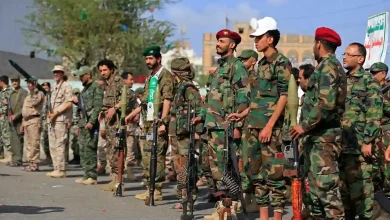
Houthis have seized control of Yemen’s critical port city of Mocha, marking a major escalation in the ongoing regional conflict. Military sources confirmed that the rebel forces captured the city and advanced down the Red Sea coast to secure strategic islands, including the Hanish archipelago. This swift offensive took place just hours after United States President Donald Trump publicly announced his expectation that the war involving Iran and its proxies would draw to a close shortly after the upcoming U.S. midterm elections. The contrasting developments on the ground highlighting the widening gap between Washington’s political timeline and the rapid physical maneuvers of combatants in the Middle East.
The Fall of Mocha and Coastal Aggression
The capture of Mocha is a monumental shift in the regional balance of power. Located on Yemen’s western coast, Mocha has historically served as a critical gateway, linking the interior highlands to global maritime corridors. The offensive by the insurgent forces was highly organized, catching local Yemeni government troops off guard and overrunning defensive lines in a matter of hours. This bold territorial expansion directly connects to broader Middle East war developments, transforming the tactical layout of the southern Red Sea and establishing a heavily militarized coastline under proxy control.
Local military commanders reported that the rebel forces utilized a combination of drone strikes, rapid marine transport, and heavy artillery to overwhelm local defensive units. By establishing control over the municipality, port facilities, and nearby coastal outposts, they have secured a secure logistics hub. This enables them to launch further operations along the coast, effectively squeezing government-held territory and positioning defensive and offensive weaponry closer to international shipping lines.
Strategic Threat to the Bab el-Mandeb Strait
With Mocha fully under their control, the military vanguard immediately pushed further down the coastline, threatening the highly sensitive Bab el-Mandeb Strait. The Bab el-Mandeb is a narrow, vital chokepoint situated between Yemen on the Arabian Peninsula and Djibouti and Eritrea in the Horn of Africa. It serves as the southern gateway of the Red Sea, connecting European, Mediterranean, and Asian trade networks via the Suez Canal. Any disruption here reverberates across the globe. Alongside these events, parallel theater activities such as escalating Strait of Hormuz tensions remind the global community how vulnerable shipping corridors remain to symmetric and asymmetric tactics.
Securing the coastal areas surrounding this strait gives the rebel coalition unprecedented leverage over international maritime operations. They are now capable of deploying land-to-sea missile systems, surveillance radar, and fast-attack craft directly overlooking the primary transit lanes. This puts thousands of cargo ships, bulk carriers, and tankers within immediate striking distance, potentially disrupting the supply of energy, consumer goods, and critical manufacturing components to global markets.
Capture of the Hanish Islands
Shortly after taking Mocha, military sources confirmed that the insurgent forces had crossed the maritime boundary to occupy the strategic Hanish Islands. The Hanish archipelago represents a critical vantage point in the middle of the southern Red Sea. By placing radar systems, anti-ship missiles, and reconnaissance assets on these islands, the militia can effectively monitor and target shipping vessels passing through the deep-water navigation channels. This advancement threatens to turn the current Iran war stalemate into a dynamic, highly volatile flashpoint of active hostility.
Control over the Hanish Islands gives the group a forward military base capable of projecting power deep into the Red Sea. Historically contested between Yemen and Eritrea, these islands hold significant geopolitical weight. Their militarization by an Iran-aligned non-state actor severely compromises the safety of maritime traffic, challenging the capabilities of western naval task forces operating in the region.
Impact on International Shipping and Global Commerce
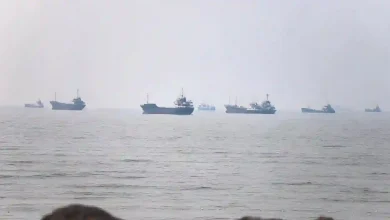
Global maritime trade routes are incredibly sensitive to geopolitical instability. When a key chokepoint is compromised, insurance premiums for commercial vessels skyrocket. The immediate financial impact was mirrored in energy markets, where global oil prices experienced rapid, unstable adjustments as traders evaluated the risk of a full-scale blockade. Shipping conglomerates are now forced to consider routing container ships around the Cape of Good Hope, adding thousands of miles and weeks of travel time to international voyages, which further threatens global supply chains.
This detour is not merely an inconvenience; it increases shipping costs, fuels inflation, and delays critical manufacturing supply chains across Europe and the Americas. The ports of the Mediterranean and northern Europe are particularly vulnerable to these delays, as they rely heavily on a constant, predictable stream of cargo traversing the Suez Canal and Red Sea corridor daily.
President Trump’s Post-Midterm Election Strategy
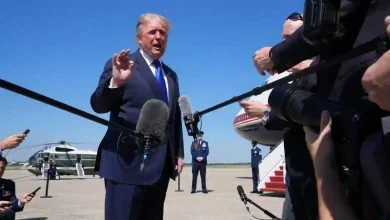
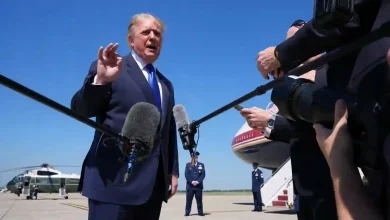
The capture occurred only hours after US President Donald Trump announced that he anticipated the Iran-aligned regional wars to conclude swiftly following the upcoming US midterm elections. The administration’s diplomatic and military postures are shifting as domestic political timelines approach. By linking the resolution of regional hostilities to the political calendar, the administration attempts to project confidence in its strategy. However, these remarks have highlighted the growing disconnect between diplomatic expectations in Washington and the aggressive moves on the ground. These US and Iranian geopolitical shifts demonstrate how physical control of territory continues to challenge theoretical diplomatic solutions.
President Trump has consistently maintained that a combination of economic pressure, strategic military deterrence, and direct negotiation would bring the hostile factions to the table. According to his administration, the post-midterm period will offer a cleared political runway to apply maximum diplomatic weight. Detractors, however, argue that this perspective underestimates the determination of proxy forces who operate on their own long-term tactical schedules rather than domestic Western electoral cycles.
Rhetoric vs. Reality on the Ground
While Washington speaks of winding down conflicts, regional proxy forces appear to be expanding their territorial footprints to build leverage. By capturing Mocha and the Hanish Islands, the coalition signals that they will not easily capitulate to international demands. Military experts suggest that Iran-backed groups are actively taking advantage of political transitions within the United States. They aim to establish irreversible realities on the ground before the next policy cycle begins. Even as Iran vows painful response strategies to ongoing containment actions, the practical coordination of their allied networks remains highly effective.
The physical seizure of territory creates a direct obstacle for any peace initiatives. Rather than negotiating from a position of weakness, the insurgent groups now hold the keys to one of the world’s most critical maritime corridors. This makes their inclusion in any future regional security architecture mandatory, giving them significant diplomatic veto power over global trade safety.
Geopolitical Ramifications and Energy Security
The capture of Yemen’s western coast is not an isolated local event; it is an escalation that directly impacts global energy security. A protracted blockade of the Red Sea would trigger a severe global energy supply crisis, driving inflation up and disrupting economic stability in Europe and Asia. Major import economies are looking at options to secure the shipping lanes, potentially deploying multinational naval task forces to escort commercial vessels. However, direct military intervention risks widening the conflict into a direct confrontation.
Security analysts warn that a militarized Red Sea could force a complete restructuring of global energy corridors. Landlocked pipelines and alternative overland routes through Central Asia may see increased investment, but none can fully replicate the sheer volume of liquid natural gas (LNG) and crude oil that moves through the Bab el-Mandeb on a daily basis. The geopolitical stakes could not be higher for import-dependent economies in Western Europe.
Global Economic Countermeasures and Sanctions
To counter this territorial expansion, western powers are preparing to escalate economic measures. The application of aggressive US economic sanctions remains a key policy tool to degrade the financial resources feeding these proxy networks. However, history suggests that unilateral sanctions are often insufficient when targeting highly motivated, non-state actors with established alternative black-market funding structures. The geopolitical deadlock looks set to persist as both sides double down on their respective strategies.
Financial analysts suggest that secondary sanctions targeting the entities purchasing illicit oil or facilitating maritime insurance for gray-market vessels will need to be tightened. Without international cooperation, particularly from rising economic powers in Asia, these economic measures risk fracturing the global financial system without achieving the desired behavioral changes on the ground.
Comprehensive Strategic Chokepoint Analysis
To better understand the immediate threat to global maritime trade, it is essential to examine the specific strategic nodes along the Red Sea coast that are currently affected by the Houthi offensive.
| Chokepoint / Location | Strategic Importance | Current Security Status | Global Economic Impact |
|---|---|---|---|
| Port of Mocha | Coastal gateway, logistics hub for western Yemen | Under rebel control | High; restricts government land access and secures coastal staging grounds |
| Bab el-Mandeb | Southern gateway of the Red Sea | Severely threatened by nearby coastal advances | Extreme; vital for Europe-Asia trade, container shipping, and energy flows |
| Hanish Islands | Central Red Sea radar and missile staging ground | Occupied by rebel forces | High; threat of anti-ship missile deployment and maritime surveillance |
| Strait of Hormuz | Primary Persian Gulf oil shipping transit route | High tension; subject to frequent naval standoffs | Catastrophic if fully blockaded; directly tied to global energy pricing |
Future Scenarios for Regional Security
Looking forward, several strategic outcomes are possible. If regional players fail to establish a ceasefire, we may see a prolonged militarization of the Red Sea coast. Multinational coalitions will likely increase their maritime presence, leading to frequent skirmishes. Alternatively, if diplomatic channels open post-elections, the newly acquired territory will serve as a powerful bargaining chip for the insurgent forces, allowing them to dictate terms. The international community must prepare for a long, complex diplomatic struggle to restore stability to this critical trade artery.
Another scenario involves an increased reliance on regional allies, such as Saudi Arabia and Egypt, to take a more active role in coastal defense. However, these nations are wary of being dragged back into a costly, protracted conflict that drains their economic resources. The path forward remains highly uncertain, and the security of the Bab el-Mandeb will remain a central concern for global security planners for the foreseeable future.