Eight-letter genetic alphabet read by UC San Diego team 2026
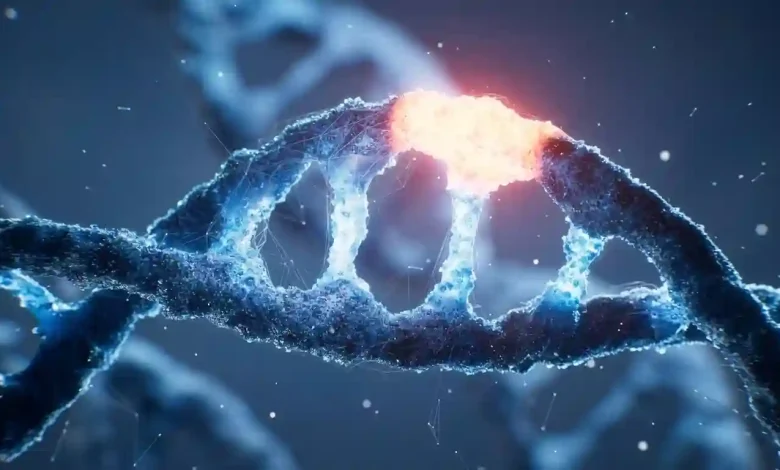
Table of Contents
Eight-letter genetic alphabet research reached an extraordinary milestone in September 2026 as scientists at UC San Diego demonstrated that a key cellular enzyme can accurately read and transcribe an expanded genetic code, effectively doubling the four nucleotides that have defined all known life on Earth for billions of years. For generations, biology textbooks have taught that the blueprint of terrestrial life is written using only four chemical letters: adenine (A), thymine (T), cytosine (C), and guanine (G). By proving that natural bacterial enzymes can process a synthetic eight-letter code, this pioneering study published in Nature Communications brings synthetic biology significantly closer to creating designer organisms with entirely novel biological functions. Led by Dr. Dong Wang at the Skaggs School of Pharmacy and Pharmaceutical Sciences, the research group focused on Escherichia coli (E. coli) RNA polymerase, proving that natural cellular machinery can process synthetic genetic code with remarkable precision. This landmark discovery signifies that the boundaries of biological storage and expression are far wider than previously assumed.
Unveiling the Eight-Letter Genetic Code
The quest to expand the genomic language has occupied synthetic biologists for decades. Since the discovery of the double helix structure of DNA by Watson and Crick in 1953, the scientific consensus has been that the four natural nucleotides represent the optimal, if not exclusive, chemical framework for sustaining genetic memory. However, researchers have long wondered whether this restriction was a historical accident of evolution or a fundamental physical limit. The recent breakthrough by the UC San Diego team demonstrates that the natural evolutionary machinery is remarkably accommodating, showing that bacteria-derived transcription mechanisms can seamlessly transition into transcribing artificial DNA sequences. This is not merely an incremental achievement; it represents a fundamental paradigm shift in molecular biology. By doubling the genetic alphabet, researchers have unlocked the potential to create synthetic biological systems capable of executing commands and creating chemical compounds that do not exist anywhere in the natural biosphere.
The Mechanics of Hachimoji DNA: Expansion of the Letters
The foundation of this expanded system rests on the concept of Hachimoji DNA—a term derived from the Japanese words for “eight” (hachi) and “letter” (moji). Developed originally by Dr. Steven A. Benner and his colleagues at the Foundation for Applied Molecular Evolution, this synthetic framework introduces four artificial nucleotides named P, Z, B, and S. When integrated alongside the standard four bases, these synthetic components form unique Watson-Crick-style pairings: P bonds exclusively with Z, while B pairs with S. The chemical structure of these new bases is designed to match the molecular geometry of natural DNA, ensuring that the overall helical structure is preserved without distortion.
Deciphering the Chemistry of Synthetic Nucleotides (P, Z, B, S)
At the molecular level, natural DNA bases pair via specific hydrogen-bonding patterns, where positive hydrogen atoms line up with negative nitrogen or oxygen atoms on the opposite strand. The developers of Hachimoji DNA successfully engineered the synthetic letters P, Z, B, and S by shifting and rearranging these weak chemical links. This chemical restructuring allows the synthetic pairs to slot into the DNA double-helix without altering its structural integrity. While previous synthetic biology research has attempted to insert non-natural base pairs, many of those frameworks relied on hydrophobic interactions that could destabilize the physical helical architecture. The AEGIS system (Artificially Expanded Genetic Information System) solves this by ensuring that the synthetic base pairs match the exact geometry of natural DNA, enabling the cellular machinery to easily interface with them.
RNA Polymerase: The Cellular Translator
For any genetic alphabet to be useful, a cell must be able to read the instructions and convert them into functional outputs. This is where RNA polymerase comes into play. As the essential enzyme responsible for transcribing DNA into RNA, RNA polymerase serves as the gatekeeper of gene expression. Understanding how fundamental enzymes behave in synthetic environments is as groundbreaking as analyzing the behavior of microbes on the space station. The UC San Diego team’s major achievement was demonstrating that E. coli RNA polymerase could recognize and transcribe the artificial base pairs inside test tubes at close to natural speeds. Just as traditional molecular biological research is crucial for understanding therapeutics developed for viral pathogens, studying synthetic replication sheds light on biochemical resilience. The natural enzyme did not require extensive genetic engineering to perform this feat; instead, its evolutionary shape was already primed to accept the geometric configuration of the synthetic letters.
High-Resolution Insights via Cryo-Electron Microscopy
To verify how RNA polymerase achieves this level of accuracy, the UC San Diego researchers utilized high-resolution cryo-electron microscopy (cryo-EM). This state-of-the-art imaging technique allows scientists to zoom down to a scale smaller than the width of a single atom. Through cryo-EM, the team captured detailed structural snapshots of the bacterial enzyme during transcription. The structural models revealed that the enzyme recognizes the synthetic base pairs P-Z and B-S using the exact same biochemical and structural signals it uses for natural base pairs. In a companion study published in August 2026 in the Proceedings of the National Academy of Sciences (PNAS), the team also documented that the same RNA polymerase could transcribe a separate pair of synthetic bases that lack hydrogen bonds entirely. This demonstrates that the enzyme’s capacity for recognition is highly versatile and adaptable to diverse chemical configurations.
Comparing Natural and Expanded Genetic Systems
To fully comprehend the scale of this breakthrough, it is helpful to analyze the distinct physical, chemical, and computational differences between natural four-letter DNA and the expanded eight-letter Hachimoji system.
| Feature | Natural DNA System | Hachimoji DNA (AEGIS) |
|---|---|---|
| Nucleotide Letters | A, T, C, G | A, T, C, G, P, Z, B, S |
| Base Pair System | A-T, C-G | A-T, C-G, P-Z, B-S |
| Hydrogen-Bond Dynamics | Standard Watson-Crick configurations | Rearranged structural configuration patterns |
| Coding Potential | 64 distinct codons | 512 distinct codons |
| Amino Acid Support | 20 standard amino acids | Hundreds of novel synthetic amino acids |
| Transcription Compatibility | Natural RNA polymerases | Unmodified bacterial RNA polymerases |
Intersections of Synthetic Biology and Extreme Science
The implications of this scientific leap extend far beyond laboratory petri dishes and test tubes. The capacity of cells to transcribe eight-letter DNA bridges various scientific disciplines, including astrobiology, computational chemistry, and molecular engineering.
Space Exploration and the Search for Alien Life
The development of the AEGIS system was initially funded by the NASA Astrobiology Program to aid the search for extraterrestrial life. By establishing that life can utilize a wider array of chemical building blocks, scientists have expanded the criteria for what constitutes a biosignature. Just as the latest spacex falcon 9 launch expands our physical reach into orbit, or state-of-the-art facilities like space starbase louisiana represent the pinnacle of aerospace engineering, expanding the genetic alphabet pushes the envelope of what is chemically possible in the universe. If alien life exists on moons like Enceladus or Europa, its genetic architecture might very well resemble an expanded genetic system rather than Earth’s classic four-letter DNA. By understanding how non-terrestrial biochemistry can be read and copied by basic enzymes, astrobiologists are better equipped to design sensory arrays and lander experiments intended to discover life beyond Earth.
Developing Next-Generation Therapeutics
By increasing the genetic alphabet from four letters to eight, the number of potential combinations—or codons—increases exponentially. In the natural genetic code, three-letter codons allow for 64 possible combinations that translate into 20 standard amino acids. An eight-letter genetic code dramatically increases this, offering 512 codon combinations. This expanded vocabulary could allow scientists to build entirely new, non-natural proteins to serve as advanced therapeutics. These designer proteins could target complex diseases, neutralize viral structures, or even operate as bio-computers inside living cells. Furthermore, because these synthetic building blocks do not exist in standard organisms, they are highly resistant to degradation by natural enzymes, extending the shelf-life and efficacy of genetic medicines inside the human body.
Technological Competition and Innovation Ecosystems
The race to master synthetic biology has also become a focal point of international innovation. In much the same way that the ai race with china is driving unprecedented public and private investments into computer systems, or how sudden technological breakthroughs in algorithms cyber insurance disrupt traditional paradigms of risk management, synthetic biology is forcing regulatory and biological frameworks to evolve. Organizations worldwide are recognizing that genomic engineering represents the next industrial revolution. While modern manufacturing lines might see companies like tesla leads china in battery and automobile production, the bio-economy represents a new frontier where synthetic materials could soon replace petrochemicals. Furthermore, as climate fluctuations intensify and nations grapple with records like when france records hottest seasonal benchmarks, the demand for heat-resistant crops and engineered enzymes with enhanced thermal resilience becomes more pressing.
Overcoming Theoretical Hurdles and Safety Parameters
Despite the revolutionary potential of this research, safety remains a primary concern for the scientific community. The UC San Diego team emphasizes that all experiments conducted so far have been performed in vitro (in test tubes) and not within a living, self-replicating organism. The synthetic nucleotides P, Z, B, and S do not exist in the natural environment. Consequently, even if scientists succeed in engineering a fully living eight-letter organism, it would be subject to strict biocontainment. Such synthetic organisms would require constant administration of artificial nutrients to survive, making escape into the wild and subsequent ecological disruption virtually impossible. This built-in “safety switch” ensures that synthetic biology can progress without posing an uncontrolled biological risk.