Norway’s FM: US War on Iran Was Not ‘Smart’ and Failed Initial Aims 2026
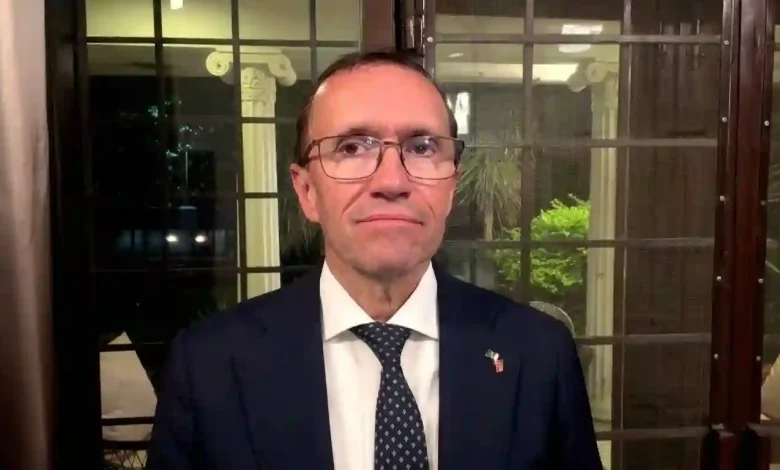
Table of Contents
Introduction: Norway’s FM Voices Deep Concerns Over Conflict Outcomes
Norway’s FM Espen Barth Eide has delivered a sharp, highly critical assessment of the ongoing military confrontation in the Middle East. Speaking in a candid interview with Al Jazeera, the top Norwegian diplomat stated that the current strategy employed by Western allies has yielded highly disappointing results. He argued that the ongoing military campaign, characterized by aggressive posturing and direct kinetic engagements, was not a ‘smart’ approach to handling Tehran’s regional influence or its controversial nuclear ambitions. In his view, the escalating campaign has deviated significantly from its stated goals, raising serious alarms about an imminent World War 3 threat involving Iran.
Eide’s remarks reflect a growing transatlantic and European anxiety over the trajectory of Middle Eastern security. Rather than neutralizing hostile actors, the heavy-handed military pressure has triggered a cascade of unintended consequences. The Norwegian foreign minister stressed that the international community must urgently re-evaluate its path, prioritizing multilateral diplomatic channels over destructive combat operations that threaten to destabilize the global order.
The Geopolitical Impact of Unilateral Actions
The decision to launch widespread US military strikes across the region was originally framed as a necessary measure to restore deterrence. However, Eide pointed out that unilateral actions often lack the broad-based legitimacy required to secure long-term stability. Instead of isolating the Iranian regime, the military campaign has alienated key regional partners and fractured the unified stance previously maintained by European and American coalition members. By bypassing established diplomatic frameworks, such as those governed by the United Nations, the coalition’s campaign has unintentionally set a dangerous precedent for international relations, where force is prioritized over dialogue.
Furthermore, the escalation has forced neighboring states to navigate an incredibly volatile security environment. Many of these nations find themselves caught in the crossfire of the unfolding 2026 Iran war, which has disrupted regional trade, damaged infrastructure, and heightened the risk of a broader contagion. For Norway, a country with a long and proud history of acting as a neutral mediator in international disputes, the abandonment of diplomatic negotiations represents a tragic setback for global governance.
Why Norway’s FM Believes the War Was Not ‘Smart’
At the core of Espen Barth Eide’s critique is the fundamental assertion that the war on Iran was fundamentally not ‘smart’ from a strategic perspective. A smart foreign policy, Eide argued, is one that accurately assesses the domestic political dynamics of the adversary and deploys tools that incentivize moderation rather than radicalization. The current military campaign has done the exact opposite. By subjecting Iran to relentless aerial bombardment and naval blockades, the coalition has validated the narrative of the most extreme elements within the Iranian political establishment.
Eide explained that military pressure alone cannot force a sovereign nation into submission without causing immense collateral damage. Instead of driving Tehran to the negotiating table in a weakened state, the conflict has hardened its resolve. This miscalculation highlights a persistent flaw in modern Western strategic thinking: the over-reliance on military solutions to solve deeply rooted political and ideological disputes, ignoring the complex socio-political fabric of the Persian nation.
Strengthening the Position of Tehran’s Hardliners
One of the most damaging consequences of the military intervention, according to Norway’s FM, is the dramatic strengthening of hardline factions within Tehran. For years, moderate and pragmatic voices in Iran argued that economic engagement and diplomatic cooperation with the West could yield tangible benefits for the Iranian people, as demonstrated during the negotiation of the Joint Comprehensive Plan of Action (JCPOA). However, the onset of hostilities has effectively silenced these moderate elements.
With the country under direct military attack, the supreme leadership and the Islamic Revolutionary Guard Corps (IRGC) have successfully rallied the domestic population under the banner of national defense. Eide noted that the war has allowed hardliners to consolidate their grip on domestic power, marginalize reformers, and portray any call for diplomacy as an act of treason. Consequently, the prospects for internal political reform or a peaceful transition of power have been pushed back by decades, leaving the international community to deal with an even more uncompromising and hostile regime in Tehran.
The Failure to Achieve Initial Strategic Objectives
When the drums of war first began to beat, proponents of the intervention promised that a swift and decisive military campaign would accomplish several key objectives: dismantle Iran’s nuclear infrastructure, halt its regional proxy operations, and force a rewrite of regional security dynamics. Today, none of these objectives have been met. Eide emphasized that the nuclear program has likely been pushed further underground, out of reach of conventional airstrikes, while the regional network of allied militias remains highly active and lethal.
Instead of degrading Iran’s asymmetrical warfare capabilities, the conflict has spurred the rapid innovation and deployment of advanced Iranian drones and ballistic missiles. These cheap but highly effective technologies have repeatedly penetrated advanced air defense networks, demonstrating that military superiority on paper does not guarantee victory in the complex, hybrid battlespaces of the 21st century. The war has thus exposed the limits of Western military power, leaving the coalition with few viable options other than a costly, indefinite occupation or a frustrating withdrawal.
Maritime Security and the Crucial Strait of Hormuz

A primary focus of Norway’s FM during his Al Jazeera interview was the devastating impact of the war on global maritime safety and freedom of navigation. Specifically, Eide expressed deep concern over the closure of the Strait of Hormuz, a narrow waterway that serves as the primary artery for the global energy trade. Before the outbreak of hostilities, the strait remained open to commercial traffic, facilitating the smooth transit of roughly 20 percent of the world’s petroleum supply.
The war has transformed this critical maritime corridor into a highly dangerous warzone, riddled with naval mines, drone attacks, and aggressive interceptions. Eide called for an immediate return to the status quo ante, urging all parties to respect long-standing international maritime laws that guarantee safe passage for civilian vessels. Without a secure and open Strait of Hormuz, the global economy remains highly vulnerable to sudden, catastrophic shocks. The restoration of this trade route is not merely a regional issue, but a critical imperative for global stability.
Economic Shockwaves and the Global Oil Supply
The economic repercussions of the naval blockades and maritime skirmishes have been felt far beyond the borders of the Middle East. As shipping companies redirect their vessels around Africa to avoid the hazardous waters of the Persian Gulf, global supply chains have faced unprecedented delays and soaring insurance premiums. Most critically, the disruption of oil exports has triggered severe volatility in the energy markets, causing gas prices surge across the US and Europe, which has fueled inflation and hampered post-crisis economic recovery.
Norway, as a major energy exporter itself, recognizes that high oil prices in the short term do not compensate for the systemic damage caused by global economic instability. Eide warned that prolonged disruption of energy flows could plunge the global economy into a severe recession. He stressed that preserving maritime safety in the Strait of Hormuz must be treated as a non-negotiable international priority, independent of the broader political grievances between Washington and Tehran.
European and Nordic Perspectives on Middle East Diplomacy
Norway’s position on the conflict represents a broader consensus among several European and Nordic nations who have long championed peacebuilding, human rights, and the rule of law. Unlike their American counterparts, European policymakers have traditionally favored a policy of critical engagement with Iran, recognizing that isolating a regional powerhouse of 85 million people is neither practical nor sustainable. Eide’s statements serve as a reminder that Europe is unwilling to blindly support a strategy of perpetual conflict.
Nordic diplomacy has historically played an instrumental role in resolving seemingly intractable global conflicts. By raising its voice against the ‘unsmart’ war, Oslo seeks to position itself as a credible intermediary that can help bridge the gap between the warring parties. Eide’s public critique is a calculated diplomatic signal, indicating that Norway is ready to facilitate back-channel discussions to defuse the crisis before it spirals completely out of control. This perspective emphasizes that sustainable peace can only be achieved when security is viewed as a collective, rather than a zero-sum, endeavor.
Exploring Alternative Diplomatic Channels
To move beyond the current military stalemate, Eide urged a renewed commitment to multilateral diplomacy. He suggested that the international community should look to historical models of successful conflict resolution, such as the Helsinki Accords or the early phases of the JCPOA negotiations. These frameworks succeeded because they focused on incremental, verifiable concessions and addressed the security concerns of all participating parties, rather than demanding unconditional surrender.
A viable diplomatic path forward would require the United States to ease its naval blockades in exchange for Iran halting its enrichment of uranium and suspending its offensive proxy operations. By building trust through small, reciprocal steps, the two sides could gradually work toward a comprehensive regional security framework. Eide emphasized that such an approach is not a sign of weakness, but rather the only realistic way to prevent a catastrophic, broader Western war with Iran that would have devastating global consequences. The alternative is a war of attrition with no clear end in sight.
Summary of Key Assertions by Espen Barth Eide
In order to better understand the diplomatic posture of Norway relative to the ongoing conflict, it is useful to structure the key assertions made by the Foreign Minister. The following comprehensive table highlights the core areas of concern raised by Eide during his Al Jazeera interview, detailing both his specific perspectives and the broader strategic implications for the international community:
| Strategic Pillar | Eide’s Specific Statement & Argument | Broader Geopolitical Implications |
|---|---|---|
| Evaluation of US Strategy | Described the US war on Iran as not “smart” and strategically flawed from the outset. | Reveals a growing transatlantic division and dissatisfaction among European allies with US Middle East policy. |
| Empowerment of Hardliners | Argued that the conflict failed to weaken the regime and instead dramatically strengthened Tehran’s political hardliners. | Reduces the likelihood of internal moderate reforms and increases anti-Western sentiment among the Iranian populace. |
| Strait of Hormuz Status | Called for an immediate return to the freedom of navigation that existed before the war, when the strait was open. | Highlights the critical dependency of global energy markets and international shipping on this narrow waterway. |
| Conflict Resolution Path | Urged an immediate end to military confrontation and a prompt return to multilateral diplomatic mediation. | Underscores the preference of European nations for negotiated, law-based frameworks rather than unilateral blockades. |
Conclusion: The Urgent Path Forward for Global Mediation
In conclusion, the remarks made by Norway’s FM Espen Barth Eide to Al Jazeera offer a sobering, much-needed reality check for the architects of the current military campaign against Iran. The war has clearly failed to achieve its primary strategic goals, serving instead to empower the most radical elements in Tehran, endanger global shipping, and inflict severe economic pain on consumers worldwide.
The path of military escalation has reached its logical limit. As Eide eloquently argued, true statecraft requires the courage to admit when a strategy has failed and the wisdom to return to the negotiating table. To prevent further devastation, the global community must heed Norway’s call, demand an immediate end to the blockade of the Strait of Hormuz, and commit to a sustainable, diplomatically mediated resolution to this highly perilous conflict. Only through international cooperation and respect for the rule of law can the Middle East emerge from this dark chapter and transition toward a durable, inclusive security paradigm.