Trump plane swap confirmed: Inside the NATO summit security escape 2026
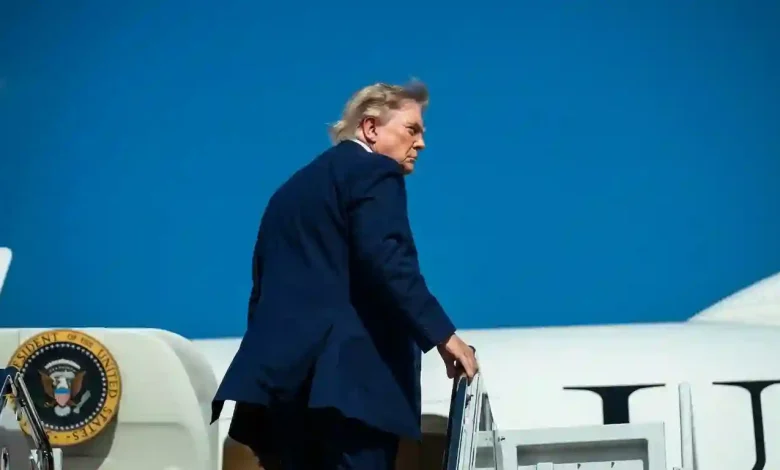
Table of Contents
Trump plane swap details have been officially confirmed by President Donald Trump, sending shockwaves through international diplomatic circles and revealing the extreme, dramatic measures taken to protect the United States President during overseas travel. On August 11, 2026, President Donald Trump officially confirmed reports that he had secretly switched aircraft when departing the NATO summit in Turkey on July 8, 2026. Acknowledging the incident to reporters, Trump stated, “I go by Secret Service and the military. They wanted me to go in a different flight, different plane. I just have to do what they say.” This unprecedented revelation sheds light on the incredible lengths security details will go to when facing an active, highly sensitive threat in foreign airspace. The incident, which involved a classic cold-war-style decoy play, occurred amidst a heightened worldwide caution issued by the State Department due to escalating threats targeting American leadership globally.
Trump Plane Swap: Inside the Secret NATO Summit Evacuation
The decision to swap the primary presidential aircraft, commonly referred to as Air Force One when the commander-in-chief is aboard, with a tactical military flight is a rare tactical maneuver. According to defense specialists, such protocols are only authorized under imminent, verified threat vectors. Trump’s candid remarks to the press have brought these highly classified operations into the public spotlight. In an era dominated by advanced electronic surveillance, satellite monitoring, and sophisticated anti-aircraft technology, the physical safety of a head of state requires more than just armored hulls and radar jamming; it demands tactical deception. This sudden aviation shuffle has forced analysts to re-examine the mechanics of executive protection during high-risk diplomatic travels, especially considering the ongoing Iran-US conflict under Trump, which has significantly heightened the regional threat level in the Middle East and surrounding European margins.
Chronology of the July 8 Security Maneuver
To understand how this complex operation unfolded, we must look at the sequence of events on that high-stress July afternoon in Istanbul, Turkey. On July 8, 2026, members of the international press corps watched as President Trump walked up the steps of Air Force One, waving to the cameras in his signature fashion before entering the cabin. The boarding was intentionally highly visible, designed to project a normal departure to onlookers, local airport staff, and foreign intelligence spotters. However, immediately after entering the secure cabin of the Boeing VC-25A, a highly coordinated, pre-planned contingency plan was initiated. Instead of preparing for takeoff, Trump was escorted through the service galleys of the aircraft and slipped out of sight. This rapid shift highlights the volatile climate where US embassies issuing urgent security alerts has become a standard precaution for state personnel travelling through highly contested corridors.
The Catering Truck Maneuver
Rather than sitting in the presidential suite of the massive Boeing, Trump was guided down to the tarmac level on the blind side of the plane, away from the media’s view. There, he hid inside a catering truck parked alongside the aircraft, which was ostensibly servicing the cabin. This catering truck, driven by highly vetted military personnel, transported the President across the secure tarmac of the Turkish military airfield to a waiting C-17 Globemaster III—a heavily armored, tactical military transport plane equipped with advanced missile defense countermeasures. While the press, public, and potentially malicious state actors focused their attention on Air Force One, Trump was already airborne on a completely different flight path, leaving Turkey under complete operational silence.
The NATO Summit Context and Rising Geopolitical Tension
The context of the NATO summit in Turkey cannot be overstated. Security analysts suggest that Turkey’s strategic but complex position as a bridge between the West and the Middle East creates a dense intelligence environment, rife with electronic warfare and signal monitoring. Concerns over presidential safety have peaked recently amid fears of a wider 2026 Iran war, making any presidential movement in the region a high-value target for various state and non-state adversaries. The Secret Service and military joint command felt that Turkey’s airspace, surrounded by volatile maritime corridors and unstable bordering nations, posed an unacceptable level of risk for a standard presidential departure.
Security Decoy vs. High-Risk Transport: The Tactical Dilemma
This last-minute swap has sparked a fierce debate among defense specialists and ethicists alike. Critics are raising serious questions about the ethics of leaving staff, press, and flight crew on a known decoy aircraft that could have been a target. If Air Force One was acting as a lightning rod to draw attention away from the President, were those left on board placed in mortal danger? Trump dismissed these concerns when speaking to reporters, arguing that his presence on the secondary flight actually made that vehicle the more dangerous option. “The jet I boarded instead could have been at greater risk… because that would be the plane, I think, that they would be more likely to go for,” Trump explained. This perspective relies on the assumption that if an adversary caught wind of the deception, they would divert their focus to intercepting the military transport instead, leaving the decoy VC-25A safe. This security logic is typical of high-stakes situations, such as those following recent US airstrikes on Iranian assets, where retaliation risks must be dynamically assessed and distributed.
Who Was Left on Air Force One?
Despite Trump’s explanation, those remaining on the decoy plane—including White House staff, junior aides, secret service agents of lower detail, and the traveling press pool—were completely unaware of the swap until hours later. Protocols dictate that during a decoy operation, the decoy vessel must maintain normal operations, including radio communications, scheduled flight paths, and standard diplomatic clearances. Revealing the swap too early would invalidate the deception, potentially endangering both flights. In past security crises, such as the ones where Trump predicted major geopolitical shifts, the division of key personnel between different assets has been used as a standard continuity-of-government procedure, though rarely with such cinematic secrecy.
The Mechanics of Presidential Evacuation
An evacuation of this nature requires seamless communication between the Secret Service’s Presidential Protective Division (PPD), the White House Military Office (WHMO), and local military hosts. The C-17 Globemaster III utilized in the swap is designed for rugged operations and is fitted with a specialized, secure capsule known as the Senior Leader In-transit Conference Capability (SLICC). This provides the President with secure, encrypted communications and a comfortable command post even while flying in a tactical cargo hold. The deployment of these units is carefully orchestrated, often disguised as routine military cargo movements. This level of extreme readiness reflects the persistent growing World War 3 threat involving Iran and other regional actors, forcing the US military to treat even diplomatic summits as active combat-adjacent zones.
Public and Political Reactions to the Revelation
The confirmation of the plane swap has drawn mixed reactions from Capitol Hill and international observers. Supporters praise the decisive action of the Secret Service and military coordinators, noting that the primary responsibility of the executive protection detail is to preserve the life of the President at all costs. Critics, however, point to the potential diplomatic fallout with Turkey. Conducting such an aggressive, covert security maneuver within Turkish territory without fully briefing local authorities could be perceived as a lack of trust in Turkey’s sovereign security capabilities. This event took place during a complex period of negotiation, following temporary moments where US-Iran hostilities eased, highlighting how delicate regional dynamics remain.
Geopolitical Ramifications of Presidential Threats
The tactical evasion highlights the incredibly volatile global security landscape of 2026. Presidential travel is no longer a matter of routine diplomacy; it is an active theater of asymmetrical defense. By publicly confirming the plane swap, Trump has sent a clear message to international adversaries that American intelligence is fully aware of tracking attempts and is prepared to use highly unconventional means to counter them. This public admission also serves as a warning to potential bad actors that standard patterns of presidential movement cannot be relied upon for targeting purposes.
Historical Context of Presidential Decoys
Historically, the use of decoy aircraft and deceptive travel arrangements is a well-established practice in presidential security, though it is rarely executed with such theatrical complexity in the modern era. During the height of the Iraq War, President George W. Bush secretly departed his ranch in Crawford, Texas, under the cover of darkness, utilizing a generic unmarked transport plane to visit troops in Baghdad for Thanksgiving. Similarly, President Barack Obama’s unannounced visits to Afghanistan involved darkened cockpits, turned-off transponders, and decoy flight plans. However, what makes the July 2026 Turkey incident particularly unique is the physical swap of the President between two active, prominent aircraft on the same airfield, in broad daylight, while the world’s media was actively filming the scene. The “catering truck swap” will likely go down in Secret Service history as one of the most daring tactical audibles ever called on foreign soil.
Technical Dimensions of the Threat
The specific nature of the threat that prompted this extreme decision remains classified, but defense experts speculate it involved sophisticated electronic tracking or man-portable air-defense systems (MANPADS) capable of targeting a large, slow-moving commercial derivative like the VC-25A. Air Force One is equipped with state-of-the-art missile jamming systems, chaff, and flares, but it lacks the rugged, low-visibility profile of a military cargo vessel. A C-17 Globemaster III, by comparison, can perform steep tactical descents and ascents, is designed to withstand light surface-to-air fire, and does not carry the highly recognizable, gleaming blue-and-white presidential livery that acts as a visual beacon. By utilizing a catering truck to bridge the gap between the two planes, the Secret Service successfully broke the “chain of custody” of visual observation, rendering any optical tracking systems useless.
Lessons for Future Executive Protection
The successful execution of this emergency swap provides invaluable lessons for the future of executive protection in an era of hyper-surveillance. With the proliferation of open-source intelligence (OSINT), flight tracking applications, and amateur satellite monitoring, keeping the movements of the leader of the free world secret has become a nearly impossible task. Traditional methods of security-through-obscurity are failing, requiring security agencies to pivot toward active deception and physical misdirection. The Secret Service’s ability to pull off such a complex maneuver under the intense scrutiny of a NATO summit suggests that the agency is adapting rapidly to these 21st-century challenges.
Summary of Decoy and Secret Transport Vehicles
To better understand the logistical differences between the two aircraft involved in this high-stakes security swap, the following comparison highlights their distinct defensive and functional characteristics:
| Feature | Air Force One (VC-25A) | Military Cargo / Secret Flight (C-17) |
|---|---|---|
| Role in July 8 Operation | Decoy Vehicle (highly visible boarding) | Secret Evacuation Vessel |
| Visual Profile | Highly recognizable blue-and-white livery | Low-visibility matte gray military paint |
| Flight Path Tracking | Standard diplomatic corridors, active transponder | Tactical route, classified/encrypted transponder |
| Defensive Systems | Missile jamming, chaff, flares | Tactical flare systems, armored fuselage, rapid descent/ascent capability |


One Comment