Iran war at Day 162: Air strikes, shipping threats, and diplomacy
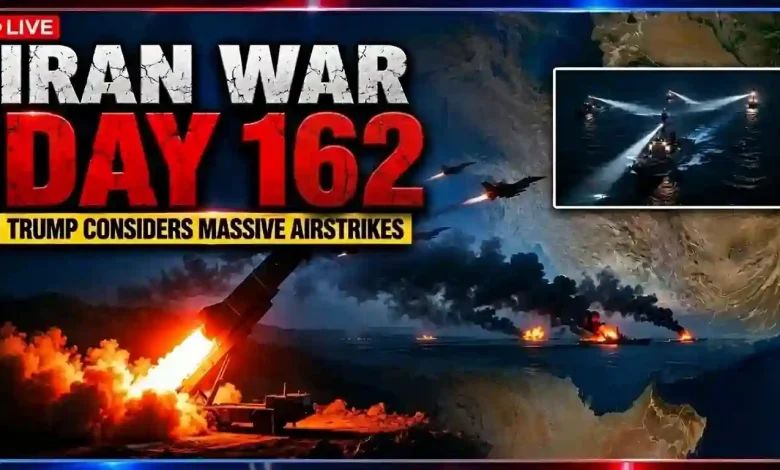
Table of Contents
Iran war developments have entered an incredibly volatile stage, now marking approximately 162 days of persistent military actions, intense geopolitical posturing, and severe economic anxieties. What began as localized border skirmishes and targeted naval interceptions has mutated into a sustained campaign of attrition. This conflict has fundamentally altered the security architecture of the Middle East, drawing in global superpowers and placing key international trade arteries at direct risk. As both sides dig in for a protracted engagement, military strategists and global financial institutions are grappling with the long-term ramifications of a conflict with no clear end in sight.
Over the past five months, the conflict has progressed through several distinct phases. Initial precision strikes on command-and-control centers have given way to wider engagements targeting missile storage facilities, sophisticated drone assembly plants, and critical logistics nodes. As defensive capabilities on all sides are tested to their absolute limits, the international community watches with mounting concern, aware that a single miscalculation could ignite an even larger regional conflagration.
War: Introduction to the 162nd Day
As the conflict crosses the 162-day threshold, the strategic landscape remains highly unstable. Neither side has managed to secure a decisive victory, leading to a war of attrition that has drained local economies and strained global military supplies. Over this period, the nature of the confrontation has evolved from swift, localized air operations to a broad-spectrum campaign. This includes cyberattacks on critical infrastructure, maritime interdictions, and continuous missile exchanges. The geopolitical shockwaves are being felt far beyond the immediate region, influencing domestic political debates in major capitals and reshaping international alliances.
International observers note that the persistence of this conflict is due to the deep-seated ideological and strategic priorities of the combatants. Efforts to enforce deterrence have instead fueled a cycle of retaliation, where every action is met with an equal and opposite reaction. This dynamic has made ceasefire negotiations exceptionally difficult to initiate, let alone finalize, as both parties fear that any sign of compromise will be interpreted as a sign of weakness.
Military Dynamics and Ongoing Airstrikes
On the military front, the air campaign has intensified dramatically. Strategic operations have shifted focus from purely tactical assets to broader drone infrastructure and long-range ballistic missile systems. Reports indicate that coalition forces have conducted extensive aerial bombardments aimed at neutralizing launch sites that threaten international shipping lanes and regional defense bases. These operations require precise coordination, involving complex aerial reconnaissance and electronic warfare assets to bypass integrated air defense networks.
Despite these heavy bombardment campaigns, defensive forces have demonstrated remarkable resilience. Under the umbrella of defensive maneuvers, localized forces have managed to launch quick-reaction counterattacks, utilizing mobile missile launchers and low-altitude loitering munitions. This continuous cycle of attack and defense has kept military personnel in a state of high alert. Specifically, ongoing airstrikes have targeted military facilities in urban outskirts, raising the risk of collateral damage and compounding the humanitarian challenges in the affected areas. Both sides claim to have achieved high-value target neutralization, yet the frontlines and overall strategic balance remain largely unchanged.
The Strait of Hormuz: A Global Chokepoint under Threat
A primary gravity point of this conflict is the maritime security situation in the Persian Gulf. The Strait of Hormuz tensions have reached unprecedented levels, creating a highly dangerous environment for merchant shipping and international tankers. As one of the world’s most vital energy transit corridors, any sustained disruption in the Strait has immediate, cascading effects on the global supply of crude oil and liquefied natural gas. Security analysts have warned that naval mines, fast-attack craft harassment, and drone strikes on commercial hulls remain constant threats in these narrow waters.
To counter these threats, international coalitions have increased their naval presence, implementing convoy escort protocols and aerial surveillance patrols. However, the sheer volume of daily maritime traffic makes absolute protection virtually impossible. The constant threat of asymmetric maritime warfare has forced major shipping companies to re-evaluate their transit routes, with many opting for longer, far more expensive journeys around the Cape of Good Hope, thereby bypassing the region entirely and further straining global logistics chains.
Economic Fallout and Soaring Energy Costs
The economic ramifications of this prolonged war are severe and far-reaching. As maritime routes face continuous threats, global energy markets have reacted with extreme volatility. Crude oil futures have experienced sharp spikes, directly impacting consumer fuel prices and driving up manufacturing costs across Europe, Asia, and North America. Economists warn that a prolonged blockade or major incident in the shipping lanes could trigger a severe global inflationary cycle, complicating central bank efforts to stabilize international financial markets.
In addition to energy shocks, the insurance sector has responded by drastically increasing war-risk premiums for vessels operating in the Middle East. These rising costs are inevitably passed down to the consumer, affecting everything from grain shipments to consumer electronics. Concerns over commercial shipping security have also led to supply chain delays, leaving factories worldwide facing shortages of essential components. This ongoing economic pressure underscores the reality that this war is not merely a regional security crisis, but a global economic challenge with the potential to trigger a widespread recession. Furthermore, the rising economic costs associated with prolonged military deployment have forced governments to reallocate domestic budgets, drawing criticism from fiscal watchdogs and taxpayers alike.
Strategic Posturing: Retaliation and Deterrence
The strategic calculations governing the conflict are deeply rooted in the concepts of deterrence and escalation management. Both sides seek to project strength, calculated to convince the opponent that further aggressive actions will carry an unacceptable cost. However, the threshold for what constitutes a tolerable level of engagement is constantly shifting, creating a highly unpredictable environment where misinterpretation is highly probable.
As part of this posturing, military commanders have frequently issued public declarations outlining their readiness for an all-out engagement. The wider geopolitical landscape is further complicated by political transitions and policy shifts in Western capitals, where leaders face pressure to maintain a firm stance while avoiding direct entrapment in a massive ground campaign. Observers note that Trump’s military strategy has emphasized maximum economic pressure paired with sudden, high-impact tactical strikes to force a diplomatic retreat. Meanwhile, the adversary has relied on a network of regional partners and asymmetric tactical operations to demonstrate that any direct aggression against its sovereign territory will result in immediate, severe, and distributed retaliatory attacks across multiple theaters. This complex web of alliances means that a spark in one corner of the region can instantly ignite a multi-front conflict, drawing in actors from neighboring states and further complicating any path toward stabilization. In this context, the broader debate surrounding a potential full-scale U.S. war with Iran continues to dominate strategic discussions in Washington and Brussels, with experts debating whether containment or active rollback is the most viable path forward.
Diplomatic Maneuvers and the Role of Mediators
Despite the intensifying military operations, backchannel diplomacy has not ceased entirely. Neutral third-party nations have been working behind the scenes to establish communication channels between the warring factions. These efforts are focused on creating localized pauses in fighting, securing the release of detained merchant crews, and establishing humanitarian corridors to alleviate civilian suffering in high-risk zones.
In particular, intense diplomatic mediation has been spearheaded by regional partners seeking to prevent a total collapse of regional security. These discussions are exceptionally delicate, requiring negotiators to balance the non-negotiable security concerns of all parties involved. While these diplomatic efforts have occasionally succeeded in preventing localized escalations from spiraling completely out of control, a comprehensive framework for a sustainable ceasefire remains elusive. The main obstacle continues to be the fundamental disagreement over long-term security guarantees and the presence of foreign military assets in regional waters.
Comparative Overview of the Conflict Phases
To better understand the progression of this war over its 162-day duration, it is helpful to examine the operational focus and economic impacts of its key phases. The table below outlines how the conflict has transitioned from early localized containment to the present multi-domain attrition campaign.
| Conflict Phase | Primary Target Focus | Geographic Scope | Global Economic Impact | Diplomatic Status |
|---|---|---|---|---|
| Phase 1: Border Skirmishes (Days 1–30) | Border posts and tactical radar installations | Localized borders and immediate coastal zones | Minimal; localized insurance adjustments | Public condemnation; initial backchannel setup |
| Phase 2: Targeted Escalation (Days 31–90) | Command centers, supply depots, and air defense nodes | Regional military bases and coastal sea lanes | Moderate; oil price fluctuations; premium hikes | Stalled talks; placement of unilateral sanctions |
| Phase 3: Maritime Theater (Days 91–130) | Commercial vessels, energy infrastructure, and tankers | Strait of Hormuz and the wider Gulf region | High; shipping rerouted; global inflation fears | Urgent UN sessions; mediator states intervene |
| Phase 4: Active Attrition (Days 131–162+) | Deep drone facilities, missile sites, and logistical hubs | Multi-front, regional, and cyber domains | Very High; sustained energy volatility; supply delays | Intense mediation efforts; deep distrust remains |
Future Outlook: Escalation or Containment?
As the conflict moves deeper into its sixth month, the future remains highly uncertain. The potential paths forward range from a gradual containment of hostilities achieved through painstaking diplomatic negotiations, to a catastrophic escalation that could draw global powers into a direct military confrontation. The resilience of the global economy will continue to be tested as long as the shipping lanes in the Gulf remain subject to hostiles and strategic blockades.
Ultimately, a sustainable resolution will require addressing the underlying security anxieties that have fueled this conflict for decades. Until a regional security architecture can be established that respects the sovereignty and security of all nations involved, the Middle East will likely remain a highly volatile region, with the threat of renewed conflict constantly looming on the horizon. International diplomats and military commanders alike recognize that while military force can achieve temporary tactical advantages, only a comprehensive and inclusive diplomatic process can deliver long-term stability and peace.