Strait of Hormuz demands: Iran’s conditions for Trump 2026
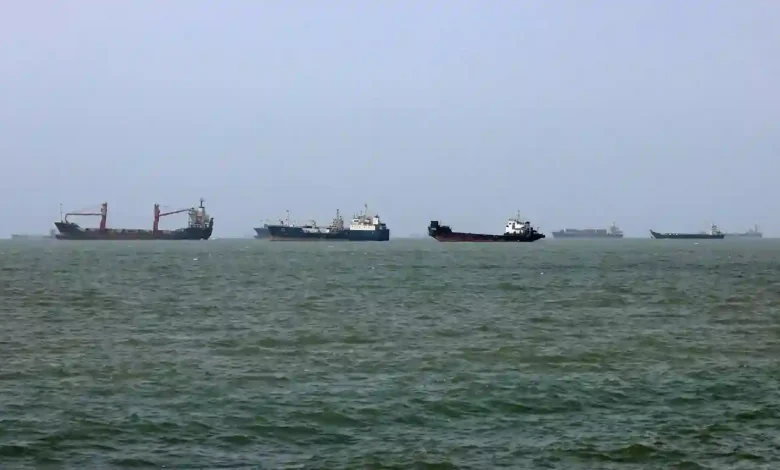
Table of Contents
Strait of Hormuz demands issued by Tehran have taken center stage in global politics as Iran outlines a strict, uncompromising list of preconditions to President Donald Trump and American negotiators before any talk of reopening the vital shipping lane can begin. As the world watches with bated breath, NBC’s Keir Simmons reported on Sunday TODAY that the situation in the Persian Gulf has reached a critical bottleneck. Tehran’s stance marks a significant shift in diplomatic maneuvering, setting high-stakes boundaries that challenge the traditional power projections of the United States in the Middle East. With global energy security hanging in the balance, understanding the depth and feasibility of these demands is paramount.
The Diplomatic Standoff: Analyzing Tehran’s Bold Terms
The current impasse represents a pivotal juncture in modern geopolitical history. Following weeks of intense regional maneuvering, Iran’s supreme leadership has consolidated its bargaining position by tying the passage of global maritime trade directly to comprehensive sovereign guarantees. The ongoing Iran-U.S. conflict escalation has transformed from tactical military exchanges into a complex, multi-layered economic war, where the choke points of global energy are being leveraged as ultimate bargaining chips.
By demanding that the United States fundamentally alter its rhetoric, alter its military footprint, and commit to financial restitution, Tehran is signaling that it will no longer accept the status quo of economic sanctions and military containment. Observers note that these demands are crafted not only for the negotiating table in Washington but also as a demonstration of strength to regional allies and domestic audiences, asserting Iran’s sovereign authority over its immediate maritime domain.
Unpacking the Three Core Conditions
Tehran’s list of conditions is built upon three main pillars, each representing a direct challenge to United States foreign policy:
- No Threats or Insults: Iran demands a binding commitment that the United States will never again issue military threats or public insults against the nation or its leadership.
- Complete Military Withdrawal: American armed forces must completely evacuate the Persian Gulf and surrounding territories, effectively ending decades of U.S. naval dominance in the region.
- War Damages and Reparations: The United States must pay extensive financial compensation for the infrastructure damage and economic losses incurred by Iran during the prolonged conflict.
These three pillars target the core mechanisms of American influence, forcing a difficult calculation for the White House as it attempts to balance national security interests with the global necessity of maritime trade.
The Strategic Importance of the Strait of Hormuz
The Strait of Hormuz is widely regarded as the most critical oil transit choke point in the world. Stretching between Oman and Iran, it connects the Persian Gulf with the Gulf of Oman and the Arabian Sea. Millions of barrels of petroleum pass through this narrow waterway daily, supplying the manufacturing hubs of Asia, the cities of Europe, and the global energy market at large. Any prolonged Strait of Hormuz transit shutdown threatens to throw global supply chains into chaos, sparking panic across international commodity exchanges.
Iran’s geographical positioning along the northern coast of the strait gives it a formidable defensive and offensive advantage. Through the deployment of anti-ship missiles, naval mines, and fast-attack craft, Tehran has demonstrated an ability to monitor, restrict, or entirely halt commercial traffic, using this geographic reality as a powerful counterweight to American economic sanctions.
Global Economic Impact of a Blockaded Strait
The closure of the strait has immediate and devastating consequences for the global financial ecosystem. Energy analysts have warned that even a temporary blockade can trigger historic spikes in Brent and WTI crude prices. This reality has already materialized, causing severe U.S. economic shockwaves and high oil prices that have spiked global inflation and strained Western industrial output.
The table below summarizes the economic and logistical implications of the current blockade compared to historical baselines:
| Waterway Metric | Historical Baseline (Pre-Conflict) | Current Blockade Status | Estimated Global Impact |
|---|---|---|---|
| Daily Oil Flow | Approx. 20-21 Million Barrels/Day | Severely Restricted / Blocked | Massive crude supply deficit |
| Average Crude Price | $70 – $80 per barrel | Exceeding $100+ per barrel | Global inflationary pressure |
| Maritime Insurance Rates | Standard baseline premiums | Spiked by over 400% | Increased cost of all consumer goods |
| Shipping Routes | Direct transit through the Gulf | Rerouted around Africa (Cape of Good Hope) | Added transit times of 10-14 days |
As maritime insurance rates continue to climb, shipping conglomerates are refusing to send vessels through the region without explicit sovereign guarantees of safety, further isolating Persian Gulf exporters and multiplying the economic strain on consumer nations.
President Trump and the American Response
The administration of President Donald Trump faces an unprecedented foreign policy test. Historically, the United States has maintained a policy of maximum pressure against Iran, utilizing comprehensive sanctions to isolate Tehran economically while maintaining a heavy naval presence to ensure the free flow of commerce. However, the current blockade has altered that calculation, as military options carry the risk of triggering an all-out regional war.
In public addresses, the administration has maintained a firm stance, declaring that the United States will not succumb to economic blackmail. Yet behind the scenes, there is growing recognition that a purely military solution may be too costly, leading to strategic pivots where Trump cancels military actions in a bid to give negotiators breathing room. This delicate dance of public defiance and private caution underscores the complexity of confronting a regional power that holds the keys to global energy security.
The Challenges Facing American Negotiators
U.S. diplomats are tasked with a seemingly impossible mission: securing the reopening of the Strait of Hormuz without appearing to capitulate to Tehran’s demands. To concede to any of the core demands—particularly the withdrawal of military forces and the payment of war damages—would be viewed domestically as a historic defeat and a capitulation of American global leadership.
Furthermore, negotiations are hampered by a severe lack of mutual trust. Decades of broken agreements, unilateral treaty withdrawals, and hostile rhetoric have left both sides deeply skeptical of any promises made by the other. This diplomatic gridlock is exacerbated when Iran denies direct U.S. talks, preferring instead to communicate through third-party intermediaries, slowing down the pace of diplomacy when rapid communication is desperately needed to avoid accidental military escalation.
Military Realities and Troop Withdrawal Concerns
The demand for a complete U.S. military withdrawal from the Persian Gulf strike at the heart of the Pentagon’s regional security architecture. For decades, the U.S. Fifth Fleet, based in Bahrain, has served as the anchor of American military presence in the Middle East, protecting allies, securing shipping lanes, and deterring hostile actions. A complete withdrawal would create a massive power vacuum, likely to be filled by regional players or global rivals such as Russia and China.
Military strategists argue that withdrawing forces under pressure would embolden Iran’s escalation in regional waters, potentially leading to further demands on neighboring Gulf states. Conversely, maintaining a large naval presence in a confined waterway like the Persian Gulf exposes American warships to asymmetric threats, including swarming drone attacks, smart mines, and coastal missile batteries, keeping the risk of accidental conflict dangerously high.
The Question of Reparations: Rebuilding After Conflict
The demand for war damages and financial compensation is perhaps the most politically sensitive issue for Washington. Iran argues that years of crushing economic sanctions, combined with direct military strikes on infrastructure, have caused hundreds of billions of dollars in damage to its civilian economy, healthcare system, and industrial sectors. Tehran views reparations not as a concession, but as a matter of international law and justice.
For the United States, agreeing to pay war damages is a political non-starter. Congress would almost certainly block any appropriation of funds destined for Tehran, and the political fallout for any administration agreeing to such terms would be devastating. However, the escalating financial costs of the war—both in terms of military operations and lost economic productivity—are forcing some policymakers to consider creative financial workarounds, such as the unfreezing of sanctioned Iranian assets or structured humanitarian trade mechanisms, as a compromise.
Geopolitical Mediation: The Role of Regional Allies
Given the lack of direct communication channels between Washington and Tehran, regional mediators have become essential in preventing a total breakdown of talks. Countries with diplomatic ties to both nations are working tirelessly behind the scenes to find a middle ground that allows both sides to save face while restoring maritime stability.
We are seeing extensive diplomatic traffic, with Qatar’s mediation efforts playing a key role in conveying messages, offering neutral venues for backchannel discussions, and proposing phased escalation pauses. These diplomatic conduits represent the best hope for a peaceful resolution, working to translate Iran’s maximalist demands into actionable, realistic negotiation points that can be integrated into a broader regional security framework.
Whether these mediation efforts can successfully bridge the vast ideological and strategic chasm between President Trump’s