Iran Denies Trump Claims of Imminent Monday Negotiations 2026
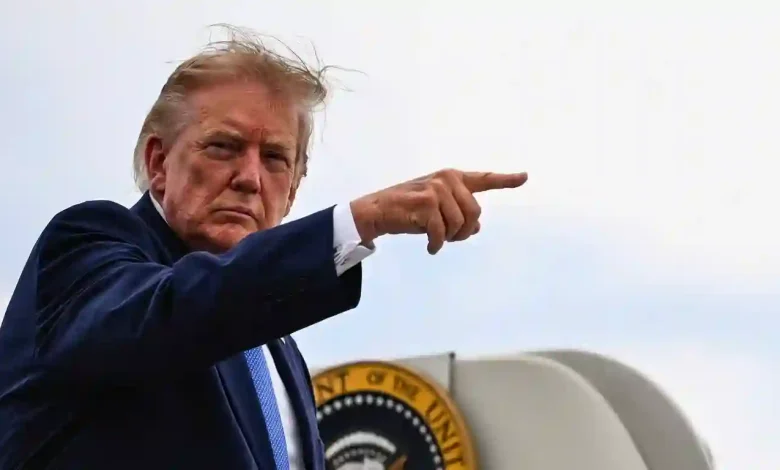
Table of Contents
Iran has rejected claims made by US President Donald Trump that both nations are set to begin high-level bilateral talks to resolve the ongoing military and economic standoff [60255]. The denial marks yet another dramatic twist in a highly volatile sequence of events, highlighting the deep-seated distrust that continues to define relations between Washington and Tehran. This sudden diplomatic friction comes after a tense period where planned attacks on Iran were reportedly drawn up, only to be suspended at the eleventh hour by the US commander-in-chief [61265]. The conflicting narratives from both capitals underscore the immense challenges of establishing any credible path to peace, with each side attempting to control the domestic and international press coverage of the crisis.
Introduction: The Diplomatic Clash Over Monday Negotiations
The latest war of words erupted after Donald Trump asserted that direct discussions were scheduled to commence immediately. However, Iranian officials wasted no time in publicly distancing themselves from the American president’s remarks, stating categorically that no such meeting had been agreed upon, let alone scheduled. This rapid polarization of statements reflects the classic geopolitical posturing that has characterized the Persian Gulf conflict for decades. While Washington attempts to portray an image of a powerful nation dictating the terms of engagement, Tehran remains determined to show that it will not negotiate under the threat of direct military force.
The timing of these claims is particularly critical. Observers suggest that the rhetoric from both sides serves specific tactical goals. For the United States, presenting the possibility of immediate talks serves to reassure global financial markets and soothe regional allies who are terrified of an all-out war. For the Islamic Republic, maintaining a firm stance of denial protects the regime’s ideological purity and ensures that domestic hardliners do not perceive the government as capitulating to Western pressure. As a result, the global community is left to parse through highly contradictory accounts of what is actually occurring behind closed doors.
Behind the Claims: Trump’s Air Force One Statements
Speaking to journalists on board Air Force One on Sunday, the US President detailed what he described as a highly structured diplomatic opening. According to his account, the decision to call off the military action was directly tied to the onset of these talks. Trump stated that the Iranian leadership “knew the extent of the attack because they saw it forming,” suggesting that the visible build-up of US naval and aerial assets in the region served as a powerful deterrent that forced Tehran’s hand. He confidently told reporters: “We’re talking to them in the form of a negotiation. It begins tomorrow afternoon.”
This statement has been viewed by analysts as an attempt to leverage military brinkmanship into immediate diplomatic concessions. By asserting that negotiations were imminent, the administration sought to demonstrate that its policy of maximum pressure was yielding concrete results. As the geopolitical landscape shifts, Donald Trump’s policy on Iran continues to oscillate between maximum military pressure and sudden offers for direct dialogue, leaving both allies and adversaries struggling to predict the White House’s next move. This unpredictability has become a core element of the administration’s foreign policy playbook, though it carries substantial risks of miscalculation.
The Truth Social Precursor and “Massive” Strike Threat
Prior to his remarks on Air Force One, Trump had utilized his Truth Social platform to lay the groundwork for his diplomatic narrative. In a series of characteristically bold posts, he claimed that he had been formally approached by representatives of both the Iranian government and key US allies in the Middle East. He asserted that these actors had collectively implored him to “hold off” on the planned military strikes, on the basis that the “perimeters” of a comprehensive deal had already been successfully outlined. The implication was clear: the threat of force had done its job, and a peaceful resolution was now within arm’s reach.
This narrative, however, glosses over the intense military mobilization that preceded the pause. The Pentagon had reportedly finalized targets ranging from radar installations to missile launch sites before the operation was abruptly halted. The sudden reversal occurred as the White House announced that the previously planned airstrikes paused to allow diplomatic channels a brief window of opportunity. Whether this pause was a genuine attempt to avoid catastrophic war or merely a theatrical maneuver remains a subject of intense debate among international relations experts.
Tehran’s Sharp Denials: Dissecting Iran’s Public Response
The response from the Iranian capital was swift, uncompromising, and highly public. Within hours of Trump’s comments on Air Force One, spokespersons for the Iranian Foreign Ministry and senior national security advisors issued statements refuting the US President’s claims point by point. They clarified that no bilateral talks had been scheduled for Monday, nor was there any ongoing negotiation under the conditions described by the United States. Tehran made it clear that it would not enter into any formal dialogue while undergoing punitive economic sanctions and military encirclement.
In official declarations, Iran accuses US leadership of engaging in psychological warfare and disseminating misleading information to appease domestic audiences. Iranian diplomats argued that Trump’s claims of an imminent deal were a face-saving measure designed to mask his reluctance to launch a highly risky military campaign that could easily spiral out of control. By denying the talks, Tehran sought to reclaim the initiative, demonstrating to its public and regional proxies that it remains defiant in the face of American pressure.
Domestic Pressures and Strategic Narrative Building
Understanding the internal dynamics of both nations is essential to decoding this diplomatic clash. In Iran, the government is facing severe economic strain due to international sanctions, yet the ruling elite cannot afford to look weak. Engaging in talks under the immediate threat of a “massive” strike would be viewed by hardliners as an unacceptable surrender, potentially destabilizing the country’s internal political structure. Therefore, denying Trump’s claims is a strategic necessity for the preservation of the regime’s domestic credibility.
Conversely, the Trump administration faces its own set of domestic pressures. With an election cycle constantly looming and the American public generally wary of entering another prolonged conflict in the Middle East, the president must balance his tough-on-defense persona with his promise to avoid costly foreign wars. While military analysts remain skeptical of an immediate breakthrough, the current backchannel diplomacy indicates that some technical lines of communication remain functional, serving as a vital safety valve to prevent accidental escalation.
Mapping the Conflict: Key Postures Compared
The divergent stances of the United States and the Islamic Republic of Iran highlight the structural gridlock that prevents an easy resolution. To clarify the current state of affairs, the following table outlines the official positions and tactical objectives of both governments regarding the proposed negotiations and the recent military stand-off.
| Strategic Parameter | United States Position | Iranian Position | Geopolitical Outcome |
|---|---|---|---|
| Monday Negotiation Claims | Asserted that formal bilateral talks would begin on Monday afternoon. | Categorically denied the existence of any scheduled meeting or immediate negotiations. | Public confusion and increased reliance on international backchannels. |
| Military Standoff & Strikes | Called off a “massive” strike but maintains that the military option remains on the table. | Dismissed the called-off strikes as psychological warfare; warned of severe retaliation if attacked. | Temporary pause in active hostilities, though regional military readiness remains exceptionally high. |
| Core Preconditions | Demands a comprehensive deal addressing missile development and regional influence. | Demands immediate sanctions relief and a return to original international treaties before any talks. | Diplomatic deadlock, as neither party is willing to make the first concession. |
This structural deadlock is precisely why the Washington-Tehran dialogue remains highly volatile, with both governments maintaining diametrically opposed red lines. The use of public forums to announce and then deny diplomatic initiatives suggests that both sides are more interested in winning the information war than in engaging in quiet, constructive diplomacy. Without a neutral intermediary to bridge these fundamental differences, the risk of a military miscalculation remains dangerously elevated.
Regional Actors and the “Hold Off” Backchannel Appeals
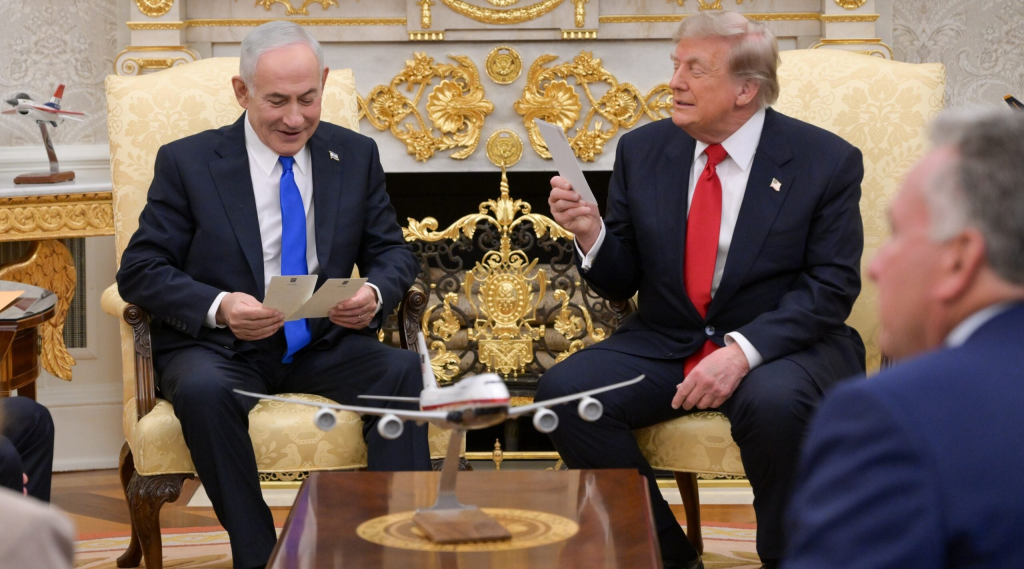
Trump’s claim that he was asked by regional allies to hold off on military action is highly credible, given the immense stakes for the Middle East. Countries like Saudi Arabia, the United Arab Emirates, and Qatar are fully aware that any direct military conflict between the US and Iran would have immediate, catastrophic consequences for their own security and economic infrastructure. A war would likely lead to the closure of key maritime shipping routes, rocket attacks on energy installations, and massive disruptions to the global oil supply.
Consequently, these regional actors have been working feverishly behind the scenes to urge restraint. Regional powers are acutely aware of the economic consequences, hoping these temporary conflict pauses will mature into a more durable, legally binding framework. By acting as intermediaries, these states hope to facilitate a face-saving exit for both Washington and Tehran, ensuring that local populations do not bear the brunt of an armed confrontation.
Gulf Cooperation Council and European Intermediaries
In addition to Gulf nations, European signatories to the original nuclear agreement have also been playing an active role in attempting to defuse the situation. Diplomats from Brussels, Paris, and London have consistently warned that military strikes would destroy any remaining hope of reviving diplomatic agreements. These European allies have urged the US administration to offer tangible economic incentives, such as limited sanctions waivers, to entice Tehran back to the negotiating table.
However, the effectiveness of these intermediaries is limited by the deep mutual suspicion between the two primary combatants. Iran views European efforts as well-intentioned but ultimately toothless, given Europe’s inability to bypass US financial sanctions. Meanwhile, the United States remains skeptical of European diplomatic soft-power, preferring instead to rely on its unilateral economic and military leverage. This divergence in approach further complicates the international community’s ability to present a unified front.
Strategic Implications: What Happens Next?
The immediate consequence of this public dispute is a heightened state of uncertainty. While the threat of imminent airstrikes has receded for the moment, the lack of a clear, mutually agreed-upon diplomatic path means that the underlying causes of the conflict remain completely unaddressed. The regional security environment is characterized by a fragile status quo that could be shattered at any moment by a single localized incident, such as a drone interception or a maritime clash in the Strait of Hormuz [59762].
Furthermore, the public nature of the disagreement makes future negotiations even more difficult to initiate. Having denied Trump’s claims so vociferously, the Iranian leadership would find it incredibly difficult to enter into talks shortly hereafter without appearing to have capitulated under pressure. Any future dialogue will likely require a prolonged period of quiet, unpublicized preparation through trusted third-party intermediaries before any official announcements can be safely made to the public.
De-escalation Paths or Tactical Repositioning?
Ultimately, the world is left to wonder whether the current lull in hostilities represents a genuine step toward de-escalation or merely a tactical repositioning by both sides. The US military maintains a massive presence in the region, ready to strike at a moment’s notice should negotiations fail to materialize [61227]. On the other hand, Iran continues to refine its defensive capabilities and reinforce its network of regional allies, ensuring that it is fully prepared for a protracted conflict if necessary.
As the days progress, the international community will be watching closely to see if any low-profile meetings take place, or if the rhetoric escalates once again. What is certain is that the path to a lasting peace will require more than Twitter posts, Air Force One soundbites, and rapid-fire public denials. It will require a fundamental shift in strategy from both Washington and Tehran, moving away from unilateral demands and toward a realistic, compromise-based diplomatic framework.