Smithsonian Exhibits Faced with Warning Signs Under New Trump Order
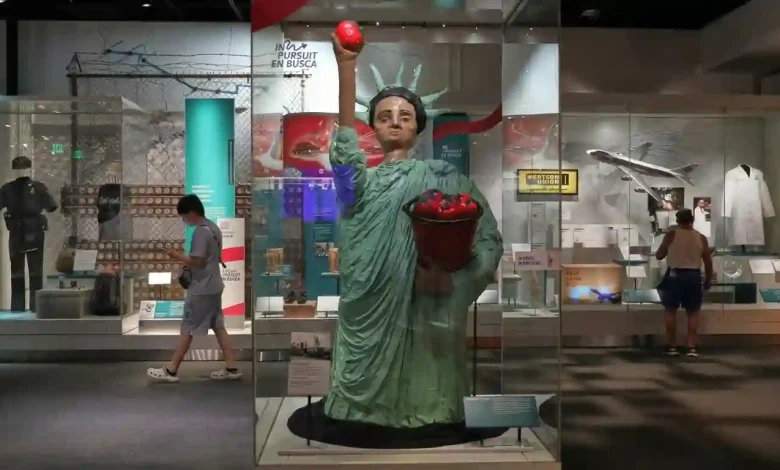
Table of Contents
Smithsonian Institution museums find themselves at the center of a historic battle over the curation of American identity after President Donald Trump signed an executive order directing the installation of warning signs outside the National Museum of American History. The unprecedented directive, signed on July 24, 2026, orders federal officials to construct temporary signage cautioning visitors against what the administration categorizes as “inaccurate information” presented within the museum’s exhibits. Moving beyond rhetorical critiques, the order instructs the Department of the Interior to guide tourists toward alternative platforms and locations that offer “accurate information regarding America’s history”. The bold action marks a dramatic escalation in the White House’s ongoing campaign against prominent cultural and academic organizations accused of harboring an “anti-American bias”. While the museum did not immediately issue a public response to media inquiries, the clash highlights the deep ideological divide over how the nation’s past is preserved, interpreted, and presented to the public.
To navigate this deep dive into the executive action and its cultural implications, refer to the outline below:
- The Executive Order: Warning Signs and Alternative Sources
- “Saving America’s Story”: The White House Report’s Accusations
- Comparative Analysis of the Political Battle over Federal Museums
- Backlash and Defense from the Historical Community
- Legal and Administrative Challenges to the Executive Order
- The Broader Political Implications for Public Education and Culture
Smithsonian :The Executive Order: Warning Signs and Alternative Sources
Smithsonian’s status as a world-renowned cultural institution has not shielded it from intense scrutiny as the executive branch leverages administrative tools to demand sweeping changes. The newly signed order targets the National Museum of American History’s physical presence, directing federal employees to erect warning boards directly along the heavily trafficked public walkways of the National Mall. Critics have noted that this move reflects the same uncompromising executive authority observed in the Trump administration’s aggressive posture on global conflicts and domestic regulatory restructuring. Rather than working solely through legislative budgets or board negotiations, the White House has chosen to install a competing physical narrative directly on the ground outside the museum, a direct confrontation that historians argue has no precedent in modern American civic life.
Smithsonian :Target of the Directive: The National Museum of American History
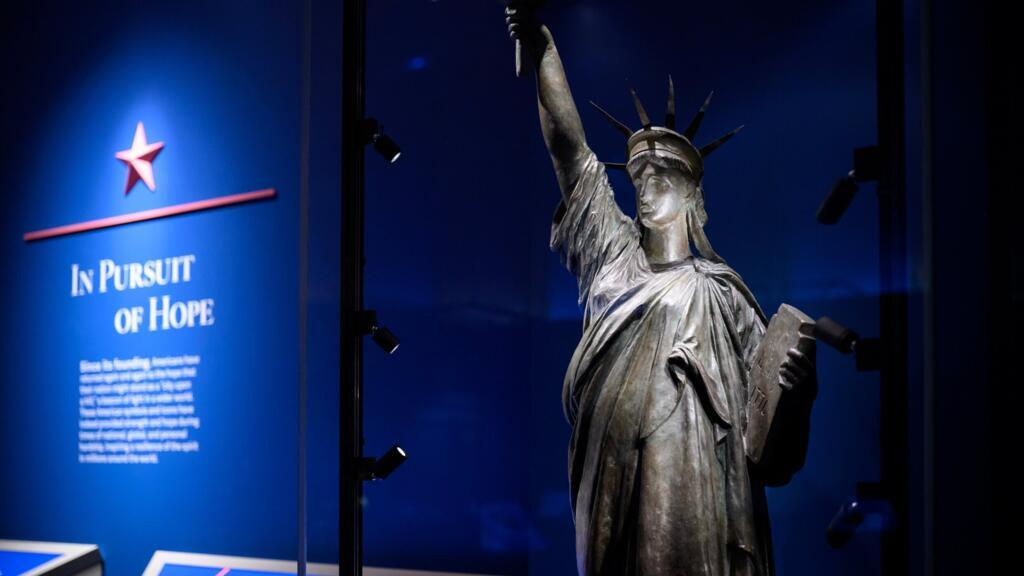
The primary target of the administration’s ire is the National Museum of American History, which serves as the keeper of iconic national artifacts ranging from the Star-Spangled Banner to Lincoln’s top hat. According to the administration, the museum has abandoned its foundational goal of celebrating American exceptionalism. This clash is viewed by some political analysts as part of a series of ideological shifts within conservatism that demand absolute loyalty to traditional historical narratives, viewing any academic reexamination of America’s past as a symptom of cultural decline. By placing disclaimers at the literal gates of the museum, the administration seeks to shape the expectations of millions of families, school groups, and international tourists before they even step foot inside the exhibition halls.
Smithsonian :Role of the Department of the Interior and National Park Service
To execute this policy, the executive order specifically directs the Department of the Interior, led by Secretary Doug Burgum, and the National Park Service (NPS) to implement the physical signs. Because the Smithsonian Institution itself operates as an independent trust established by Congress, the president does not possess the direct authority to unilaterally alter exhibits inside the building without facing immense legal resistance. However, the sidewalks, pathways, and green spaces surrounding the building on the National Mall fall under the jurisdiction of the National Park Service. This clever use of administrative boundaries has triggered complex legal disputes surrounding federal power and territorial jurisdiction, as legal scholars debate whether the executive branch can legally use federal land surrounding an independent trust to actively undermine that trust’s educational mission.
“Saving America’s Story”: The White House Report’s Accusations
At the heart of the administration’s executive order is a scathing 162-page report released on July 4, 2026, by the White House Domestic Policy Council. Titled “Saving America’s Story: How Ideological Capture at the Smithsonian Institution’s National Museum of American History Erases Our Heritage,” the document asserts that the museum has been systematically co-opted by left-wing scholars. The report claims that the institution’s leadership treats the American narrative as a political tool designed to divide rather than unite. It argues that instead of presenting history as a shared national inheritance to be celebrated, the current displays focus excessively on systemic injustices, social struggles, and political conflict. This policy battle over museum spaces is occurring alongside contentious local disputes over infrastructure and cultural conservation policies, showing a coordinated push to re-evaluate how national and local resources are utilized in public life.
Critiques of “Social Justice” and “Radical Ideology”
The White House report explicitly accuses the museum’s curators of utilizing Marxist frameworks to teach history, arguing that themes of class struggle, gender inequality, and systemic racism are overemphasized at the expense of traditional patriotic narratives. The administration’s focus on rooting out “divisive concepts” matches its broader efforts to challenge independent regulatory bodies, similar to how the White House has pushed for aggressive federal oversight and agency control in health and science sectors. Proponents of the order argue that public funds should not be utilized to propagate theories that depict the United States as inherently flawed or oppressive. In contrast, academic historians warn that filtering history to show only positive outcomes turns education into propaganda, eroding the analytical tools necessary for a healthy democracy.
Comparative Analysis of the Political Battle over Federal Museums
To understand the specific areas of contention between the Trump administration and the Smithsonian Institution, it is helpful to examine the specific grievances highlighted in the Domestic Policy Council’s report alongside the traditional scholarly defense of these exhibits. The table below outlines the core ideological divides shaping this unprecedented cultural conflict.
| Exhibition Focus Area | White House Objection | Smithsonian / Academic Rationale | Administration’s Mandated Correction |
|---|---|---|---|
| Founding Fathers & Slavery | Overemphasizes slaveholding, diminishes their contributions to global liberty. | Presents a complete, nuanced view of historical figures within their material contexts. | Display signs highlighting the Declaration of Independence and achievements of the founders. |
| Industrial Revolution | Focuses too heavily on labor exploitation, child labor, and environmental damage. | Documents the lived experiences of working-class Americans and the rise of labor movements. | Emphasize the triumphs of American capitalism, ingenuity, and technological breakthroughs. |
| Civil Rights Movements | Frames American progress as a continuous conflict between dominant and marginalized groups. | Highlights the democratic struggle to fulfill the constitutional promise of equality for all. | Focus on unity, institutional progress, and the ultimate realization of constitutional ideals. |
| Westward Expansion | Accuses curators of presenting expansion solely as indigenous displacement and genocide. | Provides a balanced account of frontier life, incorporating Native perspectives and experiences. | Celebrate the courage of pioneers, the spirit of adventure, and the unification of the continent. |
The table demonstrates that the disagreement is not merely factual but fundamentally philosophical. The administration favors a historical perspective centered on national achievements and patriotic inspiration, while academic curators argue that true patriotism is fostered by examining both the achievements and struggles of the past.
Backlash and Defense from the Historical Community
The administration’s efforts to influence public perception of history have sparked a major outcry from curators, university professors, and preservationists nationwide. This debate highlights the complex challenges of protecting historical narratives and indigenous territories from external administrative overreach, drawing parallels to global debates on heritage preservation. Critics argue that inserting political disclaimers outside museums compromises academic freedom and sets a dangerous precedent of state-sponsored historical revisionism. The historical community has rallied to support the Smithsonian, asserting that the institution’s primary obligation is to historical accuracy and rigorous peer-reviewed scholarship, not political compliance.
The Smithsonian Leadership’s Stance and Institutional Independence
Smithsonian Secretary Lonnie Bunch and National Museum of American History Director Anthea Hartig have defended their staff’s work against the White House’s accusations. During contentious congressional hearings leading up to the executive order, Hartig emphasized that the museum’s exhibits are designed to inspire patriotism through honest reflection rather than state-sponsored instruction. She testified that a great nation does not fear its own history, and that presenting a diverse array of perspectives is essential to a robust democracy. Despite the intense political pressure, the Smithsonian’s leadership has maintained that its independent status—granted under its unique 1846 charter—protects it from being forced to adopt political narratives. This structural independence remains a vital defense mechanism against executive orders seeking to mandate specific ideological outcomes inside the exhibition spaces.
Professional Historians and Academic Organizations React
The Organization of American Historians (OAH), the largest professional society dedicated to the study of American history, issued a sharp statement rejecting the claims made in the White House report. The OAH argued that the report unfairly and inaccurately characterized the hard work of museum professionals. Academic scholars warn that the order represents a troubling shift toward the politicization of history, even as the public experiences major shifts in mainstream public interest toward entertainment and sports, which can sometimes leave serious cultural debates overlooked. Scholars argue that the attempt to label museum displays as “inaccurate” without scholarly consensus is a direct threat to the integrity of the nation’s premier educational institutions.
Legal and Administrative Challenges to the Executive Order
As the Department of the Interior prepares to execute the order, legal experts are predicting a wave of lawsuits aimed at blocking the installation of the signage. The primary legal battleground will likely center on the First Amendment and the scope of executive authority over independent trusts. Opponents of the order will argue that using the National Park Service to place political disclaimers on public sidewalks is a form of government-compelled speech and an abuse of administrative power. Furthermore, because the Smithsonian was established by Congress as a unique entity, any executive attempts to alter its mission or influence its visitors could spark a constitutional struggle between the executive and legislative branches, especially amid a complex domestic climate impacted by broader national economic challenges that already strain federal resources. Congress holds the power of the purse over both the Smithsonian and the Department of the Interior, meaning lawmakers could choose to defund the signage initiative in upcoming budget negotiations.
The Broader Political Implications for Public Education and Culture
The battle over the Smithsonian National Museum of American History represents a key chapter in a much larger struggle over the teaching of history in American schools, universities, and public institutions. By targeting the nation’s most prestigious museum, the Trump administration is sending a clear signal to educators across the country that traditional patriotic narratives will be heavily promoted. Supporters view this as a necessary correction to decades of academic drift, while critics see it as an attempt to enforce a uniform, state-sanctioned version of history. As this cultural tug-of-war escalates, the outcome will likely shape how future generations of Americans understand their shared past, their national identity, and the role of public institutions in preserving the diverse and complex tapestry of American history.