AI data centers: 10 New York Halts Buildout as Virginia Strains
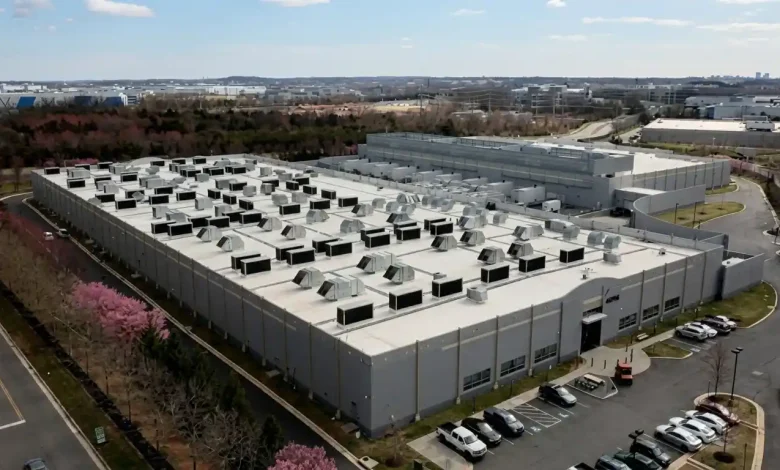
Table of Contents
AI data centers are expanding at a breakneck pace across the globe, driven by an insatiable appetite for computational power to support next-generation algorithms. This explosive demand has placed local communities and state governments at a historical crossroads, forced to balance the promising economic windfall of the artificial intelligence revolution against the stark reality of strained public utilities and environmental degradation. Welcome to the daily Inside Scoop newsletter, where today we explore how different regions are grappling with this infrastructure dilemma. From New York’s sudden regulatory freeze to Virginia’s hyper-dense cluster of windowless digital factories, the race to power the future is reshaping local landscapes and energy policies. As tech conglomerates rush to acquire land and power commitments, the conversation has shifted from purely economic opportunities to the critical question of community sustainability.
The Great AI data centers Dilemma of the Artificial Intelligence Boom
The sudden and massive growth of the AI industry has meant skyrocketing demand for specialized physical infrastructure. Unlike standard legacy data warehouses, modern high-density compute facilities require massive amounts of energy and water to keep advanced graphics processing units (GPUs) operational. This physical bottleneck has triggered intense regulatory scrutiny, setting the stage for a nationwide debate. According to reports by CNET News, New York has become the first state in the nation to halt this rapid buildout, creating a precedent that could influence policy across fifteen other states currently contemplating similar constraints. The central conflict lies between developers who view these facilities as indispensable engines of the digital economy and local residents who fear skyrocketing utility bills, degraded natural resources, and noise pollution.
New York’s Historic Moratorium: A Pause on Hyperscale Expansion
New York has officially taken a bold step by enacting a one-year statewide pause on building new hyperscale computing infrastructure. This legislative and executive freeze makes the Empire State a key battleground in the struggle to regulate Big Tech’s physical footprint. By halting new permits, state officials intend to buy precious time to analyze the systemic impacts of high-megawatt facilities on public infrastructure and resident utility rates. The pause does not affect active projects that have already broken ground, but it draws a strict line in the sand for future hyperscale developments.
Governor Hochul’s Executive Order and Regulatory Ambitions
In July 2026, Governor Kathy Hochul signed a sweeping executive order to pause the issuance of new building permits for large-scale digital hubs that demand more than 50 megawatts of power. These facilities, often consuming equivalent power to tens of thousands of residential homes, represent a significant risk to grid stability. Governor Hochul stated that as data center development threatens to hike up utility bills, deplete our natural resources, and create uncertainty for New Yorkers, it is her responsibility to take action and lead. The goal is to craft a comprehensive regulatory framework that forces developers to invest in local communities and protect host municipal assets before they can receive new building permits.
Public Support and Local Activism in the Empire State
The moratorium did not happen in a vacuum; it was the direct result of months of persistent organizing by grassroots coalitions. From Long Island to Albany, citizen groups gathered to express deep concerns about resource strain and rising electricity prices. Local activists argued that unregulated computer server farms would drain local financial and physical resources without providing proportionate long-term economic benefits. These intense local skirmishes mirror larger national environmental protection debates, where industrial development and resource preservation are frequently in opposition. Grassroots leaders praised Governor Hochul’s decisive action, characterizing the pause as wise leadership that prioritizes voter welfare over corporate expedience.
Loudoun County, Virginia: Living in the Shadow of ‘Data Center Alley’
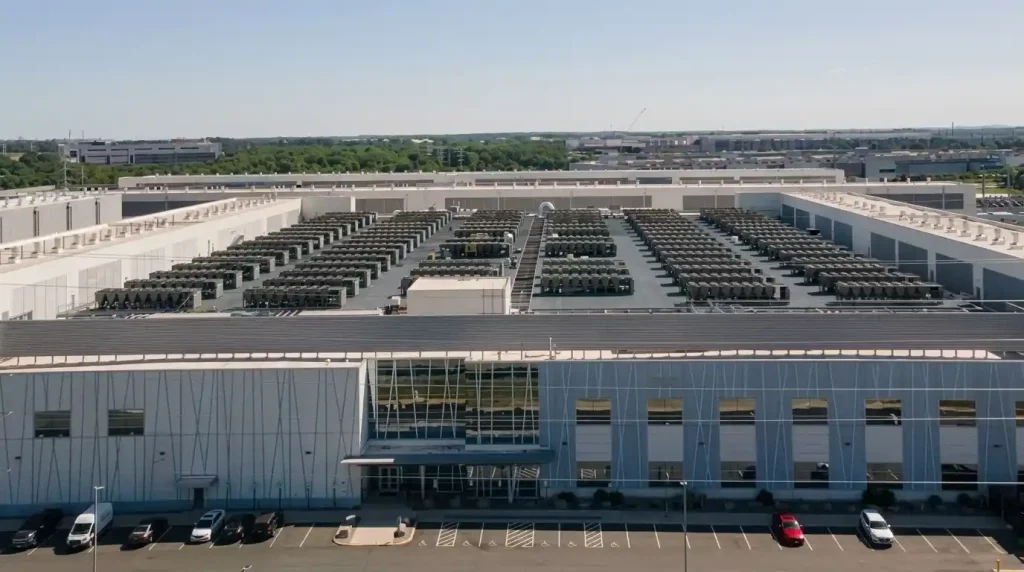
In stark contrast to New York’s precautionary approach, Loudoun County, Virginia, represents the global epicenter of digital infrastructure development. Known colloquially as ‘Data Center Alley’, this region has fully embraced the tech boom over the past two decades. The landscape is dominated by tons of windowless buildings that churn the massive amounts of data needed to meet our many daily tech needs. However, the sheer density of these facilities has brought the county’s infrastructure to its absolute physical limits, prompting a reevaluation of the unchecked growth strategy.
The Infrastructure Strain on Northern Virginia
The hyper-concentration of computing power in Northern Virginia has created unprecedented strain on the regional transmission grid. Local utilities are struggling to meet the interconnection requests of developers, leading to prolonged delays. According to industry research, the average wait time for a 100-megawatt grid connection in Northern Virginia has stretched to an astonishing seven years. This local energy stress is compounded by broader macroeconomic pressures, such as climbing fuel prices, which raise the baseline cost of living and exacerbate voter anxiety over public utility expenses. Municipalities are finding that local transmission lines are saturated, forcing utilities to propose controversial new high-voltage transmission projects through scenic residential corridors.
Community Pushback and Rezoning Battles
As the boundaries of Data Center Alley expand into residential and agricultural zones, local opposition has reached a boiling point. Residents are fighting back against the noise, the visual impact of massive windowless warehouses, and the construction of high-voltage power lines. This rising discontent culminated in the Loudoun County Board of Supervisors rejecting the massive Belmont Innovation Campus proposal in a tense 5-4 vote, citing grid capacity concerns and community opposition. The days of rubber-stamping major computing projects in Virginia appear to be over, as local leaders face intense pressure to protect the quality of life of their constituents.
Resource Consumption: The Massive Footprint of AI Infrastructure
To understand why communities are rebelling against the expansion of digital hubs, one must look at the sheer scale of physical resources these systems devour. Modern AI training and inference processes require continuous, high-performance computing cycles that draw immense electrical current. The underlying driver of this breakneck demand is the explosive adoption of highly complex generative AI technologies, which require exponentially more computing power and water cooling than legacy digital applications. This resource-hungry nature is pushing utility companies and environmental regulators into uncharted territory.
Grid Strain, Power Interconnection, and Energy Requirements
The electrical load of a single modern hyperscale computing facility can easily rival that of a medium-sized city. This unprecedented demand is clashing with an energy grid that is already struggling to transition to renewable sources. With regional transmission grids already suffering under extreme summer heat, the addition of multimegawatt computer server facilities threatens to push local power infrastructure to the breaking point. Utility operators are forced to keep fossil-fuel plants online longer than planned to prevent blackouts, threatening state-level carbon reduction goals and driving up overall energy costs for residential ratepayers.
Hydrological Impacts: Water Siting and Cooling Challenges
In addition to electricity, massive server arrays require millions of gallons of water daily to prevent overheating. Whether using evaporative cooling or chilled-water loops, these facilities can severely deplete local aquifers. The issue of water strain becomes even more acute during unprecedented heatwaves, which simultaneously stress local utility grids and boost the evaporation rate of open-loop cooling systems. In some water-stressed western states, data centers have already been linked to groundwater depletion, prompting municipal water utilities to restrict industrial water reuse systems and halt new connection agreements.
Comparison: Analyzing Regional Strategies for AI Integration
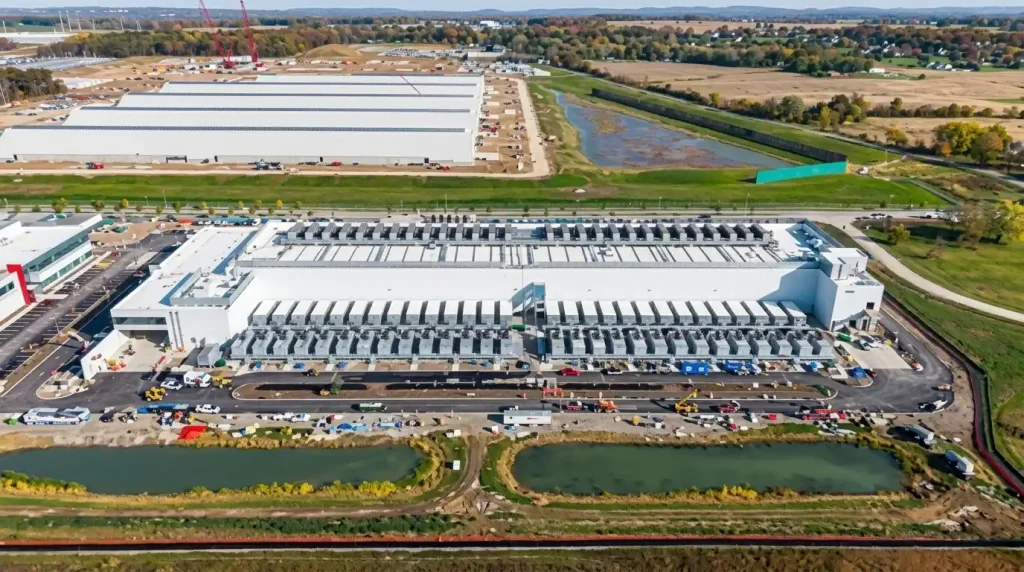
To better understand the divergent paths taken by different jurisdictions, we can compare the regulatory framework enacted by New York State with the market-driven, high-density approach of Loudoun County, Virginia. The table below highlights the key differences in policy, grid impact, and community response.
| Feature Category | New York State (Precautionary Model) | Loudoun County, VA (Hyper-Concentration Model) |
|---|---|---|
| Regulatory Status | One-year statewide moratorium on new hyperscale permits (>50 MW) | Case-by-case county zoning reviews with mounting rejections |
| Grid Management | Active state review to protect ratepayers and grid reliability | Severe saturation; average 7-year wait for 100 MW connections |
| Environmental Safeguards | Statewide environmental and water impact studies mandated | Localized restrictions; rising controversy over water consumption |
| Economic Strategy | Establishing strict standards before letting developers proceed | Leveraging high tax revenues while managing intense infrastructure strain |
The Economic and Geopolitical Backlash
The sudden move by New York to halt new computing facilities has triggered a fierce national debate about economic competitiveness and technological leadership. Proponents of rapid tech development argue that blocking the infrastructure of the future will simply drive valuable investments and high-paying construction jobs to other states. This polarization has caught the attention of federal lawmakers and national political figures who view physical computing infrastructure as a crucial component of geopolitical supremacy.
Tech Industry Concerns and Investment Relocation
Technology developers and industry lobby groups have warned that New York’s moratorium will ultimately backfire, creating an investment vacuum that benefits rival states. Critics of the freeze argue that the massive capital expenditures associated with AI hubs will shift to states like Texas, Florida, Arizona, and Alabama, which offer more favorable zoning laws and tax incentives. Industry advocates contend that slowing down the buildout of physical computing infrastructure could hinder domestic progress in software engineering and artificial intelligence, potentially ceding valuable ground to global competitors.
Political Demands and Federal Reactions
The policy divide has also taken on a heavy partisan tone. Following the announcement of New York’s moratorium, national leaders publicly criticized the decision, arguing that turning away ‘cash cows’ and ‘money machines’ is an economic self-injury. These infrastructure issues are not just localized debates; they have reached the highest levels of tech policy. At the recent Washington AI Honors Gala, industry leaders and policymakers discussed the balance between digital leadership and local community protections. Furthermore, while supporters argue that these facilities are massive economic engines, critics warn that the long-term job creation is minimal, especially when contrasted with broader automation-driven labor shifts that continue to impact technology workers.
Conclusion: Charting a Sustainable Path Forward
The contrasting approaches of New York and Loudoun County highlight the critical challenge of the modern digital age: finding a sustainable balance between rapid technological progress and physical environmental constraints. New York’s one-year pause represents a necessary step back to evaluate the long-term stability of public utilities, ensuring that local ratepayers are not forced to subsidize the immense electrical demands of multinational tech giants. Conversely, the bottlenecks and community rejections in Loudoun County demonstrate that even the most tech-friendly regions cannot ignore the physical limits of land, water, and power. As the demand for computing infrastructure continues to surge, states and municipalities must collaborate to establish clear, standardized ground rules. Only by enforcing stringent energy efficiency, promoting sustainable cooling techniques, and protecting local resources can society harness the power of artificial intelligence without compromising the communities that host its physical backbone.