Exclusive: 5 Powerful Reasons Laura Loomer Changed Her Ukraine Position After Kyiv Attack
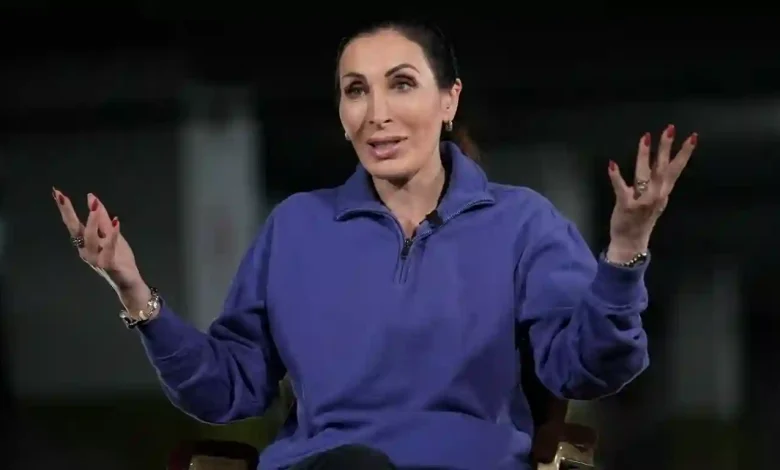
Table of Contents
Laura Loomer has stunned political observers and her nearly 2 million social media followers by executing a massive about-face on the Russia-Ukraine war. For years, she was one of the loudest online voices criticizing American aid to Ukraine, accusing the country’s leadership of corruption, and echoing Kremlin-style talking points. However, a personal fact-finding tour to the war-torn nation in July 2026 has completely changed her perspective. Her sudden shift in rhetoric represents a highly unusual ideological migration from the isolationist fringes of the MAGA movement to a stance of moral clarity that aligns closely with traditional foreign policy hawks. By exploring the conflict firsthand, she has directly confronted the stark differences between digital echo chambers and the grim realities of active warfare.
Prior to her journey, she had spent years minimizing Russia’s invasion of Ukraine and amplifying Russian propaganda to her massive audience. She had labeled Ukraine a country full of Laura Loomer Nazi apologists—a narrative frequently pushed by Vladimir Putin’s government to justify its full-scale invasion—and had characterized President Volodymyr Zelenskyy as being a Jihadi apologist. Her online footprint was heavily populated with posts criticizing the tens of billions of dollars in military aid sent by Washington. This Laura Loomer skepticism has been shared by other major conservative influencers, including former Fox News host Tucker Carlson, and has been a central rallying cry for isolationists. Yet, after arriving in Ukraine, she began posting dispatches that immediately signaled a complete retreat from her previous stance. Rather than seeking to delete her past comments, she openly acknowledged them, stating that she had been living in a media echo chamber and was heavily propagandized by Russian state media on social media platforms. Her shift toward calling for moral clarity has sent shockwaves through the conservative media ecosystem. Amidst domestic conversations around democracy and civil activism, much like the voting rights march on Washington that gripped the nation, foreign policy narratives are undergoing their own intense grassroots reassessment.
Experiencing the Air Raid Sirens Firsthand
The catalyst for her most profound realizations came in the form of a terrifying, real-time experience under fire. “Just experienced my first air raid in Ukraine. Sirens blaring. This is everyday for every Ukrainian,” Loomer wrote on X during her visit to Kyiv. The sheer immediacy of the threat—hearing the alarms designed to warn citizens of incoming Russian missiles and drones—forced a major shift in her perspective. “I often said I don’t care. Looking back, that wasn’t very nice of me to say,” she admitted. This experience of hearing the sirens firsthand provided a human element that her online-centric analysis had previously lacked. Experiencing the sirens and seeing the civilian population rush to bomb shelters highlighted the stark reality of the conflict. By witnessing how normal families are forced to live under constant threat, she confessed that her previous dismissal of Ukrainian suffering was a mistake.
Loomer’s Findings on Russian Propaganda
Her tour was not limited to the capital city of Kyiv. She traveled to Bucha, the site Laura Loomer of notorious Russian war crimes committed early in the conflict, where she viewed mass graves and documented the devastation. She also visited the Kyiv-Pechersk Lavra alongside First Deputy Minister Laura Loomer of Foreign Affairs Serhii Kyslytsya. While there, she observed the damage caused by a Russian drone attack on the historic Dormition Cathedral. For her, who had previously accepted Russian narratives framing Putin as a defender of traditional Christian values, this was a massive turning point. She criticized the hypocrisy of targeting ancient Christian holy sites with Iranian-made Shahed drones. She publicly remarked on how powerful Russian propaganda is within American media. She even went as far as to suggest that the U.S. Congress should hold formal hearings on how Russian propaganda is weaponized to stoke social divisions in the United States. She admitted that she had fallen victim to these very campaigns, which distorted her understanding of who the true aggressors were in Eastern Europe.
High-Level Meetings: Sitting Down with Zelenskyy
Perhaps the most surprising event of the trip was a formal sit-down meeting between her and Ukrainian President Volodymyr Zelenskyy. Given Laura Loomer years of personal attacks against Zelenskyy, the meeting was a major diplomatic coup for the Ukrainian government, which has been working tirelessly to court skeptical Republicans. Ukrainian officials, including Chief Rabbi Moshe Reuven Azman, hosted her and helped dismantle the false narratives she had previously championed. By engaging directly with high-profile American influencers, Kyiv is demonstrating an adaptive strategy to win over the MAGA base. During these meetings, she was presented with evidence of Russian atrocities and documented testimonies of returned Ukrainian prisoners of war. These direct engagements further solidified her transition. Her meeting with Zelenskyy signifies that Laura Loomer Ukrainian leadership is willing to engage with even their most vehement former critics to secure the bipartisan support necessary for their national survival.
Comparative Analysis of Stance Shift

To fully understand the scale of this political turnaround, the following table contrasts Laura Loomer’s long-standing public positions on the war with her newly expressed realizations during her July 2026 trip to Kyiv:
| Topic of Concern | Past Beliefs (Pre-July 2026) | New Realizations (Post-Visit) |
|---|---|---|
| Ukrainian Sovereignty & Government | Assumed Ukraine was a country of “Nazi apologists” led by a “Jihadi apologist.” | Acknowledged the country’s profound patriotism and gratitude toward democratic allies. |
| Russian Aggression & War Crimes | Minimized the invasion; viewed Russian actions through the lens of justified defense. | Witnessed mass graves in Bucha and documented Russian strikes on historic Christian cathedrals. |
| U.S. Military & Humanitarian Assistance | Strongly opposed all aid; argued the United States had no core interest in supporting Kyiv. | Advocates for moral clarity and recognized how crucial Western air defense systems are to preserving civilian lives. |
| The Domestic Media Ecosystem | Believed Western media reports of the war were highly manipulated by security agencies. | Admitted that Russian propaganda is incredibly powerful and has heavily distorted Republican media narratives. |
The Deepening Schism in Republican Foreign Policy
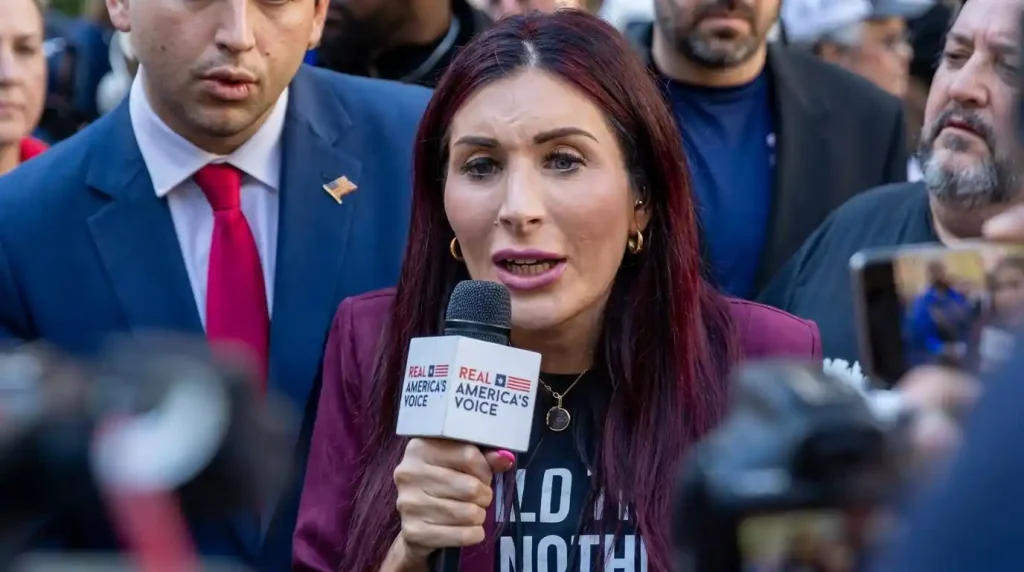
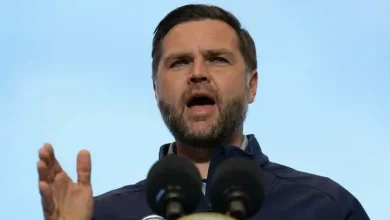
The political fallout of her reversal is expected to reverberate across the Republican Party. The issue of Ukraine aid has been a major point of contention between traditional Republicans, such as former Vice President Mike Pence and Senate leaders like Mitch McConnell, and Donald Trump’s isolationist MAGA base. While traditional leaders have consistently pushed for robust defense budgets to counter global adversaries, the isolationist wing has argued that America should focus strictly on domestic issues. This ideological rift is particularly visible in the leadership team itself. Vice President JD Vance was among the earliest and most vocal critics of continued U.S. military aid to Ukraine, famously clashing with Zelenskyy alongside Trump during a heated Oval Office meeting. Loomer’s sudden conversion introduces a wild card into this dynamic. As one of Trump’s most loyal and vocal public defenders, her sudden embrace of Ukraine’s defense challenges the consensus within the isolationist wing and could give cover to other conservative figures wishing to pivot.
Geopolitical Ripples and Domestic Economic Realities
The debate over foreign aid cannot be divorced from broader economic and military pressures facing the United States. Skeptics of foreign aid often point to domestic fiscal strains to justify cutting overseas funding. These debates over international engagement are highly sensitive, especially when policy analysts look at how the Strait of Hormuz deal and other Middle Eastern tensions affect defense allocations. Additionally, foreign entanglements carry significant financial footprints, as seen in projections where potential US-Iran war costs have dominated fiscal discussions on Capitol Hill. Indeed, these massive packages come at a time when warnings are emerging about the Defense Department running out of cash due to sustained overseas security commitments. The tension between funding domestic initiatives versus securing international alliances remains a core friction point. This contrasts with Donald Trump’s preferred strategy, which is often transactional, as seen when U.S. airstrikes on Iran were threatened to establish deterrence. Military experts warn that global security is increasingly being redefined by regional conflict, forcing policymakers to carefully balance their priorities. Furthermore, global instability directly impacts domestic consumers, as highlighted by recent CPI reports and energy price spikes that threaten economic stability at home.
Conclusion: The Future of MAGA Foreign Policy Rhetoric
Her dramatic reversal is a vivid illustration of how firsthand exposure to the brutal realities of war can shatter long-held ideological biases. By stepping out of her online echo chamber and experiencing the terrors of Russian missile strikes, she has challenged her peers to re-evaluate their own foreign policy assumptions. Whether her moral clarity will successfully sway other key figures within the MAGA movement remains to be seen. However, her journey from echoing Kremlin propaganda to meeting with Volodymyr Zelenskyy proves that even the most entrenched political narratives can be dismantled when confronted with the undeniable truth of a nation fighting for its survival.