Iran-US conflict 2026: US strikes target key ports for sixth night
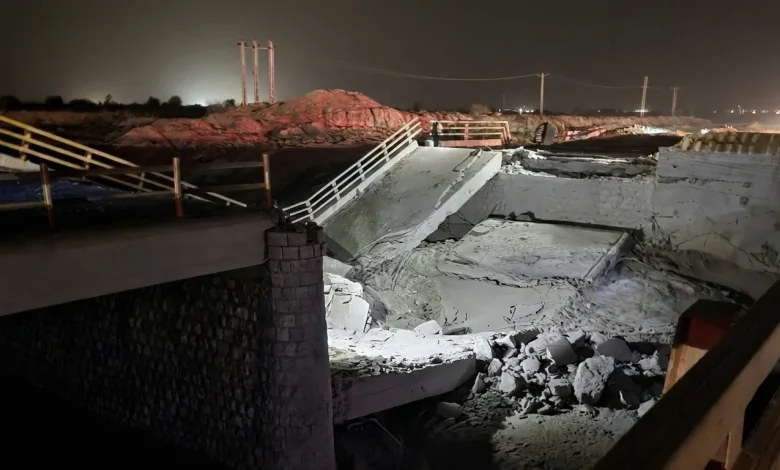
Table of Contents
Iran-US conflict developments have reached an unprecedented level of military intensity, as the Middle East reels from a sixth consecutive night of targeted U.S. airstrikes. Following the sudden collapse of last month’s fragile bilateral ceasefire and interim agreement, kinetic operations have expanded aggressively, with tactical maneuvers specifically designed to degrade Tehran’s economic and maritime footprint. The latest wave of kinetic action has focused heavily on southern Iran, aiming to cut off the critical port city of Bandar Abbas—the nerve center of the Islamic Republic’s maritime commerce and home to major Islamic Revolutionary Guard Corps (IRGC) naval installations—from the central heartland. With the Strait of Hormuz effectively closed and shipping lanes paralyzed, global oil prices have spiked, threatening the stability of the international economy.
As the Iran-US conflict escalates into a full-scale regional crisis, the political and military objectives of both nations have diverged further into protracted warfare. Prior to this outbreak, the international diplomatic community held out hope that the previous bilateral Memorandum of Understanding (MoU) would provide a template for durable stability. However, with the sudden breakdown of those protocols, military strategists in Washington have pivoted to a campaign of infrastructure attrition.
Historically, diplomatic mechanisms like the US-brokered diplomatic initiatives designed to pacify borders have struggled to withstand direct provocations between regional power players. In previous months, small-scale gestures such as the release of detained American citizens offered brief moments of optimism, suggesting that channels for backchannel discussions remained viable. But those minor confidence-building measures have been completely overshadowed by the sheer scale of the current military confrontation, which now threatens to draw multiple neighboring states into a wider regional conflagration.
The strategic objective behind targeting the southern Hormozgan province is multi-faceted. By striking key transportation networks, U.S. Central Command (CENTCOM) is attempting to sever the logistical arteries that connect Bandar Abbas with the interior cities, including Shiraz, Esfahan, and the capital, Tehran. If the flow of goods and heavy military equipment from the ports is neutralized, Iran’s internal distribution network faces catastrophic collapse. Concurrently, the operational environment is complicated by other overlapping global and regional pressures, including intense cross-border militant operations and compounding environmental challenges, as global temperature records continue to stress infrastructure across West Asia, heightening domestic emergencies on multiple fronts.
The Six-Night Air Campaign and CENTCOM’s Tactical Objectives
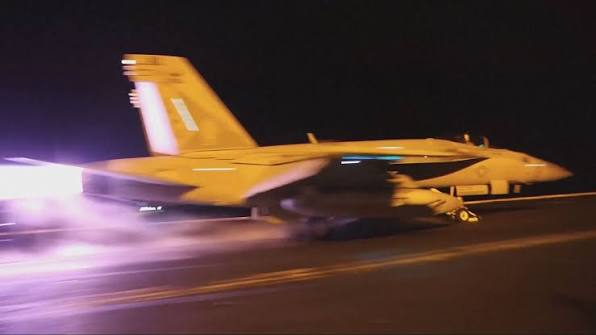
During the latest operations, U.S. forces, utilizing fighter jets, aerial drones, and warships, launched precision munitions that hit dozens of military targets. According to U.S. Central Command, these attacks, which concluded at dawn on Friday, were carried out under the direct guidance of the President. The operational command declared that the goal of the campaign is to degrade Iranian military capabilities and hold Tehran accountable for recent attacks on commercial shipping.
CENTCOM highlighted that the targets during this sixth night of strikes included coastal surveillance and air defense sites, military logistics infrastructure, and maritime capabilities. Strikes were reported across several crucial regional hubs, including Qeshm Island, Bandar Abbas, Chabahar, and Iranshahr. The precision nature of the attacks has successfully degraded Iranian early warning radars, reducing their ability to track incoming aircraft and maritime assets in the Gulf of Oman.
The military logic behind this sustained air campaign is to weaken Iranian defenses to shore up possible options if the executive branch decides to escalate further. By neutralizing key air defense batteries and coastal radar systems first, the U.S. military is establishing local air supremacy. This allows subsequent waves of bombers and attack drones to operate with minimal risk, systematically dismantling Iran’s defensive shield.
Targeting Southern Transportation Arteries and Bridges
The most physically destructive phase of the recent air strikes occurred along Hormozgan province’s logistical lifelines. U.S. precision-guided missiles struck five key bridges overnight, most notably the Bandar-e Khamir bridge and the Kahurestan Bridge. These highway and railway link strikes appeared aimed at cutting off Bandar Abbas, Iran’s largest commercial port, from the roads leading into the Islamic Republic’s central region and onward to the capital.
Local reports from Iranian state television confirmed that the strike on the Bandar-e Khamir bridge resulted in at least seven fatalities and nine injuries. The bridge, which is a vital transit corridor for heavy shipping, was heavily fractured, bringing vehicular movement to a grinding halt. Just west of Bandar Abbas, the Kahurestan Bridge, which links the port city to Shiraz, was also targeted, causing massive traffic pileups and isolating the coastal population from emergency services.
Additionally, a railway junction station in Bandar Abbas was hit, wounding at least two workers and crippling the primary rail line used to transport commercial cargo and industrial materials. The deliberate targeting of transport infrastructure represents a major shift in the rules of engagement. By cutting off these routes, the U.S. and its partners are restricting not only the movement of military materiel but also the flow of basic commodities needed for Iran’s population of 90 million.
Tehran’s Retaliatory Strikes and the Gulf’s Escalation
Tehran hit back immediately, launching a wave of retaliatory missile and drone attacks aimed at U.S. military bases and allied nations across the Persian Gulf. In an unprecedented move, Iran carried out its first direct attack on Syria, targeting Western-linked staging grounds and logistics facilities. Concurrently, the Islamic Revolutionary Guard Corps (IRGC) claimed responsibility for a series of drone strikes on U.S. facilities in Bahrain and Kuwait.
In Kuwait, local authorities confirmed that a missile strike damaged a power and water desalination plant, a vital asset in the desert nation. Kuwait’s military responded with air defenses and declared a state of high alert. Meanwhile, in Bahrain, sirens sounded as IRGC drones targeted Sakhir Air Base, aiming to disrupt U.S. reconnaissance aircraft and helicopters stationed in the kingdom.
Further east, in Qatar—which has historically served as a key mediator in regional disputes—the capital city of Doha heard multiple loud explosions. Qatar’s air defense systems successfully intercepted several incoming projectiles, though shrapnel from one of the intercepts reportedly injured a child. This rapid expansion of the battle space indicates that Iran is prepared to impose severe economic and physical costs on any regional neighbor hosting U.S. forces, threatening an all-out regional war.
The Maritime Stalemate: The Crucial Waterway of Hormuz
The battle for control of the Strait of Hormuz has essentially halted all commercial traffic through this vital global shipping lane. Historically responsible for carrying nearly 20 percent of the world’s daily oil consumption, the strait has become a militarized zone. Since the conflict began, U.S. naval forces operating in the Gulf of Oman have enforced a strict naval blockade, intercepting and redirecting commercial vessels attempting to run the blockade to access Iranian ports.
CENTCOM recently released footage showing U.S. Marines boarding the commercial tanker M/T Wen Yao, disabling non-compliant vessels, and establishing a dominant maritime presence. In response, Iranian military spokesmen have declared that the Strait of Hormuz will not return to pre-war status, claiming that Iran retains the right to defend its territorial waters from Western aggression.
The halting of maritime traffic has sent shockwaves through the global economy, causing oil prices to surge and sparking widespread fears of inflation. Major shipping conglomerates have rerouted their container fleets around the Cape of Good Hope, adding weeks of transit time and massive fuel costs to global supply chains. As long as the naval blockade remains active, the economic pressure on both Western consumers and regional producers will continue to intensify.
Tactical and Strategic Damage Assessment Data
The following table outlines the key targets struck during the sixth consecutive night of U.S. military action and their strategic implications for the regional balance of power:
| Strike Location | Infrastructure Targeted | Military & Economic Significance | Reported Operational Outcome |
|---|---|---|---|
| Bandar Abbas | Railway junction station, telecommunications tower, residential sectors | Iran’s largest commercial port city; headquarters of IRGC naval assets | Restricted rail logistics, civil communications disruptions, civilian casualties |
| Bandar-e Khamir | Bandar-e Khamir highway bridge, Kahurestan Bridge | Critical overland transit links connecting the southern coast to Shiraz and Tehran | 7 fatalities, structural collapse of bridges, land transport isolated |
| Qeshm Island | Coastal surveillance sites, air defense positions, drone depots | Overlooks the narrowest point of the Strait of Hormuz; early warning outpost | Degradation of coastal defense radar, restricted drone launch capabilities |
| Iranshahr | Local airport and regional logistics facilities | Southeastern inland hub for regional military coordination | At least one projectile impact, local flight operations suspended |
Donald Trump’s Primetime Address: Geopolitics and Domestic Elections
Despite mounting fears for the global economy and the real possibility of a prolonged war of attrition, President Donald Trump delivered a highly confident primetime address to the American public. Speaking from the White House, Trump insisted that the military operations in the Middle East were proceeding according to plan. Trump has frequently utilized primetime administrative addresses to control the national narrative, especially when domestic political pressures are high.
“We are likewise winning big in Iran, and you will see the fruits of that labor very, very shortly,” Trump asserted. The address came at a critical time for his administration, with the upcoming midterm elections poised to decide control of Congress. By framing the conflict as a series of decisive victories, Trump is attempting to project strength and deflect criticism of his administration’s domestic policies.
Indeed, the domestic landscape has been marked by significant bureaucratic upheavals, including the high-profile administrative firing of high-level attorneys and the controversial reorganization of internal security heads. By highlighting successful foreign operations, such as his administration’s recent maneuvers in Venezuela to boost oil production, Trump is attempting to reassure voters that his administration remains effective and lethal on the global stage.
The Collapse of the Ceasefire and the Diplomatic Vacuum
The current escalation of violence is the direct consequence of the collapse of the interim bilateral agreement signed last month. Designed as a 14-point Memorandum of Understanding to halt hostilities, the agreement fell apart amid mutual accusations of non-compliance. Israel, which was not a party to the negotiations, repeatedly criticized the MoU for failing to secure concrete concessions on Iran’s nuclear program and regional proxy networks.
With the collapse of the ceasefire, the diplomatic channels that once kept the two sides from full-scale war have largely dried up. While some regional actors, including mediators from Qatar, have attempted to revive talks, the continuous cycle of strikes and counterstrikes has created a deep security dilemma. Neither side is willing to back down, as doing so would be perceived as a major geopolitical defeat.
The lack of diplomatic trust is further exacerbated by the aggressive rhetoric coming from both Washington and Tehran. Iranian officials have labeled the U.S. strikes on civilian infrastructure as war crimes that violate international law and the UN Charter. Conversely, the U.S. administration maintains that its operations are necessary defensive actions aimed at protecting international shipping and maritime commerce from state-sponsored piracy.
Long-Term Regional Destabilization and Strategic Outlook
The strategic outlook for the Persian Gulf remains highly volatile, with the risk of a broader, multi-front war growing by the day. As the United States maintains its naval blockade and expands its infrastructure-targeting campaign inside Iran, the potential for unintended escalations is high. The conflict is no longer just a localized dispute; it has evolved into a global crisis affecting energy markets, international shipping, and the geopolitical alliances of the entire Middle East.
Ultimately, the resolution of the conflict will depend on whether both nations can find a viable diplomatic off-ramp before the costs of the war become unsustainable. Until then, the people of the region will continue to bear the brunt of the violence, and the global economy will remain vulnerable to the volatile currents of the Persian Gulf.