Trump Freedom 250 speech launches National Mall event
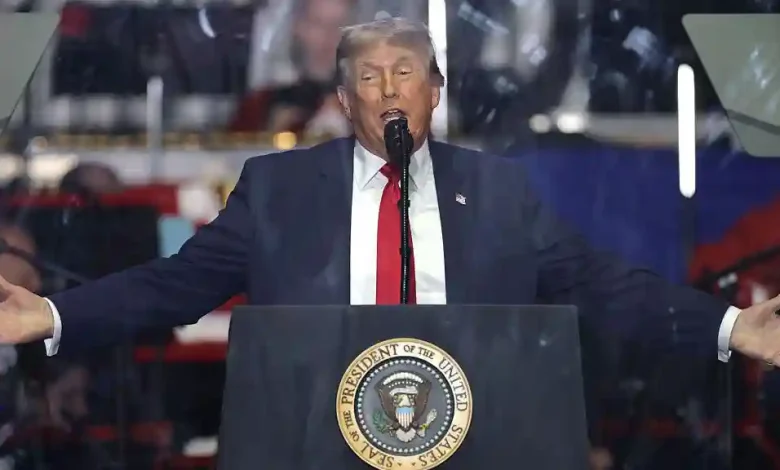
Table of Contents
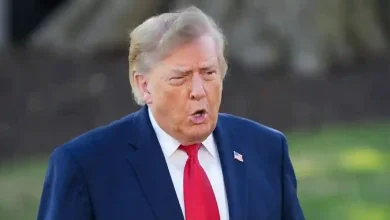
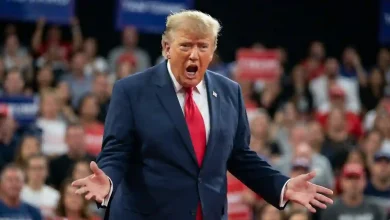
Trump Freedom 250 speech delivered on the National Mall officially launched the historic 16-day Great American State Fair, marking the start of America’s 250th anniversary celebrations amid immense political division and artist boycotts. “Tonight, as we stand at the edge of our 250th year, I am thrilled to declare that America is back,” President Donald Trump declared before a crowd gathered in the nation’s capital. “As you know very well, a short time ago we were a dead country. We were dead. Now we’re the hottest country anywhere in the world. We’re respected by everybody. Nobody’s laughing at us anymore.” The address kicked off a modern-day world’s fair designed to celebrate the U.S. semiquincentennial, yet the event itself has become a lightning rod for the political and cultural polarization of the modern era.
The event, organized by Freedom 250, a public-private partnership created by Trump that labels itself as a nonpartisan nonprofit organization, marked the beginning of the 16-day exposition, envisioned as a modern-day world’s fair to celebrate America’s 250th birthday. While organizers intended to present a united front showcasing the absolute best of America, the weeks leading up to the opening were marred by logistical headaches, state-level dropouts, and public fallouts with booked entertainment. The result is a celebration that, while grand in scale, reflects a deeply divided nation navigating two very different visions of its history, identity, and future.
The Context and Ambience of the Great American State Fair
The physical landscape of the National Mall has undergone a staggering transformation in preparation for the Great American State Fair, which runs from June 25 to July 10, 2026. Walking paths beneath the shadow of the Washington Monument have been sliced into a labyrinth of tall black security fencing, creating dead ends and considerable frustration for tourists and daily commuters alike. National Park Service workers and event security guards have spent weeks controlling access to the curved walkways, strictly limiting entry to personnel with specialized badges and hard hats. For many locals, the capital’s most iconic public green space has been turned into a costly and highly disruptive construction zone, all in the name of preparing the city for its forthcoming milestone.
The Visual Transformation of the National Mall
Despite the operational friction, the visual scale of the fair is undeniable. Anchoring the National Mall is a massive 110-foot “Freedom 250” Ferris wheel positioned near the U.S. Capitol, offering panoramic views of the city. Nearby, the newly refurbished Smithsonian National Carousel spins, evoking a sense of mid-century nostalgia designed to appeal to families. Flagpoles lining the walkways fly three distinct banners in unison: the American flag, the District of Columbia flag, and the official flag of Freedom 250. The fair features more than 150 individual exhibits representing U.S. states, territories, civic organizations, and corporate partners. However, the oppressive summer heat—hovering around 90 degrees with heavy thunderstorms threatening the opening night—has tested the resolve of early attendees, prompting organizers to issue heat and health warnings.
Behind the Rhetoric: Decoding President Trump’s “America is Back” Speech
The centerpiece of the opening night was the President’s address, which starkly contrasted with his usual campaign trail performances. Known for delivering sprawling, free-wheeling rallies that frequently exceed the one-hour or even two-hour mark, Donald Trump delivered an uncharacteristically concise and tightly structured speech that concluded in approximately 30 minutes. Observers noted that the President remained remarkably disciplined, sticking closely to his prepared script and resisting the urge to wander off into the lengthy personal grievances or political digressions that typically characterize his public appearances.
An Uncharacteristically Concise Trump Address
In his brief remarks, Trump focused on themes of national resurrection and global dominance. By describing the United States as having recently been a “dead country” that has now transformed into the “hottest country anywhere in the world,” the President utilized his signature hyperbole to frame his administration’s tenure as a period of unprecedented renewal. The claim that “nobody’s laughing at us anymore” directly targeted critics who have long argued that his foreign and domestic policies have alienated international allies. The decision to deliver a short, script-focused speech may have been a strategic choice, designed to minimize controversy and project a more dignified, presidential image at the launch of a national milestone, or it may have been a logistical necessity given the tight scheduling of the opening ceremony’s broadcast and the looming summer storms.
Freedom 250 vs. America250: A Tale of Two Anniversaries
The administrative structure behind America’s 250th birthday is itself a source of confusion and political friction. Two separate entities have been working concurrently—and often contentiously—to organize the milestone celebrations. On one side is America250, a nonpartisan, congressionally mandated commission created years ago to oversee the official national semiquincentennial. On the other side is Freedom 250, the public-private partnership established via executive order by President Trump to coordinate a parallel track of highly publicized events, including the Great American State Fair. Critics argue that Freedom 250 was created to bypass the traditional, bipartisan oversight of the congressional commission in order to project a more overtly nationalistic and partisan vision of American history.
| Feature | Freedom 250 | America250 |
|---|---|---|
| Origin & Creation | Established by Donald Trump’s executive order as a public-private partnership. | Congressionally created bipartisan body. |
| Key Leadership | Keith Krach (CEO) and Trump White House allies. | Bipartisan congressional and civic appointees. |
| Core Philosophy | Patriotic rededication, MAGA-aligned initiatives, industrial showcases. | Broad, nonpartisan historical remembrance and localized celebrations. |
| Signature Events | Great American State Fair (National Mall), UFC Freedom 250, Freedom Trucks. | Local community grants, educational curricula, state-by-state historic marker funding. |
| Controversies | Political alignments, state boycotts, artist dropouts, commercial partnerships. | Bureaucratic delays, lack of unified national branding, internal administration struggles. |
The Politicization of a National Milestone
While Freedom 250 insists on its nonpartisan status, the organization’s close alignment with the Trump White House has made it a focal point for political debate. Progressive critics argue that the public-private partnership has effectively commercialized and politicized what should be a neutral, civic celebration. The heavy involvement of corporate sponsors, conservative political figures, and the emphasis on industrial “Made in America” showcases have led some to view the Great American State Fair as a thinly veiled campaign platform. In contrast, supporters of Freedom 250 argue that the congressional commission was too slow, bogged down by bureaucracy, and failed to produce the kind of high-impact, patriotic events that a milestone as significant as the 250th anniversary demands.
Boycotts and Lineup Shakeups: How Trump Became the Headliner
The road to the opening night of the Great American State Fair was paved with public relations challenges, most notably a series of high-profile artist cancellations. Initially, organizers had envisioned a star-studded musical lineup designed to appeal to a broad, mainstream audience. However, planning for the event stirred controversy last month when several musical artists booked to perform, including veteran country star Martina McBride and late-1980s hip-hop artist Young MC, backed out of their commitments. Both artists, along with several others, publicly cited concerns over the increasingly political nature of the celebration and its direct association with the Trump White House, stating they did not want their work to be co-opted for political messaging.
Rather than attempting to quietly replace the departing acts with other mainstream musicians, Trump seized on the development as an opportunity to write himself into the lineup as the headliner. By stepping into the slot originally reserved for musical entertainment, the President effectively transformed a cultural festival into a political rally. While this move delighted his core base of supporters, who viewed it as a characteristically bold and defiant gesture, it further alienated critics and cemented the perception that the fair is fundamentally a partisan endeavor rather than a unifying national celebration.
The State-Level Boycotts: A Divided Nation Celebrates its Union
The controversy surrounding Freedom 250 is not limited to the entertainment industry; it has also taken on a geographic dimension. Although the Great American State Fair was designed to feature exhibitions from all 50 states and six U.S. territories, at least eight states officially declined to participate in the event. Officials from Connecticut, Illinois, Massachusetts, North Carolina, Maine, Oregon, Washington, and Pennsylvania announced that their states would not take part in the National Mall exposition. While some governors cited state budget constraints or logistics as the primary reasons for skipping the fair, political analysts note that all eight states are led by Democratic administrations, pointing to a clear partisan divide in participation.
In response to these state-level opt-outs, Freedom 250 organizers have worked to downplay the significance of the absences, promising that every community will still be represented in some form. Organizers have bypassed state governments to partner directly with local tourism boards, chambers of commerce, or private businesses from the non-participating states to ensure their geographic regions are still featured in the state pavilions. Nevertheless, the high-profile refusal of several of the nation’s most populous and historically significant states—including Pennsylvania, the very birthplace of the Declaration of Independence—casts a long shadow over the fair’s claim to be a unified celebration of the entire nation.
The Daily Programming and Theme Pavilions on the National Mall
Despite the political battles, the Great American State Fair boasts an ambitious, highly structured 16-day schedule of daily programming. The exposition is anchored by five massive themed pavilions designed to showcase distinct aspects of American life: Made in America, American Heartland, American Innovates, The American Canvas, and Faith & Family. The Made in America pavilion, in particular, has become a major hub for domestic manufacturers and industrial companies to showcase their technology and capabilities directly to a national audience, serving as a physical manifestation of the administration’s economic nationalist policies.
The daily programming includes unique thematic designations for each of the fair’s 16 days. For example, organizers have designated “MAHA Mondays” (Make America Healthy Again), featuring health, wellness, and fitness programs aligned with the administration’s public health initiatives. Other notable days include Military & Veterans Appreciation Day, Horsepower of America, and Faith, Values, and Inspiration Day. The entire 16-day fair is scheduled to culminate in a massive Independence Day celebration on July 4th, which organizers claim will feature the largest fireworks display in American history, utilizing over 800,000 shells and lighting up the skies above the National Mall.
Broad Controversies Surrounding the 250th Anniversary Celebrations
The opening of the Great American State Fair is only the latest in a series of controversial events associated with the Freedom 250 initiative. Earlier in June, the administration faced intense scrutiny over “UFC Freedom 250,” a professional mixed martial arts fight held on the South Lawn of the White House to coincide with President Trump’s 80th birthday. Ethics watchdogs and political opponents sharply criticized the event, arguing that allowing a for-profit sports entertainment company—led by major Trump donor Dana White—to commandeer public executive grounds created an unprecedented and highly inappropriate blurring of commercial interests and public office.
UFC Fights and Cultural Polarization
The choice of a UFC event as a signature celebration for the nation’s semiquincentennial highlights the cultural strategy of the Freedom 250 organizers, who have consistently prioritized high-energy, populistic spectacles over traditional, high-brow historical commemorations. This approach has also extended into historical interpretation. The administration has faced criticism for promoting what detractors call a “revisionist” view of American history, highlighted by an executive order aimed at removing park materials and public monuments that discuss systemic racial injustice, slavery, and the climate crisis. While a federal judge recently ordered the administration to reinstate some of these educational materials, the ongoing ideological battle over how America’s past is presented remains a central theme of the 250th-anniversary landscape.
The Path Forward: What the Great American State Fair Portends for the Nation
As the Great American State Fair continues its 16-day run on the National Mall, it serves as a powerful metaphor for the current state of the American republic. On one hand, the fair is a remarkable feat of logistics and presentation, drawing thousands of visitors to celebrate the real achievements, innovations, and diverse cultures of the fifty states and territories. On the other hand, the fences carving up the Mall, the absence of key states, and the highly politicized opening address by the President underscore a nation deeply divided over its own narrative. For those interested in the full scope of upcoming events, the official Freedom 250 platform provides schedules, ticket information, and registration details for the remaining themed days.
Ultimately, the semiquincentennial was always going to be a moment of national self-reflection. Whether the celebrations organized by Freedom 250 will succeed in fostering a renewed sense of patriotic unity, or whether they will simply deepen the existing cultural and political trenches, remains to be seen. As the country moves closer to July 4th, the spectacle on the National Mall will continue to capture the eyes of the world—demonstrating that while America may indeed be “back” in the eyes of its current leadership, the debate over where the country is heading is far from resolved.